“Indian pastries” is a useful search phrase but not one precise food category. A shopper may mean traditional mithai, bakery-style puffs or cakes, syrup-soaked sweets, flaky festival specialties or modern fusion pieces. The difference matters because texture, freshness, transport and serving style.
The Mithai Maharaja’s current website separates sweets into milk-based delicacies, barfi, premium mithai, ladoo and gulab jamun, halwa and pinni, and fusion sweets. It also links to a bakery category. That live structure supports a category-based explanation without pretending every item is always in stock.
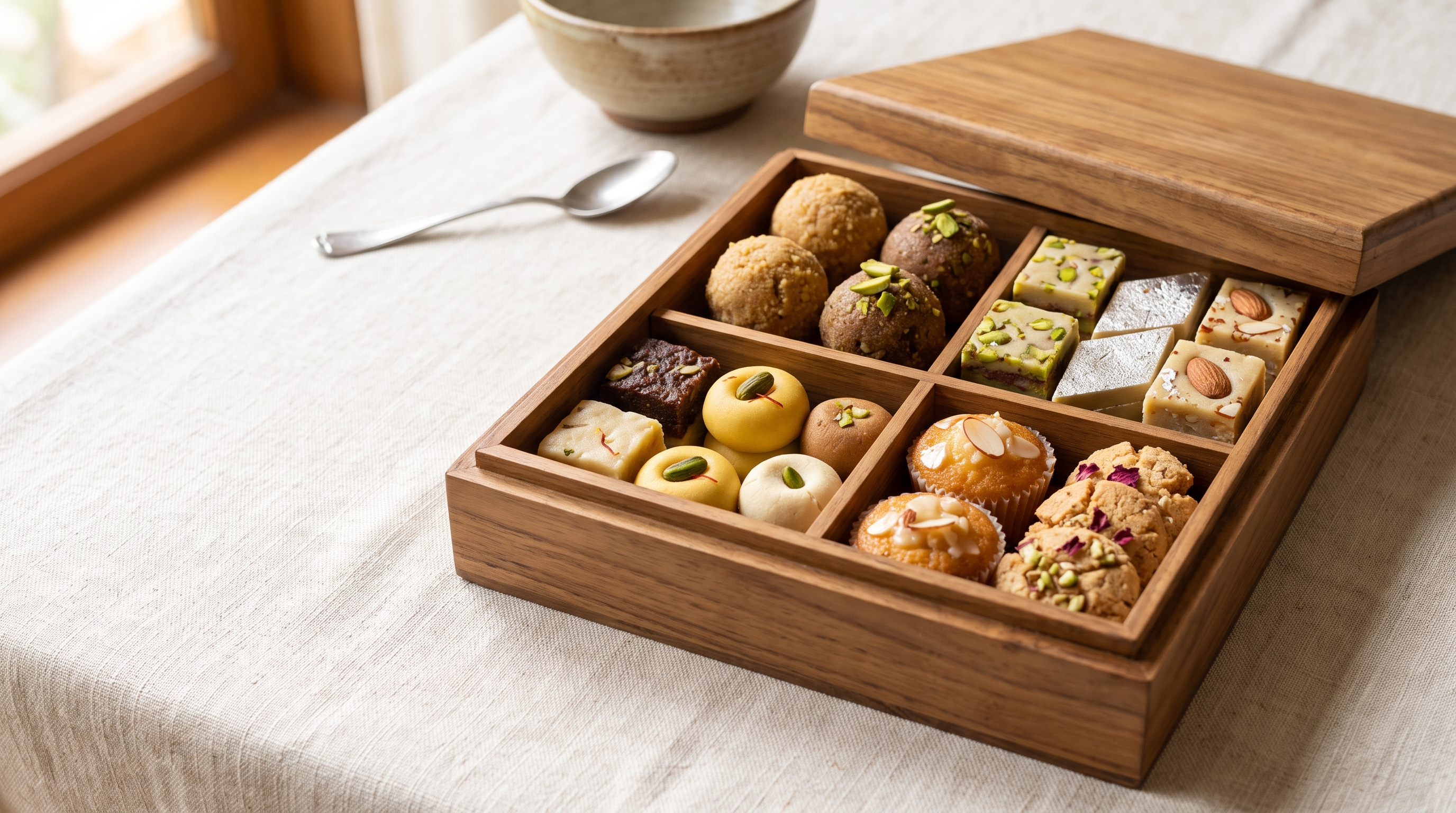
What does Indian pastry actually mean?
In everyday Canadian shopping, the phrase can cover a broad dessert counter. A traditional sweets shop may organize products by base or technique, while a bakery may organize by cakes, puffs, biscuits and breads. Neither system is wrong. The useful question is what kind of eating experience the buyer wants.
Ask four things: Is it baked, fried, cooked and set, or syrup-soaked? Is the texture crisp, crumbly, chewy, soft or creamy? Does it need refrigeration? Is it intended for immediate eating, gifting or travel? Those answers are more useful than forcing every sweet into a Western pastry definition.
Six categories you may find in an Indian dessert shop
Milk-based delicacies
These sweets often emphasize a soft, dense or creamy milk character. Recipes and storage needs differ, so do not infer ingredients or shelf life from appearance. The Mithai Maharaja maintains a milk-based collection for current browsing.
Barfi and set sweets
Barfi is generally portioned into firm pieces, making it practical for boxes, but the base can vary from milk to nuts, coconut or other ingredients. Browse the live barfi collection, then confirm what each selected piece contains.
Ladoo and round sweets
Ladoo describes a shape and family of techniques, not one recipe. Flour, legumes, nuts, seeds, dairy and ghee may appear depending on the variety. A visual match does not establish ingredient equivalence.
Syrup-soaked sweets
Gulab jamun and related sweets offer a soft, syrupy contrast to firm pieces. They may be less convenient for an unlined gift box or long travel, so packaging and serving plans matter.
Halwa and pinni
These categories can be dense, rich and ingredient-specific. Some are spoonable; others hold a shape. Ask how the selected item should be stored and served rather than applying a universal rule.
Bakery and fusion pastries
This is where baked doughs, cakes, biscuits or contemporary combinations can meet mithai flavours and presentations. The fusion collection is the appropriate place to see current first-party examples. Availability and composition still require current confirmation.

Compare categories by the decision they solve
| Need | Direction to explore | Question to ask |
|---|---|---|
| Neat gift presentation | Firm barfi, ladoo or selected fusion pieces | Will each piece hold during the planned travel? |
| Texture contrast | Combine one firm, one soft and one crisp or flaky item | How should each be stored before serving? |
| Immediate dessert service | Add a soft or syrup-based sweet | What container and utensils are needed? |
| Longer travel | Prioritize stable, individually separated pieces | How long can the chosen products safely travel? |
| Mixed familiarity | Use recognizable classics plus one fusion choice | Can the box be labelled by item and ingredient? |
These are planning directions, not shelf-life or safety claims. The seller’s current product guidance should control.
Build a balanced Indian dessert box
- Define the occasion. A family tea, wedding favour, office gift and plated dinner need different packaging.
- Choose three texture roles. For example, firm, soft and crisp or chewy.
- Vary sweetness perception. Contrast rich milk or syrup pieces with nutty, spiced or less-syrupy directions where available.
- Control piece count. More varieties are not always better; every extra item adds an ingredient and labelling question.
- Plan identification. A recipient should know which item is which before guessing.
- Confirm storage and travel. Share the pickup time, travel time and serving time with the seller.
Freshness, storage and travel set real limits
A beautiful assortment can fail if a soft sweet warms for too long or a crisp pastry absorbs moisture. Ask which items require refrigeration, which should remain dry, whether syrup items need separate containers and when the shop recommends serving them.
Health Canada’s general food-safety tips explain basic temperature and contamination controls. Apply the shop’s product-specific instructions because the phrase Indian pastry covers products with very different moisture and dairy content.
- Collect the order as close to departure as practical.
- Keep cold items cold using an appropriate cooler.
- Separate crisp and syrupy items where advised.
- Avoid leaving the box in a hot vehicle.
- Retain labels and serving instructions for recipients.
Ask item-specific allergen questions
Milk, wheat, nuts, peanuts, sesame, soy and other allergens can appear across sweets and bakery products, but no single list describes every recipe. The CFIA’s food allergen labelling resource explains priority allergen and cross-contamination concepts for packaged food. For counter items, ask the shop about each product and shared preparation.
- What are the ingredients in this exact item today?
- Does any component contain the allergen?
- Could it contact shared trays, tools, oil or preparation areas?
- Can pieces be labelled and separated reliably?
- What information can the shop provide in writing?
Do not describe a whole box as allergen-free, gluten-free or vegan based on one piece or on appearance.
Common mistakes when choosing Indian pastries
- Calling every sweet a pastry and missing useful category differences.
- Selecting only by colour, so every piece has a similar texture.
- Assuming a familiar name always means the same ingredients.
- Putting syrupy and crisp items together without packaging advice.
- Ignoring travel time and refrigeration.
- Using an old social post as proof of current availability.
- Choosing too many varieties to label clearly.
- Making dietary promises the shop has not confirmed.
Frequently asked questions
Are Indian pastries the same as mithai?
No. The terms overlap in casual use, but mithai is a broader traditional sweets category, while pastry usually points to baked or layered dough and cake formats. Fusion products can combine both traditions.
Which Indian sweets travel best?
Firm, well-separated pieces may be easier to transport than soft, syrupy or temperature-sensitive items, but the shop should advise on the specific products and journey.
How many varieties belong in a gift box?
Enough to create meaningful contrast while keeping identification and dietary information clear. Three to five deliberate roles can be more useful than many single pieces.
How do I know what is available?
Check the live sweets collection and contact the Brampton shop for current stock, ordering lead time and product guidance.
Choose the box by experience, not colour alone
Start with the occasion, texture and travel plan. Once those are clear, the product names become easier to understand and the final assortment becomes more enjoyable to serve.
Sources reviewed
- The Mithai Maharaja sweets collection — first-party category and product context.
- CFIA food allergen labelling.
- Health Canada general food safety tips.