Besan barfi is a classic North Indian mithai made by slow-roasting gram flour (besan) in pure desi ghee, binding it with a one-string sugar syrup, and setting the mixture into neat squares. In Brampton, The Mithai Maharaja crafts besan barfi the real halwai way—small batches, careful roasting, and elegant boxing for gifting and catering.
By The Mithai Maharaja • Brampton • Last updated: 2026-05-27
Overview and Table of Contents
This complete guide explains what besan barfi is, why it’s beloved in Brampton, and how it’s made for that melt-in-mouth bite. You’ll learn step-by-step technique, proven variations, troubleshooting tips, and how to plan gift boxes and catering trays using The Mithai Maharaja’s fifth-generation halwai approach.
Besan barfi sits at the heart of our Barfi Treasures lineup. It’s dependable, travels well, and pairs beautifully with milk-based or nut-forward varieties. If you’re organizing a celebration, this guide doubles as a playbook—from roasting cues to arrangement ideas that look regal when the box opens.
- What is besan barfi? Definition, texture, and flavor profile
- Why it matters in Brampton: heritage, gifting, and dependability
- How it’s made: roast, syrup, combine, set, and cut
- Types and methods: traditional, condensed milk, jaggery, vegan
- Best practices and troubleshooting
- Tools, ingredients, and local resources
- Storage, serving, and transport logistics
- Planning quantities for events and gifting
- Flavor pairings and assortment design
- Case studies from our Brampton kitchen
- FAQ and next steps
What Is Besan Barfi?
Besan barfi is a toasty, chickpea-flour fudge bound with ghee and a one-string sugar syrup, then cut into squares. Perfect batches hold their shape but melt on the tongue, carrying warm notes of roasted besan, cardamom, and pistachio. Texture depends on even roasting and precise syrup work.
At its core, the recipe is deceptively simple: besan, ghee, sugar, and optional aromatics. The magic lies in control. Roasting drives off raw flavors and unlocks a deep, nutty aroma. Syrup concentration provides structure without turning the slab brittle. When these levers align, the result is clean edges, a tender bite, and a glossy finish.
In our halwai practice, we treat besan barfi like a benchmark sweet—if the roast sings and the set is right, everything else in the box benefits. That’s why it often anchors The Mithai Maharaja’s gift assortments in Brampton, flanked by milk-based or nut-forward bars for contrast. For pairings and inspiration, explore our in-depth barfi flavor ideas that complement besan’s golden tone.
- Core formula: 2 parts besan : 1 part ghee : 1–1.25 parts sugar (tuned by granulation and humidity).
- Key cues: color transitions from pale to golden; aroma shifts from floury to toasted.
- Syrup target: one-string/thread stage, roughly 223–234°F; too thin won’t set, too thick crumbles.
- Finishes: cardamom, saffron strands, pistachio or almond garnish pressed lightly into the surface.
Why Besan Barfi Matters in Brampton
Besan barfi matters because it’s reliable, elegant, and rooted in Punjabi-Delhi halwai traditions. In Brampton, its tidy geometry and stable set make it a favorite for weddings, Diwali boxes, and corporate trays—easy to portion, photogenic in packaging, and universally welcomed with tea or coffee.
For families and event planners, practicality matters as much as nostalgia. Chickpea flour’s structure keeps pieces intact in transit. Ghee-bound mixtures hold at room temperature in typical indoor settings, so displays look sharp for hours. The flavor profile also plays well with varied assortments, offering a warm, toasty baseline.
We’ve seen Brampton hosts mix besan with pale kaju and green pista squares for a rich color story. The presentation reads festive without being overly sweet, and the cut edges look refined under ambient lighting. When boxes are opened together at a ceremony, this contrast creates an immediate sense of abundance and care.
- Gifting confidence: Squares stack cleanly, reducing smears and keeping liners neat.
- Seasonal dependability: Autumn festival peaks demand sweets that hold shape through busy pickup windows.
- Cultural resonance: Fits naturally into Diwali, Raksha Bandhan, and wedding traditions.
- Diet notes: The base uses chickpea flour and ghee, appreciated by guests avoiding wheat.
Local considerations for Brampton
- For late-summer or fall festivals, place larger orders early to secure preferred box designs and coordinated pickup windows.
- On humid days, store trays in air-conditioned rooms; bring to serving temperature 20–30 minutes before display.
- For office trays across the city, choose assortments with firm-set squares for fast, mess-free distribution.
How Besan Barfi Is Made (Step-by-Step)
Roast besan in desi ghee on medium-low heat until golden and aromatic, cook sugar to one-string syrup, then combine briskly and spread 0.75–1 inch thick to set. Cut into 1–1.25 inch squares and garnish. Even heat and syrup precision determine the final texture and sheen.
The real halwai rhythm is steady: low flame, patient stirring, and non-negotiable syrup control. Organize your tools before you start, because once syrup hits roasted besan, the window for smooth mixing is short. Below is the flow we teach home cooks who want professional results without stress.
- Prepare the tray: Line a metal tray with parchment or lightly grease with ghee for a clean release.
- Roast the besan: Melt ghee in a heavy kadai or sauté pan. Add besan and stir constantly for 12–18 minutes until color deepens and aroma turns nutty. Avoid hot spots.
- Cook the syrup: Dissolve sugar in water in a separate pan. Simmer to one-string (a single thread between fingers), roughly 223–234°F on a thermometer.
- Combine fast: Pour the syrup into the roasted besan and mix vigorously for 60–90 seconds until glossy and thick.
- Set and cut: Spread to 0.75–1 inch thickness, smooth the surface, sprinkle nuts, and rest 30–60 minutes. Cut with a sharp knife for crisp edges.
Two checks prevent most mishaps: keep the flame moderate so the flour roasts without scorching, and verify the syrup with both the thread test and temperature. For sharper edges, chill the slab 10–15 minutes before cutting; it reduces tear-out and improves presentation in gift boxes.
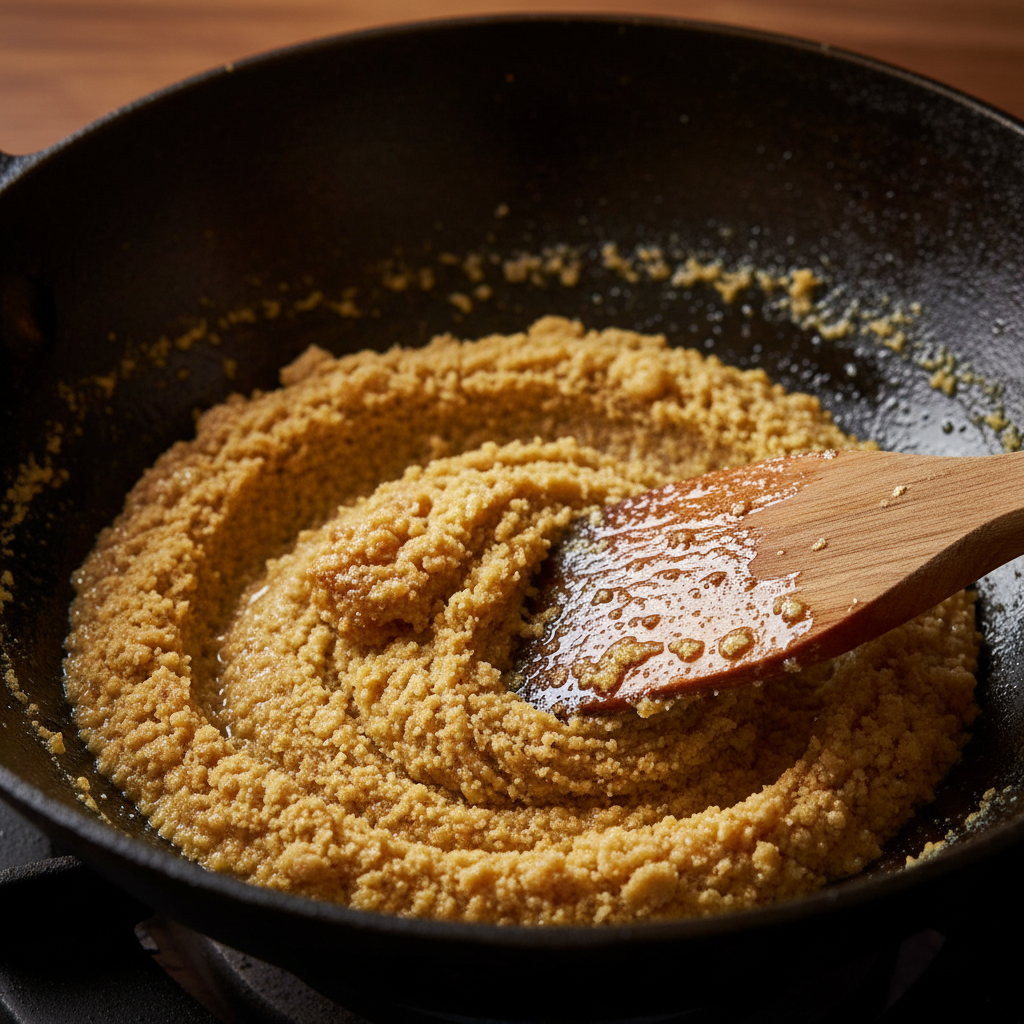
Process timing at a glance
- Roast: 12–18 minutes for small home batches; larger batches vary by pan and flame.
- Syrup: 6–9 minutes to one-string on a gentle simmer, depending on pot width and flame.
- Combine: 60–90 seconds of vigorous mixing when syrup meets besan.
- Set: 30–60 minutes at cool room temperature before cutting for tidy edges.
- Storage: Airtight at cool room temp 1–3 days; refrigerate to extend up to a week.
If you’d rather enjoy expertly crafted pieces instead of cooking, our Barfi Treasures include both classic and roasted styles. Build a regal assortment anchored by besan with plain barfi and contrast it with the deeper notes of roasted barfi for a dynamic, photo-ready box.
Types and Methods (Traditional to Modern)
Four popular approaches define besan barfi: traditional syrup-and-ghee for the cleanest set, condensed milk for richer sweetness, jaggery for caramel depth, and vegan with plant fats for dietary needs. Each method changes aroma, set strength, and ideal serving conditions.
Method choice is less about trend and more about intent. Traditional barfi rewards patience with a pristine structure and classic halwai aroma. Condensed milk softens the bite and adds milky fullness. Jaggery leans rustic with mineral notes and a tawny hue. Vegan adaptations can succeed, but the set may differ because plant fats crystallize unlike ghee.
| Method | Flavor & Aroma | Texture & Set | Shelf Considerations | Best Use |
|---|---|---|---|---|
| Traditional (ghee + one-string syrup) | Nutty roast; classic cardamom finish | Firm yet tender; sharp edges | Reliable at room temperature | Weddings, formal gifting, storefront displays |
| Condensed milk hybrid | Milky richness; sweeter profile | Slightly softer; glossy top | Box and store cool; avoid warm windows | Home celebrations, tea-time treats |
| Jaggery version | Caramel, earthy notes; deeper color | Firm with rustic crumb | Great visual contrast with pale sweets | Winter festivals, nostalgic selections |
| Vegan (plant-based fat) | Clean finish; lighter aroma | Variable set; can be brittle | Mind warm rooms; set may soften | Dietary accommodations, mixed platters |
For visual contrast and tasting flow, we often anchor an assortment with golden besan, then add pale kaju and fresh green pista. To see how hosts in Brampton combine colors and textures for impact, skim our popular Indian desserts guide before finalizing your box design.
Best Practices and Troubleshooting
Three controls decide success: a deep, even roast; a verified one-string syrup; and brisk mixing at the moment of combining. Cut only after a proper set. Greasy or crumbly textures usually trace back to under-roasted flour or syrup cooked off-target.
In our Brampton kitchen, we’ve tuned these guardrails across seasons. Home cooks can replicate them with a steady flame and a thermometer. Event planners can use the same logic for evaluating samples before placing a large order.
- Roast discipline: Stir constantly on medium-low. If you see dark flecks too early, reduce heat and keep stirring.
- Syrup reality check: Do the thread test and confirm with a thermometer. Thin syrup won’t bind; overcooked syrup yields a crumbly bite.
- Mixing window: When syrup meets besan, move fast—about 60–90 seconds of vigorous stirring for a glossy, uniform mass.
- Set patience: Let it rest 30–60 minutes. A brief 10–15 minute chill before cutting improves edge definition.
- Garnish adhesion: Press chopped pistachios lightly so they embed without dragging during cuts.
- Storage logic: Airtight containers, cool room for 1–3 days; refrigerate up to a week and return to room temperature before serving.
When you want turn-key elegance, our team assembles balanced platters and gift-ready assortments that travel cleanly. For inspirations that play well with besan, browse our Punjabi sweets overview to pair classics like kaju katli or pista barfi for color and texture contrast.
Planning a celebration in Brampton? We’ll help you choose box sizes, mix flavors, and coordinate pickup windows. Besan barfi anchors assortments with tidy squares and a reliable set—ideal for weddings, festivals, and office trays.
Tools, Ingredients, and Local Resources
Use a heavy-bottomed kadai or sauté pan, a reliable candy thermometer, and a stiff spatula for control. Choose fresh besan and pure desi ghee for aroma. In Brampton, The Mithai Maharaja provides finished barfi, curated gift boxes, and catering trays ready for pickup or coordinated delivery.
Great tools reduce stress and raise your success rate. A thick pan spreads heat evenly so besan toasts without scorching. A thermometer removes guesswork from syrup—especially useful if you’re cooking multiple components. With fresh besan, the raw scent is grassy; as it roasts, it turns nutty and slightly sweet.
- Core tools: heavy kadai or sauté pan, thermometer, silicone spatula, offset spatula, parchment-lined trays.
- Ingredient standards: finely milled besan, pure desi ghee, green cardamom, pistachios or almonds.
- Local services: gift-ready boxes, assorted barfi packs, and catered platters tailored for festivals and office events.
Prefer to curate rather than cook? Start with besan as your anchor and add complementary colors and textures. Our premium mithai selection guide shows how Brampton hosts build spreads that look royal and taste balanced.
Storage, Serving, and Transport Logistics
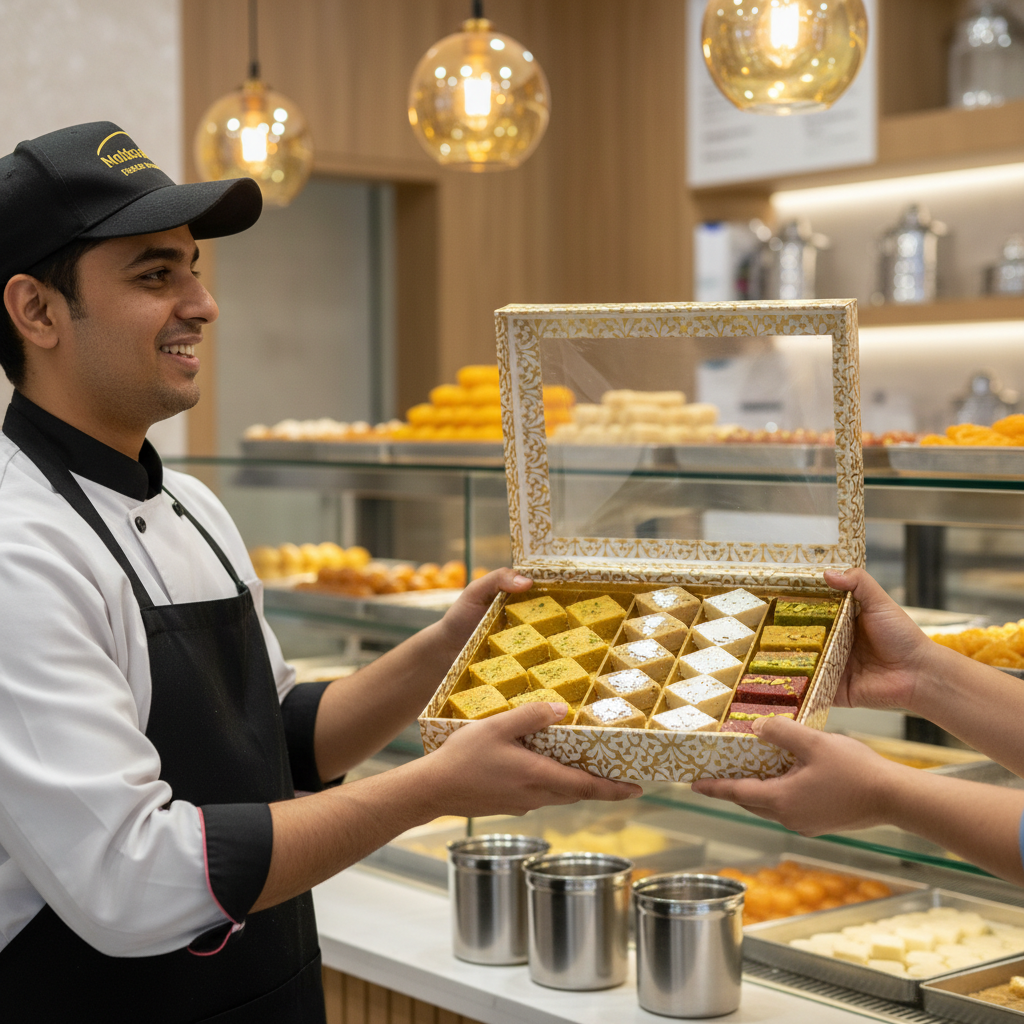
Keep besan barfi airtight at a cool room temperature for short-term freshness, or refrigerate to extend shelf life. For events, transport in snug boxes to minimize jostling, then bring to room temperature 20–30 minutes before serving to revive ghee aroma and melt-in-mouth texture.
In Brampton’s seasonal swings, a bit of planning preserves texture and sheen. Cool rooms keep the set firm. Refrigeration helps through longer timelines, but always allow pieces to warm slightly before serving—this wakes up the ghee fragrance and soft bite guests expect.
- Short-term hold: 1–3 days airtight at cool room temperature away from sunlight.
- Extended hold: Up to a week refrigerated; always let return to room temperature before service.
- Transport: Pack snugly with separators so squares don’t shift. Keep boxes flat and shaded.
- Display: For ceremonies and offices, use shallow layers for quick, clean access and tidy refills.
We design our gift-ready packages to protect edges and keep liners clean. That’s part of our “Elegance in Every Box” promise—your reveal should look as refined as it tastes.
Planning Quantities for Events and Gifting
Plan 2–3 small squares per guest for mixed platters, or 4–6 squares in personal favor boxes, adjusting for assortment variety and meal timing. For receptions with multiple desserts, lean toward the lower range; for tea-time or prasad-focused events, plan slightly higher.
Quantities depend on context. If sweets follow a full meal, guests sample less. If tea and snacks lead, expect higher uptake. When your assortment includes many varieties, the per-flavor count per guest can be modest because people enjoy tasting across the selection.
- Mixed platters: 2–3 pieces of besan per guest when paired with 2–3 other sweets.
- Favor boxes: 4–6 total squares across flavors; include at least one besan for balance and color.
- Office trays: Pre-cut uniform squares speed distribution and limit handling.
- Ceremonies: Add pale and green-toned barfi for visual depth around golden besan.
Need help sizing? Our Brampton team matches quantities to guest count and event flow. We’ll coordinate pickup windows to keep freshness high without last-minute rushes.
Flavor Pairings and Assortment Design
Anchor the box with golden besan, then add pale kaju and green pista for color contrast. Layer textures—clean snap next to tender melt—so guests experience a satisfying arc. Finish with a nut garnish that ties hues together for a polished, celebratory look.
We think of a sweets box like a small gallery: color balance, texture variation, and rhythm across bites. Besan brings warmth and structure. Kaju adds milky clarity. Pista offers a fresh nut scent and a jewel-green accent. This trio reads festive in photos and even better during shared tastings.
- Color theory: Gold (besan) + ivory (kaju) + green (pista) creates depth and contrast.
- Texture arc: Alternate firm-set and meltier styles to keep interest high across bites.
- Garnish unity: Use pistachio dust or slivers to visually connect squares without overpowering flavors.
To explore combinations beyond the classics, review our barfi varieties overview and round out your assortment with seasonal picks—always anchored by reliable besan squares for tidy stacking and distribution.
Case Studies and Examples from Our Kitchen
In weddings, Diwali assortments, and corporate trays across Brampton, besan barfi consistently anchors the box. Its clean set reduces packing time, holds edges through transport, and makes the reveal look composed—key wins when you’re preparing dozens or hundreds of favors.
We’ve refined these approaches through seasons and celebrations, balancing tradition with modern presentation. Below are snapshots that show how reliable technique translates into beautiful, practical results when volume and timing matter.
- Wedding return gifts: Boxes of three to four barfi styles with besan as the base flavor stack neatly and present uniform color blocks in photos.
- Festival assortments: During Diwali, golden besan next to ivory kaju and green pista creates immediate visual abundance that guests recognize and love.
- Corporate trays: Individually portioned, clean-cut squares speed distribution at offices, minimizing handling time and keeping linens spotless.
For more pairing ideas that photograph beautifully and taste balanced, our popular Indian desserts guide offers proven combinations Brampton hosts return to year after year.
Frequently Asked Questions
Common besan barfi questions center on ingredients, texture, and storage. The base is roasted chickpea flour set with ghee and syrup, it holds shape at room temperature, and it keeps best airtight. For Brampton events, plan lead time for box design and pickup windows.
Is besan barfi the same as besan burfi?
Yes. “Barfi” and “burfi” are alternate spellings for the same mithai. Both describe roasted chickpea flour bound with ghee and one-string syrup, cut into squares and often finished with cardamom and pistachios.
How do I keep besan barfi from turning greasy?
Grease seepage usually points to under-roasted flour or an imbalanced ratio. Roast on medium-low until deeply aromatic, verify one-string syrup with a thermometer, mix briskly when combining, and let the slab set fully before cutting and boxing.
Is besan barfi gluten-free?
Besan is chickpea flour and does not contain gluten. The core recipe—besan, ghee, sugar, and cardamom—is gluten-free by ingredients. For strict needs, confirm kitchen processes to avoid cross-contact during preparation and boxing.
How long does besan barfi keep?
In an airtight container, keep at cool room temperature for 1–3 days. Refrigerate to extend up to a week, then bring pieces back to room temperature before serving so the ghee aroma and soft, melt-in-mouth bite return.
Conclusion and Next Steps
Besan barfi shines because it’s dependable, elegant, and nostalgic. Master an even roast and a one-string syrup for perfect texture—or let a professional halwai team handle it. In Brampton, The Mithai Maharaja crafts gift-ready boxes and platters anchored by golden, melt-in-mouth besan.
Whether you’re ordering for a celebration or cooking at home, hold to the fundamentals: slow roast for aroma, verify syrup for structure, mix decisively, and cut once properly set. For gifting, build a color story—golden besan beside pale kaju and green pista—for a reveal that looks royal and tastes balanced.
Key takeaways
- Even roasting and one-string syrup are the decisive controls for texture and set.
- Besan barfi anchors assortments because it stacks neatly and travels well.
- Use color contrast—gold, ivory, green—to create a regal presentation in boxes.
- Store airtight, serve at room temperature, and plan 2–3 pieces per guest on mixed platters.
Ready to curate a box or tray? Start with golden besan, then add contrasts. For ideas and options, explore our barfi flavor ideas, or choose ready assortments like plain barfi and roasted barfi. Our team in Brampton can coordinate design and pickup windows for weddings, festivals, and corporate gatherings.