Ghee ladoo is a classic Indian sweet made by roasting flour in pure desi ghee, binding it with sugar, and shaping into soft, round treats. It delivers nutty aroma, melt-in-mouth texture, and festive appeal. In Brampton, The Mithai Maharaja crafts ghee ladoo using fifth-generation halwai methods and premium ingredients for consistent flavor and gifting.
By The Mithai Maharaja • Last updated: 2026-05-28
Quick Summary and Table of Contents
This guide explains what ghee ladoo is, why it matters in celebrations, and how it’s made step-by-step by halwais. You’ll see key variations, pro techniques, storage tips, and Brampton-specific notes. Use it to choose, serve, or gift ladoo confidently—whether for family dinners, festivals, or corporate celebrations.
- Definition, ingredients, and cultural role
- Why ladoo excels for festivals, gifting, and catering
- Step-by-step method with exact cues and timings
- Popular types: besan, motichoor, rava, atta, dry fruit
- Best practices, allergen notes, and storage windows
- Local considerations for Brampton celebrations
What Is Ghee Ladoo?
Ghee ladoo is an Indian sweet made by roasting a base (often gram flour) in clarified butter, mixing with sugar and aromatics, then shaping into balls. Balanced roasting (12–18 minutes) unlocks a nutty aroma. Ladoo travels well, suits vegetarian diets, and anchors festival boxes, wedding favors, and everyday treats.
At its core, ghee ladoo combines three essentials: a flour or crumb base, pure desi ghee, and sugar. Many families add cardamom, saffron, or nuts. The result is a rounded sweet that’s easy to portion, gift, and share.
- Base choices: gram flour (besan), boondi (motichoor), semolina (rava/sooji), whole wheat (atta), or nut/dry-fruit blends.
- Binding: warm ghee creates a cohesive, soft crumb; sugar (powdered or syrup) provides structure once cooled.
- Aromatics: cardamom, saffron, and roasted nuts personalize the profile without overpowering the ghee.
At The Mithai Maharaja, we apply fifth-generation halwai discipline to each batch—maintaining even heat, predictable bind, and elegant finishing. For explorers, our ladoo varieties overview walks through textures and flavors you can try across seasons.
Why Ghee Ladoo Matters
Ghee ladoo matters because it pairs long shelf life with reliable texture, travel readiness, and vegetarian appeal. The format fits elegant packaging and portion control. In events and festivals, ladoo anchors assortment boxes, sustains aroma for days, and pleases diverse palates without elaborate plating.
For Brampton families and event planners, simplicity meets ceremony. Ladoo packs firm, maintains structure during transport, and shines in gift boxes. A well-made batch retains its aroma for 3–5 days at room temperature in cool weather and 5–7 days refrigerated, which covers most festival weeks and office celebrations.
- Portion-perfect: 1–2 pieces (30–40 g each) suit dessert rounds and tea breaks.
- Presentation-friendly: garnish with pistachio or silver leaf for instant polish.
- Versatile pairing: serve beside gulab jamun or salty snacks to balance sweetness.
We see two common scenarios: wedding favors that must hold shape for hours, and corporate gifts that travel across the GTA. Ladoo handles both with grace, keeping quality without on-site reheating or plating.
How Ghee Ladoo Is Made (Step-by-Step)
Halwais make ghee ladoo by roasting the base in ghee over low heat, adding sugar and aromatics, cooling to the binding window (95–105°F), and shaping uniform rounds. Precision in roasting time (12–18 minutes) and sugar integration (powder or syrup) determines crumb, moisture, and shelf life.
Each style follows the same logic: unlock aroma, bind, and set. Here’s a practical, home-scale framework inspired by our halwai workflow.
- Prep the base: Sieve 1 cup besan (or chosen base). Fine particles roast evenly, reducing clumps.
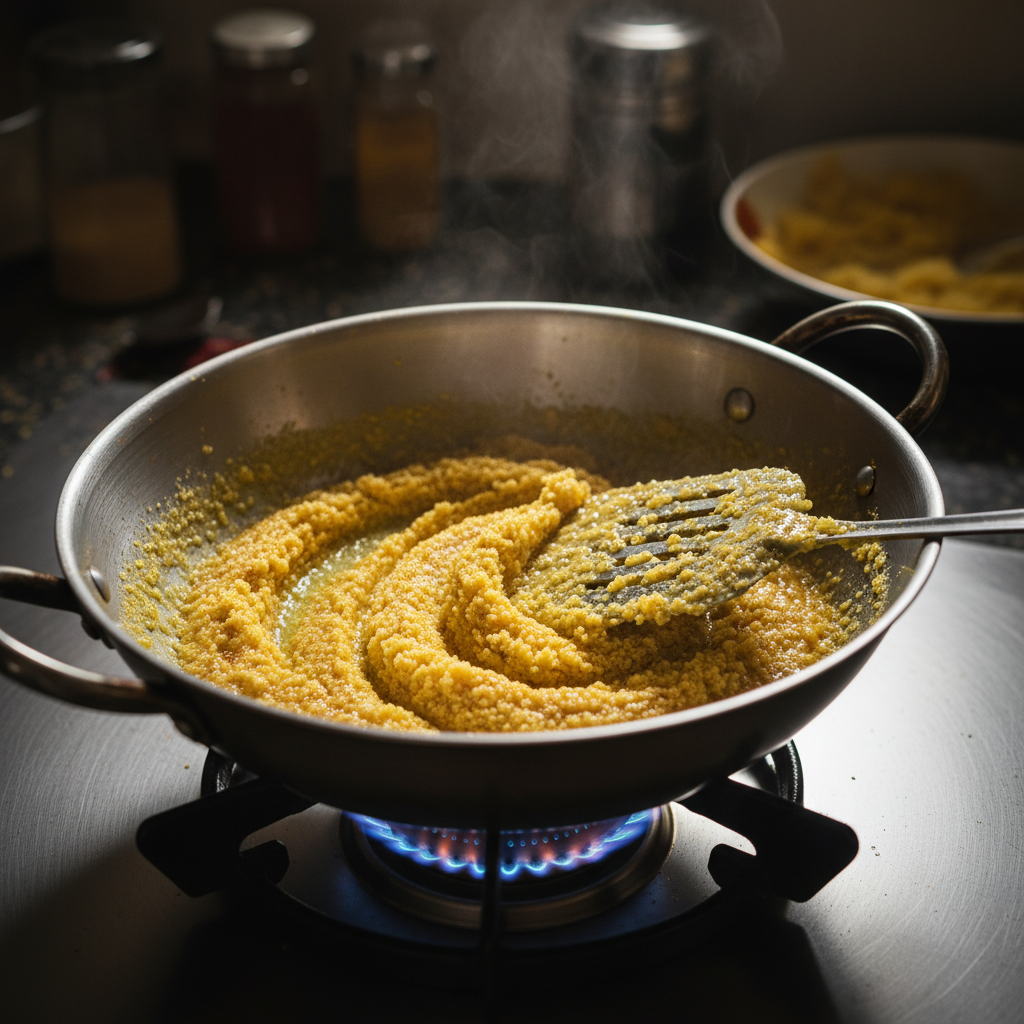
- Roast in ghee: Add 4–5 tablespoons warm ghee to a heavy kadhai. Stir constantly on low heat 12–18 minutes until the flour turns golden and smells nutty.
- Cool to bind: Spread the mixture on a tray for 5–7 minutes to reach the safe binding window (about 95–105°F). Too hot melts sugar; too cool crumbles.
- Sweeten and flavor: Fold in 1/2–3/4 cup powdered sugar, 1/2 teaspoon cardamom, and 2–3 tablespoons chopped nuts. For motichoor, use a light sugar syrup (one-string) instead.
- Shape: Portion 30–40 g scoops, press firmly, and roll into balls. If too dry, add 1–2 teaspoons warm ghee; if too sticky, rest 3–5 minutes.
- Set and store: Let shaped ladoo rest 30–40 minutes before boxing. Store in airtight containers away from direct heat.
In our kitchen, we track texture by feel and temperature. Consistently sized portions not only look better in gift boxes but also deliver even mouthfeel. For broader context on Punjabi sweets craft, see our Punjabi sweets guide.
Types and Variations of Ghee Ladoo
Popular ghee ladoo styles include besan (nutty crumb), motichoor (fine pearls bound in syrup), rava/sooji (grainy-soft), atta (whole-wheat warmth), and dry-fruit/panjiri (rich, nutrient-dense). Each balances sweetness, texture, and shelf life differently, letting you match boxes to season, event length, and audience.
Core styles you’ll encounter
- Besan ladoo: Gram flour roasted in ghee, powdered sugar binding; classic, aromatic, and stable for 3–5 cool-weather days.
- Motichoor ladoo: Tiny boondi pearls fried, then bound with light syrup; delicate bite and festive color.
- Rava/sooji ladoo: Semolina base, slightly grainy-soft texture, aromatic with ghee and cardamom.
- Atta ladoo: Whole wheat flour, cozy and hearty; pairs well with nuts and jaggery variations.
- Dry-fruit/panjiri-style: Crushed nuts and edible gum options; energy-dense, elegant in premium mithai boxes.
When to choose which
- For travel or shipping: Besan and atta hold shape best; aim for 30–35 g each.
- For weddings: Motichoor reads celebratory; garnish with silver leaf or pistachio dust.
- For winter gatherings: Atta and dry-fruit varieties feel warming and robust.
If you’re curating a mixed box, start with 2–3 types and vary textures. Our besan barfi guide pairs naturally with besan ladoo for a nutty-focused set, while sooji halwa tips inform your semolina choices.
| Type | Base | Texture | Sweetness | Shelf Life (days) | Best For | Notes |
|---|---|---|---|---|---|---|
| Besan | Gram flour | Soft, nutty crumb | Medium | 3–5 (cool), 2–3 (warm) | Gift boxes, travel | Very forgiving; beginner-friendly |
| Motichoor | Boondi pearls | Fine, delicate | Medium–High | 2–4 | Weddings, festivals | Requires syrup finesse |
| Rava/Sooji | Semolina | Grainy-soft | Medium | 2–4 | Tea-time, mixed assortments | Watch roasting for aroma |
| Atta | Whole wheat | Hearty, cozy | Medium | 3–5 | Winter boxes | Pairs with nuts/jaggery |
| Dry-Fruit | Nut blend | Rich, dense | Medium | 3–5 | Premium gifting | Elegant, energy-dense |
Best Practices for Perfect Ladoo
Perfect ghee ladoo comes from low heat, patient roasting, and a precise binding window. Sieve the base, stir nonstop 12–18 minutes, cool 5–7 minutes, then fold sugar and aromatics. Portion 30–40 g, roll firmly, and set 30–40 minutes. Airtight storage preserves aroma and prevents moisture swings.
Halwai-level tips
- Control heat: Low flame prevents scorched notes; color shift is gradual from pale to golden.
- Bind at the right temp: Too hot dissolves sugar; too cool crumbles. Aim near body temperature.
- Season smart: Cardamom supports, saffron accents; add 1–2 teaspoons ghee if the mix feels sandy.
- Uniform sizing: Use a scoop or scale for 30–40 g rounds and consistent gifting aesthetics.
- Set time: Allow at least 30 minutes before boxing to avoid imprinting and moisture traps.
Local considerations for Brampton
- Plan for cool winters and humid summers: in humid weeks, move boxes to a cooler room and keep them sealed.
- Festival rush peaks around Diwali and Vaisakhi; pre-ordering ensures fresh batches and preferred garnishes.
- For office celebrations, request mixed boxes with 2–3 varieties to accommodate varied sweetness preferences.
We translate these habits into every festive order. If you want a visual of pearl-sized boondi, check our boondi laddoo listing before finalizing a gifting set.
Tools and Resources
A heavy kadhai, flexible spatula, fine sieve, mixing bowl, and airtight containers cover essentials. For motichoor, add a boondi ladle and a candy thermometer (one-string syrup). Food-safe gloves and rigid boxes protect texture during transport and gifting.
- Cookware: heavy-bottom kadhai, saucepan for syrup, silicone spatula, ladle.
- Prep tools: fine sieve, measuring cups/spoons, small scoop or scale (30–40 g portions).
- Packaging: rigid gift boxes, food-safe papers, and moisture barriers for travel.
- Safety: gloves for shaping hot mixtures; thermometer for consistent syrups.
Gifting design matters. While you build a dessert table, browsing thoughtful gifting ideas can spark color and theme choices for your sweets spread. For a complementary dessert reference, compare textures with this baklava showcase to align crunch and syrup notes alongside ladoo.
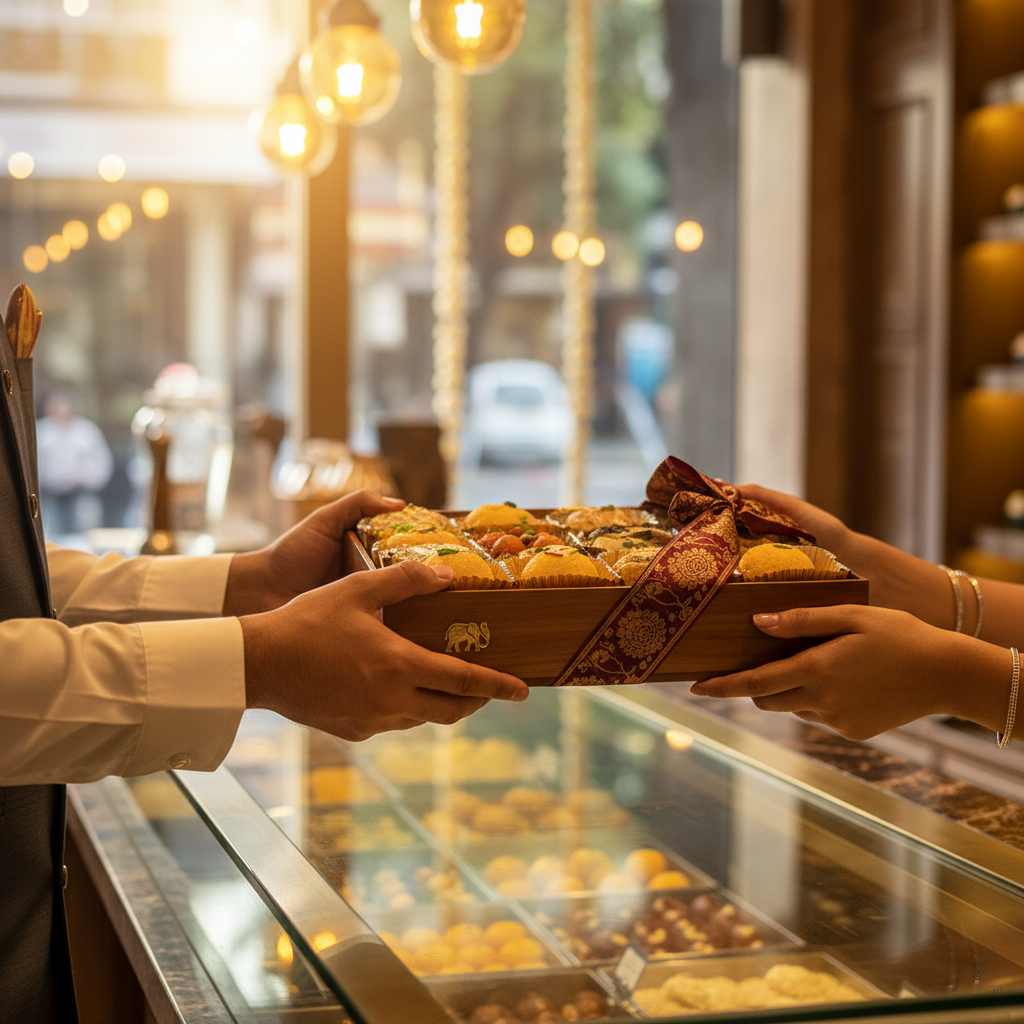
Planning a celebration in Brampton? Our fifth-generation halwai team prepares fresh ladoo assortments for festivals, weddings, and office events. Explore our ladoo varieties guide or start with classic boondi laddoo for a festive centerpiece.
Case Studies and Real Examples from Brampton
In our Brampton shop, ghee ladoo regularly anchors wedding favors, Diwali boxes, and corporate gifts. The common thread: consistent size (30–40 g), elegant garnish, and airtight packaging. Across dozens of orders each season, this trio protects aroma, bite, and presentation over multi-hour events and courier trips.
Wedding favor set (100–300 guests)
- Mix: motichoor + besan for contrast; silver leaf on motichoor, pistachio on besan.
- Portions: two pieces per guest; boxes sealed after a 30–40 minute set.
- Result: uniform visuals in photos; stable bite through a 4–6 hour reception.
Diwali office box (team of 25–50)
- Mix: besan + atta + dry-fruit for varied textures.
- Portions: 2–3 pieces per person; airtight containers prevent humidity creep between meetings.
- Result: aroma stays vivid for 3–5 days in cool rooms, covering the workweek.
Family celebrations (weekend gatherings)
- Mix: rava/sooji as tea-time star with a few motichoor for color.
- Portions: 1–2 pieces per person with chai; refill-friendly box for casual serving.
- Result: minimal plating; consistent sweetness across ages.
For more dessert inspiration, our gulab jamun spotlight shows how syrupy desserts balance a ladoo-led spread.
Frequently Asked Questions (FAQ)
These are the most common ghee ladoo questions we hear in our Brampton shop. Each answer is concise and practical, based on day-to-day halwai experience.
How long does ghee ladoo stay fresh?
In cool weather, ghee ladoo keep well for 3–5 days at room temperature in airtight containers. In warmer weeks, refrigerate for 5–7 days and bring to room temperature before serving. Avoid direct sunlight and repeated lid opening, which can affect aroma and moisture.
Is ghee better than oil for ladoo?
For traditional aroma and mouthfeel, yes—ghee is preferred. It roasts flour evenly at low heat and sets the crumb when cooled. Neutral oils can work, but they often miss the nutty depth and may alter binding timing, especially when using powdered sugar.
Which ghee ladoo type travels best?
Besan and atta ladoo are the most travel-ready. They hold shape for hours, handle minor bumps, and fit snugly in rigid boxes. Motichoor is excellent for events but needs careful syrup control and airtight packaging for longer trips.
Can I freeze ghee ladoo?
Freezing can dull aroma and slightly change texture. If you must, wrap portions tightly and thaw in the refrigerator before bringing to room temperature. We recommend making smaller fresh batches or ordering closer to your event date for best flavor.
Conclusion and Next Steps
Ghee ladoo succeeds because it’s reliable, celebratory, and easy to serve. Choose the right type for your event, control heat and binding, and package airtight. For Brampton celebrations, our halwai team crafts assortments that travel well, look elegant, and deliver timeless flavor.
- Key takeaways: roast patiently, bind warm, size uniformly, and set before boxing.
- Match varieties to needs: besan for travel, motichoor for weddings, atta/dry-fruit for winter warmth.
- Plan ahead for festival weeks to align freshness with your event schedule.
Ready to build a festive box? Explore our guide to ladoo styles and add a touch of syrupy comfort with our gulab jamun picks. For planning décor and dessert tables, even this creative inspiration post can help you think about color and mood while you finalize sweets.
Related Articles and Sweets to Explore
Build a balanced dessert experience by pairing ladoo with barfi, halwa, and syrupy sweets. These resources help you understand textures, presentation, and serving order so your box or dessert table feels complete and memorable.
Learn how nutty profiles differ in our besan barfi guide, and browse practical semolina insights in this sooji halwa guide. For a cultural overview of what makes Punjabi mithai special, skim our Punjabi sweets explainer before you finalize assortments.