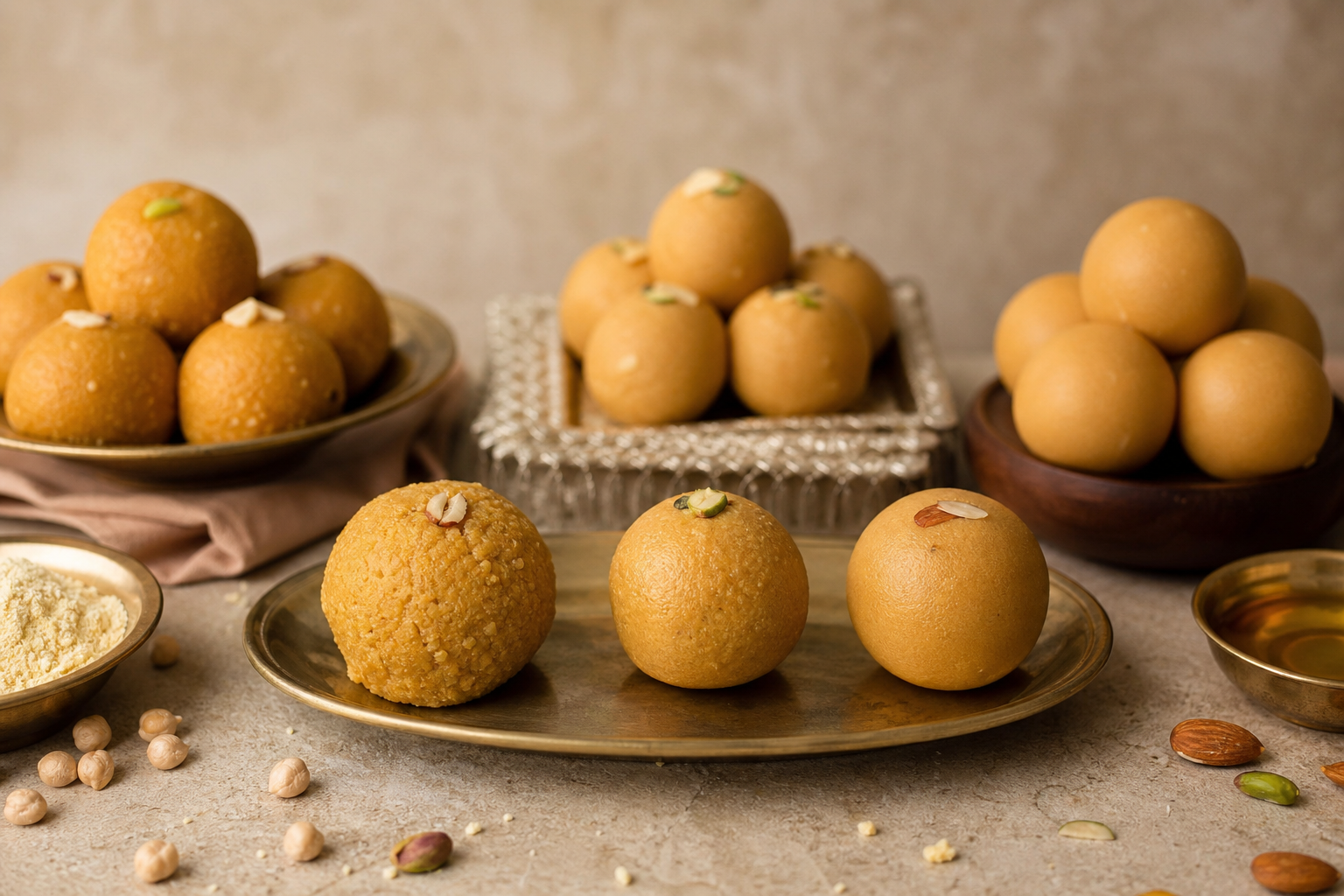
Besan ladoo compared: homemade, mithai shop and mass-produced
Besan ladoo is a classic mithai at Diwali and family celebrations, but not every ladoo is made the same. This article gives a practical comparison you can use in store or online. Read seven sensory and ingredient checks that signal quality, a quick in‑person test, the tradeoffs between homemade, premium mithai‑shop, and mass‑produced options, plus a short Brampton buying note with ordering links.
Seven things to check before you buy
Use these criteria when you sample a ladoo, read a product description, or ask staff. They are ranked by how often they reveal genuine quality differences.
- Aroma — A fresh, nutty roasted chickpea scent indicates recently roasted besan and the right degree of cooking.
- Roast and colour — Properly roasted besan darkens to an even golden hue rather than remaining raw pale yellow or becoming burnt brown.
- Texture inside — A good ladoo is smooth with a mild granular note, binds without being crumbly, and does not feel gritty.
- Ghee quality — Pure desi ghee gives a subtle milkfat aroma and clean mouthfeel; cheap or hydrogenated fats leave a waxy aftertaste.
- Oiliness — Slight sheen is normal, but excess surface oil or a greasy feel means too much fat or poor storage.
- Sweetness balance — Sugar should support the roasted flavour, not dominate it. Overly sweet ladoo often mask undercooked besan or inferior fat.
- Packaging and date information — For shop or online purchases, check packaging date, ingredient list, and storage instructions to confirm freshness and handling standards.
Checklist details: aroma, roast and colour, texture, ghee quality, oiliness, sweetness balance and packaging
Aroma is the quickest sign. Sniff for a warm, nutty scent from roasted besan and a clean milkfat note from desi ghee. Buying guides emphasise that freshness and grind fineness make the biggest difference for sweets, so prefer recently packaged, fine besan for ladoo testing and for home use Which Besan to Keep at Home.
Watch roast and colour. When besan is roasted correctly it darkens to an even golden shade and releases a fragrant aroma. Recipe sources list colour change and aroma during roasting as primary signals that cooking reached the right point without burning Besan Ladoo Recipe: Perfect Indian Sweet with Pure Ghee and practical makers advise monitoring both smell and colour as you roast Besan Ladoo Recipe.
Handle a sample to judge texture. A well made ladoo holds shape, breaks cleanly, and feels soft on the tongue with a mild granular note. Dry and crumbly suggests under‑roasting or too little fat. Excessively smooth and greasy suggests overly processed flour or excess oil.
Ghee quality matters. Ask whether the shop uses pure desi ghee and, if ordering online, seek an ingredient list that names ghee rather than vegetable shortening or hydrogenated fats. Authentic recipes emphasise pure ghee because it contributes aroma and shelf behaviour, and recipe guides note that the choice of fat alters both taste and mouthfeel recipe reference.
Finally check packaging. For packaged or store‑bought ladoo look for a clear packaging or production date and a full ingredient list. Absence of dates or vague ingredient terms makes it harder to verify freshness. If buying for an event, request a preparation or packing date to decide how long the sweets can be safely kept before serving.
How to test a besan ladoo quickly in store or online
Follow these exact steps during an in‑store tasting or when you read a product page. If you are buying for a wedding or corporate event, save this short checklist to share with your team.
- Smell first. Hold the ladoo near your nose. A fresh product smells nutty and toasty. If you detect a stale, cardboard, or rancid note, decline.
- Look at colour. Expect an even golden tone. Dark brown spots or uneven patches suggest partial burning.
- Break it open. The inside should be consistently roasted, not raw or overly oily.
- Taste a small piece. Notice the roast, the balance of sugar and ghee, and any off flavours. A clean, warm finish is good.
- Ask one direct question: "Do you use pure desi ghee in this recipe?" If staff cannot clearly say yes and name the source or brand, treat the claim with caution.
- For online orders, check the product description for ingredient list and packaging date, and request a photo of the packing label if it is not shown.
If you want a printable single page, use these six bullet items: aroma, colour, internal texture, mouthfeel, oiliness, and ingredient source. For roasting cues and technique see practical guides that describe colour and aroma changes during roasting besan ladoo recipe and ghee‑focused instructions here.
Homemade, mithai shop and mass-produced compared
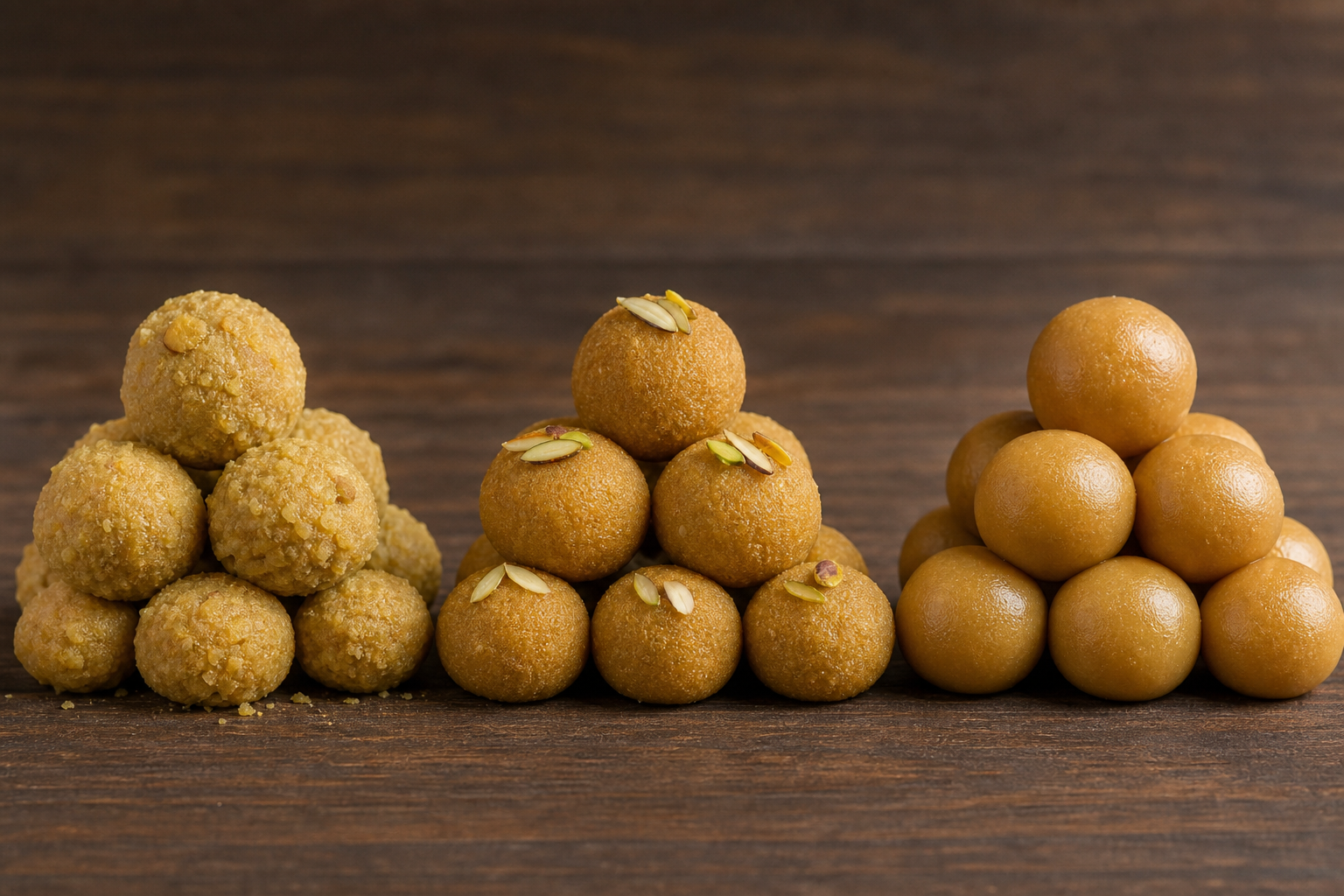
This section highlights typical tradeoffs so you can match a choice to your need: gifting, catering, or everyday use.
-
Homemade
- Taste and texture: Often freshest with a recognisable roast and personalised sweetness. Home cooks can tune roast and ghee quantity to taste.
- Shelf life and stability: Shorter than commercial options because packaging and preservatives are minimal.
- Best for: Small family gatherings, personalised flavours, and when you want a handmade touch.
-
Mithai shop or premium craft maker
- Taste and texture: A skilled halwai reproduces traditional roast depth and uses pure desi ghee, so flavour is consistent and authentic.
- Packaging and gifting: Shops offer gift‑ready boxes and can provide packing dates and ingredient lists, which help for events.
- Best for: Weddings, corporate gifts, and larger orders where presentation and consistent quality matter.
-
Mass‑produced or store brand
- Taste and texture: Formulation focuses on shelf stability, uniformity, and cost. Flavour can be sweeter and less roasted in profile.
- Shelf life and convenience: Longer shelf life and wide availability make these sensible when you must store for days or buy in bulk at low cost.
- Best for: Budget events, long term storage, or when availability is the priority over artisan quality.
For a sense of traditional preparation and what to expect from handcrafted ladoo recipes, mainstream sources include stepwise roasting and form tests used in home and professional kitchens besan ladoo recipe and general how‑to resources How to make besan ladoo.
Storage, transport and serving rules for events and gifting
Plan around three realities: ghee softens with heat, roasted besan continues to develop aroma over a short period, and packaging affects presentation. For travel and events keep ladoo in a cool place away from direct sunlight and heavy heat. Use airtight boxes during transport to limit moisture and odour transfer. If you are ordering boxed gifts ask the shop about box insulation or chilled packing for summer events to maintain shape and mouthfeel.
When arranging a dessert table, place besan ladoo away from warm chafing dishes and direct heat. Label boxes with a packing date and simple storage instructions for recipients so they can keep the sweets fresh after opening.
Food‑safety, allergens and authenticity claims to verify
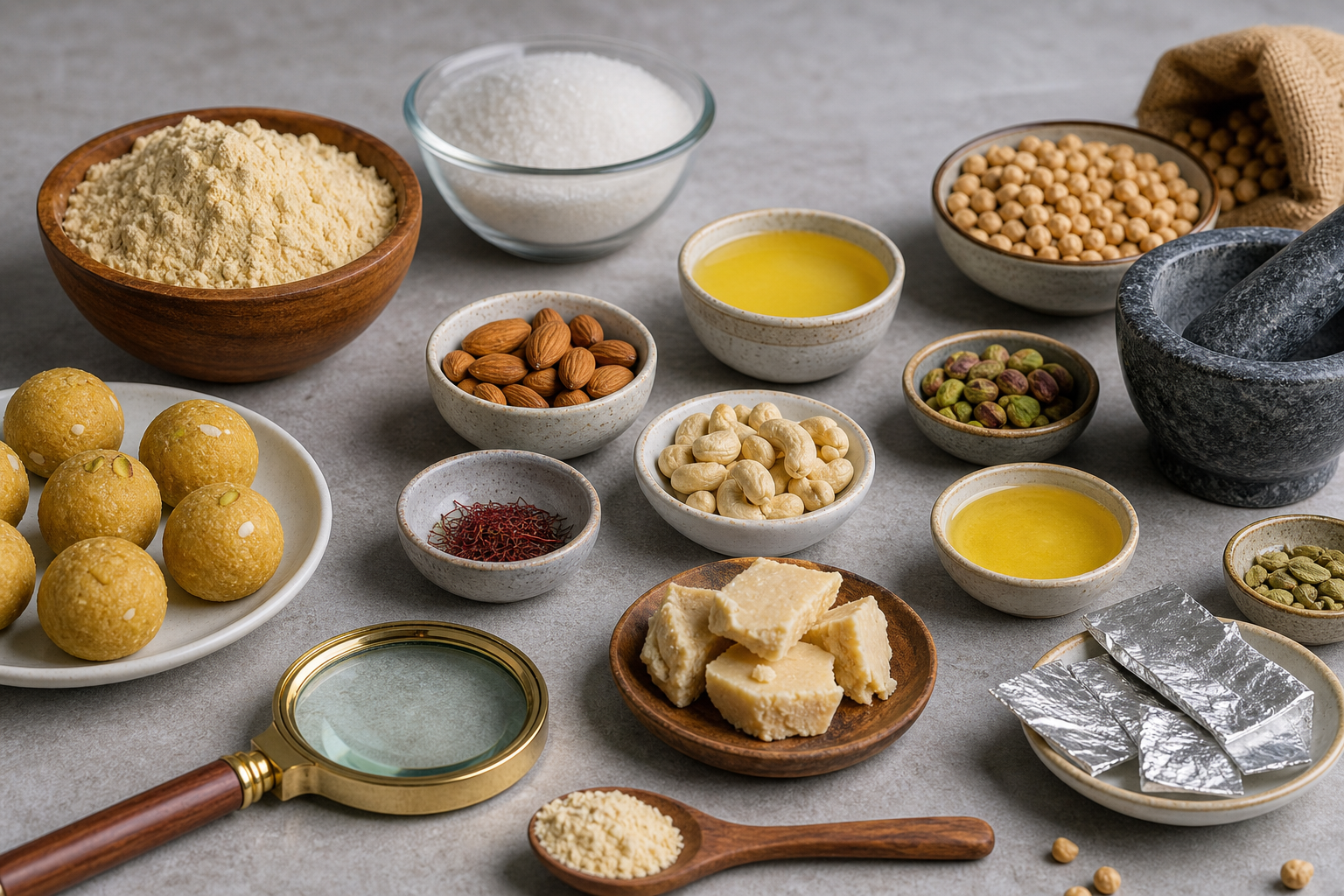
Always ask for an ingredient list when you buy, and request the packaging or production date for prepared sweets. Confirm whether the producer uses pure desi ghee, as many premium shops state this in product listings and on request. The Mithai Maharaja lists handcrafted sweets and traditional halwai methods on their site, and you can view their besan ladoo product details when you decide to order besan ladoo or check the store homepage The Mithai Maharaja for heritage and ingredient notes.
For allergies, besan is chickpea flour and not a tree nut, but cross contamination is common in mixed sweet kitchens. If you must avoid nuts or sesame, ask the shop for a clear statement and, if possible, a separate preparation area. Do not accept broad claims like "allergen free" without a written ingredient list or written confirmation from the producer.
Which option to choose for gifting, catering or daily treats
Use this simple decision rule. Choose homemade for intimate gatherings where a personal touch matters. Choose a premium mithai shop when you need presentation, consistent quality, and the option to scale for a wedding or corporate gifts. Choose mass‑produced options when shelf life and cost are the priority and you must store sweets for several days before an event.
If you plan a wedding or a large function and want a traditional taste with gift presentation, a mithai shop with heritage halwai expertise is the pragmatic choice because they can provide packing dates, standardised boxes, and larger, consistent batches. For local ordering of handcrafted ladoo and gift boxes in Brampton, check The Mithai Maharaja product page for besan ladoo and online ordering options.
Where to buy in Brampton and how to order from The Mithai Maharaja
The Mithai Maharaja operates in Brampton and presents a range of handcrafted mithai, including besan ladoo, with an online Shopify storefront for browsing and pickup. If you prefer to inspect samples, visit the shop in person or request a tasting when placing a catering or gifting order. The store offers gift‑ready packaging suited for weddings and festivals and lists heritage preparation as part of its product descriptions on the site The Mithai Maharaja and the specific besan ladoo page besan ladoo.
Frequently asked questions
How can I tell if the besan or ghee used in a ladoo is fresh and pure
Smell and taste. Fresh besan has a warm nutty aroma after roasting, and pure desi ghee offers a clean milkfat aroma and mouthfeel. Ask for an ingredient list and a packing or production date if you cannot confirm by scent. Buying guides emphasise freshness and grind fineness for sweets, so prefer recently packaged fine besan when possible guide on besan.
How should I store besan ladoo before an event or when shipping them as gifts
Keep them in an airtight container away from heat and direct sunlight. For longer travel or hot weather consider insulated packing. Place boxes in a cool part of your vehicle and avoid leaving them in hot trunks. If ordering from a shop, request packing date details so you know how recently they were made.
Can I order besan ladoo in bulk for a wedding or corporate event in Brampton
Yes, many mithai shops handle bulk orders with gift packaging. Contact the shop directly to confirm minimums, pick up windows, and packing options. The Mithai Maharaja lists catering and gift boxes on its site and offers online ordering for many sweets The Mithai Maharaja.
Are besan ladoo generally safe for people with nut allergies and what should I ask the shop
Besan is chickpea flour, but cross contamination with tree nuts or sesame can occur in mixed kitchens. Ask the shop whether they handle nuts in the same area, and request a written ingredient list and a statement on cross contamination if the allergy is severe.
What are the quick signs that a besan ladoo has been overcooked or is too oily
Overcooked ladoo have a bitter or burnt aftertaste and uneven dark patches. Too oily ladoo feel greasy to the touch and may leave oil stains on paper. Both are signs to reject the batch for gifting.
If you need handcrafted besan ladoo and gift‑ready packaging for an event, consider contacting The Mithai Maharaja through their website to view product options and place an order. Visit The Mithai Maharaja for product details and online ordering.