What soan papdi is and what to expect?
Soan papdi is a South Asian sweet defined by delicate, flaky layers and a fibrous, melt-in-the-mouth texture. Traditional preparation involves roasting flour, making a concentrated sugar syrup, and combining these with fat while pulling or layering the mixture so it separates into threadlike flakes rather than a smooth block. The result should feel light and airy, with a fine fibrous snap followed by rapid melting on the tongue. For a practical description of the preparation stages and why texture matters, see a stepwise home production guide.
Source: a stepwise how-to overview of soan papdi production (slurrp).
Why a short checklist helps you decide?
At the point of purchase, online, in a shop, or when briefing a caterer, you need compact, observable criteria to compare options quickly. Short checklists reduce uncertainty and make decisions defensible by listing clear items to inspect or ask about. Guidance on checklist design and decision aids emphasises concise, usable items and explicit tradeoffs so users can compare vendors reliably. Use a compact checklist for soan papdi to turn sensory expectations into repeatable checks you can perform in-store, on a product page, or in an order request.
Sources: checklist design and decision aid standards (APS Academy, SUNDAE checklist research).
Decision checklist: 8 quick checks to judge soan papdi
Use these eight checks in sequence. Spend no more than a minute per item in a shop, or include them in your ordering notes when you contact a vendor.
1. Texture and structural snap
What to expect: a light, fibrous flake structure that separates into thin threads rather than crumbling or compressing like fudge. How to test: if a sample is available, press gently with a fingertip to feel layered flakes. Online, look for descriptive language about layering and a clear photo showing visible strands. A dense or greasy mouthfeel suggests process or proportion issues.
2. Ingredients and aroma signals
What to look for: a mild roasted aroma from the flour, balanced sweetness, and transparent ingredient disclosure. Traditional recipes use refined flour, sugar syrup and fat; premium makers may highlight desi ghee or roasted chickpea flour for depth. Ask the vendor whether desi ghee is used if that matters to you, and request an ingredient list for allergy or dietary checks.
3. Appearance, finish and layering
Visual cues matter: even, pale golden layering, an absence of large oily patches, and visible nuts or cardamom when those flavours are claimed. Good soan papdi shows consistent fibre formation across each piece. Large untextured gaps or a heavy sheen indicate overcooking or excess fat.
4. Packaging and gift readiness
For gifting, check that boxes are rigid, include internal separators or inserts, and prevent pieces from shifting during transit. Packaging should protect fragile flakes from compression and humidity. When choosing a gift box, prefer a presentation that keeps pieces individually supported and clearly labelled for ingredients and storage.
See local packaging and gifting examples for soan papdi at The Mithai Maharaja’s dedicated guidance (soan papdi gifting 2026) and browse current sweets on the storefront (The Mithai Maharaja).
5. Vendor transparency about production method
Ask whether the vendor produces soan papdi in small batches and whether finishing is hand-done or fully mechanised. Vendors who describe technique, batch sizes or roasting approaches give stronger assurance because process details often correlate with consistent texture and flavour. If a vendor cannot explain basic production steps, sample first or order a small quantity.
6. Suitability for the event or recipient
Decide whether soan papdi fits the occasion. It works well in curated gift boxes, festival assortments and plated dessert selections. It is fragile for buffet-style self-serve stations without protective packaging. For corporate gifts, choose individually boxed pieces or small branded boxes with separators so recipients receive an intact item. Consider recipient preferences: the flaky texture appeals to many South Asian sweet fans but may be unfamiliar to guests who expect dense sweets.
7. Transport and storage considerations
Soan papdi is prone to crushing and humidity damage. For local pickup or delivery in the GTA, choose boxes with internal support and request handling instructions to keep the box flat. For courier shipments, ask the vendor to wrap individual pieces and use a protective external box to reduce movement and absorb shocks.
8. Value signals and a simple decision rule
Compare price against observable quality signals above. If texture, ingredients, packaging and vendor transparency all check out, proceed to buy. If two or more items fail, ask for a sample or choose an alternative sweet for gifting. Practical rule: sample a small piece before buying a large box, and for events, test a sample batch before confirming a large order.
When to choose soan papdi for gifting or events
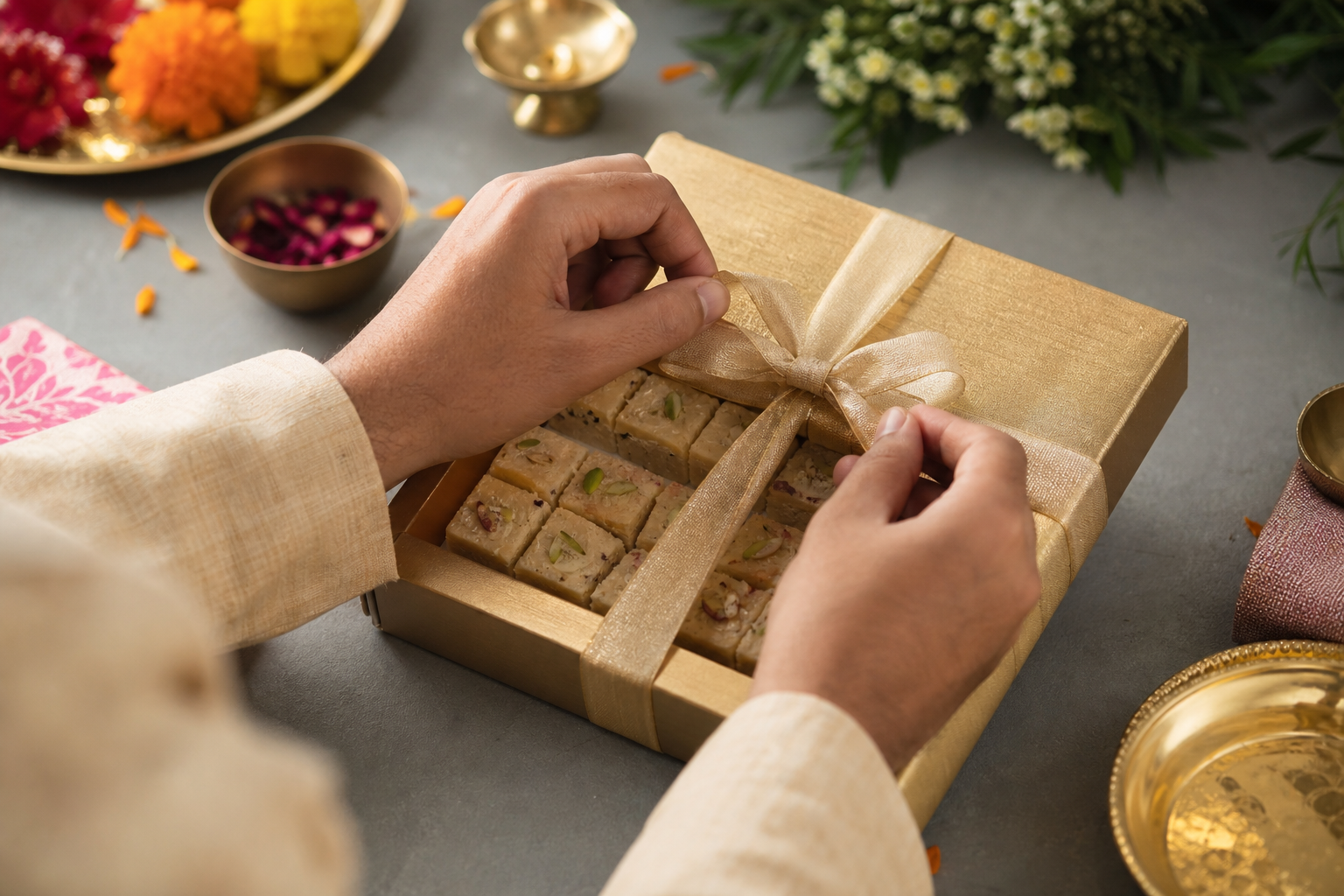
Soan papdi suits festive gifting, intimate celebrations and curated mithai boxes because of its traditional appeal and attractive layered look. It pairs well with denser sweets such as barfi or ladoo to offer textural contrast. For wedding favours and corporate gifting, prefer smaller individual boxes with separators so the recipient opens an intact piece. See The Mithai Maharaja storefront for presentation and local packaging options (the official website).
How to order or brief a caterer in Brampton and the GTA
Use these brief questions when you call or email a shop or caterer. Keep the list in your message or order form.
- Can you provide a small sample or tasting portion first?
- Do you use desi ghee or another fat, and is that listed on an ingredient card?
- What packaging options do you offer for gifting and transit?
- What is the recommended lead time for an order of X boxes or Y kilograms?
- Can you confirm handling instructions for delivery to avoid crushing?
To browse local options and current packaging styles, start with The Mithai Maharaja storefront (the official website).
Common objections and how to handle them
- Fragility: Use boxed separators or individual wraps to prevent crushing in transit.
- Too unfamiliar: Pair soan papdi with a familiar sweet in a mixed box to introduce recipients gradually.
- Perceived sweetness: Choose pieces described as lightly sweet or balance with tea-friendly savoury snacks.
- Allergy concerns: Request a full ingredient list and confirm nut inclusions or cross-contact risk before ordering.
Quick printable checklist and decision flow
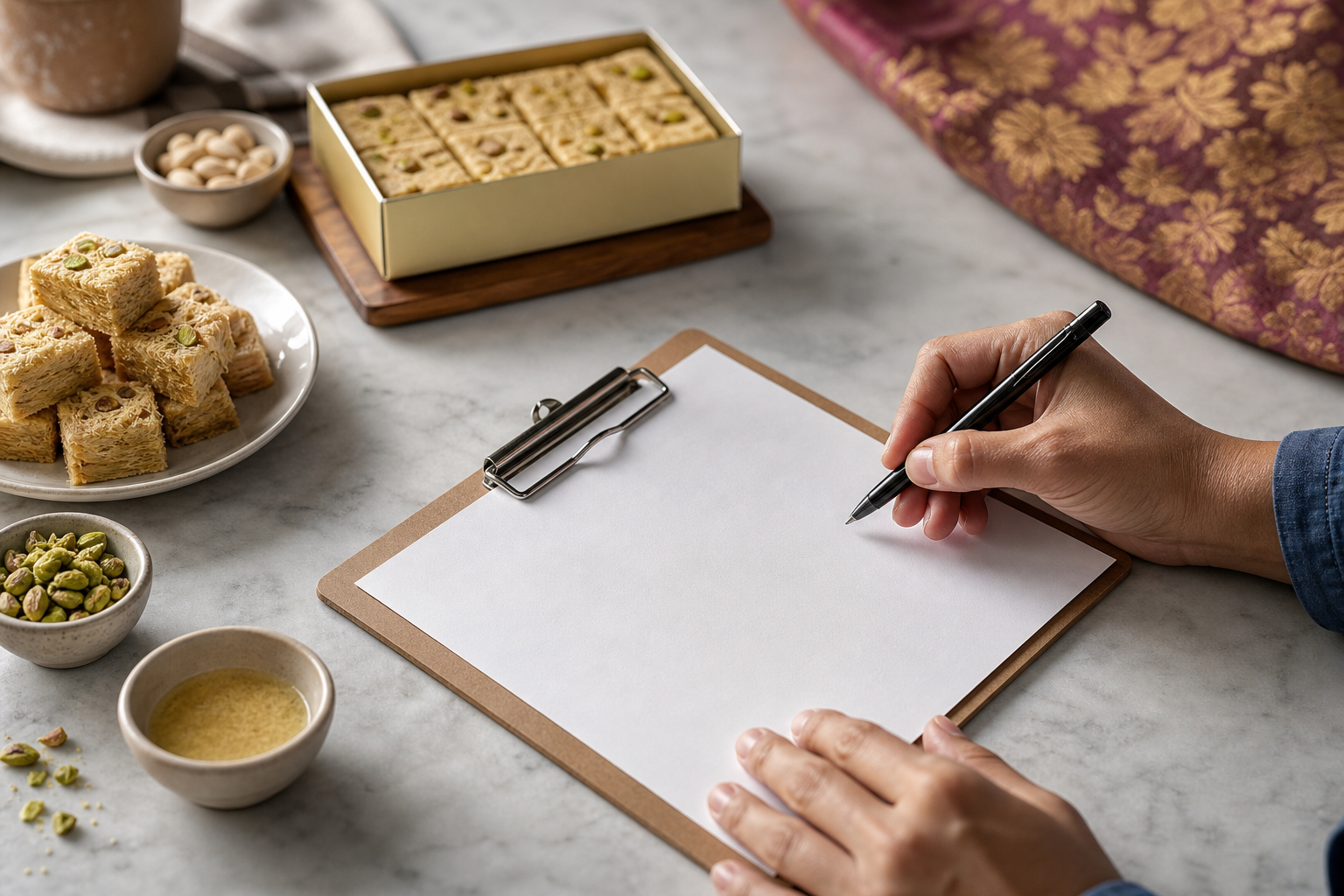
For in-store use, print or save this one-page flow: 1) inspect texture visually, 2) smell for roasted notes, 3) confirm ingredients, 4) check packaging, 5) ask about batch size and handling, 6) sample if possible, 7) decide using the simple rule above. Keep items short and observable so the tool is usable at the point of decision. Decision-aid standards recommend listing tradeoffs and options explicitly when you compare vendors.
Frequently asked questions
What exactly is soan papdi and what texture should I expect
Soan papdi is a flaky, fibrous sweet made by roasting flour and combining it with sugar syrup and fat so the mixture separates into delicate threads. Expect a light layered texture that is slightly crisp at first bite and melts into a fine fibrous mouthfeel.
How can I tell fresh, well-made soan papdi from a low-quality version
Fresh, well-made soan papdi shows even fibres, a mild roasted aroma, balanced sweetness and minimal greasiness. Sample a small piece when possible, inspect high-resolution photos online, and favour vendors who disclose small-batch or hand-finishing steps.
Is soan papdi a good choice for wedding or corporate gifting
Yes, when packaged properly. Use boxed portions with separators and ingredient cards. For corporate gifting, small branded boxes or individually wrapped pieces maintain quality and present professionally.
What should I ask a vendor or caterer before ordering soan papdi in Brampton
Ask about sampling, ingredients (desi ghee or other fats), batch size, packaging options for gifting, recommended lead time, and delivery handling instructions. These questions reduce risk and set expectations clearly.
How should I package or transport soan papdi to avoid crushing
Choose rigid boxes with internal separators or inserts, avoid stacking heavy items on top, and instruct couriers to keep the box flat. For long-distance shipments, ask the vendor to wrap pieces individually and provide a protective external box.