Indian jalebi is a coiled, deep-fried sweet soaked in warm sugar syrup, prized for a shattering bite and a juicy center. In Brampton, the most reliable way to taste it right is to buy a fresh batch from a trained halwai. Texture and syrup balance matter more than a written recipe.
By The Mithai Maharaja • Last updated: July 11, 2026
| In business since | 1938 (fifth‑generation halwai) |
|---|---|
| Service area | Brampton (local pickup and in‑store) |
| Ordering | In‑store and online ordering (Shopify) |
| Craft approach | Traditional halwai method; premium desi ghee sweets across our range |
| Catering | Weddings, festivals, celebrations |
| Gifting | Elegant, gift‑ready boxes |
Brampton pickup tip from our kitchen
Overview
Jalebi is a classic Indian sweet where tight spirals are fried until amber and dipped in warm syrup. The experience is sensory: a soft hiss as coils hit oil, a citrus‑cardamom aroma, and syrup that glows on the surface without sogging the bite.
We’re The Mithai Maharaja in Brampton, carrying forward a halwai lineage from 1938. Our team focuses on repeatable craft: batter aeration for lift, stable heat for structure, and syrup density that perfumes rather than drowns. Serve jalebi after savoury favourites like Chole Bhature or as part of a thali spread, offering sweet relief after spice.
What Makes Indian Jalebi Authentic (The Real Standards)
In our kitchen, authenticity isn’t a slogan; it’s habits our elders taught us and we refuse to shortcut. Two examples we keep to this day:
- Letting the batter mature: We rest the batter long enough for a subtle, fruity aroma and lively bubbles. That natural lift turns into micro‑crisp pockets as the spirals fry.
- Tuning the syrup by feel: We still check the one-thread stage between our fingers and watch how it drips from the ladle, using visual cues that keep the coating clean and glossy.
Small decisions stack up: piping control for uniform rings, pulling at a deep amber (not pale gold), and soaking briefly so syrup permeates the coil rather than sitting in a puddle. If you want to taste that standard today, check our jalebi page for pickup timing.
Fresh vs. Homemade: Why Texture and Syrup Ratio Matter More Than the Recipe
Flavor is only half the story. Jalebi wins or loses on texture, heat control, syrup density, and timing. Home attempts often over-thicken the syrup or swing oil temperatures, causing leathery rings, raw centres, or crystallized edges. Trained halwais keep that fragile window consistent.
Here’s what we see most in DIY batches and how we avoid it every day in Brampton:
- Oil swing → dense chew: If heat dips, the spiral drinks oil and loses snap. We stabilize burners and size batches so temperature rebounds quickly.
- Heavy syrup → soggy bite: A too‑thick syrup sits on top and weighs the coil down. Our one‑thread target wicks in, then sets as a thin, glassy sheen.
- Over‑soak → syrup pool: Minutes matter. We dip, lift, and rest, allowing enough penetration without leaving puddles on the tray.
Recipes are useful; repetition makes them reliable. Buying fresh means you’re tasting a process that’s been rehearsed thousands of times, not just ingredients on paper.
How The Mithai Maharaja Makes Jalebi: The Traditional Method
Our cadence is simple and strict: mature the batter, pipe tight spirals into hot oil, dip immediately in warm one‑thread syrup, then rest for a minute so the glaze sets. Consistency at each step protects that crisp‑meets‑juicy contrast.
In practice, it looks like this every morning in our Brampton kitchen:
- Mature the batter: We wait for light aeration and a faint fruity aroma, signs of gentle fermentation that translate into lift.
- Fry by color and sound: Spirals go into steady oil; we listen for a soft hiss and pull at deep amber so edges shatter cleanly.
- Dip while hot: Straight from oil into warm syrup. A quick, even bath perfumes the coil without softening the shell.
- Set on racks: A short rest lets excess syrup fall away and the surface turn glossy.
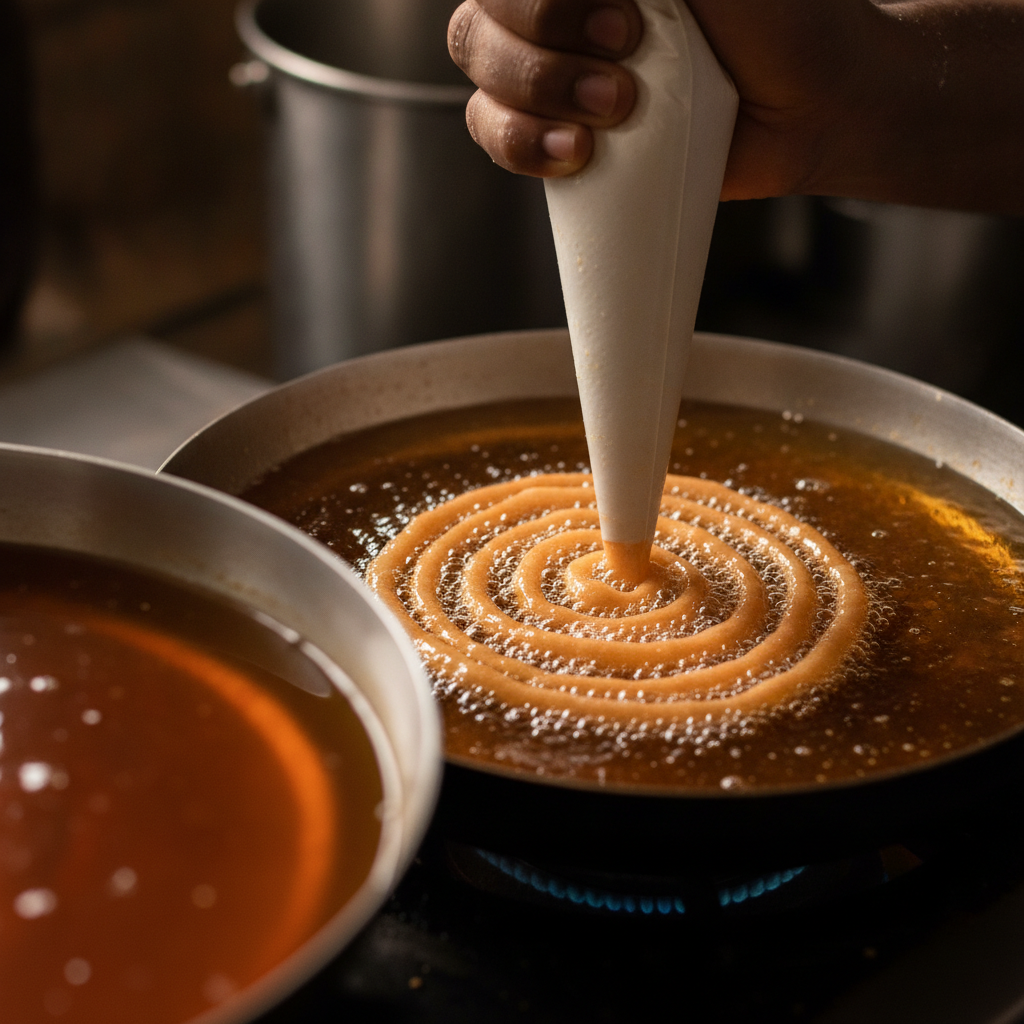
Jalebi vs. Imarti: Know the Difference Before You Order
Jalebi uses a fermented wheat‑based batter and fries into tight, glassy spirals with a light tang. Imarti uses a ground lentil batter (urad), forming thicker, flower‑like rings with a heartier bite and milder tang. Choose jalebi for crunch, imarti for richness.
| Feature | Jalebi | Imarti |
|---|---|---|
| Batter | Fermented wheat‑based | Ground urad lentils |
| Shape | Tight concentric spirals | Petal/flower pattern |
| Texture | Thin crisp shell, juicy center | Thicker bite, syrupy but denser |
| Flavor | Bright, lightly tangy, aromatic | Rounded, hearty, less tangy |
| Best for | Crunch seekers | Rich, syrup‑forward fans |
Curious to compare? Pick up both: our Jalebi and classic Imarti are made fresh in Brampton.
What to Pair With Jalebi (5 Ways to Enjoy It Best)
Balance heat and syrup with cool dairy, spice, and nutty textures. These five pairings keep bites lively: rabri, masala chai, Rasmalai, a nutty mithai board, and festive Gujia. Each adds creaminess, spice, or crisp‑flaky contrast.
- Hot jalebi + chilled rabri: Cold, thick rabri calms the syrup and lets the amber crunch shine.
- Jalebi + masala chai: Tannins and spice cut sweetness; sip, bite, repeat.
- Jalebi + Rasmalai: Soft paneer and cardamom milk add cool cream to the warm glaze—see our Rasmalai.
- Jalebi + nutty mithai board: Build contrast with Kaju Katli and Kalakand, roasty nuts and milk solids balance syrup.
- Jalebi + Gujia: Flaky Gujia brings spiced filling and pastry crunch for a festival‑ready duo.
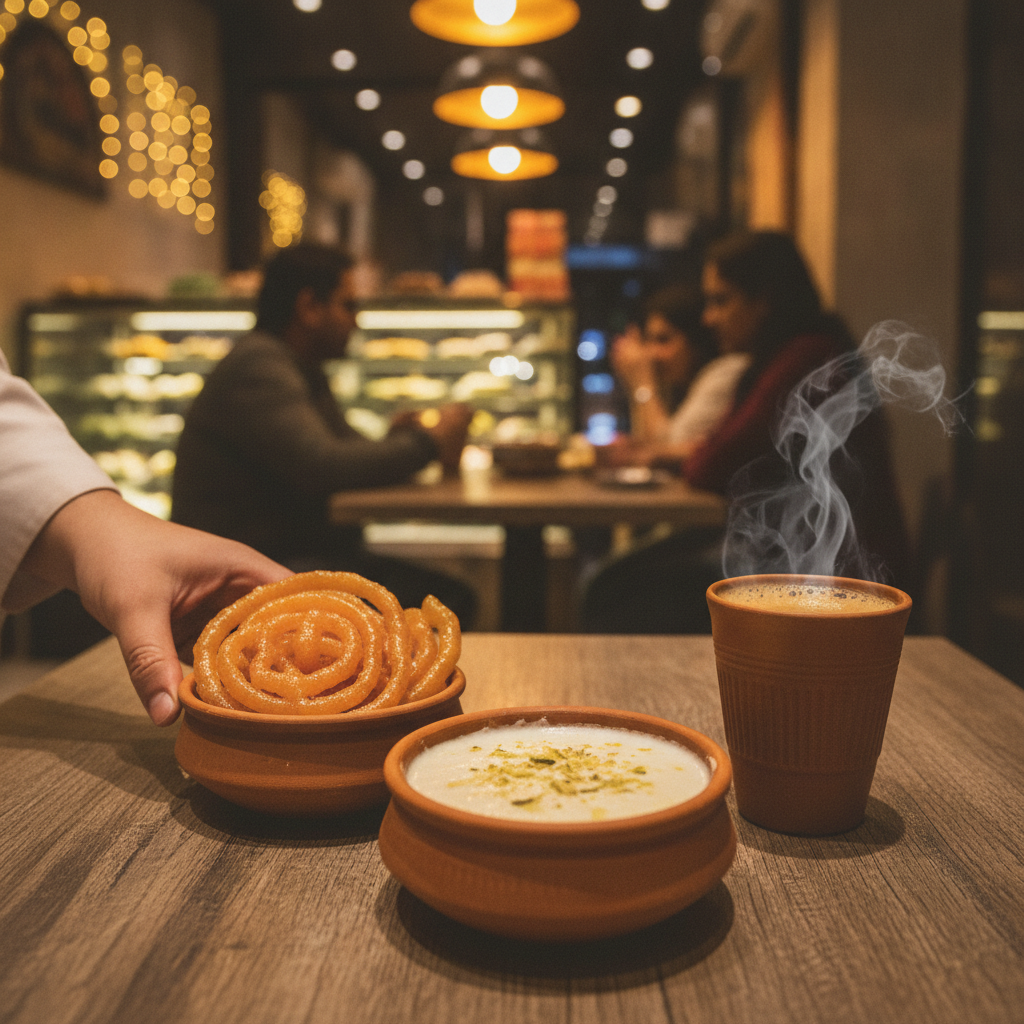
If you’re exploring drink pairings, this friendly sweet lassi guide outlines creamy options that play nicely with syrupy desserts like jalebi.
Where to Get Fresh Indian Jalebi in Brampton
For consistently crisp, juicy jalebi in Brampton, visit The Mithai Maharaja or order online for coordinated pickup. Our halwai team keeps a tight fry‑to‑syrup cadence so you enjoy that first crackly bite at home or at your event.
Check real‑time availability on our Jalebi product page. Planning a wedding or festival? A rabdi‑jalebi highlight is always a crowd magnet, see ideas like a rabdi‑jalebi station to inspire layout and guest flow. For broader trays, add chilled elements like Rasmalai so the menu breathes between sweet and spice.
Local considerations for Brampton
- Weekend mornings move fastest, so pick up then for the hottest, crispest jalebi before family gatherings.
- Festival weeks are peak demand; pre‑arrange pickup windows so the batch aligns with serving time.
- For corporate trays, request sturdier packaging and include a cool side like rabri or Rasmalai for balance.