Wedding catering menu planning is the structured design of a couple’s entire food experience—from welcome sips to late‑night snacks—tuned to guest count, venue flow, and dietary needs. In Brampton, The Mithai Maharaja helps couples craft Indian menus where mithai, chaats, and vegetarian mains create seamless service waves guests remember.
By The Mithai Maharaja • Last updated: 2026-04-23
Overview
Plan your wedding menu by mapping guest count, dietary needs, and service style, then selecting courses with timed release. Lock staffing, rentals, and hot‑holding. Add a 5–10% buffer for seconds and late RSVPs. Confirm final headcount 10 days out so you avoid shortages, long lines, and last‑minute menu edits.
This complete guide shows you how to build a guest‑loved, waste‑smart plan anchored in Indian flavors. You’ll learn:
- How to size portions and prevent lines
- Which service style fits your venue and timeline
- Dietary mapping for vegetarian, vegan, gluten‑free, and nut‑free guests
- Where mithai, chaats, and mains fit best in the flow
- How to stage staffing, rentals, and a rock‑solid run‑of‑show
Jump to a section:
- What is wedding catering menu planning?
- Why it matters
- Step‑by‑step planning
- Service styles compared
- Build your Indian menu
- Portioning that works
- Dietary needs & safety
- Run‑of‑show timeline
- Staffing, rentals, venue
- Best practices
- Tools & resources
- Case examples
- FAQ
- Key takeaways & next steps
What is wedding catering menu planning?
Wedding catering menu planning is the end‑to‑end design of the food journey—from cocktail bites to dessert and favors—aligned to headcount, venue logistics, and service style. The output is a clear menu matrix, production plan, and timeline that keep food hot, lines short, and all dietary needs covered.
In practice, you’re translating your story into food “moments.” For our Brampton couples, three anchors repeat: a welcoming chaat station, hearty vegetarian mains guests already love, and an elegant mithai finish that doubles as blessings and take‑home favors.
- Guest experience map: who eats what, when, and where
- Production plan: quantities, prep, holding, and staffing per course
- Service choreography: timing, line control, and table coverage
Handled well, these reduce waste, control wait times, and protect allergen‑sensitive guests. Many planners target a 30‑day lock on the menu and a final headcount confirmation at T‑10 days.
Why wedding menu planning matters
Thoughtful planning prevents shortages, protects guests with allergens or religious restrictions, and reflects your culture. Align service style to your venue flow, label dishes clearly, and maintain a 5–10% buffer so late arrivals and hearty appetites are covered without last‑minute stress.
Great menus are cultural bridges. For Punjabi and North Indian families in Brampton, classics like Chole Bhature, Amritsari Kulcha with Chana, and Dahi Bhalla say celebration. Pairing these with premium mithai—barfi, ladoo, gulab jamun, or seasonal halwa—turns dessert into a ritual moment.
Risk hides in gaps: a single‑file buffet with no second line, too few vegetarian mains, or unclear nut labels at dessert. You’ll curb most issues by right‑sizing stations, sequencing food releases in waves, and pre‑printing clear allergen signage for fast, confident choices.
Wedding catering menu planning: step‑by‑step
Start with guest count, service style, and venue limits. Build a course‑by‑course menu with vegetarian anchors and labeled allergens. Lock equipment, staffing, and run‑of‑show. Add a late‑night snack and a 5–10% buffer. Finalize headcount 10 days out and reconfirm logistics 48 hours before.
- Clarify guest count bands (e.g., 120–140) and RSVP plan. Expect 5–8% variance between early and final counts.
- Select service style (buffet, stations, family‑style, plated) to match space, staffing, and timeline.
- Set dietary baseline: make vegetarian your default; layer vegan, gluten‑free, and nut‑free options.
- Map the food “moments”: welcome sip, cocktail bites, dinner, dessert, favors, late‑night.
- Create a menu matrix: mains, sides, breads, salads, desserts, beverages, and kids’ plates.
- Right‑size portions via per‑guest multipliers and a 5–10% buffer for seconds and late RSVPs.
- Equipment plan: chafers, induction, sneeze guards, samovar for chai, allergen placards.
- Staffing map: 1 attendant per 25–30 guests at stations; 1 runner per 2–3 chafers.
- Logistics: load‑in windows, elevator access, power, and a 30‑minute hot‑hold buffer.
- Run‑of‑show: timestamps from cocktail hour to dessert release and late‑night snacks.
- Final confirms at T‑10 days; reconfirm rentals and special meals at T‑48 hours.
- On‑site labeling with vegetarian/vegan/gluten‑free/nut markers at eye level.
Need a template? Ask our team for a one‑page Menu Matrix and Run‑of‑Show worksheet when you reach us on the Catering page.
Comparing service styles: buffet vs plated vs stations vs family‑style
Pick service style by guest flow, space, and staffing. Buffets move volume quickly; stations reduce lines with variety; plated feels formal but requires tight timing; family‑style boosts connection. Match style to your venue layout and the timing of toasts and dancing.
| Style | Best for | Pros | Watchouts |
|---|---|---|---|
| Buffet | 120–350 guests | Fast throughput; broad variety | Lines without dual‑sided layouts |
| Action Stations | Interactive vibe | Made‑to‑order freshness | Needs power, sneeze guards, extra staff |
| Plated | Formal receptions | Predictable pacing | Less variety; complex dietary mapping |
| Family‑Style | Communal feel | Conversation at tables | Table space; portion control |
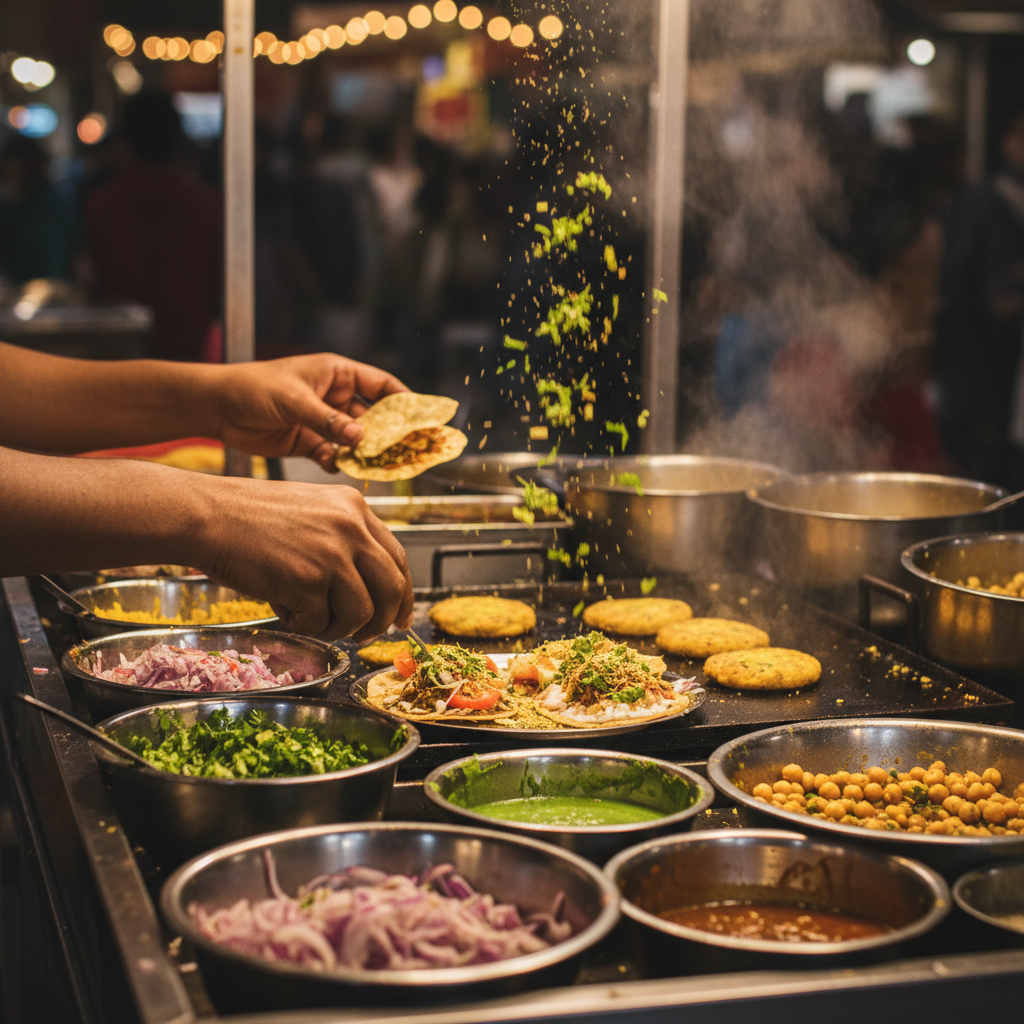
In mixed‑layout Brampton venues, we often combine a two‑line buffet for mains with one live chaat station. That blend keeps lines short and preserves the festive feel of street‑food culture—perfect for a crowd that loves crunchy chaat combos.
Building your Indian wedding menu
Anchor the menu with vegetarian mains, hot appetizers, and balanced chaats. Add fresh breads, rice, salads, and crowd‑pleasing mithai for dessert and favors. Label top allergens, plan kids’ plates, and include a late‑night bite guests can enjoy while standing.
Core vegetarian mains
- Chole Bhature for bold, celebratory energy
- Amritsari Kulcha with Chana for flaky bread and hearty chana (see our kulcha with chana)
- Dal makhani or palak paneer as creamy anchors
Hot appetizers
- Crisp Paneer Pakora that holds well for service
- Golden Vegetable Pakora to please every palate
Live chaat moments
- Cool, tangy Dahi Bhalla/Papdi for balance
- Crunchy Channa Samosa Chaat as a familiar favorite
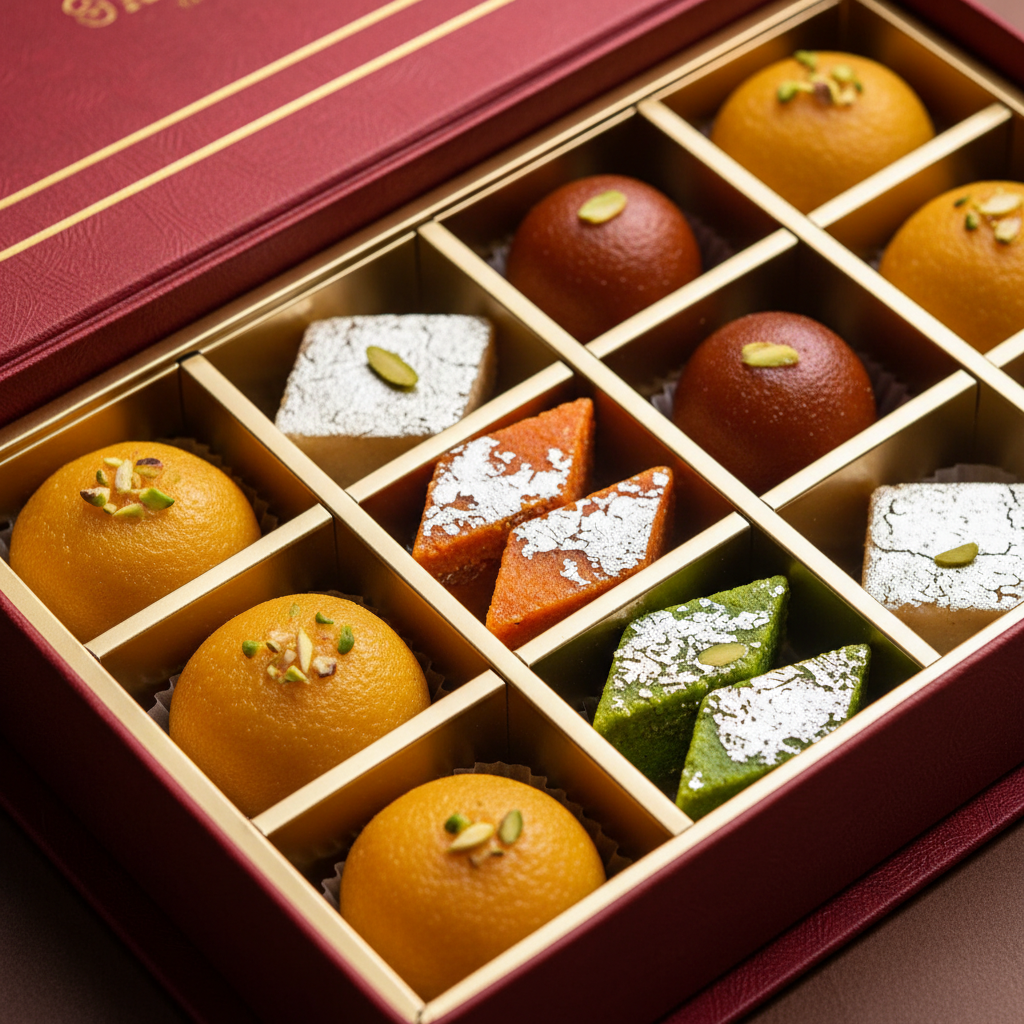
Mithai and dessert
- Barfi treasures, ladoo, gulab jamun, and seasonal halwa
- Fusion sweets for modern tastes
- Gift‑ready boxes that elevate blessings and farewells
Breads, sides, and salads
- Assorted naan and kulcha for texture and aroma
- Cumin rice or jeera pulao for balance
- Seasonal salads for freshness and color
Beverages
- Sweet and salted lassi for creamy refreshment
- Masala chai service paired with dessert
- Non‑alcoholic welcome drink station at entry
Place mithai both at dessert and as take‑home favors. Many couples set a mithai welcome at phera seating, then release premium boxes as guests depart to extend the celebration.
Portioning and quantities that work
Use per‑guest multipliers and add a 5–10% buffer. One hot appetizer per guest per hour, 1.5–2 mains per guest, and two dessert bites per person cover most receptions. Count kids’ plates, elders, and vendor meals separately so you don’t short main service.
Practical multipliers simplify planning:
- Appetizers: 6–8 bite‑sized pieces per person for a 60–90 minute cocktail hour
- Mains: 1.5–2 mains per guest when offering variety (e.g., chana + paneer)
- Breads: 1.5 pieces per guest; add 10% if the menu is mostly vegetarian
- Rice: roughly 3–4 oz cooked per person alongside breads
- Salads/Sides: around 3–4 oz per person
- Desserts: 2–3 mithai pieces per guest; add fruit for balance
Vendor meals, elders who eat earlier, and kids’ plates change flow. Document these in your run‑of‑show so the main lines stay consistent when dancing starts.
Dietary needs, allergens, and food safety
Map top allergens, label dishes clearly, and design a vegetarian‑first menu with vegan and gluten‑free callouts. Keep hot foods above safe holding temperatures and separate nut‑containing sweets. Clear signage and trained staff prevent cross‑contact and confusion.
Nut‑sensitive guests and gluten‑free diners rely on labeling and staff scripts. Distinct trays for nut‑free mithai and dedicated tongs at chaat stations remove risk. Keep holding temperatures safe and reheating times documented on a simple prep sheet.
We standardize three signals at events: a green vegetarian/vegan dot, a blue gluten‑free dot, and a red contains‑nuts dot—paired with quick server guidance. Pre‑event, log confirmed allergen‑specific plates by table to eliminate guesswork.
Your run‑of‑show timeline
Sequence food in waves: welcome sip, cocktail bites, dinner release by tables or zones, dessert, then late‑night snacks. Announce service starts, open two lines when possible, and hold back 10% of hero items for late‑arriving guests.
- Welcome (T‑0): non‑alcoholic sips and light bites at entry
- Cocktail hour (T+0:15): passed pakoras and a small chaat bowl
- Seating & toasts (T+1:00): water/tea refreshed; mains staged
- Dinner (T+1:15): open two parallel buffet lines; release breads in waves
- Dessert (T+2:15): mithai and chai; start distributing favor boxes
- Late‑night (T+3:00): easy handhelds (e.g., vada pav)
Staffing, rentals, and venue coordination
Match staff to service style, confirm power and loading, and pre‑stage rentals. A quick site walk and a one‑page diagram of lines, stations, and power drops prevent the classic long‑line problem and the cold‑food surprise on event day.
- Staffing: attendants per station; runners for breads and chai; a captain to call cues
- Rentals: chafers, sneeze guards, induction burners, platters, samovar for chai
- Venue: load‑in windows, elevator clearance, power outlets, and trash plan
For layout inspiration and checklists, review the wedding menu template from Mississauga Convention Centre, which reinforces the value of clear station mapping and labeling for guest flow.
Best practices for wedding catering menu planning
Keep it simple, visible, and sequenced. Use dual‑sided lines, one live station, and pre‑printed allergen signs. Confirm headcount 10 days out, add a 5–10% buffer, and stage late‑night bites. Document everything on one Menu Matrix and one Run‑of‑Show.
Menu structure that works
- Vegetarian‑forward mains with clear protein variety (chana, paneer, lentils)
- One live station for freshness and line distribution—try our chaat station ideas
- Mithai twice: at dessert and as take‑home favors to pace sweetness
Flow and signage
- Dual‑sided buffets cut wait times by splitting traffic
- Eye‑level allergen placards reduce questions and plate abandonment
- Number tables/zones in your run‑of‑show to avoid bottlenecks
Staffing cues that matter
- Assign a captain to call releases and manage holds (e.g., reserve 10% of hero items)
- Use runners dedicated to breads and chai refills so chafers stay hot
- Brief servers on vegetarian/vegan/gluten‑free scripting before doors open
Venue and logistics choices shape success. For a deeper look at matching venues and cuisine, see this perspective on choosing a venue with Indian catering. Its planning notes echo our emphasis on guest flow and service visibility.
Tools and resources to make it easy
Use a one‑page Menu Matrix, a cue‑to‑cue Run‑of‑Show, and a clear Allergen Legend. Share them with your venue and MC. Hold weekly 15‑minute check‑ins for four weeks before the wedding to keep tasks on track with no last‑minute scrambles.
- Menu Matrix: courses by column; quantities by row; allergen dots
- Run‑of‑Show: timestamps for welcomes, openings, releases, and last call
- Allergen Legend: consistent green/blue/red dots with short descriptions
Looking for flavor inspiration? Browse regional ideas in this Indian food menu roundup and then shortlist your favorites with our team for a customized plan.
Case examples from Brampton weddings
Brampton couples succeed with a vegetarian‑forward menu, one live chaat moment, and premium mithai for blessings and favors. A two‑line buffet plus one station keeps flow smooth, while late‑night handhelds carry the party through the final hour.
Example 1: Heritage Sikh ceremony + reception
- Welcome: rose‑cardamom sip and a small Dahi Bhalla bowl
- Dinner: Chole Bhature, Amritsari Kulcha with Chana, dal, seasonal sabzi
- Dessert: barfi, gulab jamun, and gift‑ready mithai boxes
Two parallel buffets with staggered openings controlled lines. Clear nut labels boosted confidence for elders choosing sweets.
Example 2: Indo‑Western reception with stations
- Stations: live papdi chaat plus snackable pakoras
- Buffet: cumin rice, naan, palak paneer, vegetable korma
- Late‑night: handhelds like vada pav and mini sandwiches
The action station captured each guest for about 60–90 seconds, easing buffet pressure and improving freshness perception.
Example 3: Intimate brunch shaadi
- Menu: light chaats, fresh salads, stuffed kulcha, lassi
- Dessert: fusion sweets and seasonal fruit
Morning timing favored bright flavors and lighter spice. Mithai favors doubled as thank‑you gifts for out‑of‑town guests.
Local considerations for Brampton
- Peak season fills docks quickly—confirm load‑in windows with venues early and add a 30‑minute buffer.
- Winter weather affects transport—stage insulated carriers and pad your hot‑hold plan.
- Vegetarian‑first menus work well for diverse GTA guest lists; label nut‑free mithai on distinct trays.
Frequently Asked Questions
Couples ask most about portion sizes, timing, allergen labeling, and where mithai fits. Most weddings thrive with a vegetarian‑forward menu, dual‑line service, a 5–10% buffer, and one live station to distribute crowds confidently.
How far in advance should we finalize our wedding menu?
Lock your core menu 30 days out and finalize headcount 10 days before the event. That window supports purchasing, staffing, and rental confirmations while still giving you room to handle late RSVPs or special meals.
What service style keeps lines shortest?
Two parallel buffet lines with dual‑sided access move large groups fastest. Adding one live station—like a chaat counter—spreads guests into zones and cuts wait time while adding freshness and theater.
How do we handle nut allergies with mithai?
Separate nut‑containing sweets on distinct trays with dedicated tongs. Add eye‑level “contains nuts” labels and brief servers to guide guests. Offer at least one nut‑free mithai assortment so everyone can enjoy dessert safely.
Where do mithai gift boxes fit in the timeline?
Use mithai twice: place a small selection on the dessert table and present premium gift‑ready boxes at the exit or right after toasts. Assign an attendant so every family receives a box as they depart.
Key takeaways and next steps
Choose a service style that matches your venue, build a vegetarian‑forward menu with clear allergen labels, and sequence food in waves. Confirm headcount 10 days out, add a 5–10% buffer, and plan a late‑night bite guests can eat standing up.
- Anchor mains with crowd‑pleasing vegetarian classics
- Add one live chaat station to reduce lines
- Label allergens clearly, especially nuts and gluten
- Right‑size portions and plan a take‑home strategy
- Lock logistics early and walk the venue
Ready to design your Brampton wedding menu with heritage‑rich sweets and chaats? Our team can help you translate your story into a seamless food journey—start on our Catering page.