Papdi chaat is a North Indian street snack built on ultra-crisp, fried wafers (papdi) layered with yogurt, chutneys, and toppings. The secret to lasting crunch is thin, well-docked dough fried low and steady, then assembled just before serving. In Brampton, The Mithai Maharaja applies these chaat papdi crispy texture secrets daily to serve consistently crisp plates.
By The Mithai Maharaja · Last updated: 2026-04-22
Start here: your crisp papdi chaat game plan
For shatter-crisp papdi, control thickness (1–1.5 mm), dock generously, and fry at a steady 300–330°F until deep golden. Cool completely before storing, then assemble fast with thick yogurt and balanced chutneys. This game plan protects crunch from dough to plate, even during busy Brampton rushes.
- What you’ll learn today
- Flour ratios, hydration, and semolina for crunch
- Exact docking patterns and frying temperatures
- Anti-sog assembly, storage, and reheating
- Fry vs bake vs air-fry trade-offs
- Local pro tips from our Brampton kitchen
- Quick navigation
Overview
Crisp papdi comes from dough science, meticulous shaping, and temperature control. Thin discs, adequate docking, and low-and-slow frying produce micro-layers that resist sogginess. Assembling with thick yogurt and last-minute sauces preserves texture. This overview distills what matters most so home cooks and pros can replicate shop-quality crunch.
We’ve served generations of guests who love that first bite snap. Here’s our condensed roadmap for papdi that stays crisp under chutneys and yogurt.
- Target dough hydration: 30–34% for firm, rollable discs
- Semolina (15–25%): promotes granular crunch
- Docking density: 1 hole per 1–1.5 cm across the surface
- Oil temperature: steady 300–330°F for uniform dehydration
- Cooling: full cooldown on racks to 75–80°F before storing
- Assembly: yogurt 38–42°F, spooned thick to limit soak-through
What is papdi chaat?
Papdi chaat is a layered Indian street snack featuring crisp, bite-size crackers topped with cooled yogurt, sweet-tangy chutneys, boiled potatoes or chickpeas, sev, and aromatics. The papdi must be thin, well-fried, and dry to stay crunchy once toppings are added at the last moment.
At The Mithai Maharaja in Brampton, papdi chaat sits beside classics like aloo tikki chaat and dahi bhalla. You can explore our fresh-made options on our Chaats & Combos collection or order a plate of Chaat Papdi for an immediate taste of these principles.
- Core components
- Papdi: crisp mini wafers, the texture anchor
- Yogurt: thick, lightly salted, well chilled
- Chutneys: tamarind-date for sweetness; cilantro-mint for freshness
- Toppings: sev, boiled potato, chickpeas, onions, cilantro, chaat masala
- Serving principle
- Build fast, serve faster; wet ingredients go on last
Why crispness matters
Crisp papdi creates contrast: crunchy base meets creamy yogurt and tangy chutneys. Without that snap, flavors blur and mouthfeel flattens. Structurally, crispness resists moisture migration for 5–10 minutes, giving you time to serve plates during busy periods while maintaining restaurant-level quality.
Texture is the first impression. When we assemble Bhalla Papdi Chaat, crisp wafers keep the bite lively even under soaking-prone bhallas. We’ve found that when papdi retains crunch for at least two bites, guest satisfaction rises dramatically because the toppings read brighter and cleaner.
- Benefits of a crisp base
- Protects against yogurt/chutney sogginess
- Improves spice and herb perception
- Enhances visual appeal with intact layers
- Operational advantages
- Holds up for short queue times (5–10 minutes)
- Consistent plating across multiple orders
How crispness works (the science)
Papdi crispness forms when moisture is driven out while starches gelatinize and set. Thin dough, proper docking, and controlled heat limit steam bubbles, creating uniform, rigid layers. After frying, complete cooling and low humidity storage prevent reabsorption that softens the snap.
Think of papdi as a tiny, laminated cracker. The goal is even dehydration, not puffy puri. We aim for moisture content below 3–4% after cooling; wafers feel dry, sound crisp, and break cleanly.
- Gluten matrix: Moderate gluten (from kneading 4–5 minutes) adds structure without chewiness.
- Starch gelatinization: Occurs around 140–160°F; final crisp sets as water leaves above 212°F.
- Docking: Regular holes vent steam, preventing ballooning and ensuring flat, stackable discs.
- Oil temperature: At 300–330°F, water escapes steadily, creating micro-bubbles and a brittle shell.
Chaat Papdi Crispy Texture Secrets: the fundamentals
Great papdi starts with firm, low-hydration dough (30–34%), a 75–85% all-purpose flour base, and 15–25% fine semolina. Dock every 1–1.5 cm, roll to 1–1.5 mm thickness, and fry to deep golden. Cool to room temperature on racks, then store airtight with a desiccant to lock in crunch.
These are the same fundamentals behind our shop’s Chaat Papdi in Brampton. Use them for home cooking or for prepping a party’s worth of crisp wafers ahead of time.
- Base flours: 75–85% all-purpose + 15–25% fine semolina
- Hydration: 30–34% water by weight (stiff dough rolls thinner)
- Fat: 2–3% neutral oil or melted ghee for tenderness
- Salt + spices: 1.6–2% salt; optional ajwain or crushed pepper
- Knead time: 4–5 minutes to smooth; rest 15–20 minutes covered
- Roll + cut: 1–1.5 mm thin; 2–2.5 inch (5–6.5 cm) rounds
- Docking map: grid of holes ~1–1.5 cm apart, edge-to-edge
Methods: fry vs bake vs air-fry
Deep-frying makes the crispiest, most traditional papdi with glassy snap. Baking yields drier, cracker-like wafers with subtle browning. Air-frying sits between: decent crunch with lighter fat. Choose based on texture goals and batch size; control thickness, docking, and final color in all methods.
| Method | Temp | Time (per batch) | Texture Result | Best For |
|---|---|---|---|---|
| Deep-fry | 300–330°F oil | 3–5 min | Shatter-crisp, deep golden, classic | Authentic street style, serving soon |
| Bake | 350°F oven | 10–14 min | Even, cracker-like, slightly drier | Large batches, lower active time |
| Air-fry | 325–340°F | 6–9 min | Good crunch, lighter fat pickup | Small batches, quick prep |
Pro move: regardless of method, aim for uniform deep golden color—pale papdi softens faster, and over-browned papdi tastes bitter. Color is your best real-time quality control.
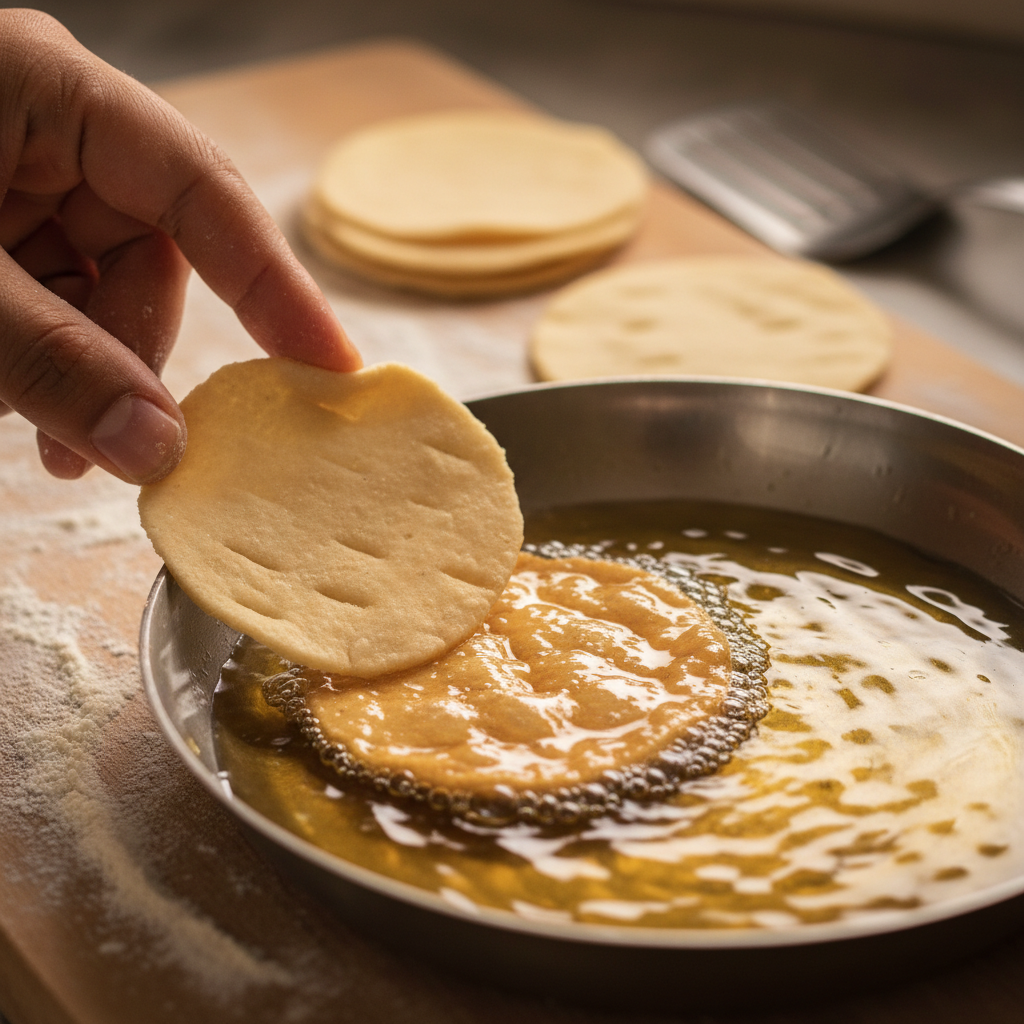
Best practices from a fifth-generation halwai kitchen
Control variables you can measure: thickness, docking density, oil temperature, cooldown, and assembly timing. Small, consistent habits—like chilling yogurt, batching garnishes, and storing wafers with desiccant—deliver repeatable crunch across busy service windows and home gatherings alike.
Measure what matters
- Use a digital thermometer; keep oil in the 300–330°F band.
- Check thickness with calipers or a rolling pin ring: 1–1.5 mm.
- Count docking holes: about 30–40 on a 2.25-inch round.
Protect against sogginess
- Chill yogurt to 38–42°F and whisk it thick; watery yogurt soaks fast.
- Layer sequence: papdi → potatoes/chickpeas → yogurt → chutneys → sev → aromatics.
- Serve immediately. For queues, pre-plate dry layers; add wet toppings to order.
Batch smart for events
- Fry a day ahead; cool to 75–80°F, then store airtight with a food-safe desiccant.
- Prep toppings in labeled containers; hold cold items under 41°F.
- Stage an assembly line for speed—keep wet and dry zones separate.
Want to see how we plate quickly while keeping crunch? Compare how fast-assembly stations in other cuisines manage layering and speed—this restaurant-style prep overview shows the value of mise en place and clear zones.
Tools and resources
You don’t need fancy gear—just reliable basics. A heavy pot, accurate thermometer, slotted spoon, docking fork, and cooling racks handle most of the job. For volume, ring cutters, sheet pans, airtight bins, and desiccants help you scale without sacrificing texture.
- Thermometer: keeps oil in range for steady dehydration.
- Docking tool: fork, docker, or skewer for consistent vents.
- Heavy pot/deep fryer: retains heat better batch to batch.
- Racks + sheet pans: cool wafers evenly on all sides.
- Airtight containers: reduce ambient humidity pickup.
- Ring cutters: keep diameter consistent for even frying.
If you’d rather focus on the party and leave the frying to us, order fresh Chaat Papdi or explore our Chaats & Combos. For a hearty pairing, see Amritsari Kulcha with Chana from our North Indian staples.
Case studies and examples from our Brampton line
In real service, crispness lives or dies in the final two minutes. Our Brampton team plates dry layers during rushes, adds chilled yogurt and chutneys to order, and keeps a runner clearing cooled papdi to airtight bins. This cadence protects crunch while moving 20–30 plates per cycle.
Festival weekend stress test
Scenario: high-humidity afternoon, heavy takeaway flow. We increased docking density by ~10%, fried a shade deeper to offset moisture, chilled yogurt to the lower end (38°F), and staged toppings in smaller, colder bowls. Result: average plate retained audible crunch for 6–8 minutes.
Corporate sampler trays
For mixed platters, we separate wet and dry zones. Papdi, sev, and aromatics ship in one compartment; yogurt and chutneys in sealed cups. At the destination, trays are assembled in under 120 seconds per platter. Explore office-friendly options alongside Channa Samosa Chaat and Aloo Tikki Chaat.
Pairing for hearty eaters
Guests craving a fuller meal often add fried snacks. Crisp papdi contrasts beautifully with hot Paneer Pakora. The temperature and texture play amplify both experiences while keeping the chaat bright and refreshing.
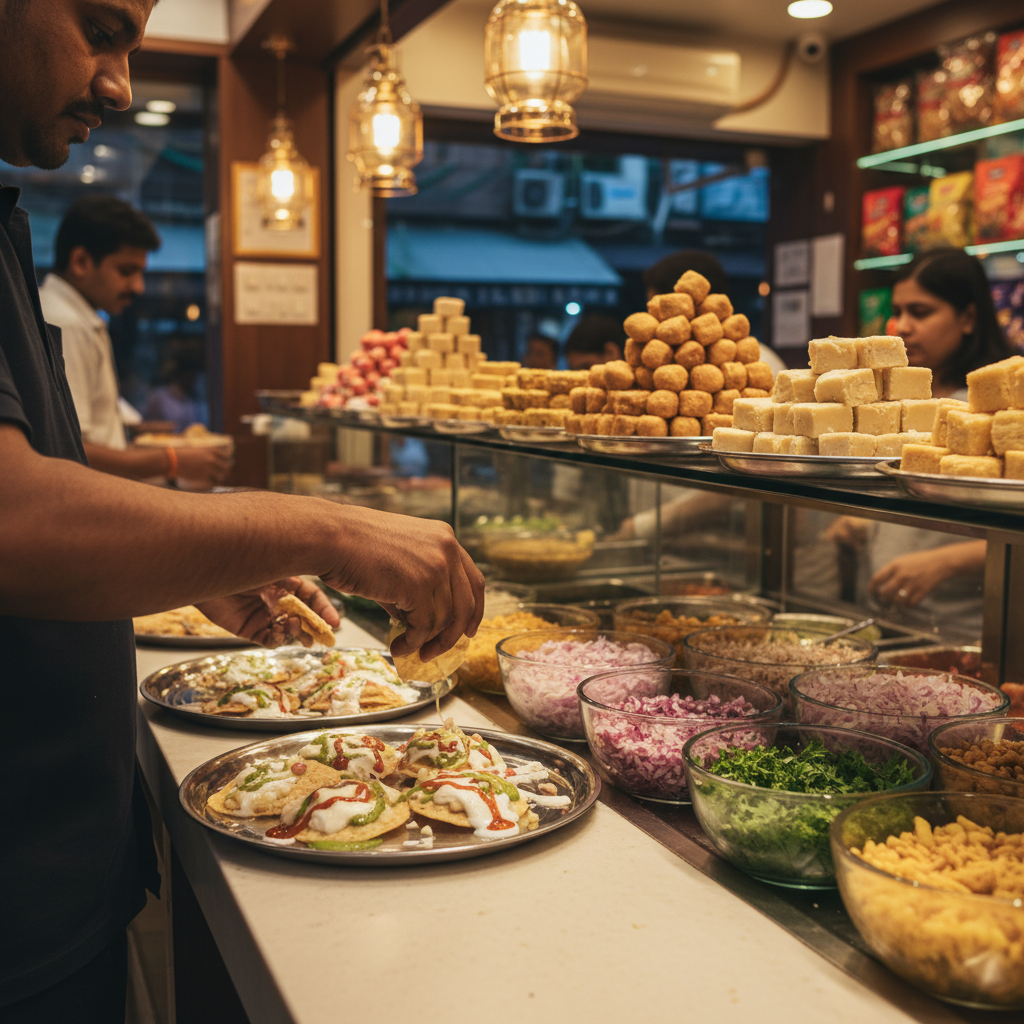
Local considerations for Brampton
Brampton’s seasonal humidity and festival peaks affect papdi texture and service flow. Adjust docking density and final color on humid days, plan for holiday spikes, and stage a quick assembly line for takeout orders. These small local tweaks keep crunch consistent across changing conditions.
Local tips
- Humidity swings: On damp days, dock more densely and fry a shade darker to counter moisture reabsorption.
- Festival rushes: Pre-fry and cool earlier; hold more dry components ready since evening lines lengthen around holidays.
- Takeout behavior: Many guests drive across the GTA; pack wet and dry elements separately to preserve crunch on the road.
Taste the difference. If you’re in Brampton, try our Chaat Papdi or the creamy-crisp contrast of Bhalla Papdi Chaat. Planning a team treat? Our Chaats & Combos make ordering easy.
Step-by-step: dough to shatter-crisp
Mix a firm dough (30–34% hydration) with 15–25% semolina, rest 15–20 minutes, roll to 1–1.5 mm, dock every 1–1.5 cm, and fry at 300–330°F to deep golden. Cool fully on racks and store airtight. Assemble fast with thick, chilled yogurt to protect the crunch.
- Scale ingredients: 75–85% all-purpose flour, 15–25% fine semolina, 1.6–2% salt, 2–3% fat, water to 30–34% hydration.
- Knead 4–5 minutes to a smooth, firm dough; rest covered 15–20 minutes.
- Divide and roll thin (1–1.5 mm). Cut 2–2.5 inch rounds; keep covered.
- Dock in a grid, holes 1–1.5 cm apart, including near the edges.
- Fry at 300–330°F until deep golden (3–5 minutes), turning as needed.
- Cool on racks to 75–80°F. Store airtight with a desiccant sachet.
- Assemble to order: papdi → fillings → chilled thick yogurt → chutneys → sev → aromatics.
Curious how fast-casual concepts manage rapid layering? This restaurant-quality assembly guide demonstrates the value of clean stations and smart sequencing for speed without sacrificing texture.
Troubleshooting: diagnose and fix sogginess
If papdi bends instead of snaps, check thickness, docking, fry temperature, and cooldown. Pale color signals under-dehydration; oil below 300°F causes grease absorption; missing vents lead to puffing. Fix the root cause, then protect wafers from humidity before plating.
- Soft after frying: Fry longer to deeper golden; confirm oil at 300–330°F.
- Greasy feel: Oil too cool; increase heat and avoid overloading.
- Puffed centers: Increase docking density, especially near edges.
- Stales in storage: Cool completely, then store airtight with desiccant; avoid warm stacking.
- Soggy on plate: Use thicker yogurt, add wet toppings last, and plate to order.
Pairings and variations to highlight crunch
Choose toppings that respect the wafer: thick yogurt, controlled chutney streams, and a late shower of sev. For variety, swap in spiced potatoes, tangy chickpeas, or seasonal garnishes. Pair with hot snacks for contrast and round out the spread with a comforting North Indian staple.
- Chaat variations at our shop: Aloo Tikki Chaat, Channa Samosa Chaat
- Hot + crisp contrast: Paneer Pakora
- Hearty pairing: Amritsari Kulcha with Chana
- Visual inspiration for assembly lines: see this service flow example from another snack format.
FAQ: papdi chaat and lasting crunch
These concise answers cover dough ratios, frying, storage, and plating. Follow them, and you’ll protect the snap that makes papdi chaat irresistible, whether you’re cooking at home or ordering from our Brampton kitchen.
How thin should papdi be for maximum crunch?
Roll to 1–1.5 mm. Thinner wafers dehydrate evenly and resist sogginess longer. Use a rolling pin with rings or check with calipers. If the disc looks translucent at the edges and docks cleanly without tearing, you’re in the right range.
What oil temperature keeps papdi crispy without burning?
Maintain 300–330°F. This band steadily drives off moisture and sets starch without scorching. Fry to a uniform deep golden color. Overcrowding drops temperature quickly, so work in small batches and reheat oil between rounds.
How do I stop papdi from puffing like puri?
Dock thoroughly—about one hole per 1–1.5 cm in a full grid, including near the edges. Roll evenly to 1–1.5 mm. If you still see domes, increase docking density by 10–15% and press gently with a slotted spoon in the first 20–30 seconds of frying.
What’s the best way to store fried papdi?
Cool fully on racks to room temperature (75–80°F), then store in airtight containers with a small food-safe desiccant. Keep away from steam or warm kitchens. Re-crisp briefly in a 300°F oven for 3–4 minutes if needed before service.
Key takeaways
Crisp papdi is no accident. It’s the result of low hydration, semolina in the mix, thin rolling, aggressive docking, steady 300–330°F frying, full cooling, airtight storage, and last-second assembly. Nail these, and your papdi will keep its snap even under generous yogurt and chutneys.
- Hydration 30–34%; semolina 15–25%.
- Thickness 1–1.5 mm; thorough docking.
- Oil 300–330°F; deep golden color.
- Cool to 75–80°F; store airtight with desiccant.
- Assemble fast; keep yogurt thick and cold.
Conclusion
From dough ratios to plating rhythm, the path to glassy-crisp papdi is measurable and repeatable. Use the specs here, and you’ll deliver chaat with true snap—at home or for a crowd. In Brampton, our team follows the same playbook for every plate.
When you want the crispness done for you, stop by The Mithai Maharaja in Brampton for Chaat Papdi—or build a spread with Chaats & Combos. For something warming alongside, add Amritsari Kulcha with Chana.