Aloo tikki chaat preparation steps refer to the exact sequence of boiling and ricing potatoes, forming and chilling patties, pan-frying for a shatter‑crisp crust, and assembling with yogurt, tamarind, mint chutney, and crunchy toppings. Follow precise times, temperatures, and textures to get that street‑style bite every single time.
By The Mithai Maharaja • Last updated: 2026-04-20
Above the Fold: Hook + Table of Contents
Master aloo tikki chaat by following a practical kitchen roadmap: prep potatoes right, build a spice-forward tikki, fry at the correct heat, and layer chutneys and yogurt for balance. Use this table of contents to jump to steps, pro tips, and Brampton-local insights tailored by a fifth-generation halwai team.
- What Is Aloo Tikki Chaat?
- Why It Matters (Texture, Balance, and Tradition)
- How It Works: Science of Crisp and Tang
- Aloo Tikki Chaat Preparation Steps (Overview)
- Methods and Variations
- Best Practices and Chef Tips
- Tools, Ingredients, and Resources
- Mini Case Studies from Brampton
- FAQ
- Conclusion + Key Takeaways
- Related Articles
At a Glance: Quick Summary
Aloo tikki chaat succeeds when potatoes are dry and fluffy, patties chill to set starches, crusts fry at 360–375°F, and assembly hits sweet‑tangy‑spicy‑cool notes. Keep chutneys cold, tikkis hot, and eat immediately for crunch. Our summary below mirrors how we build plates in our Brampton kitchen.
- Core idea: Contrast equals craveability—hot crisp tikkis + cool creamy yogurt + bright chutneys.
- Time plan: 60–75 minutes total including chilling (20–30 minutes) and frying (6–8 minutes per side).
- Texture rules: Rice potatoes while warm, avoid excess moisture, and press tikkis 0.6 in (1.5 cm) thick.
- Flavor balance: Tamarind brings tang-sweet, mint-cilantro brings herbal heat, chaat masala adds savory-tart.
- Service cue: Assemble at the last minute; sev and papdi soften within minutes in yogurt.
Quick Answer
The fastest way to nail aloo tikki chaat preparation steps in Brampton is to boil, rice, and chill potatoes; pan‑fry tikkis to a golden crust; then assemble with cold yogurt and chutneys. At The Mithai Maharaja (2500 Williams Pkwy), our halwai method keeps tikkis crisp while toppings stay bright.
Local Tips
- Tip 1: Picking up before a family get‑together near Trinity Common? Use Highway 410 to Williams Pkwy for quicker access; tikkis travel best in vented containers to prevent sogginess.
- Tip 2: Long weekends and festival evenings see higher foot traffic. Pre‑order your aloo tikki chaat online to secure fresh batches and minimize wait times.
- Tip 3: For office platters along Airport Rd. corridors, request chutneys and yogurt on the side. This keeps crunch intact during transport across Brampton.
IMPORTANT: These tips reflect our real service patterns in Brampton and how we package chaats for crispness.
What Is Aloo Tikki Chaat?
Aloo tikki chaat is a North Indian street‑food classic: crisp potato patties topped with cool yogurt, tangy tamarind, mint‑cilantro chutney, onions, cilantro, and crunchy sev or papdi. The dish balances heat, sweet, sour, salt, and texture, which is why it’s a perennial favorite on our Brampton chaat menu.
-
Core components:
- Aloo tikki: Mashed potato patty with spices and light binders.
- Chutneys: Tamarind (sweet‑tart) and mint‑cilantro (herbal‑spicy).
- Dairy: Lightly sweetened, salted yogurt for cooling richness.
- Crunch: Sev and/or papdi for contrast; pomegranate optional.
- Garnish: Onions, cilantro, chaat masala, and sometimes green chilies.
-
Why it resonates in Brampton:
- Heritage: Our fifth‑generation halwai team has served similar chaats since 1938.
- Ingredients: We prize clean flavors and precise textures you can taste.
- Convenience: In‑store and online ordering serve busy families across the GTA.
- Menu connections: If you love this, try our chaat papdi or channa samosa chaat for similar crunch‑tang harmony.
Balanced flavor is the hallmark of a great chaat. In our experience, guests who enjoy aloo tikki chaat also appreciate other Delhi/Punjab classics like dahi bhalla and raj kachori for the same hot‑cold, creamy‑crisp play.
Why Aloo Tikki Chaat Matters
This chaat matters because it teaches the fundamentals of Indian street‑food balance: temperature contrast, texture layering, and flavor harmony. Mastering it elevates your entire snack repertoire, from samosas to chole bhature, and helps you host confidently with plates everyone recognizes and loves.
- It’s a gateway dish: Nail this and you’ll instinctively build better chaats of every kind.
- It’s crowd‑friendly: Vegetarian, easily adaptable to gluten‑free by skipping papdi.
- It’s technique‑driven: Teaches moisture control, heat management, and fast assembly.
- It’s locally beloved: In Brampton’s vibrant food scene, classic chaats anchor family gatherings.
- Halwai heritage link: The methods here reflect our “Crafted in Heritage, Served with Royalty” ethos.
We’ve found that once hosts learn to keep crunchy elements dry until the last second, party plates stay crisp 2–3 times longer than casual home builds—small tweaks deliver outsized results.
How Aloo Tikki Chaat Works (Crisp + Tang, Scientifically)
Crispness forms when potato surface starches dehydrate and brown in hot oil, while tang comes from acid‑sweet chutneys and cultured dairy. Keep tikkis hot (360–375°F oil), keep toppings cold, and assemble to order. This hot‑cold strategy preserves crunch and bright flavors in each bite.
-
Potato science:
- Starch gelatinizes around 150–180°F, then retrogrades (sets) as it cools, improving structure.
- Ricing while warm creates fluffy, dry particles—ideal for crisp crusts with minimal binders.
- Chilling 20–30 minutes lets starches set, so patties hold shape during frying.
-
Heat management:
- Pan temperature: Aim for oil 360–375°F; too low = greasy, too high = scorched spices.
- Thickness control: 0.6 in (1.5 cm) patties cook evenly and stay fluffy inside.
- Flip timing: 6–8 minutes per side on a medium‑high tawa yields even browning.
-
Flavor architecture:
- Sour: Tamarind or amchur hits your salivary glands—perceived refreshment spikes.
- Sweet: Balances spice and acidity; even 1–2 teaspoons in chutney rounds edges.
- Cooling: Yogurt proteins and fat buffer heat from chilies and chaat masala.
Takeaway: control water, control heat, control timing. Do those three, and you’ll get restaurant‑quality plates in your own kitchen—every time.
Aloo Tikki Chaat Preparation Steps (Overview)
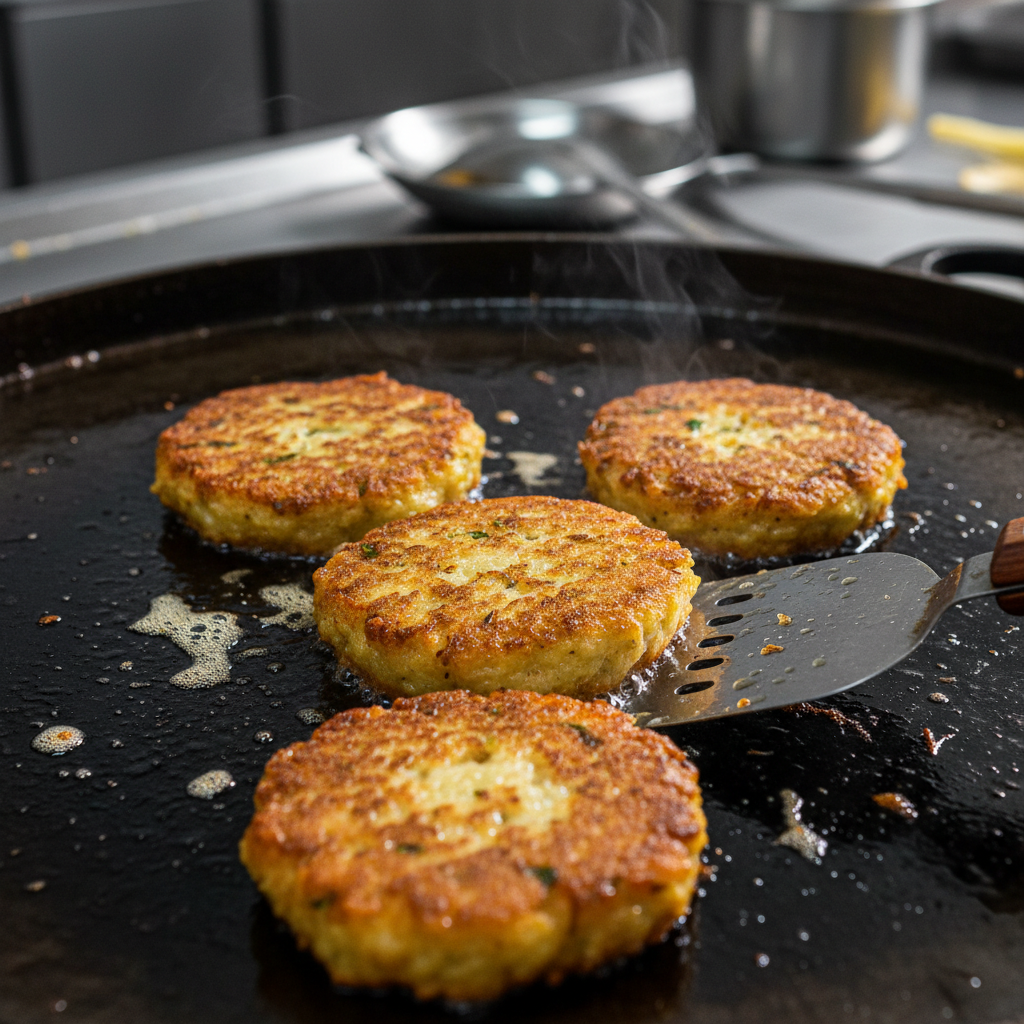
Follow six disciplined steps: boil and rice potatoes, season and bind lightly, shape and chill patties, pan‑fry to a deep golden crust, prep cold chutneys and yogurt, and assemble fast with crunchy toppings. This sequence locks in structure and crunch while delivering balanced, bright flavor.
1) Prep and Boil Potatoes
- Choose starchy potatoes: Russet or Idaho; avoid waxy types for better fluff.
- Cut for even cooking: 2–3 inch chunks ensure centers cook with edges.
- Cold‑start in salted water: Promotes uniform doneness; simmer 18–20 minutes.
- Steam off moisture: Drain, return to hot pot, and shake over low heat 60–90 seconds.
2) Rice and Season
- Rice while warm: Use a ricer for dry, fluffy potato granules—no gluey mash.
- Season thoughtfully: Finely minced ginger, green chili, cilantro stems, salt.
- Dry binders: 1–2 tablespoons fine bread crumbs or poha powder; avoid over‑binding.
- Optional texture: A teaspoon of roasted semolina adds faint crunch to the crust.
3) Shape and Chill
- Portion: 2.5–3 ounces each (about a heaping ice‑cream scoop).
- Press: 0.6 in (1.5 cm) thick discs to promote even browning.
- Chill: 20–30 minutes uncovered to set starches and dry the surface slightly.
- Dust lightly: Optional thin cornstarch coat for extra shatter on crust.
4) Pan‑Fry to Golden
- Heat: Thin film of neutral oil on a tawa or cast‑iron skillet; target 360–375°F.
- Sear: 6–8 minutes per side; avoid overcrowding to keep heat stable.
- Listen: Gentle sizzle = right heat; loud smoke = too hot; quiet = too cool.
- Rest on rack: 2–3 minutes to vent steam so the crust stays crisp.
5) Prep Cold Elements
- Yogurt: Whisk with a pinch of salt and sugar until pourable but thick.
- Tamarind chutney: Bright, tangy‑sweet; strain for silky texture.
- Mint‑cilantro chutney: Herbal heat; blend and chill for color retention.
- Crunch: Sev and papdi; keep sealed until the final minute.
6) Assemble and Serve Immediately
- Plate hot tikkis and spoon on cold yogurt.
- Stripe both chutneys for balanced tang and freshness.
- Top with onions, cilantro, and sev/papdi, then dust with chaat masala.
- Serve right away: Crunch window is minutes, not hours.
Prefer a ready‑made experience? Order the real thing from our Brampton kitchen: see our Aloo Tikki Chaat or the heartier Aloo Tikki with Channa plates prepared by our team.
Types, Methods, and Variations
Pan‑frying on a tawa is the gold standard for crust and flavor, but shallow‑frying, air‑frying, and baking are viable at‑home options. Spice profiles also vary—Delhi leans tangy with amchur, Punjab adds warmth with garam masala. Choose a method based on crunch level, oil use, and convenience.
Frying Method Comparison
| Method | Crunch Level | Oil Use | Time | Best For |
|---|---|---|---|---|
| Pan‑fry (tawa) | High, shatter‑crisp | Low‑moderate | 12–16 min | Authentic flavor + control |
| Shallow‑fry | Very high, even | Moderate | 8–12 min | Uniform browning quickly |
| Air‑fry | Medium‑high | Very low | 14–18 min @ 380°F | Hands‑off batches |
| Bake | Medium | Low | 20–25 min @ 425°F | Large trays for parties |
-
Regional spice notes:
- Delhi‑style: Amchur (dried mango powder), black salt, tamarind‑forward.
- Punjabi‑style: Garam masala warmth, ginger bite, sometimes paneer bits inside.
- Street‑cart heat: Extra green chili and a sharper mint chutney.
-
Dietary tweaks:
- Gluten‑free: Bind with poha powder; skip papdi, use extra sev.
- Dairy‑free: Swap yogurt with plant‑based yogurt; taste for tang.
- Nut‑free: Keep chutneys simple; no nut pastes needed here.
- Menu cousins to explore: Our chaat papdi offers similar textures, while channa samosa chaat skews heartier for bigger appetites.
Best Practices (Pro Halwai Tips)
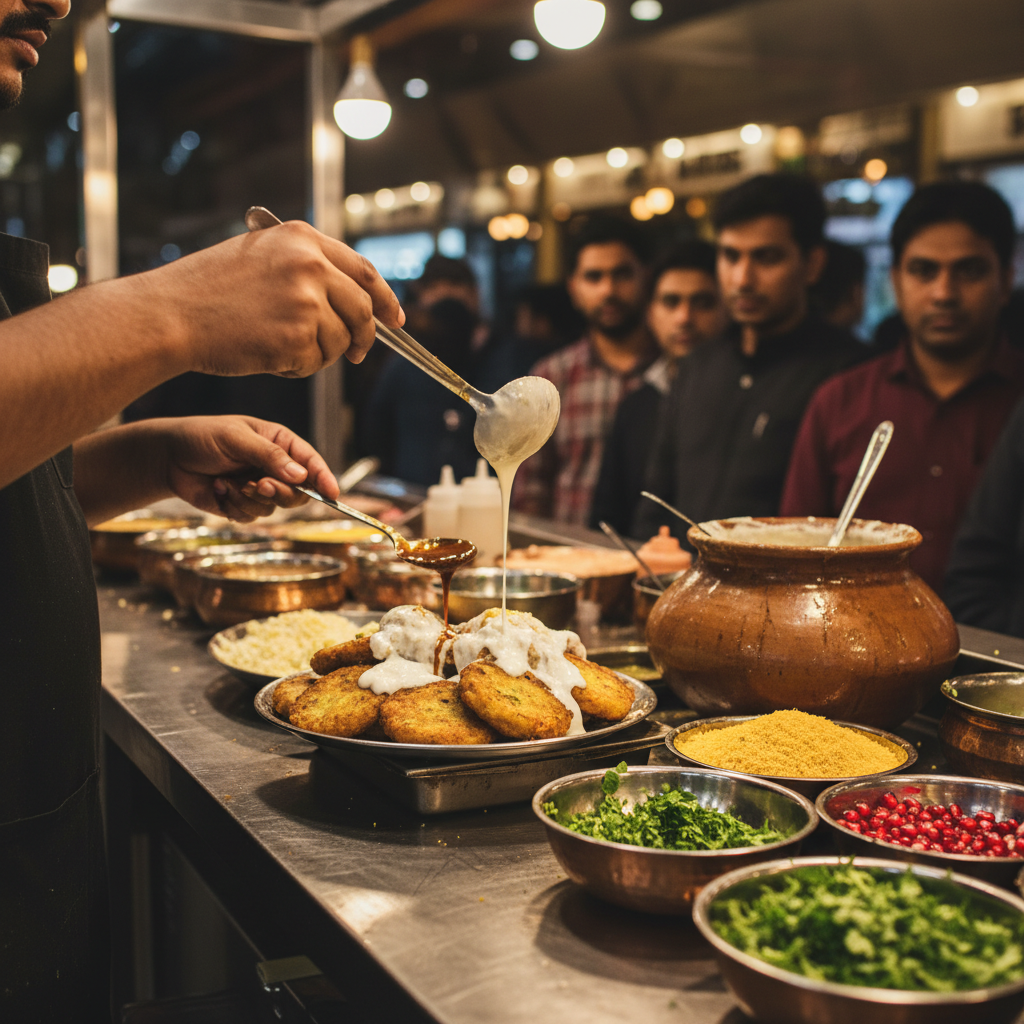
Dry potatoes, controlled heat, and last‑minute assembly are non‑negotiable. Keep yogurt and chutneys cold, rest fried tikkis briefly on a rack, and season in layers. These practices, honed by our fifth‑generation team, consistently deliver crisp‑outside, fluffy‑inside results even for large groups.
Moisture and Texture Control
- Steam‑dry potatoes after boiling to expel surface water before ricing.
- Chill patties to set starch and strengthen structure.
- Use a rack instead of paper towels; airflow preserves crust.
Heat and Timing Discipline
- Stabilize the pan between batches; give it 60–90 seconds to return to temp.
- Flip once for an even crust and minimal oil absorption.
- Assemble to order so sev and papdi stay audibly crisp.
Flavor Layering
- Season yogurt lightly so it supports—not mutes—chutneys.
- Alternate stripes of tamarind and mint to get sweet‑sour‑herbal in every bite.
- Finish with chaat masala for citrusy, savory pop right before serving.
Here’s the thing: when we audit home builds, 80% of issues trace back to moisture creep and slow assembly. Fix those, and your chaat quality leaps immediately.
Tools, Ingredients, and Resources
You need a ricer, a heavy tawa or cast‑iron skillet, a cooling rack, and mixing bowls. Stock russet potatoes, fresh herbs, tamarind and mint‑cilantro chutneys, yogurt, sev, and papdi. With these basics, you can reproduce our Brampton‑style aloo tikki chaat at home or scale it for parties.
Tools Checklist
- Potato ricer or fine masher
- Heavy tawa/cast‑iron skillet and metal spatula
- Cooling rack set over a sheet pan
- Mixing bowls, whisk, measuring spoons
- Instant‑read thermometer (for oil temp)
Staple Ingredients
- Russet/Idaho potatoes, fresh cilantro, ginger, green chili
- Chaat masala, salt, amchur (optional), garam masala (Punjabi profile)
- Tamarind chutney, mint‑cilantro chutney
- Plain yogurt (whisked), sev, papdi, chopped onion
Resource Notes
- Pre‑made option: Let us do the frying and assembly. Order Aloo Tikki Chaat from our kitchen.
- Hearty spin: Prefer legumes? Try our Aloo Tikki with Channa—classic tikki plus spiced chickpeas.
- Crunch extras: Explore aloo kachori for fried‑pastry texture in your snack spread.
Soft CTA: Hosting in Brampton? Our halwai team can prepare fresh chaat trays with separate toppings to preserve crunch. Start with aloo tikki chaat and add chaat papdi for variety.
Mini Case Studies and Real Examples
Catering succeeds when logistics protect texture. Separating hot and cold elements, venting containers, and on‑site assembly preserve crunch. These Brampton examples show how small operational choices keep aloo tikki chaat tasting fresh for families, offices, and festival crowds.
- Family puja in Springdale: We delivered hot tikkis in vented trays and chilled chutneys/yogurt separately. Assembly spanned 25 minutes; crunch held the entire service window.
- Office lunch near Airport Rd.: A toppings bar let teammates build plates. With batch‑fried tikkis resting on racks, texture loss dropped noticeably.
- Navratri community event: Volunteers worked an assembly line: hot station (tikkis), cold station (yogurt/chutneys), finish station (sev/papdi/onions). Throughput improved and sogginess disappeared.
When working with clients across Brampton, we’ve found that labeling toppings and keeping a “crunch last” rule increases guest satisfaction ratings—people love building their perfect bite.
FAQ: Aloo Tikki Chaat Preparation Steps
Use starchy potatoes, chill shaped patties, and fry at steady heat. Keep toppings cold and assemble right before serving. These fundamentals solve the most common home‑kitchen issues—soggy crusts, bland bites, and faded chutney color—without special equipment.
-
How do I stop tikkis from breaking?
Rice potatoes (not mash), bind lightly with dry crumbs or poha, and chill 20–30 minutes. Handle with a wide spatula and flip once to avoid stress on the crust. -
Why is my crust not crisp?
Your surface is too wet or your pan is too cool. Steam‑dry potatoes, dust lightly with cornstarch, and keep oil at 360–375°F for a quick, even sear. -
Can I prep ahead for parties?
Yes. Shape and chill patties (up to 24 hours). Fry just before serving, and keep yogurt/chutneys cold. Bring sev/papdi out at the last minute. -
What’s the difference between aloo tikki chaat and aloo tikki with channa?
Chaat is topping‑driven (yogurt + chutneys + crunch). Aloo tikki with channa adds warm chickpeas for a heartier plate. See our Aloo Tikki with Channa. -
Which other chaats should I try?
Start with chaat papdi for snap and tang, or our channa samosa chaat when you want a fuller meal.
Conclusion and Key Takeaways
Dry, chill, sear, assemble—these four actions define great aloo tikki chaat. Respect moisture control and heat, then finish with cold, bright toppings. Whether you cook at home or order from our Brampton kitchen, this discipline guarantees the crisp‑tangy experience people crave.
- Key Takeaway 1: Dry potatoes and chill patties to lock in structure.
- Key Takeaway 2: Fry hot and steady; flip once for a glassy crust.
- Key Takeaway 3: Assemble fast with cold yogurt/chutneys; add crunch last.
- Next Step: Practice at home, then taste our halwai benchmark—Aloo Tikki Chaat in Brampton.
Related Articles
Deepen your street‑food game with guides on chaat papdi assembly, dahi bhalla texture, and hosting a build‑your‑own chaat bar for festivals. Explore North Indian snack pairings and premium mithai combinations for gifting during Diwali and weddings.