Dahi Bhalla is a North Indian chaat of soft urad dal fritters soaked in chilled, seasoned yogurt and finished with tangy-sweet chutneys. A dahi bhalla traditional recipe delivers cloud-light vadas with balanced spice and cooling creaminess. In Brampton, The Mithai Maharaja prepares heritage-style Dahi Bhalla daily; here’s the exact halwai workflow you can replicate at home.
By The Mithai Maharaja • Last updated: 2026-04-21
Above-Fold: Hook + Table of Contents
You’ll learn the halwai method for tender vadas, stable oil temperatures, and chilled, seasoned yogurt. This guide includes a precise timeline, troubleshooting, scaling advice, and plating tips used by our fifth‑generation team at The Mithai Maharaja in Brampton.
Use this complete guide to:
- Understand what authentic Dahi Bhalla is—and how it differs from Dahi Vada or Bhalla Papdi Chaat.
- Follow a step-by-step, kitchen-tested process with times, temperatures, and ratios.
- Fix dense vadas, runny yogurt, or unbalanced chutneys with pro troubleshooting.
- Scale confidently for festivals, potlucks, weddings, or office lunches.
- Plate beautifully alongside chaats and mithai from our Brampton kitchen.
- What Is Dahi Bhalla?
- Why Dahi Bhalla Matters
- How Dahi Bhalla Works (Step-by-Step)
- Types, Methods, and Approaches
- Best Practices for Texture and Flavor
- Tools and Resources
- Case Studies, Scaling, and Local Tips
- Frequently Asked Questions
- Conclusion
Overview
Authentic Dahi Bhalla pairs airy urad dal vadas with cool, lightly sweet-sour yogurt and punchy chutneys. Success hinges on soaking time (4–6 hours), batter aeration (2–3× volume), steady frying heat (330–350°F), a brief soak, and a chilled yogurt rest for pillowy tenderness.
At The Mithai Maharaja, we prepare Dahi Bhalla using traditional halwai discipline: fresh urad dal, precise aeration, and fast, clean transfers from fryer to soak. We season yogurt with roasted cumin and a whisper of sugar-salt for balance, then garnish with tamarind chutney, green chutney, chaat masala, and cilantro.
What Is Dahi Bhalla?
Dahi Bhalla is a classic North Indian chaat of urad dal fritters soaked until plush, then served in chilled, seasoned yogurt with tamarind and herb chutneys. The hallmark is contrast: pillowy texture, cool dairy, tangy-sweet-acidic notes, and a finishing sprinkle of warm spices.
Think of it as comfort and craft in one bowl. The vadas (bhallas) should feel weightless yet hold together. Yogurt must be cold, gently seasoned, and pourable—not stiff. Chutneys bring brightness, while roasted cumin and chaat masala round the dish. We often pair it with crunchy elements like papdi or sev for textural lift and offer a plated alternative as Bhalla Papdi Chaat in our store for guests who love extra crunch.
Terminology varies by region: Dahi Bhalla and Dahi Vada are often used interchangeably, though some cooks reserve “Bhalla” for slightly larger, softer fritters. However you name it, technique rules the outcome—which is why halwai workflows matter.
Why Dahi Bhalla Matters
Dahi Bhalla matters because it showcases balance and technique—hydration, aeration, temperature, and timing—while scaling smoothly for festivals and events. It travels well, plates beautifully, and pairs with popular chaats and sweets for a complete celebration spread.
Here’s why this dish earns a permanent place on Brampton celebration menus:
- Scalable: The same workflow serves 6, 16, or 60 with minimal last-minute stress. Timelines and batch labels keep quality consistent.
- Seasonless: Cool yogurt soothes summer spice; chutneys brighten winter gatherings. It’s a year-round crowd-pleaser.
- Complements a chaat table: Offer with Chaat Papdi, Channa Samosa Chaat, and other favorites to satisfy every palate.
- Vegetarian-friendly: Naturally vegetarian and often gluten-free when made without wheat binders.
- Cultural throughline: A festival staple for Holi, Diwali, and family milestones—familiar to many South Asian households in the GTA.
At The Mithai Maharaja, guests often order Dahi Bhalla alongside mithai boxes so there’s something soothing to balance the sweetness. It’s also a reliable anchor for office lunches and wedding canapé stations when we build mixed chaat menus.
How Dahi Bhalla Works (Step-by-Step)
Great Dahi Bhalla rests on four controls: soak urad dal 4–6 hours; grind with minimal water; whip batter to 2–3× volume; and fry at 330–350°F. Soak warm vadas briefly, then rest them 30–90 minutes in chilled, seasoned yogurt before garnishing.
Below is the halwai-tested process we use in our kitchen and teach home cooks. It yields tender, balanced results and scales cleanly for events.
Ingredients and ratios (base batch, ~16 portions)
- Urad dal (split, skinless): 1 cup (200 g) soaked 4–6 hours
- Optional moong dal (yellow): up to 1/4 cup (50 g) for lighter crumb
- Ginger: 1 tsp, finely grated; Green chilies: 1 small, minced (optional)
- Salt: divided; add a pinch to batter, rest to yogurt and soak
- Oil for frying: maintain 330–350°F
- Yogurt: 3–4 cups (720–960 ml), chilled; 2–6 tbsp cold water or milk to thin
- Roasted cumin (jeera) powder: 1–2 tsp; pinch of sugar to balance
- Tamarind chutney + cilantro-mint chutney; chaat masala; red chili powder
- Fresh cilantro; pomegranate arils; sev or papdi for crunch (optional)
Method timeline
- Soak (4–6 hours): Rinse dal until water runs clear; soak in 3× water. Drain well.
- Grind (8–10 minutes): In small additions, grind to a smooth, thick paste with minimal water. Keep batter cool.
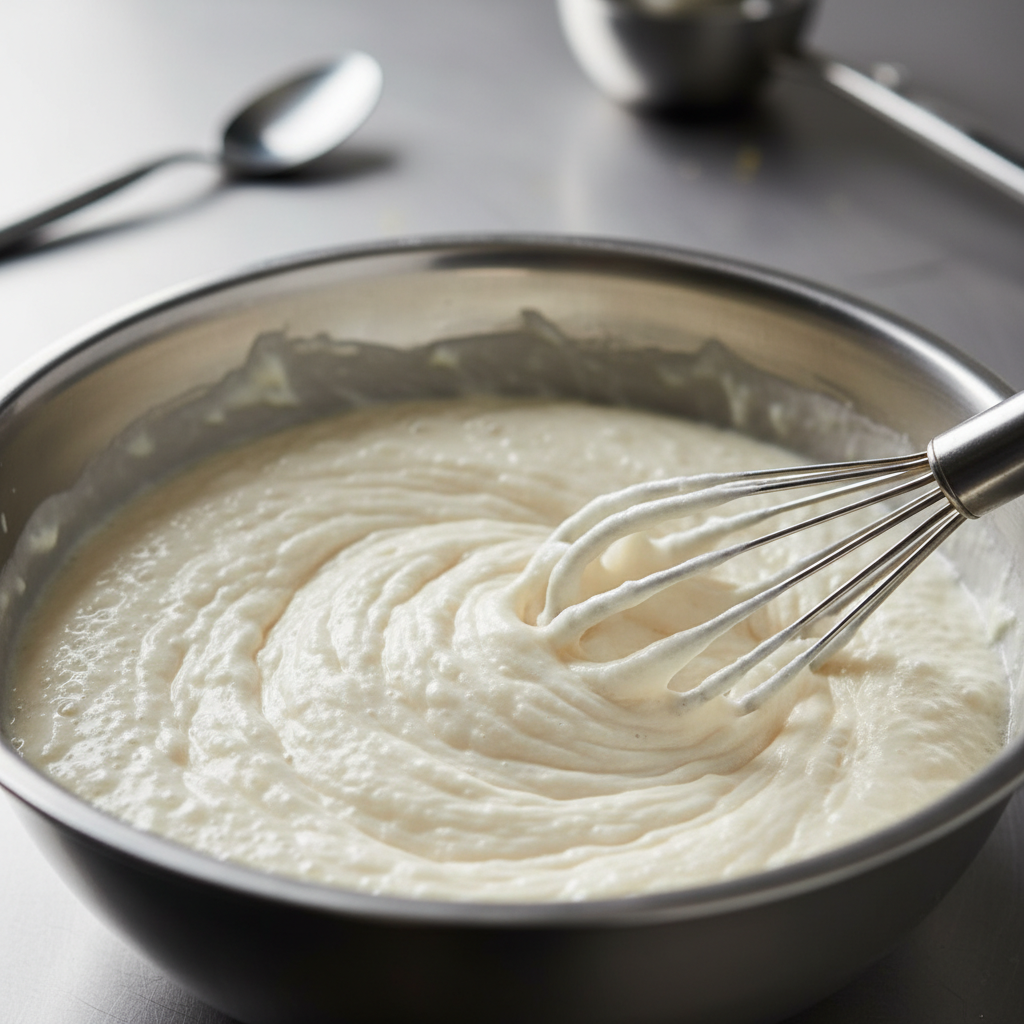
- Whip (3–5 minutes): Beat vigorously with a whisk or stand mixer until the batter lightens and increases 2–3×. Test a pea-size scoop in water; it should float.
- Fry (6–8 minutes/batch): Heat oil to 330–350°F. Drop rounded spoonfuls; avoid crowding. Fry until light golden and springy.
- Soak (10–15 minutes): Transfer hot vadas to warm, lightly salted water or thin buttermilk. Press gently to expel excess oil.
- Yogurt rest (30–90 minutes): Whisk yogurt with a pinch of salt, sugar, and roasted cumin; thin to pourable. Nestle vadas and chill until pillowy.
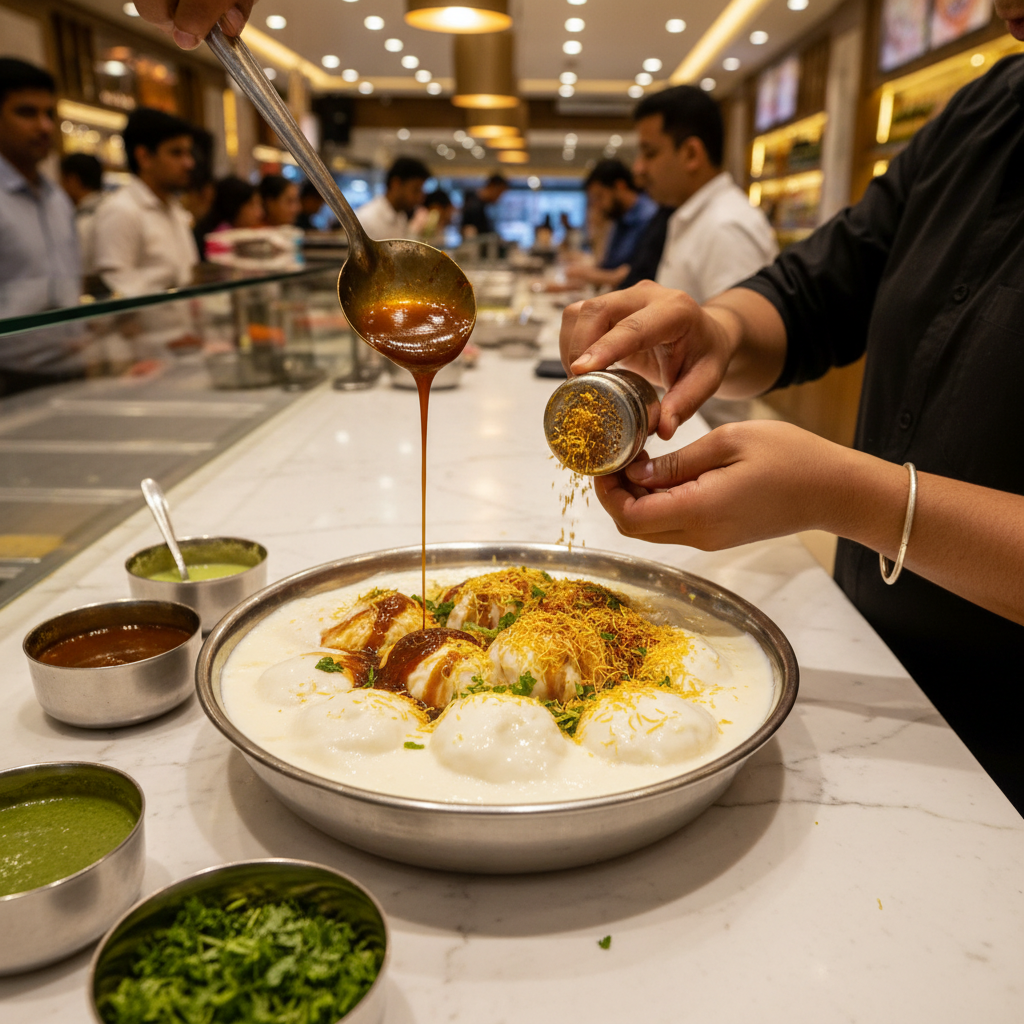
- Garnish and serve: Spoon into bowls, drizzle both chutneys, dust with chaat masala, cumin, and red chili; finish with cilantro and pomegranate.
| Step | Target | Time/Temp | Halwai tip |
|---|---|---|---|
| Soak | Even hydration | 4–6 hours | Rinse until clear to avoid grassy notes. |
| Whip | 2–3× volume | 3–5 minutes | Floating test ensures enough air for tenderness. |
| Fry | Golden, springy | 330–350°F | Hold within range; hotter toughens, cooler absorbs oil. |
| Soak | Gentle seasoning | 10–15 minutes | Lightly salted water seasons the crumb from within. |
| Yogurt rest | Pillowy texture | 30–90 minutes | Chill to 36–40°F for best contrast and stability. |
For a benchmark version in-store, see our freshly plated Dahi Bhalla. If you prefer an added crunch, try our Bhalla Papdi Chaat—identical base with papdi and sev for texture contrast.
Types, Methods, and Approaches
Classic Dahi Bhalla uses urad dal, but you can blend moong for lift, form mini canapés, or bake/air-fry for convenience. Keep three constants: airy batter, chilled seasoned yogurt, and balanced chutneys with sweet-tangy-herbal notes.
Regional and modern spins
- Urad-only (traditional): Richest mouthfeel and classic body—what we use for our signature in Brampton.
- Urad + moong (3:1): Slightly lighter crumb, faster frying, subtle nutty notes.
- Mini canapé format: Bite-size vadas for weddings and corporate trays; finish with micro-dollops of chutney.
- Streetside punch: Extra tart yogurt, bold red chili, and generous sev for crunchy heat.
- Garnish upgrades: Pomegranate, microgreens, or a swirl of boondi raita for color and crunch.
Method comparison
| Method | Texture | Active time | Oil use | Pro note |
|---|---|---|---|---|
| Deep-fry | Most tender, classic | 15–25 min/batches | High | Best control of color and spring. |
| Air-fry | Light, slightly drier | 18–22 min | Low | Brush lightly with oil; avoid overcooking. |
| Bake | Even, drier edges | 22–28 min | Low | Use convection and rotate pans once. |
Want a crunchy pairing on the side? Our Chaat Papdi or Vegetable Pakora add snap and spice to a Dahi Bhalla platter—perfect for mixed chaat spreads.
Best Practices for Texture and Flavor
For pillowy Dahi Bhalla, focus on batter aeration, temperature control, and yogurt seasoning. Use fresh urad dal, whip until a spoonful floats, fry at 330–350°F, soak briefly, and let vadas rest in chilled yogurt. Finish with roasted cumin, chaat masala, and balanced chutneys.
Halwai checkpoints
- Soak fully: Uneven hydration causes gritty crumbs. Aim for 4–6 hours.
- Grind cool and thick: Heat or excess water deflates the batter. Work in small pulses.
- Whip for lift: A 2–3× increase signals adequate air. Use a stand mixer if available.
- Hold the fry zone: 330–350°F delivers springy centers and light crusts.
- Salt the soak: 1/4–1/2 tsp salt per quart of warm water seasons from within.
- Season yogurt lightly: Pinch of salt-sugar and 1–2 tsp roasted cumin per quart for balance.
- Garnish at the end: Add chutneys and sev just before serving for color and crunch.
Troubleshooting quick fixes
- Dense vadas: Batter under-aerated—whip longer; add a teaspoon of water and re-test float.
- Greasy texture: Oil too cool—raise to 340–350°F and avoid crowding.
- Sour yogurt: Add a teaspoon of sugar and a pinch of salt; keep yogurt chilled at 36–40°F.
- Vadas falling apart: Batter too thin—fold in a spoon of rice flour or rest 10 minutes.
- Runny bowl: Yogurt over-thinned—whisk in 2–3 tablespoons of fresh yogurt to tighten.
Serving suggestion: top Dahi Bhalla with a side of warm chole and crisp bread for a fuller meal. Guests often pair our Dahi Bhalla with Amritsari Kulcha with Chana for a satisfying sweet-sour-spicy harmony.
Tools and Resources
A reliable grinder, a deep pot or kadai, a clip thermometer, and a spider or strainer deliver consistent results. A stand mixer speeds aeration. Prep bowls, squeeze bottles, and labeled trays streamline service when you’re plating for dozens.
- Grinder (burr or stone): Produces a smooth paste with minimal heat build-up.
- Deep pot/kadai: Allows 2–3 inches of oil for steady immersion frying.
- Thermometer (clip-on): Holds the 330–350°F window across batches.
- Spider/strainer: Fast transfers from oil to soak without tearing.
- Stand mixer with whisk: Three to five minutes on medium adds the lift you need.
- Sheet pans + racks: Drain evenly and keep batches organized with labels.
- Squeeze bottles: For neat tamarind and green chutney swirls at plating.
Case Studies, Scaling, and Local Tips
From family dinners to festival trays, the same workflow scales: soak, whip, fry, soak, rest in yogurt, garnish just before serving. Use labeled batches and pre-chilled yogurt to keep every portion tender and bright without last-minute stress.
How we scale in our Brampton kitchen
- Family set (serves ~12): Soak by 8 a.m., fry at 5 p.m., chill in yogurt 60 minutes. Garnish at the table.
- Office lunch (~30 portions): Prepare vadas a day prior, cool fast, refrigerate covered. Assemble in chilled yogurt 90 minutes before service; garnishes at the station.
- Wedding canapé (100+ bites): Mini vadas piped with a teaspoon; use squeeze bottles for symmetrical chutney dots and a measured dust of chaat masala.
Round out the menu with a crunchy or spicy counterpoint. Guests commonly order Vegetable Pakora and Chaat Papdi on the same platter. For a sweet finish, boondi-based treats like laddoo (see our Boondi Laddoo) complement the tangy yogurt profile.
Local considerations for Brampton
- Plan ahead for festival rushes. Place larger orders of Dahi Bhalla and mixed chaats a day early so we can align fresh frying and chilled yogurt rests for your pickup window.
- Winter gatherings call for warmer sides. Pair Dahi Bhalla with hot items like Amritsari Kulcha with Chana to balance the cool yogurt.
- For office lunches around noon, request yogurt-packed trays and garnish kits separately. This keeps the top crisp and colorful until the exact serving minute.
Frequently Asked Questions
Most issues come from under-aerated batter, unstable oil temperature, or over-thinned yogurt. Whip until a spoonful floats, fry at 330–350°F, and chill yogurt to 36–40°F. Assemble up to two hours ahead and garnish right before serving.
How do I make vadas that stay soft?
Soak urad dal 4–6 hours, grind thick, and whip the batter to 2–3× volume—the float test is key. Fry at 330–350°F, then soak warm vadas 10–15 minutes and rest them 30–90 minutes in chilled, seasoned yogurt.
Can I bake or air-fry Dahi Bhalla?
Yes. Brush lightly with oil and air-fry at 360–375°F or bake at about 400°F until golden, flipping once. Keep the batter well-aerated and let pieces rest in seasoned yogurt to regain tenderness.
How far in advance can I assemble?
For best texture, add vadas to seasoned yogurt 1–2 hours before serving. Hold chutneys, sev, and herbs until plating so the top stays bright and crisp.
Is Dahi Bhalla gluten-free?
Typically, yes. When made from urad dal without wheat binders, the vadas are gluten-free. If using purchased chaat masala or sev, confirm labels to ensure there are no gluten-containing additives.
What can I serve alongside Dahi Bhalla?
Pair with crispy chaats or warm breads for contrast. Popular combos include Chaat Papdi, Vegetable Pakora, and Amritsari Kulcha with Chana.
Conclusion
Master Dahi Bhalla by controlling four factors: soaking, whipping, frying temperature, and a chilled yogurt rest. Balance chutneys and spices, garnish at the end, and scale with labeled batches. The same halwai workflow works at home and in our Brampton kitchen.
Key takeaways
- Soak 4–6 hours; whip batter to a 2–3× rise and pass the float test.
- Fry at 330–350°F; soak 10–15 minutes; rest in yogurt 30–90 minutes.
- Season yogurt lightly and garnish right before serving for color and crunch.
- Scale with labeled trays and pre-chilled yogurt for events and festivals.
- Pair with crunchy chaats or warm breads to build a complete spread.
Want to taste a benchmark version or plan a mixed chaat table? Visit us in Brampton or order our in‑store Dahi Bhalla, then add Bhalla Papdi Chaat and Chaat Papdi for texture and variety.