Amritsari kulcha with chana guide refers to a complete, step-by-step playbook for making crisp, blistered kulcha and richly spiced chickpeas at home—or choosing it confidently when you order in Brampton. It covers dough science, stuffing, cooking methods (tawa, tandoor, oven), chana styles, plating, and smart pairings.
By The Mithai Maharaja • Last updated: 2026-04-16
Quick Answer
Amritsari kulcha with chana is a stuffed, tandoor-style flatbread served with hearty, spiced chickpeas. In Brampton, you can enjoy this combo at The Mithai Maharaja (2500 Williams Pkwy), where fifth‑generation halwai craftsmanship guides both the kulcha and chana. This guide shows you how to make it—or order it like a pro.
Start Here: Hook & Table of Contents
Start with a simple plan: know your dough, master the stuffing, and match it to the right chana. This guide breaks down ingredients, cooking options, and service tips. You’ll also see how The Mithai Maharaja in Brampton prepares, plates, and pairs this Punjabi classic for dine‑in, takeout, and catering.
- Why this guide matters: Saves time, prevents soggy breads, guarantees bold flavor
- What you’ll get: 3 cooking methods, tested ratios, spice map, plating ideas
- For whom: Home cooks, food lovers, and Brampton diners ordering confidently
- Overview
- What Is Amritsari Kulcha with Chana?
- Why It Matters (Culture, Nutrition, Experience)
- How It Works: Dough, Stuffing, and Chana
- Methods: Tandoor, Tawa, or Oven
- Best Practices & Troubleshooting
- Tools, Resources & Local Ordering
- Mini Case Studies & Real Examples
- FAQ
- Conclusion & Key Takeaways
Overview
Amritsari kulcha with chana is a crisp, layered flatbread with seasoned stuffing served alongside a bold chickpea curry. Success comes from hydrated dough, a balanced filling, high-heat baking, and a chana base that’s simmered for body and gloss. Pair with pickled onions, chutney, and a pat of desi ghee.
-
Core building blocks:
- Dough: Refined flour base (maida) with salt, leavening, 58–62% hydration
- Stuffing: Spiced potatoes, paneer, or mixed veg with nigella/sesame
- Chana: Pindi-style (dry) or home-style (gravy) using soaked chickpeas
- Heat: Tandoor hottest, followed by tawa and then oven
- Flavor anchors: Carom (ajwain), nigella (kalonji), cumin, garam masala, amchur
- Texture goals: Blistered top, soft layered crumb, light char, non-greasy finish
- Local angle (Brampton): At The Mithai Maharaja, the combo sits alongside channa samosa chaat and aloo tikki with channa—great for sharing.
Local Tips
- Tip 1: If you’re driving via Highway 410, exit at Williams Pkwy and plan pickup from Units 6 & 7 to keep kulcha crisp. Vent the bag slightly so steam doesn’t soften the bread.
- Tip 2: Weekends and festival days get busy. Order ahead online to time your pickup, then add a sweet finish—think chana ladoo—for guests.
- Tip 3: For office lunches near Trinity Common or Gage Park events, request kulcha cut in quarters with chutney cups for easy serving and less mess.
IMPORTANT: These tips align with The Mithai Maharaja’s daily service and North Indian street‑style offerings in Brampton.
What Is Amritsari Kulcha with Chana?
It’s a Punjabi staple pairing: a stuffed, blistered flatbread baked at high heat and served with spiced chickpeas. Authentic versions use nigella or sesame seeds on top, a tangy note from amchur in the filling, and chana that’s simmered until glossy and aromatic.
-
Kulcha defined:
- Flour base: Typically maida with 58–62% water for a soft crumb
- Leavening: Yogurt + baking powder/soda; some kitchens use a preferment
- Seeds: Nigella and sesame for aroma and crackle
- Finish: Brush with desi ghee for shine and flavor
-
Common stuffings:
- Potato (aloo): Mashed with cumin, green chile, cilantro, amchur
- Paneer: Crumbled and seasoned for a richer bite
- Mix-in: Red onion, ginger, or pomegranate powder for tang
-
Chana styles:
- Pindi: Drier, spice-forward, tea‑leaf or anardana for color and tang
- Home-style: Onion‑tomato base with a light, spoonable gravy
- Restaurant context (Brampton): This combo appears on The Mithai Maharaja’s Amritsari Kulcha with Chana menu, crafted by a fifth‑generation halwai family.
Self‑contained answer: Amritsari kulcha with chana blends a stuffed, seed‑topped flatbread and boldly spiced chickpeas. The bread’s blistered crust and soft interior come from hydrated dough and high heat, while the chana’s depth comes from slow simmering and a balanced spice profile.
Why This Combo Matters (Culture, Nutrition, Experience)
This pairing delivers balanced satiety and tradition. The kulcha’s light char and seeds add aroma; the chana brings protein and fiber. Together, they offer a complete street‑style meal that travels well and plates beautifully—ideal for family tables, team lunches, and Brampton celebrations.
- Cultural resonance: A classic of Amritsar street vendors, celebrated across Punjab and Delhi; in diaspora hubs like Brampton, it anchors weekend brunches and festival gatherings.
-
Nutrition snapshot:
- Chickpeas: Protein-dense and fiber‑rich; pressure cooking preserves texture
- Fats: A light ghee finish boosts aroma—use a brush for control
- Carbs: Soft crumb delivers energy; pair with salad or raita to balance
-
Dining experience:
- Texture contrast: Crisp blisters vs. creamy chickpeas
- Flavor layering: Carom, nigella, and tangy amchur hit different notes
- Service-friendly: Holds up for takeout when vented (steam escapes)
- Local relevance: At The Mithai Maharaja, it sits beside chaats in the Chaats & Combos category so mixed groups can share and sample without overlapping flavors.
Self‑contained answer: The combo matters because it’s nutritionally balanced, easy to scale for groups, and rooted in Punjabi heritage. For Brampton families and teams, it’s a reliable crowd‑pleaser that pairs naturally with pickled onions and chutneys.
How It Works: Dough, Stuffing, and Chana
Success hinges on ratios and heat. Keep dough at 58–62% hydration, rest it for gluten relaxation, and seal the stuffing fully. Bake hot for blisters. For chana, soak 8–12 hours, pressure cook until just tender, and finish with a spice‑infused tadka for sheen and depth.
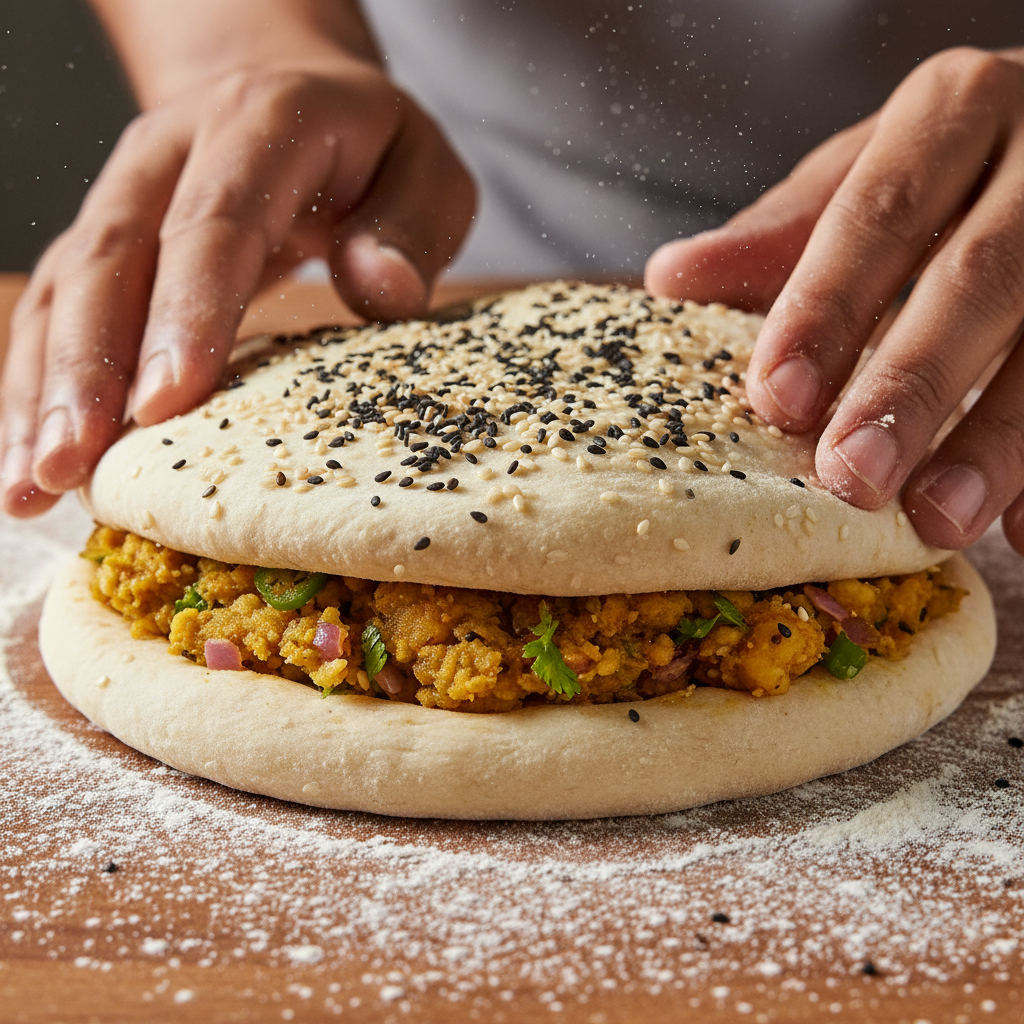
Kulcha Dough: The 4-Part Formula
- Hydration (58–62%): Higher hydration yields softer crumb; lower gives structure. Aim mid‑range for blister + softness.
- Leavening: Yogurt + baking powder/soda create lift; avoid excessive soda (alkaline taste).
- Fat: A spoon of oil or ghee in the dough shortens gluten for tenderness.
- Rest: 20–30 minutes after kneading relaxes gluten; 60–90 minutes if cooler than 68°F (20°C).
Stuffing That Stays Put
- Dry the base: Steam off moisture from potatoes; wet filling tears dough.
- Spice map: 1 tsp cumin + 1 tsp coriander + 1/2 tsp ajwain per cup mashed potato; adjust chile and amchur to taste.
- Seal well: Pinch edges firmly, then press gently—don’t roll aggressively or the filling will burst.
- Top finish: Nigella and sesame press lightly into the surface for aroma and crunch.
Chana Foundations
- Soak: 8–12 hours with a pinch of baking soda for softer skins (rinse before cooking).
- Pressure cook: 20–30 minutes at pressure until just tender; avoid mushy beans.
-
Base options:
- Pindi: Minimal gravy; tea bag/anardana for color and tang; finish with dry masala.
- Home-style: Onion‑tomato masala; loosen with reserved stock; finish with kasuri methi.
- Tadka (tempering): Bloom cumin, ginger, chile, and garam masala in hot oil/ghee; fold in for sheen.
Step-by-Step: One Kulcha + One Bowl of Chana
- Mix dough: Maida, salt, yogurt, baking powder/soda, water to 60% hydration.
- Knead + rest: Smooth dough; rest 30 minutes (longer if room is cool).
- Prep filling: Dry-mash potatoes with cumin, coriander, ajwain, amchur, cilantro.
- Shape: Flatten dough ball, add filling, seal seam side down; press gently to disc.
- Seeded top: Brush lightly with water; press nigella + sesame.
- Cook hot: Tandoor (hottest) or tawa/oven until blistered and cooked through.
- Chana: Simmer cooked chickpeas in masala; adjust salt, acid, and heat.
- Plate: Kulcha with chana, pickled onions, lemon wedges, green chutney.
Self‑contained answer: Follow the hydration‑rest‑seal‑sear sequence for kulcha and the soak‑pressure‑simmer‑tadka sequence for chana. These two short workflows create consistent results at home or in a professional kitchen.
Methods: Tandoor, Tawa, or Oven
Use your hottest option. A tandoor gives the deepest blisters; a cast‑iron tawa over high heat mimics the effect; an oven at 500°F (260°C) plus a steel or stone works well. Always preheat thoroughly and serve immediately to preserve crisp edges.
| Method | Best For | Heat Target | Pro Tip |
|---|---|---|---|
| Tandoor | Max blister, smoky char | 700–900°F (370–480°C) | Slightly wetter dough helps adhesion to the wall |
| Cast‑iron tawa | Home kitchens without ovens | High flame, pan preheated 6–8 minutes | Invert over open flame briefly to blister the top |
| Oven + steel/stone | Batch cooking | 500°F (260°C), preheat 45–60 minutes | Broil 30–60 seconds to finish blisters |
- Seed adhesion: Lightly brush water before sprinkling; press gently.
- Grease control: Brush ghee after baking, not before, to keep blisters crisp.
- Holding: Rest baked kulcha 60–90 seconds on a rack to vent steam.
Self‑contained answer: Choose the hottest tool you have, preheat thoroughly, and finish with a quick broil or direct flame to create blisters. Brush ghee at the end to preserve texture.
Best Practices & Troubleshooting
Keep dough hydrated, fillings dry, and cooking surfaces blazing hot. If kulcha tears, your filling is too wet or over‑rolled. If chana tastes flat, add acid (amchur or lemon) and a quick tadka. Vent takeout boxes so crisp edges survive the ride.
-
Avoid soggy kulcha:
- Use a wire rack post‑bake for 1–2 minutes
- Transport in vented containers; never seal piping hot
-
Prevent tearing:
- Keep stuffing dry; steam off potato moisture
- Press to shape rather than aggressive rolling
-
Consistent blisters:
- Preheat longer than you think (up to 60 minutes for stones)
- Finish with broiler or open flame for 30–60 seconds
-
Chana that shines:
- Reserve cooking stock to adjust body (2–4 tablespoons)
- Bloom spices in hot fat for aroma release (tadka)
- Balance salt, heat, and sour at the end
-
Scaling for guests:
- Par‑bake kulcha 70–80%, cool, and finish to order
- Hold chana in a 160–170°F (71–77°C) warmer; stir to prevent settling
Self‑contained answer: Control moisture and maximize heat. Dry fillings, thorough preheats, and late ghee brushing preserve the signature blistered texture. For chana, reserve stock and finish with a spice bloom for depth.
Tools, Resources & Local Ordering
You can make this combo with basic gear—mixing bowl, rolling pin, cast‑iron pan—or upgrade with a baking steel or tandoor. In Brampton, order ready‑to‑enjoy Amritsari Kulcha with Chana from The Mithai Maharaja for dine‑in, pickup, or catering.
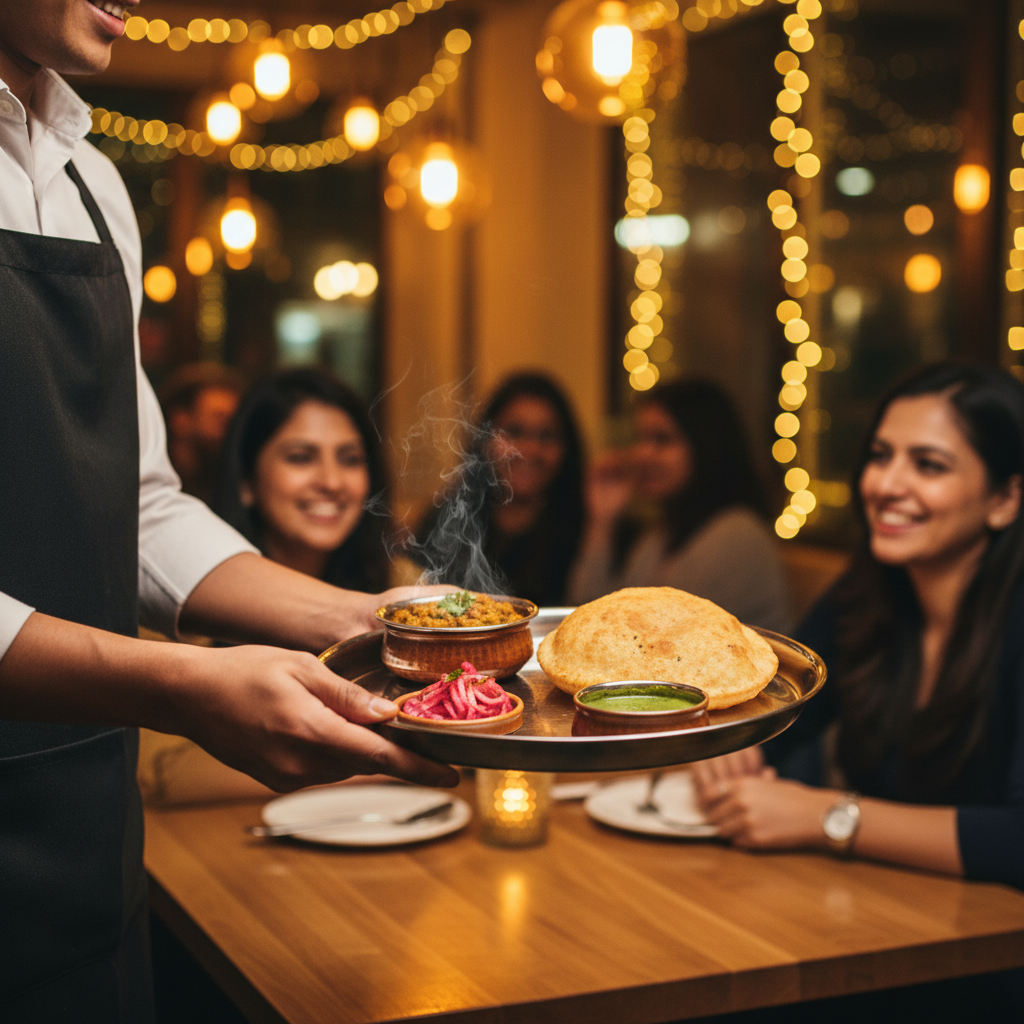
Home Setup: Good, Better, Best
- Good: Cast‑iron tawa or heavy skillet; strong burner; wire rack for venting
- Better: Oven + preheated baking steel/stone; quick broil to finish blisters
- Best: Backyard tandoor or dedicated pizza oven reaching 700°F+
Restaurant & Catering Angle (Brampton)
- Order ready‑made: See Amritsari Kulcha with Chana on our menu.
- Chaats for variety: Pair with channa samosa chaat for texture contrast at parties.
- Office lunches: Add aloo tikki with channa so guests can pick their heat level.
- Sweet finish: Close with mithai—our heritage lineup includes gulab jamun, barfi, and special chana ladoo.
Planning a Brampton gathering?
We can prepare kulcha cut into quarters, chana in warmers, and labeled chutney cups. Ask our team about vegetarian spreads that travel well across the GTA.
Self‑contained answer: With a hot surface and a quick broil, home cooks can achieve blistered kulcha. For events or time‑squeezed days, ordering from The Mithai Maharaja ensures consistency and elegant presentation.
Mini Case Studies & Real Examples
Real-world use shows what works: vented packaging keeps kulcha crisp; par‑baked rounds finish fast for crowds; and pairing with bright chutneys lifts rich chana. These patterns scale from home kitchens to corporate lunches and festival events.
-
Busy Saturday pickup (Brampton):
- Challenge: Keep edges crisp during a 15‑minute drive
- Approach: Pack kulcha on edge with vents; chutneys in cups
- Outcome: Blisters stayed intact; re‑crisped 2 minutes under broiler at home
-
Office lunch near Williams Pkwy:
- Challenge: Feed mixed spice preferences fast
- Approach: Serve chana home‑style (mild) + hot green chile chutney on side
- Outcome: Faster line flow; zero waste from over‑spicing
-
Wedding sangeet spread:
- Challenge: Large headcount with staggered service
- Approach: Par‑baked kulcha 70–80%, finished in batches; chana held at 165°F (74°C)
- Outcome: Consistent texture all evening; smooth replenishment cycles
-
Home test kitchen (technique dial‑in):
- Observation: 60% hydration gave the best blister/soft‑crumb balance
- Tweak: A final 45–60 seconds under the broiler increased spotting
- Result: Repeatable blisters without over‑browning
Self‑contained answer: Vented packing, par‑bakes, and finish‑to‑order broils protect texture at scale. Mild base chana with heat‑on‑the‑side suits mixed crowds.
FAQ
Use dry fillings, hot surfaces, and vented packaging. For chana, keep a seasoned stock to adjust body and finish with a tadka. At The Mithai Maharaja, we apply these same principles across dine‑in, pickup, and catering.
-
How do I keep kulcha from getting soggy on the way home?
Cool on a wire rack 60–90 seconds, then pack in a vented box or slightly ajar paper bag. Re‑crisp 2–3 minutes on a hot steel or under the broiler. Avoid sealing piping hot breads. -
What’s the difference between pindi chana and home‑style chana?
Pindi is drier and spice‑forward, often colored with tea leaves or anardana and finished with dry masala. Home‑style uses an onion‑tomato base and has a light, spoonable gravy. -
Can I make kulcha without a tandoor?
Yes. Use a cast‑iron tawa preheated 6–8 minutes. Cook one side, then invert over open flame to blister the top. Or use a 500°F (260°C) oven with a steel/stone and broil briefly. -
Which chutneys pair best with this combo?
Classic green chutney (cilantro‑mint) and tamarind chutney cover fresh and tangy notes. Add pickled onions and lemon wedges for crunch and brightness. -
What should I order with it for a shared meal?
In Brampton, round out the table with channa samosa chaat, aloo tikki with channa, and a box of premium mithai to finish.
Conclusion & Key Takeaways
For crisp, flavorful results, keep dough hydrated and hot, fillings dry, and chana balanced with a final tadka. Whether you cook at home or order in Brampton, these fundamentals ensure the Amritsari classic tastes exactly as it should—layered, aromatic, and satisfying.
-
Key Takeaways
- Hydration (58–62%) + high heat = blisters and soft crumb
- Dry fillings, sealed edges, and late ghee brushing protect texture
- Chana shines with reserved stock, balanced acid, and tadka
- Vented packaging keeps takeout crisp during short drives
- For events, par‑bakes and finishing to order scale smoothly
-
Next Steps
- Try the tawa method with a quick broil for reliable blisters
- Order our Amritsari Kulcha with Chana for a benchmark taste
- Build a shareable spread with channa samosa chaat and heritage mithai
From our fifth‑generation halwai family to your table—crafted in heritage, served with royalty.