Bedmi puri aloo cooking method refers to the complete, step-by-step technique for making urad-dal–spiced puris and a tangy potato curry (aloo sabzi). It covers soaking and grinding dal, mixing spiced dough, rolling and frying puris at 350–365°F, and simmering a cumin-forward aloo sabzi until thick and scoopable.
By The Mithai Maharaja • Last updated: April 17, 2026 • Brampton, ON
Quick Summary
Make crisp, puffed bedmi puri with an urad dal spice mix and pair it with a bright, tangy aloo sabzi. Aim for oil at 350–365°F, dough hydration near 55–58%, and a 20–30 minute rest. These three variables drive consistent lift, color, and crumb—hallmarks of Delhi-style bedmi enjoyed at The Mithai Maharaja.
- What you’ll learn: Dough ratios, dal prep, rolling, frying, and aloo sabzi timing.
- Why it matters: Stable oil temps and spiced dal create signature aroma, crunch, and color.
- Use cases: Brunch, festival breakfasts, and event catering boxes in Brampton.
- Tools: Kadhai, slotted spoon, rolling pin, thermometer, heavy board.
- What Is Bedmi Puri Aloo?
- Why the Method Matters
- How the Bedmi Puri Aloo Cooking Method Works
- Types, Methods, and Approaches
- Step-by-Step: From Dal to Plate
- Best Practices and Pro Tips
- Tools and Resources
- Case Studies and Local Examples
- FAQ
- Related Articles
- Key Takeaways + Next Steps
Quick Answer
The bedmi puri aloo cooking method starts with spiced urad dal blended into dough, rolled and fried at 350–365°F, then served with a tangy cumin-tomato potato curry. In Brampton, you can taste the benchmark version at The Mithai Maharaja, where fifth-generation halwais craft bedmi puri aloo daily.
Local Tips
- Tip 1: Weekend mornings near Highway 410 and Williams Pkwy get busy. Pre-order bedmi puri aloo for pickup from our Brampton shop to avoid brunch rush lines.
- Tip 2: Winter fry temps drop fast when doors open. Shield your kadhai from drafts and recheck 350–365°F often so puris stay puffed and evenly golden.
- Tip 3: Festival weeks (Diwali, Vaisakhi) see higher demand. For pooja breakfasts and office treats, lock in catering trays and giftable mithai boxes a few days ahead.
IMPORTANT: These tips reflect our Brampton kitchen flow and the classic Delhi/Punjab style we serve at 2500 Williams Pkwy, Units 6 & 7.
What Is Bedmi Puri Aloo?
Bedmi puri aloo is a North Indian breakfast plate of dal-spiced deep-fried breads and a tangy potato curry. The puri dough contains ground urad dal and warming spices; the aloo sabzi simmers with cumin, tomatoes, and chilies. Together, they deliver crunch, aroma, and a satisfying, scoopable gravy.
In plain terms, “bedmi” refers to puris enriched with ground dal and spices that season the crumb from the inside out. The dal boosts protein and contributes nutty notes; the spice mix (like fennel, coriander, and chili) defines the aroma. Aloo sabzi brings brightness from tomatoes and amchur, with cumin and hing underpinning the tempering. Served hot, this duo balances texture (crisp puri, soft potato) and flavor (warm spice, tangy finish).
- Roots: Delhi and western Uttar Pradesh breakfast culture; popular at street stalls and halwai shops.
- Signature traits: Puffed rounds, toasty dal crumb, light peppery heat, and a gravy that clings to torn puri.
- At The Mithai Maharaja: You’ll find it alongside Delhi Wale Chole Bhature and Amritsari Kulcha—classic North Indian staples crafted by a fifth-generation halwai family.
- Serving note: Common sides include mint chutney, tamarind chutney, and achar for contrast.
Why the Method Matters
The bedmi puri aloo cooking method ensures repeatable puff, color, and flavor. Controlled dal hydration, gluten development, and oil temperature (350–365°F) produce light, crisp puris, while disciplined simmering yields a thick, vibrant aloo sabzi. This precision transforms a good plate into a memorable one.
Consistency is the difference between a puri that puffs every time and one that stays flat. Hydration at roughly 55–58% helps gluten set quickly, and oil above 350°F drives rapid steam expansion. Meanwhile, a 14–18 minute simmer concentrates the aloo sabzi so it coats each bite. These levers—hydration, heat, time—are simple to track and dramatically increase your success rate.
- Texture control: Even a 10°F drop in oil can reduce puff and darken edges prematurely.
- Flavor fidelity: Toasting spices for 30–60 seconds unlocks essential oils that give bedmi its aroma.
- Food safety: Hot holding above 140°F keeps the sabzi safe during service; reheat to a boil before plating.
- Event-readiness: The method scales cleanly, ideal for catering trays or office breakfasts in Brampton.
How the Bedmi Puri Aloo Cooking Method Works
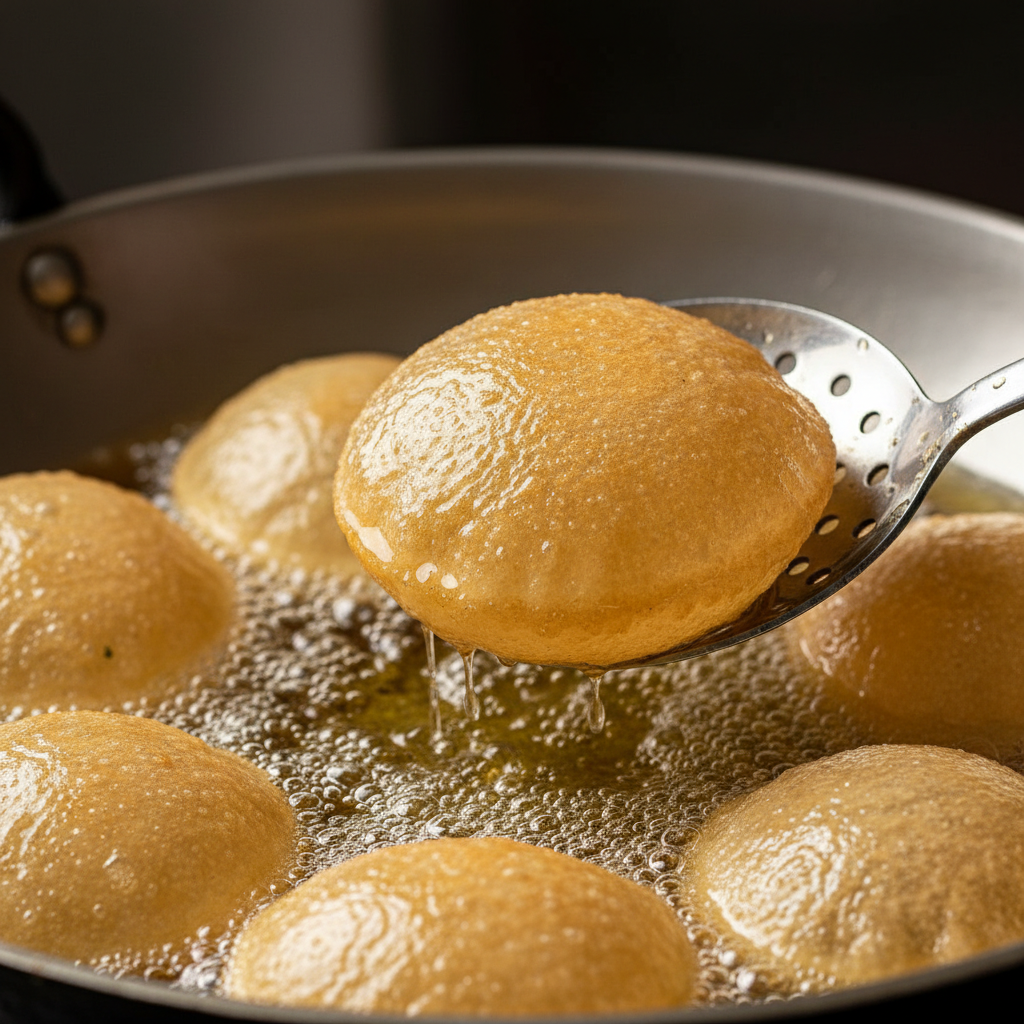
Bedmi puri puffs because moisture in the dough flashes to steam when it hits 350–365°F oil. Ground urad dal adds body and flavor, while modest gluten development traps steam. The aloo sabzi thickens as starches gelatinize during a gentle, uncovered simmer.
Think of puri as a steam balloon. You need two things: a thin, even disk and high heat. The dough uses all-purpose or atta flour with 10–12% protein; minimal resting (20–30 minutes) relaxes it enough for rolling but doesn’t make it slack. Urad dal (pre-soaked and ground) gives a distinctive, slightly nutty profile. Aloo sabzi relies on a cumin-ginger-chili base. As potatoes cook, their starch disperses; by the 15-minute mark, the gravy transitions from watery to glossy and clingy.
- Hydration window: 55–58% (by weight) supports fast puff without oiliness.
- Rolling target: 5–6 inches across, 1.5–2 mm thick for quick, even expansion.
- Oil depth: 2–2.5 inches provides buoyancy for full ballooning.
- Sabzi simmer: 14–18 minutes, uncovered, stirred every 2–3 minutes.
Types, Methods, and Approaches
There are two main bedmi approaches: dal mixed into the dough or a thin dal paste layered inside (stuffed style). Both work. Choose urad for classic richness; moong for lighter taste. Fry deep in neutral oil for reliable puff; air-fry only for reheating, not first-cook.
Classic Delhi bedmi mixes ground urad dal right into the dough for a uniform crumb. A stuffed style spreads a dal paste inside two small disks sealed at the rim; it’s aromatic but slightly trickier to roll thin. For aloo sabzi, Delhi-style leans tangy with tomatoes and amchur; a Punjabi-leaning version may finish with garam masala and fresh cilantro. For frying, neutral oils with high smoke points (e.g., refined peanut or sunflower) support consistent color at 350–365°F.
- Dal choice: Urad = fuller body; moong = lighter, crisper edges.
- Integration: Mixed-in (easier, fast) vs stuffed (aromatic, advanced handling).
- Alu sabzi styles: Delhi tangy-tomato; Banarasi uses kasuri methi; Punjabi adds garam masala at finish.
- Cooking: Deep-fry for puff; shallow-fry risks uneven ballooning; air-fry is best for reheating leftover puris to restore some crispness.
Step-by-Step: From Dal to Plate
To make bedmi puri aloo, soak and grind urad dal, mix and rest dough 20–30 minutes, roll to 5–6 inches, fry at 350–365°F, and simmer aloo sabzi 14–18 minutes. Keep puris stacked in a ventilated basket and serve both components piping hot.
This sequence balances speed and quality. Soak urad 1–2 hours, grind to a smooth paste, and fold into flour with spices. Rest briefly while you prep the aloo base. Fry puris just before plating to protect puff and snap. Sabzi should finish glossy with small potato chunks intact; smash a few pieces to thicken naturally, no cornstarch needed.
- S.M.A.R.T. mise: Weigh flour, dal paste, spices; set thermometer on kadhai; preheat oil to 350°F.
- Dal prep (1–2 hrs): Soak urad; drain fully; grind with minimal water to a soft paste.
- Dough mix (5–7 min): Flour + dal paste + spices + salt + warm water to 55–58% hydration; add 1–2 tsp oil to aid rolling.
- Rest (20–30 min): Covered, room temp; prevents shrinkback when rolling.
- Roll (10–15 min): Divide 40–45 g balls; roll to 5–6 inch disks, 1.5–2 mm thick.
- Fry (2–3 min/batch): Oil at 350–365°F; press center gently with slotted spoon to encourage ballooning; flip once; drain well.
- Sabzi base (6–8 min): Temper cumin + hing; add ginger-chili-tomato; cook until oil separates.
- Potatoes (14–18 min): Add boiled cubes; season with turmeric, coriander, red chili, amchur; simmer to thick, glossy consistency.
- Finish: Cilantro and a squeeze of lemon; adjust salt at service temp.
- Plate hot: Pile puris in a vented basket; ladle sabzi into a shallow bowl for easy scooping.
| Step | Target | Why it works | Common miss | Fast fix |
|---|---|---|---|---|
| Dough hydration | 55–58% | Traps steam; prevents oiliness | Too wet | Knead in 1–2 tbsp flour |
| Rest time | 20–30 min | Even rolling, better puff | Skipped | Extend rolling time; fry hotter |
| Oil temperature | 350–365°F | Immediate ballooning | Below 340°F | Pause; reheat oil to target |
| Sabzi simmer | 14–18 min | Glossy, clinging gravy | Watery | Smash 6–8 cubes; simmer 3–5 min more |
Soft CTA: Want the benchmark texture without the prep? Taste our halwai-crafted plate—order the house version on our product page for bedmi puri aloo and compare your results side by side.
Best Practices and Pro Tips
For dependable puff and flavor, measure hydration, keep oil at 350–365°F, and roll evenly. Toast spices 30–60 seconds, rest dough 20–30 minutes, and fry in small batches. Finish aloo sabzi with amchur and cilantro for brightness.
We’ve found three habits separate consistent home success from hit-or-miss days: weigh ingredients, heat-check often, and finish boldly. A single thermometer reading before each batch prevents flat puris. A precise amchur sprinkle transforms a bland sabzi into a lively one. And a short rest makes rolling faster and more uniform, even for beginners.
- Spice bloom: Whole cumin sizzles in 5–10 seconds; add aromatics right as seeds darken.
- Batch size: 2–3 puris per kadhai for home burners; crowding drops oil 15–25°F.
- Drain right: Use a rack or perforated basket; paper alone can trap steam and soften crust.
- Season at temp: Taste sabzi hot; salt perception shifts 10–15% as food cools.
- Make-ahead: Boil potatoes and blend dal paste a day early; hold chilled, tightly covered.
- Reheat: Bring sabzi to a boil for 60–90 seconds; re-crisp puris in a 375°F oven for 3–4 minutes.
Tools and Resources
A heavy kadhai, reliable thermometer, slotted spoon, and a sturdy rolling surface are the essentials. With these, you can hit 350–365°F, roll to 1.5–2 mm, and drain crisply—delivering shop-quality bedmi at home.
Professional results don’t require a commercial fryer. A thick-bottomed kadhai or Dutch oven retains heat well; a clip-on thermometer verifies the oil window. A flat board helps reach uniform 5–6 inch rounds. A wire rack keeps crusts crisp. Optional but helpful: a bench scraper for portioning and a scale for consistent 40–45 g dough balls.
- Kadhai/Dutch oven: Heat retention and safe depth (2–2.5 inches oil).
- Thermometer: Instant-read or clip-on; calibrate monthly in 212°F boiling water.
- Slotted spoon: For center-press to encourage puff and clean draining.
- Scale + scraper: Keeps portions even; reduces rolling time by ~20%.
- Wire rack: Preserves snap versus steaming on a plate.
Prefer to enjoy without stocking tools? Our Brampton team prepares fresh plates every day; you can pick up or order online from our Shopify storefront via the bedmi puri aloo page.
Case Studies and Local Examples
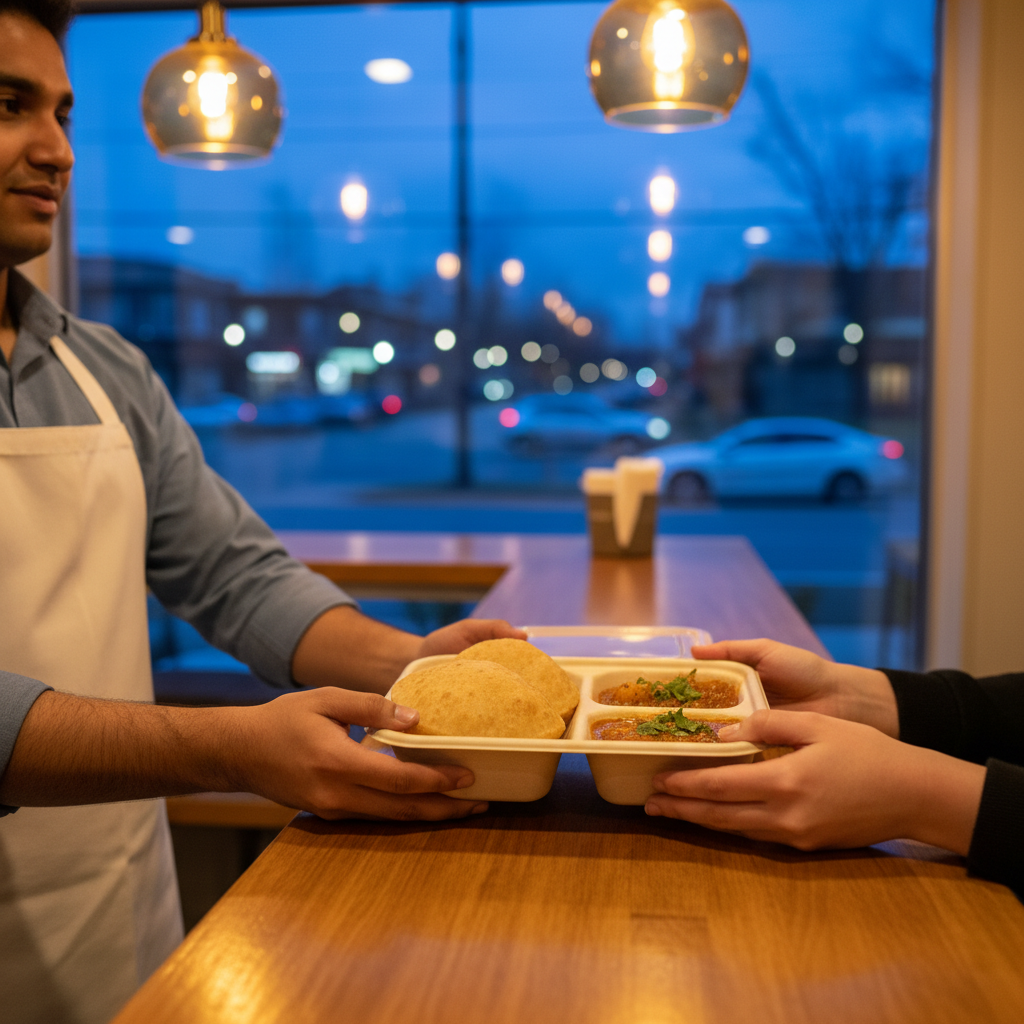
In Brampton, bedmi puri aloo shines for weekend brunches, festival mornings, and office breakfasts. Families value the 15–20 minute hot-hold window for puris; organizers love how sabzi travels well in insulated pans without splitting.
We regularly see three winning scenarios: a family brunch where 10–12 puris disappear in minutes; a Diwali morning pooja with bedmi plus mithai boxes; and a corporate stand-up where takeout thalis keep teams moving. In each case, tight timing and portion planning make service smooth and stress-free.
- Weekend brunch family: Roll 12 puris in advance; fry 2–3 at a time while someone plates. Keep sabzi simmering on low.
- Festival puja tray: Combine bedmi with a small mithai assortment for prasad; our aloo poori is a milder option for guests.
- Office breakfast: Pack ventilated boxes; add lemon wedges and a green chili. For variety, include aloo kachori or aloo matar.
FAQ
Keep oil at 350–365°F, rest dough 20–30 minutes, and simmer aloo sabzi for 14–18 minutes. These three numbers answer most bedmi questions—from puff issues to watery gravy.
-
How do I stop puris from absorbing oil?
Check hydration; too-wet dough soaks oil. Confirm 350–365°F before each batch, and don’t crowd the kadhai. Drain on a rack, not a plate, to prevent steam softening. -
What if my puris won’t puff?
Roll evenly to 1.5–2 mm, press the center gently for 2–3 seconds after dropping into oil, and ensure adequate rest so dough relaxes. Low oil temp is the usual culprit. -
Can I air-fry bedmi puri?
Use air-fryers only for reheating fully fried puris at 375°F for 3–4 minutes. First-cook air-frying rarely delivers the hallmark ballooning or crumb. -
How do I thicken watery aloo sabzi?
Smash 6–8 potato cubes into the pot and simmer 3–5 minutes uncovered. Starch release thickens naturally without flour or cornstarch. -
What dal is best for bedmi?
Urad delivers the most traditional body and nutty profile. Moong is lighter and can be used for a crisper edge. Both should soak 1–2 hours before grinding.
Related Articles
Build your North Indian breakfast playbook with a few complementary classics. Pair robust bedmi with gentler options and vegetable sides so every guest finds a favorite.
Round out your spread by exploring similar plates we serve in Brampton. For a milder breakfast, our aloo poori keeps spices gentle. For stuffed, snackable crunch, aloo kachori delivers. And for a cozy curry pairing, consider aloo gobi or aloo matar alongside hot puris.
- Gentle alternative: Aloo Poori is kid-friendly yet comforting.
- Snack crossover: Aloo Kachori travels well for office trays.
- Veg sides: Aloo Gobi or Aloo Matar balance the heat and add variety.
Key Takeaways + Next Steps
Success with bedmi puri aloo hinges on three controls: hydration 55–58%, oil 350–365°F, and a 14–18 minute sabzi simmer. Nail these and you’ll replicate halwai-level plates at home.
- Remember the trio: Hydration, temperature, time.
- Batch smart: Fry 2–3 puris at once; recheck heat between rounds.
- Finish bright: Amchur and cilantro right before serving.
- Compare and learn: Taste our shop version on the bedmi puri aloo page to benchmark your home plate.
Planning a Brampton breakfast or office treat? Swing by The Mithai Maharaja at 2500 Williams Pkwy, Units 6 & 7, or explore our Shopify storefront. From bedmi puri aloo to mithai gift boxes, our fifth-generation halwais have you covered.