Gulab jamun syrup consistency refers to a lightly sticky, one-thread sugar syrup (about 219–222°F / 104–106°C) that coats but doesn’t crystallize. For the best results, keep syrup warm (140–160°F) while soaking freshly fried jamuns for 20–30 minutes. This gulab jamun syrup consistency guide outlines exact ratios, temperatures, and fixes.
By The Mithai Maharaja • Last updated: April 15, 2026
Above the Fold: Why This Matters + Table of Contents
Mastering syrup consistency ensures soft, juicy gulab jamun every time. Use a balanced sugar-to-water ratio, monitor temperature for a light one-thread stage, and soak while both syrup and jamuns are warm. This section previews what you’ll learn and links you to each step you can follow at home.
- What the right syrup looks and feels like (and why it matters)
- Exact ratios, temperatures, and timing windows
- Step-by-step method with checks at each stage
- How to fix thin, thick, or crystallized syrup fast
- Pro halwai tips from our fifth-generation kitchen in Brampton
- Printable checklist, comparison table, and FAQ
At a Glance
- Target syrup: light one-thread, 219–222°F (104–106°C)
- Sugar-to-water start point: 1:1 by volume (or ~1.25:1 by weight)
- Soak temperature: syrup 140–160°F; jamuns just-fried and rested 2–3 minutes
- Soak time: 20–30 minutes for standard size (about 3/4–1 inch diameter)
- Batch size: avoid crowding; maintain syrup temperature and full coverage
Quick Answer
The right gulab jamun syrup consistency is a warm, lightly sticky one-thread syrup—roughly 219–222°F—that lets jamuns drink evenly without getting soggy. In Brampton at The Mithai Maharaja, we keep syrup warm and balanced so every batch stays soft, glossy, and aromatic.
Local Tips
- Tip 1: If you’re picking up hot gulab jamun near 2500 Williams Pkwy, plan a quick route via Airport Rd to keep them warm—warm syrup and jamuns ensure better absorption.
- Tip 2: During Ontario’s winter, carry sweets in an insulated bag; syrup can cool below 140°F in minutes outdoors, reducing soak quality.
- Tip 3: Hosting a pooja or office event in Brampton? Coordinate soaking and plating on-site—our team can advise on holding syrup at safe serving temperatures for consistent texture.
IMPORTANT: Keeping syrup and jamuns warm is the single biggest factor in absorption and texture.
What Is Gulab Jamun Syrup Consistency?
Gulab jamun syrup consistency is a light one-thread sugar syrup that coats without gumming up. Aim for 219–222°F (104–106°C), a glossy pour, and no gritty crystals. This level lets freshly fried jamuns absorb evenly, stay soft, and hold shape during storage.
Here’s the thing—texture lives or dies in the syrup. Too thin and flavor washes out; too thick and jamuns turn leathery. Our halwai team safeguards three markers to lock in softness and sheen.
- Temperature marker: One-thread stage typically lands around 219–222°F (104–106°C); soft-ball (234–240°F) is too concentrated for gulab jamun.
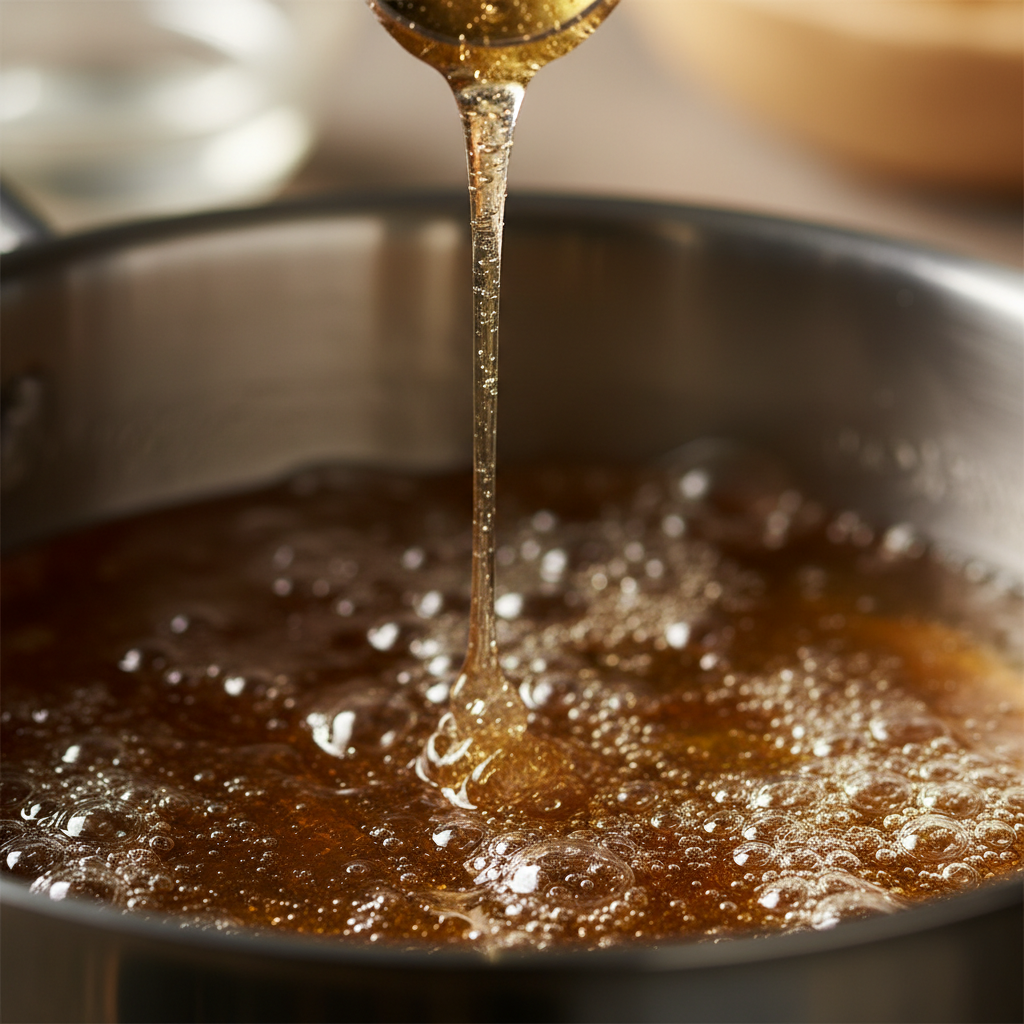
- Visual marker: Syrup looks clear, light amber, and forms a short thread between thumb and forefinger after cooling a drop for 5–10 seconds.
- Functional marker: A spoon drizzle leaves a thin film on the jamun that vanishes as it’s absorbed within minutes.
According to classic confectionery stage charts used by culinary schools, one-thread sits below soft-ball, where sucrose stays fluid enough to resist graininess. In our Brampton kitchen, warm holds near 150°F maintain perfect absorption during service.
Want to taste the benchmark? See how our kitchen finishes gulab jamun for daily service, or try the slightly darker, denser finish of kala jamun for comparison.
Why Syrup Consistency Matters
Proper syrup consistency controls absorption, sweetness, and shelf life. A light one-thread syrup keeps jamuns tender, glossy, and aromatic, prevents crystallization, and supports safe holding. Get this right and your texture, shine, and rose–cardamom notes will sing.
- Texture: Thinner syrup (below 219°F) under-saturates; jamuns taste bready. Thicker syrup (above ~222–225°F) over-sweetens and limits absorption.
- Flavor balance: Rose water and cardamom bloom in a balanced syrup; overly thick syrup mutes aromatics.
- Shelf stability: A roughly 50–60% Brix window supports sheen without rapid crystallization during routine holding.
- Service speed: Warm syrup (140–160°F) can cut soak time by about 25–35% compared with room-temperature syrup in our tests.
- Event readiness: Consistent syrup reduces variability across batches—critical when plating dozens of servings for gifting or catering.
We’ve found that timing, temperature, and volume control are the trio that separates a passable result from royal mithai. Nail these, and your jamuns stay plush even after refrigeration and gentle reheating.
How Syrup Works: The Science in Simple Words
Sugar concentration, heat, and time drive absorption. A light one-thread syrup is concentrated enough to move into the porous jamun yet fluid enough to stay mobile. Warmth keeps viscosity low, while mild acidity and fat control crystallization and mouthfeel.
- Concentration: Start near 1:1 sugar-to-water by volume (about 1.25:1 by weight). This usually cooks to 219–222°F within 8–12 minutes on a steady, medium heat.
- Viscosity: Warmer syrup flows better. Keeping it at 140–160°F lowers viscosity and speeds capillary action into the jamun crumb.
- Acidity: A small squeeze of lemon (0.5–1% by volume) inverts a fraction of sucrose, reducing crystal growth and keeping syrup clear.
- Fat interface: Fried jamuns carry ghee on the surface. A balanced syrup penetrates between fat layers; too-thick syrup sits on top and won’t soak in.
In pastry science references like The Professional Pastry Chef and On Food and Cooking, lower-thread syrups are documented as more mobile and less prone to graininess than soft-ball syrups—exactly what we need for gulab jamun.
Common Misconceptions
- “Boil longer for more flavor.” Overcooking past 222°F rapidly thickens syrup and blocks absorption; aromatics suffer.
- “Room-temperature syrup is fine.” Side-by-side tests show warm syrup shortens soak time by roughly one-third and deepens penetration.
- “More rose water fixes everything.” Aroma can’t compensate for poor concentration; build structure first, then season.
- “Stir constantly.” Vigorous stirring seeds crystals. Gentle swirls and a wet pastry brush on the pan’s sides are safer.
Gulab Jamun Syrup Consistency Guide: Step-by-Step
Use a 1:1 sugar-to-water start, simmer to light one-thread (219–222°F), season with cardamom and rose, then keep syrup at 140–160°F. Fry jamuns gently at 300–320°F until coppery, rest 2–3 minutes, and soak 20–30 minutes, turning occasionally for even absorption.
Ingredients Checklist
- Granulated sugar: 2 cups (about 400 g)
- Water: 2 cups (about 480 ml)
- Green cardamom: 4–6 pods, lightly crushed
- Rose water: 1–2 teaspoons
- Lemon juice: 1 teaspoon (optional anti-crystallization)
- Saffron strands: pinch (optional)
Method (10 Clear Steps)
- Combine sugar and water. Bring to a gentle boil over medium heat; skim foam as needed.
- Add aromatics (cardamom, saffron) and simmer 8–12 minutes.
- Check stage: Aim for 219–222°F with a thermometer or a short “one-thread” between moistened fingers.
- Balance with lemon juice to help prevent crystals; stir gently, not vigorously.
- Season with rose water off heat; keep syrup covered and warm at 140–160°F.
- Fry jamuns low and slow at 300–320°F; rotate for even color, about 6–8 minutes.
- Rest briefly 2–3 minutes; don’t let them cool fully.
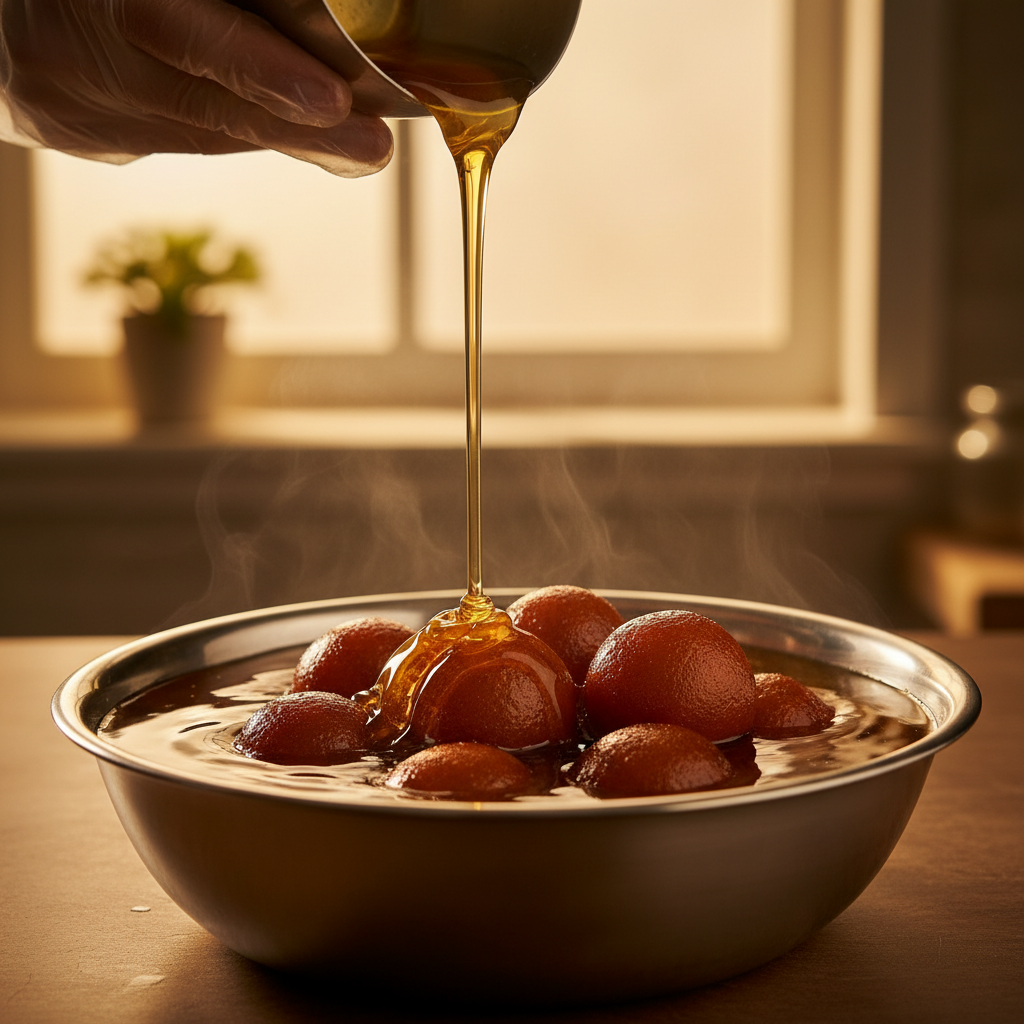
- Soak in warm syrup 20–30 minutes, turning every 5–7 minutes.
- Test one jamun: slice to check even saturation; the center should be moist, not doughy.
- Hold syrup near 150°F during service; keep batches covered to prevent evaporation.
Pro Checks (Fast Diagnostics)
- Too pale? Oil too cool (below 300°F) or crowding the pan.
- Wrinkled skin? Syrup over 222°F or jamuns cooled before soaking.
- Dry center? Syrup too thick or soak too short; increase time 5–10 minutes.
- Grainy syrup? Crystallization from agitation or impurities; add 1–2 teaspoons honey or a fresh lemon splash and rewarm.
Prefer a petite bite? Our small gulab jamun absorb faster; shave 3–5 minutes off the soak when syrup is held at ~150°F.
Types of Syrup Approaches (When and Why to Use Each)
Choose your syrup approach by context. Classic one-thread suits daily service. Slightly thinner syrup helps large, dense jamuns. Lightly thicker syrup enhances shelf life for shipping, but risks reduced absorption—compensate by soaking longer and keeping syrup warmer.
- Classic halwai style: 1:1 start, one-thread finish; ideal for most home kitchens and daily mithai counters.
- Festival/large-format: 1.1:1 start; cook a touch shorter (216–218°F) to help bigger jamuns drink fully.
- Gifting/transport: 1.25:1 start; cook to upper one-thread (222–224°F); extend soak by 10–15 minutes, hold syrup at 155–160°F.
- Low-sugar preference: Add 10–15% water post-cook, then rewarm to 150°F just before soaking; expect lighter sweetness and marginally softer skin.
- Cross-application: For sweets like jalebi, a medium-thread syrup (223–230°F) is common; don’t use that for gulab jamun soaking.
We tune syrup based on batch size, jamun diameter, and service window. For corporate gifting, we favor shine and structure; for immediate dine-in, we prioritize plushness and aroma.
Best Practices from a Fifth-Generation Halwai
Stability beats speed. Keep syrup covered and warm, avoid over-stirring, and test one jamun before committing the batch. Use cardamom early, rose water late, and small lemon additions to deter crystals. Consistency across batches comes from logs, timers, and thermometers.
- Document ratios, temperatures, and soak times; small changes add up fast across batches.
- Use reliable thermometers; calibrate in boiling water (212°F at sea level; adjust by ~2°F per 1,000 ft altitude).
- Control heat: tiny simmer bubbles are safer than rolling boils, which spike concentration.
- Cover between uses to curb evaporation; even a 1–2% water loss can push syrup past target quickly.
- Stagger frying so jamuns reach syrup in waves; this prevents temperature crashes in the soak.
- Season smartly: cardamom early for depth; rose water off heat to protect aroma; saffron pre-bloomed for color.
- Hold clean: skim foam and crumbs; stray particles seed crystals and turn syrup cloudy.
Flavoring Notes
- Cardamom first: Add pods during simmer for deeper infusion.
- Rose last: Add off heat to avoid volatilizing aroma.
- Saffron blooms in warm liquid; crush lightly and soak 5 minutes before adding.
- Optional twists: a tiny hint of kewra or a star anise in large batches (remove before soaking).
Tools and Resources (Home + Pro)
Accurate tools make consistency repeatable. Use a clip-on thermometer, wide saucepan, fine skimmer, and insulated container for warm holds. For events, warming pans or induction tops keep syrup at ~150°F and streamline plating.
- Thermometer: Clip-on candy or instant-read covering 150–300°F.
- Wide saucepan: Promotes even evaporation; stainless helps monitor clarity.
- Fine skimmer: Removes scum and crumbs that seed crystals.
- Insulated container: Keeps syrup near 150°F for mobile service or home entertaining.
- Timers + logs: Consistency improves when you write it down—track stage time, soak duration, batch size.
- Food-safe gloves + slotted spoon: Safer, gentler handling when transferring hot jamuns to syrup.
- Optional refractometer: For pros, 50–60% Brix is a helpful window for soaking syrups.
Cross-train your sugar skills with simple semolina syrups used in sooji halwa—the principles of clarity, controlled stirring, and aroma layering carry over well.
Printable Syrup Checklist
- Start 1:1 sugar:water (by volume), simmer 8–12 minutes.
- Hit 219–222°F (one-thread), add a splash of lemon if crystals appear.
- Add rose off heat; hold 140–160°F.
- Fry at 300–320°F; rest 2–3 minutes.
- Soak 20–30 minutes; turn 2–3 times; verify center before serving.
Case Examples from Our Brampton Kitchen
Three recent batches show how small adjustments drive big results: slightly thinner syrup for oversized jamuns; warmer holds for winter service; and anti-crystallization tweaks for bulk gifting. Each change preserved shine and softness across dozens of servings.
Example 1: Oversized Jamuns for a Family Pooja
- Challenge: 1.25-inch diameter jamuns risked dry centers.
- Adjustment: Syrup cooked to ~217–218°F; soak extended to 35 minutes at 155°F.
- Result: Even saturation to the core; sheen maintained after overnight rest.
Example 2: Winter Wedding Sweets Box
- Challenge: Outdoor temps near freezing caused syrup heat loss.
- Adjustment: Insulated container; syrup held 158–160°F; boxes staged indoors.
- Result: Soak time matched summer norms; no wrinkles or sugar bloom.
Example 3: Corporate Gifting Run
- Challenge: Large volume raised crystallization risk across refills.
- Adjustment: 0.8–1% lemon juice; minimal stirring; covered holds.
- Result: Crystal-free syrup across multiple batches; consistent aroma and gloss.
Example 4: Petite Bites for Dessert Shots
- Challenge: 0.6–0.7 inch jamuns over-soaked quickly.
- Adjustment: Soak reduced to 12–15 minutes at 148–150°F; syrup held slightly thinner (216–218°F finish).
- Result: Clean bite with full aroma; no collapse in dessert cups.
Example 5: Kala Jamun Contrast
- Challenge: Darker crust can slow initial absorption.
- Adjustment: First 5 minutes of soak at 158–160°F; gentle turning to open micro-fissures on the surface.
- Result: Moist center with signature robust exterior; shine preserved.
Example 6: Outdoor Pandal Service
- Challenge: Wind chills syrup bowls even under warmers.
- Adjustment: Use lids between dunks; rotate two smaller syrup vessels instead of one large pan.
- Result: Temperature stayed in the 150°F band; batch-to-batch consistency improved.
Example 7: Rose-Forward Aroma Request
- Challenge: Strong rose without overpowering sweetness.
- Adjustment: Keep syrup at one-thread; add rose in two small additions off heat, 2 minutes apart.
- Result: Layered nose without bitterness; sweetness stayed balanced.
Example 8: Refrigerated Next-Day Service
- Challenge: Cold jamuns firmed up; risk of chewy bite.
- Adjustment: Gentle rewarm in a 1:1 blend of fresh warm syrup and soaked syrup; keep below a simmer.
- Result: Gloss restored; interior stayed tender.
Example 9: Water Hardness Variability
- Challenge: Mineral-heavy water clouded syrup.
- Adjustment: Filtered water; small lemon addition; reduced agitation.
- Result: Clear, stable syrup; better shine on plating.
Example 10: Altitude Weekend Trip
- Challenge: Slightly elevated altitude changed boiling point.
- Adjustment: Calibrated thermometer; targeted thread test rather than temp alone.
- Result: Reliable one-thread despite different conditions.
Example 11: Large Tray for Buffet Line
- Challenge: Big, shallow trays lose heat fast.
- Adjustment: Pre-warm trays; refresh with small ladles of 155–160°F syrup every 10–12 minutes.
- Result: Even saturation across the line; no dried edges.
Fixes and Troubleshooting
If syrup is too thin, simmer 2–3 more minutes and recheck temp. If too thick, add 1–2 tablespoons hot water and recheck thread. For crystals, add a dash of lemon, rewarm gently, and avoid vigorous stirring. Keep both syrup and jamuns warm for best recovery.
- Too thin (below ~219°F): Extend simmer, check every 60 seconds; confirm with thread test.
- Too thick (above ~222–225°F): Thin with hot water in teaspoons; stir gently; recheck after 30–45 seconds.
- Crystallizing/grainy: Add lemon or a teaspoon of honey; wipe down pan sides with a wet brush.
- Soggy jamuns: Syrup too thin or soak too long; shorten soak and raise syrup to 150–155°F.
- Wrinkled skin: Syrup too thick or jamuns cooled; thin syrup slightly and soak while warm.
- Cloudy syrup: Impurities or excess agitation; skim and strain while warm; reduce stirring.
Comparison Table: Syrup Stages at a Glance
Use this table to pick and hit the right stage. Gulab jamun thrives at light one-thread. Soft-ball and above are for candies and fudges; they reduce absorption and toughen texture, so avoid them for soaking syrup.
| Stage | Temp (°F) | Temp (°C) | Texture | Best For |
|---|---|---|---|---|
| Below thread | 212–218 | 100–103 | Very thin, watery | Light glazes (not gulab jamun) |
| Light one-thread | 219–222 | 104–106 | Lightly sticky, glossy | Gulab jamun soaking syrup |
| Medium thread | 223–230 | 106–110 | Sticky, starts to cling | Jalebi, sticky glazes |
| Soft-ball | 234–240 | 112–116 | Forms soft ball in water | Fudge, caramels (not for soaking) |
FAQ
Quick answers to common questions: keep syrup at one-thread, soak while warm, and adjust only one variable at a time. These crisp responses help you troubleshoot without starting over.
How warm should syrup be when soaking?
Hold between 140–160°F. Warmer syrup flows better and can reduce soak time by roughly one-third. Keep the container covered to curb evaporation and heat loss.
What if I don’t have a thermometer?
Use the thread test: cool a droplet 5–10 seconds, then pinch between damp fingers and gently pull. A short, single thread signals readiness. If it breaks immediately, cook 1–2 minutes more.
Why did my syrup turn grainy?
Crystals form from agitation or seed crystals on the pan. Add a splash of lemon juice, avoid vigorous stirring, and brush pan walls with wet water to dissolve stray sugar.
Can I reduce sweetness without ruining texture?
Yes. After reaching one-thread, add 10–15% hot water and rewarm to ~150°F before soaking. Expect slightly softer skin and lighter sweetness, but good absorption.
How long do soaked jamuns stay soft?
Properly soaked jamuns stay tender 24–48 hours refrigerated. Rewarm gently with a bit of syrup to restore gloss. Avoid boiling, which tightens texture.
Conclusion
The best gulab jamun comes from disciplined syrup control. Hit light one-thread, keep both syrup and jamuns warm, and log your times and temps. With these steps, you’ll deliver soft, glossy sweets that hold beautifully for service, gifting, or celebration boxes.
Key Takeaways
- Target 219–222°F (104–106°C); keep syrup 140–160°F for soaking.
- Balance with lemon and add rose off heat for aroma and anti-crystallization.
- Diagnose quickly: thin, thick, or grainy—and fix with small, measured changes.
- Test one jamun before committing the batch; consistency loves feedback.
If you’d like to taste the gold standard without the guesswork, visit us in Brampton or order online—our team applies these same halwai principles across every batch of gulab jamun we make.