Boondi laddu is a traditional Indian sweet made from tiny fried gram flour pearls bound with cardamom-scented sugar syrup and ghee. It’s a festival staple across Punjab and North India, loved for its soft, melt-in-the-mouth texture. In Brampton, The Mithai Maharaja crafts boondi laddu the real halwai way, with gift-ready boxes and catering-perfect platters.
By The Mithai Maharaja • Last updated: 2026-06-02
Quick Summary and Table of Contents
Boondi laddu blends crisp besan pearls with one-thread sugar syrup, ghee, and cardamom to form soft, glossy spheres. This complete guide covers ingredients, technique, troubleshooting, serving ideas, and Brampton-specific planning, so you can make perfect laddus or order boxes and platters from our fifth-generation halwai team with confidence.
Use this table of contents to jump to what you need right now:
- What is boondi laddu?
- Why boondi laddu matters
- How boondi laddu works (process)
- Types, variations, and halwai approaches
- Best practices from a fifth‑generation halwai
- Tools and resources
- Step-by-step method
- Troubleshooting and quick fixes
- Storage and shelf life
- Catering and gifting in Brampton
- Serving ideas and occasion pairings
- Mini case studies
- Frequently asked questions
- Key takeaways
- Conclusion and next steps
What Is Boondi Laddu?
Boondi laddu is an Indian confection of chickpea flour (besan) batter dripped through a perforated ladle (jhara) into hot ghee to form tiny pearls, then bound with cardamom-spiced sugar syrup and shaped into round sweets. Hallmarks: tender bite, light syrup sheen, and aroma of ghee, cardamom, and sometimes saffron.
At The Mithai Maharaja, our lineage reaches back to 1938 in Phagwara, Punjab. That heritage shows in our boondi: uniform pearls, balanced sweetness, and a soft interior with a gentle cardamom bloom. In Brampton, families often pair a box of our boondi laddu with a savory snack spread for effortless hosting.
- Core ingredients: Besan, sugar, ghee, cardamom; saffron and nuts are optional accents.
- Signature texture: Cohesive but tender spheres that yield easily to a bite.
- Flavor profile: Warm ghee base with cardamom; saffron or rose notes by request.
- Occasions: Diwali, weddings, housewarmings, milestones, corporate gifting.
Curious to explore beyond boondi? Our assortment spans ladoo varieties and milk-based classics. See our in-depth look at ladoo varieties and flavors and our product page for boondi laddoo boxes ready for pickup or local delivery.
Why Boondi Laddu Matters
Boondi laddu symbolizes auspicious starts and shared joy, while delivering reliable flavor, travel readiness, and vegetarian appeal. For Brampton families and event planners, it’s a crowd-pleasing hero sweet that stacks neatly, presents elegantly, and anchors a dessert table without fuss.
Here’s the thing: guests reach for ladoo first. A well-made boondi laddu is bright, aromatic, and balanced, not cloying and not oily. Uniform sizing speeds service at large events. Sealed, rigid boxes keep garnish intact during transport across the GTA, which matters when you’re juggling snacks, chaats, and beverages.
- Giftability: Uniform size, neat finish, and elegant garnish convey care.
- Menu fit: Naturally eggless and vegetarian; pairs with chaats and hot snacks.
- Travel-friendly: Compact, stackable, and stable under common conditions.
- Tradition plus craft: Ghee aroma and cardamom bloom signal authenticity.
If you’re building a larger mithai box, consider mixing boondi laddu with gulab jamun for syrupy contrast and a square of barfi for creamy variety. That trio delivers three textures in three bites, fast, familiar delight.
How Boondi Laddu Works (The Process)
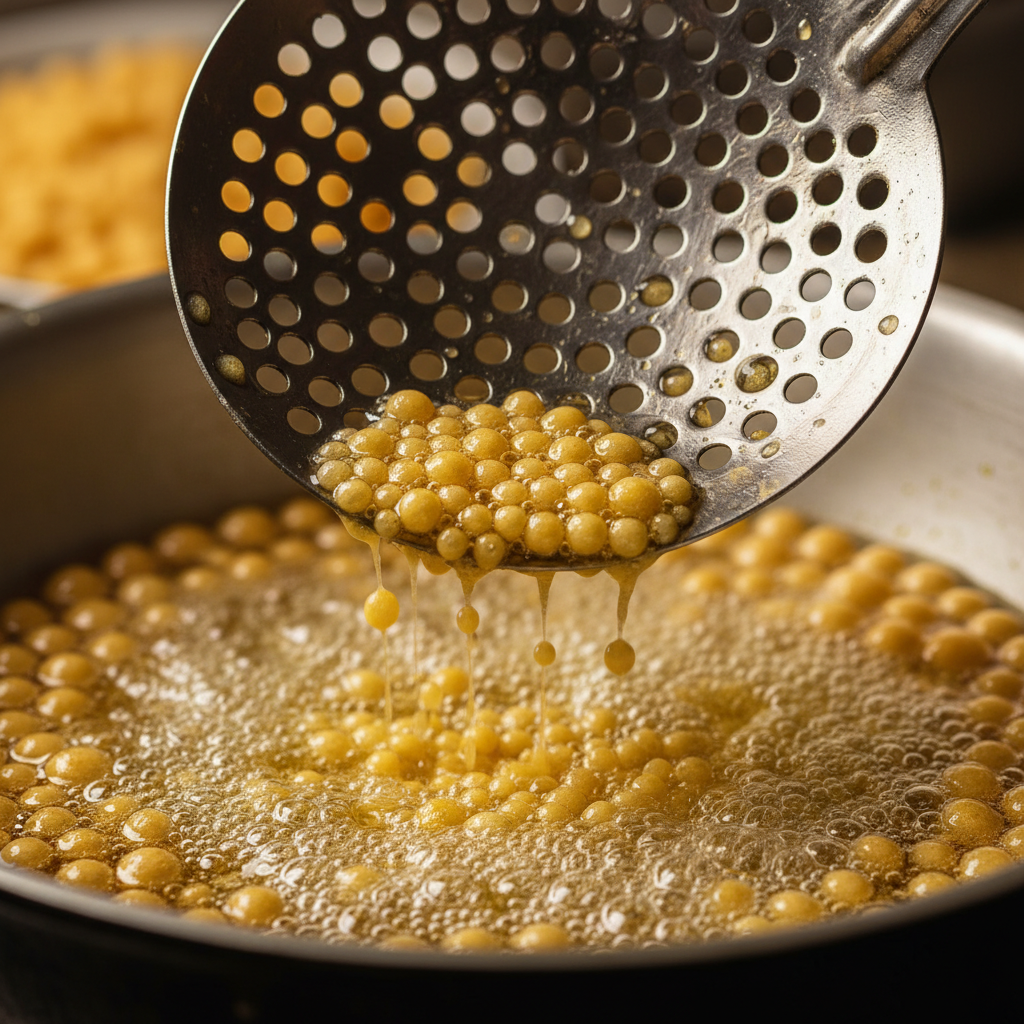
Perfect boondi laddu depends on four levers: batter fluidity, droplet size, frying temperature, and one-thread sugar syrup. Get these right, and pearls absorb syrup evenly, bind cleanly with ghee, and set into tender spheres with a glossy finish and lasting aroma.
Think in stages: batter, frying, syrup, and shaping. A slightly thin, lump-free batter forms uniform pearls. Frying in the 330–350°F range keeps boondi light and crisp without oiliness. One-thread syrup (about 220–230°F) binds without hardening. Warm ghee in the mix supports cohesive shaping and sheen.
| Stage | Target (°F) | Visual Cue | Outcome |
|---|---|---|---|
| Fry boondi | 330–350 | Gentle bubbling, no smoke | Light, crisp pearls without greasiness |
| Sugar syrup | 220–230 | One-thread consistency | Even binding; soft final texture |
| Shaping | Warm (not hot) | Pliable mixture | Round, glossy laddus that hold |
These aren’t arbitrary numbers, they’re practical targets halwais use daily. Small, steady adjustments beat big swings: a 10°F drift can change absorption enough to move you from soft and glossy to crumbly and dry.
Local considerations for Brampton
- Festival weeks drive higher demand; pre-order gift boxes early to secure garnish preferences and uniform sizes.
- Cold car rides can firm laddus; rest at room temperature 20–30 minutes so ghee softens and aroma blooms.
- Coordinating delivery windows with our catering team preserves shaping, garnish, and box presentation.
Types, Variations, and Halwai Approaches
Boondi laddu spans classic saffron-cardamom, motichoor (ultra-fine pearls), dry-fruit rich versions, and temple-inspired profiles. Mesh size, syrup thickness, and garnish drive differences. Match the style to the moment, everyday treat, wedding centerpiece, or corporate gift, for seamless hosting.
We tailor texture and flavor to the occasion. For weddings, a subtle saffron glaze and pistachio dust create a regal, camera-ready finish. For religious observances, a simpler, ghee-forward profile resonates as traditional. Corporate gifting usually favors uniform sizing and mixed-assortment boxes that travel well without repacking.
- Classic boondi laddu: Medium pearls, one-thread syrup, cardamom; saffron optional.
- Motichoor style: Extra-fine pearls for a delicate, uniform bite.
- Dry-fruit rich: Cashews, almonds, and melon seeds for a luxurious finish.
- Temple-inspired: Restrained spice, pronounced ghee aroma.
- Color accents: gentle saffron hue or natural tones, avoid artificial overload.
To compare across ladoo families and pick a signature for your event, browse our ghee ladoo guide and our broader roundup of popular Indian desserts favored in Brampton.
Best Practices from a Fifth‑Generation Halwai
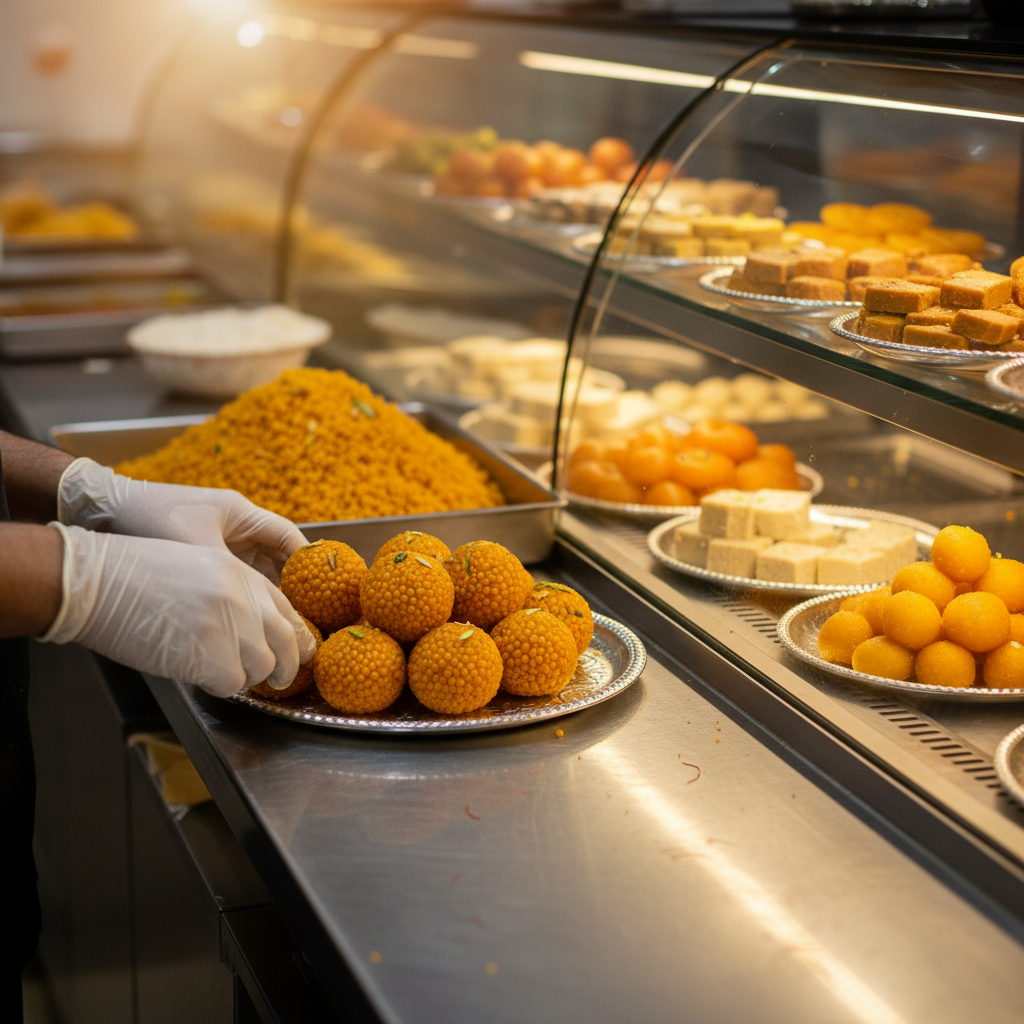
For consistent laddus: sift besan, use a mesh that matches your style, fry in fresh ghee at steady heat, cook syrup to one-thread, and shape while warm with light pressure. Let set fully before packing. Consistency across these steps delivers reliably soft, aromatic sweets.
- Sift and rest: Sift besan and rest batter 10–15 minutes to hydrate; this reduces clumps and air pockets.
- Mesh matters: Pick a jhara matched to boondi or motichoor goals; uniform holes mean uniform pearls.
- Heat discipline: Hold 330–350°F for frying; smoke introduces bitterness and dark speckling.
- Syrup checks: Aim for one-thread; it should stretch briefly between fingers, not snap.
- Warm shaping: Grease palms lightly; press just enough to bind without crushing pearls.
- Set and store: Allow full set before sealing in boxes to protect sheen and garnish.
Pro tip: keep sweets-only utensils and containers. Ghee absorbs aromas readily; separating gear preserves clean, classic flavor from the first to last laddu in the box.
Tools and Resources
Essentials include a perforated ladle (jhara), heavy kadai or fryer, reliable thermometer, wide draining trays, and airtight containers. For events, pair trays with elegant gift boxes or lean on a professional sweets kitchen to handle sizing, garnish, labeling, and on-time delivery.
In our Brampton kitchen, we maintain dedicated jharas for different pearl sizes and a thermometer at each fryer. For gifting, we stock elegant, rigid boxes that arrive table-ready. If you prefer to order instead of DIY, our boondi laddu boxes are prepped for quick pickup or delivery.
- Perforated ladles (multiple mesh sizes) for consistency.
- Heavy-bottom kadai or fryer plus a reliable thermometer.
- Heatproof strainers and wide trays to drain evenly.
- Airtight containers for short-term home storage.
- Rigid, gift-ready boxes and coordinated platters for events.
Planning a celebration? Our team assembles boondi laddu assortments with complementary mithai and snacks, coordinates delivery, and labels allergens, so you can focus on hosting and photos.
How to Make Boondi Laddu: Step-by-Step
Create a thin, lump-free besan batter; fry pearls at 330–350°F using a jhara; cook one-thread syrup; fold warm boondi with syrup, ghee, and spices; then shape while still warm. Aim for uniform size, gentle pressure, quick garnish, and full set before packing.
- Mix batter: Sift besan; whisk with water until pourable and smooth. Rest 10–15 minutes.
- Heat ghee: Bring to 330–350°F in a heavy kadai or fryer.
- Form pearls: Hold the jhara above the ghee; pour batter; tap to create even droplets. Fry light golden.
- Drain: Spread boondi on a tray to release excess fat while staying warm.
- Cook syrup: Simmer sugar and water to ~220–230°F (one-thread). Add cardamom and saffron if using.
- Combine warm: Fold boondi into syrup; add a little ghee; incorporate nuts or melon seeds if desired.
- Shape: Grease palms; scoop, press gently, and roll into rounds. Garnish and let set.
Shaping window: roughly 8–12 minutes while the mixture is warm and pliable. If it cools too much, briefly warm the mix to restore binding without melting the structure.
Troubleshooting and Quick Fixes
Dry laddus come from over-fried pearls or overly thick syrup. Oily laddus signal low fry heat. Crumbly laddus need warmer shaping or a touch more syrup. Tackle one variable at a time heat, syrup stage, or pressure to recover ideal texture fast.
- Too dry or crumbly: Reduce fry time, ensure one-thread syrup, and shape warmer. A teaspoon of warm syrup can rescue a small batch.
- Oily feel: Raise fry heat to the 330–350°F zone; drain pearls briefly on wide trays.
- Flat or misshapen: Shape sooner while the mix is pliable; use light, even pressure.
- Overly sweet: Keep syrup at one-thread, not two-thread; add a pinch of salt to balance.
- Muted aroma: Refresh cardamom; garnish with warm ghee kiss and saffron for lift.
In our experience, changing one factor at a time is crucial. For example, a 15°F rise in oil temperature often fixes oiliness without touching syrup consistency or spice ratios.
Storage and Shelf Life
Store boondi laddu in airtight containers at room temperature away from direct heat and sunlight. Rest refrigerated boxes at room temperature 20–30 minutes before serving. Properly set laddus maintain texture and aroma for typical celebration timelines.
For home storage, prioritize airtight boxes that protect garnish. Avoid humid environments; excess moisture dulls sheen and weakens binding. If you refrigerate due to travel logistics, buffer time back to room temperature ensures the ghee softens and cardamom blooms again.
- Airtight first: Reduces moisture swings and protects aroma.
- Room temp serving: Favors mouthfeel and fragrance.
- Handle once: Minimize reboxing to protect finish and garnish.
Planning a multi-sweet box? Our team packs boondi laddu alongside milk-based sweets with odor barriers so delicate aromas and finishes remain distinct from first bite to last.
Catering and Gifting in Brampton
For Brampton celebrations, boondi laddu offers uniform sizing, vegetarian appeal, and transport-ready packaging. Our kitchen assembles mixed boxes, labels allergens, and coordinates delivery windows, ideal for weddings, festivals, and corporate welcomes across the GTA.
When we cater sweets, we also think through guest flow. Uniform sizes speed lines; rigid boxes stack cleanly; garnish choices signal flavor or nut content. For presentation ideas, browse broader gifting inspiration such as choosing thoughtful gifts or dessert staples like classic baklava that emphasize neat slices and sturdy packaging—principles we echo in mithai boxes.
If you’d rather skip DIY, explore our ready-to-present boondi laddu boxes and consider pairing with chai-friendly snacks from our signature lineup for a balanced spread.
Serving Ideas and Occasion Pairings
Serve boondi laddu as a hero sweet or in a trio with milk-based mithai and a syrupy classic. For weddings and festivals, uniform sizes, elegant garnish, and sturdy boxes simplify transport, display, and guest flow while keeping flavors balanced across the menu.
- Everyday treat: One or two laddus with masala chai and a samosa for contrast.
- Family gatherings: Combine a ladoo box with chaat and pakora platters to cover sweet-salty-crunchy.
- Weddings: Saffron glaze and pistachio dust create a regal palette for dessert tables.
- Corporate gifting: Choose uniform sizing and mixed assortments with clear labels.
Looking for menu balance? Our guides to sooji halwa and nutritious groundnut ladoo show how to round out a dessert course with creamy spoonable and nutty, energy-forward bites.
Mini Case Studies: Brampton Events
Event clients in Brampton choose boondi laddu for reliability, elegance, and vegetarian appeal. With uniform sizing, sealed boxes, and robust garnish, trays travel well across the GTA. These snapshots show how planning turns a favorite sweet into a smooth, memorable service moment.
Wedding sangeet assortment
A family requested motichoor-style texture with a gentle saffron hue to match decor. We delivered uniform laddus in rigid boxes with pistachio dusting and paired them with milk-based sweets for variety. The dessert table looked cohesive and served quickly without crumbling.
Festival neighborhood potluck
For a Diwali potluck, the host needed kid-friendly sizes and nut labeling. We formed slightly smaller laddus, used color-coded garnish, and sealed boxes with insert cards. Guests recognized flavors at a glance and portioned confidently.
Corporate welcome kits
A Brampton office assembled newcomer kits with mithai samplers. We supplied mixed boxes with boondi laddu, barfi, and gulab jamun, all packed for commute-friendly transport. Feedback highlighted freshness, aroma, and presentation.
For savory anchors, teams often add Delhi/Punjab street-style favorites like chaat or even chole bhature on separate stations to balance sweet and savory pacing. For a light overview of that dish’s role in North Indian menus, see this general reference on chole bhature.
Frequently Asked Questions
These quick answers cover the most common boondi laddu questions texture, storage, ingredients, and serving. Use them to troubleshoot DIY attempts or to plan orders that arrive photo-ready for your celebration or corporate moment.
What’s the difference between boondi laddu and motichoor?
Motichoor uses a finer mesh to make ultra-small pearls and yields a more uniform, delicate bite. Classic boondi has slightly larger pearls with a playful texture. Both rely on one-thread syrup and warm shaping.
How do I keep laddus soft and not dry?
Cook syrup only to one-thread, fold it into warm boondi, and shape while still warm. Avoid over-frying pearls or letting syrup reach a hard-ball stage. Store airtight after setting and avoid refrigeration unless necessary.
Can I order nut-free or saffron-free laddus?
Yes. We can omit nuts and saffron and focus on a ghee-forward, cardamom profile. For events, we can label boxes clearly and separate assortments to support dietary preferences and reduce confusion at the table.
What’s the ideal serving temperature?
Room temperature highlights aroma and texture best. If laddus were in a cold car or fridge, rest them 20–30 minutes before serving so the ghee softens and flavors bloom again.
Key Takeaways
Master four variables, batter flow, droplet size, fry heat, and one-thread syrup, to get soft, glossy boondi laddus every time. For Brampton events, uniform sizing, rigid boxes, and coordinated delivery windows make service smooth and presentation photo-ready.
- Keep fry heat steady (330–350°F) and syrup at one-thread for binding.
- Shape while warm with light, even pressure for neat spheres.
- Use airtight, rigid boxes for transport and display confidence.
- Pair with 1–2 complementary sweets to diversify textures.
Conclusion and Next Steps
Boondi laddu shines when technique and timing align. Whether you’re making a small home batch or planning a Brampton celebration, focus on heat, syrup stage, and warm shaping or rely on our curated boxes for uniform, aromatic, photo-ready results.
- Choose your style: classic, motichoor, or dry-fruit rich.
- Use the process table to guide temperature and syrup checks.
- Plan boxes and platters early for festival weeks.
- Explore more mithai guides like our sooji halwa primer for menu balance.
Ready to celebrate? Share your guest count and flavor preferences. Our sweets team in Brampton will coordinate assortments, labeling, and delivery windows, so you can simply unbox and enjoy.