Ladoo varieties and flavors refer to the many regional styles of India’s beloved hand-rolled sweets—made from besan, boondi, semolina, coconut, khoya, or nuts—each finished with distinct aromatics like cardamom, saffron, or rose. At The Mithai Maharaja in Brampton, fifth-generation halwais craft these textures and tastes for everyday joy and festival gifting.
By Mithai Maharaja • Last updated: April 11, 2026
Hook: Planning Diwali boxes, a wedding dessert table, or just craving an authentic bite? This complete, expert-built guide breaks down every major ladoo style, how it’s made, what it pairs with, and how to pick the right box—Brampton-local and halwai-approved.
At a Glance
- Understand what makes different ladoo varieties and flavors unique.
- See how authentic halwai technique shapes texture, aroma, and shelf life.
- Choose the right box for festivals, weddings, or corporate gifting in Brampton.
- Get practical tips on storage, serving, and pairing with other mithai and chaats.
Table of Contents
- What Are Ladoo Varieties and Flavors?
- Why Ladoo Choice Matters for Your Occasion
- How Ladoo-Making Works (From Grain to Golden Spheres)
- Types, Methods, and Regional Styles
- Best Practices: Selecting, Storing, and Serving
- Tools & Resources (Plus Gift-Ready Options)
- Case Studies: Real Brampton Occasions
- FAQ
- Conclusion & Key Takeaways
- Related Articles
Quick Answer
At The Mithai Maharaja in Brampton, ladoo varieties and flavors span classic besan, motichoor, boondi, coconut, and dry-fruit styles—each hand-shaped by fifth‑generation halwais using pure desi ghee. For festivals, weddings, or corporate gifts, we build elegant, gift‑ready boxes tailored to your guest list and taste preferences.
Local Tips
- Tip 1: Picking up near Williams Pkwy and Hwy 410? Plan for weekend traffic around big festival dates—place your gift-box order ahead so your ladoo selection is guaranteed.
- Tip 2: For winter weddings in Brampton, favor sturdy classics like besan and boondi that hold texture well at cooler room temps (68–72°F). Summer events love coconut and motichoor with light, floral accents.
- Tip 3: For office Diwali drops in the GTA, request mixed trays with nut-free side labels; our team organizes assortments and packaging so distribution is tidy and quick.
IMPORTANT: Tell us dietary preferences early (e.g., nut-free), and we’ll align your box with the right ladoo base and garnish choices.
What Are Ladoo Varieties and Flavors?
Ladoo varieties and flavors are distinct styles of India’s signature spherical sweets, shaped by hand from bases like besan, boondi, coconut, semolina, khoya, and nuts. Each style carries a unique crumb, mouthfeel, and aroma—built with desi ghee, sugar syrup, and aromatics such as cardamom, saffron, or rose.
Self-contained answer: Ladoo is a family of hand-rolled sweets defined by its base (flour, boondi, coconut, khoya, or nuts) and the finishing aromatics that create flavor identity. Texture shifts from sandy-crumbly (besan) to delicate-pearled (motichoor), while sweetness ranges from restrained to rich. The Mithai Maharaja curates these profiles into balanced, gift‑ready assortments.
- Core idea: A ladoo’s base sets texture and body; the syrup and ghee set cohesion; aromatics deliver the signature nose.
- Why this matters: Occasion, climate, and palate should dictate which ladoo varieties and flavors you pick.
-
Flavor drivers:
- Base: besan (gram flour), boondi pearls, coconut, semolina (sooji), khoya, dry fruits/nuts.
- Syrup: generally one‑string consistency ~220–230°F (104–110°C) for proper binding.
- Fat: desi ghee for aroma, mouthfeel, and authentic finish.
- Aromatics: cardamom, saffron, rose, kewra, nutmeg, or edible silver leaf.
- Occasion cues: Weddings favor delicate motichoor; temple-style functions lean besan; corporate boxes mix textures for broad appeal.
- Shelf-life range: 3–7 days at 68–72°F (20–22°C) depending on moisture/fat content; coconut/khoya styles trend shorter; nut/atta styles often last longer when sealed.
In our Brampton shop, we balance sweetness and texture with precise roasting (for besan) and pearl size (for boondi/motichoor). Consistent one‑string syrup and warm ghee integration keep each piece cohesive yet tender.
Why Ladoo Choice Matters for Your Occasion
Choosing the right ladoo style maximizes guest satisfaction, minimizes waste, and protects presentation. Texture, sweetness, and nut content should match the event, climate, and audience. For Brampton celebrations, we tune assortments to room temperature, travel time, and guest mix to keep trays beautiful and fresh.
Self-contained answer: Match ladoo to your context—delicate motichoor shines at plated dinners; sturdy besan thrives at large, high-traffic buffets; coconut and dry-fruit laddus please mixed-age groups. Aligning sweetness, nut content, and storage conditions reduces leftovers and keeps your display camera‑ready through service.
-
Guest profile:
- Kids: coconut and motichoor with gentle cardamom (low nut texture).
- Mixed-age office: assorted box with nut‑free options clearly separated.
- Traditional elders: classic besan/boondi with warm ghee aroma.
- Climate factor: At 68–72°F, ghee remains solid, holding shape; above 75°F, choose firmer bases (atta/dry-fruit) to keep structure.
-
Service format:
- Buffet/Walk-up: denser laddus resist nicks and hold garnish.
- Plated dessert: motichoor’s micro-pearls eat like velvet.
- Traveling boxes: mix firmer and delicate pieces; keep separators.
- Photography & display: Uniform sizing (22–26 g per piece) makes tiered platters look symmetrical and reduces tray gaps during service.
We routinely build 3‑, 5‑, and 7‑variety assortments for weddings and corporate gifting. Careful variety selection keeps trays tidy for 2–4 hours of display without slumping.
How Ladoo-Making Works (From Grain to Golden Spheres)
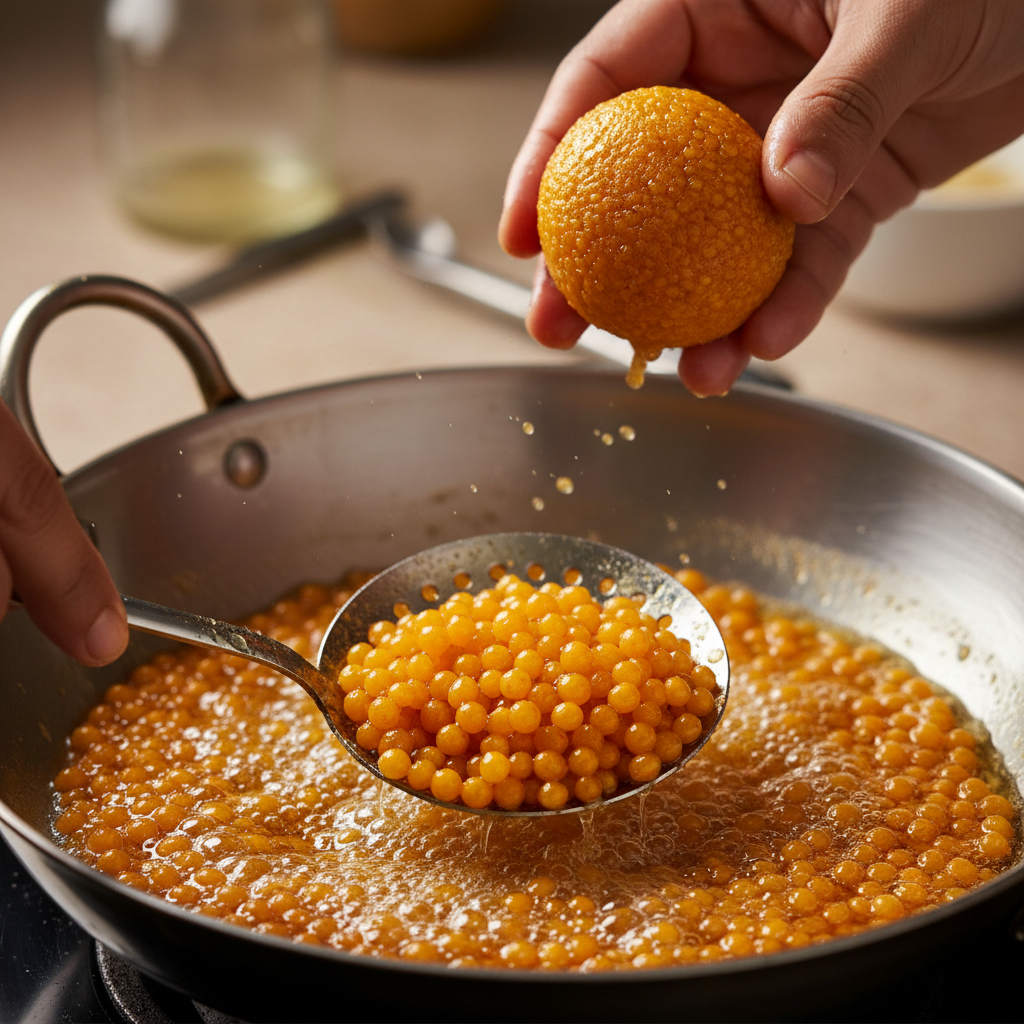
Authentic halwais roast the base (e.g., besan), cook a one‑string sugar syrup, then bind with warm desi ghee and aromatics before hand‑rolling. For motichoor/boondi, batter is passed through a perforated ladle into hot ghee to form pearls, which are soaked in syrup and shaped.
Self-contained answer: The ladoo process is a balance of roast, syrup, and shaping. Roast to remove raw notes (8–12 minutes for besan), aim for one‑string syrup ~220–230°F, fold in warm ghee for cohesive crumbs or pearls, and roll while still warm for smooth, crack‑free spheres with lasting aroma.
-
Roasting (dry heat):
- Besan/atta/sooji: 8–14 minutes on medium-low until nutty and golden; constant stirring prevents hotspots.
- Why: Drives off moisture and unlocks Maillard notes for depth.
-
Syrup (one‑string):
- Target: ~220–230°F; pulls into a thin thread between fingers (caution: cool a drop before testing).
- Role: Binds crumbs/pearls without crystallizing gritty sugar.
-
Ghee integration:
- Timing: Warm ghee folds in evenly; avoid smoking point (~450°F) to protect aroma.
- Outcome: Glossy, cohesive mix that rolls cleanly.
-
Shaping:
- When: While warm; cool enough to handle but still pliable.
- Size: Consistent weight improves portion planning and display symmetry.
Our halwais monitor pearl size for motichoor with perforation gauge and drop height over ghee. Even pearls soak syrup uniformly, preventing sogginess and ensuring a luxurious bite.
Types, Methods, and Regional Styles
From besan and boondi to coconut and dry-fruit, each ladoo style has a signature texture, sweetness, and aroma. Picking a balanced mix—crumbly, pearled, nutty, and floral—creates an irresistible box for weddings, Diwali gifting, or everyday treats.
Self-contained answer: Build your box around variety—include a roasted besan for warmth, a motichoor for delicacy, a coconut for freshness, and a dry-fruit for richness. Add seasonal accents like saffron or rose. This balance satisfies diverse palates and travels well across Brampton events.
Signature Classics (Halwai Standards)
- Besan Ladoo: Gram flour roasted in ghee, cardamom finish; sandy-crumbly texture with nutty depth. See our fresh besan laddus for a benchmark classic.
- Boondi Laddoo: Larger boondi pearls bound in syrup; sturdy and festive; holds shape well on buffets. Explore our boondi laddoo for traditional celebrations.
- Motichoor Ladoo: Ultra‑fine pearls (moti = pearl) give a delicate, melt‑in‑mouth bite; saffron or rose notes optional. Our motichoor is a wedding favorite.
- Chana Dal Ladoo: Coarse chana dal grind offers rustic, protein‑rich body; great for long services. See chana laddoo for a hearty option.
- Jodhpuri Ladoo: Royal-style with mixed nuts and often boondi/khoya elements for a regal profile—popular in premium assortments like our Jodhpuri laddoo.
Regional & Ingredient‑Led Favorites
- Coconut (Nariyal) Ladoo: Fresh coconut texture with light cardamom; great for summer events and nut‑sensitive groups.
- Sooji/Rava Ladoo: Semolina base; lightly toasty, gentle crumb; kid‑friendly and travel‑friendly.
- Atta Ladoo: Whole‑wheat warmth; satisfying density; pairs well with masala chai at 4–5 pm breaks.
- Til (Sesame) Ladoo: Winter‑leaning, toasty sesame aroma; balanced sweetness; often a Lohri pick.
- Dry‑Fruit/Khoya Ladoo: Rich mouthfeel with pistachio, almond, or cashew; elegant garnish for premium boxes.
- Gond/Pinni‑style Ladoo: Cold‑season energy sweet with edible gum and nuts; nourishing profile and longer hold when sealed.
Modern & Fusion Twists
- Chocolate Motichoor: Cocoa accent folded through fine pearls; a fun dessert‑table wildcard.
- Pistachio‑Rose Ladoo: Fragrant floral lift with vibrant green garnish; photogenic for tiered stands.
- Date‑and‑Nut (No Added Sugar): Natural sweetness from dates/figs; chewy‑nutty bite; perfect for wellness‑minded guests.
- Coconut‑Chocolate “Bounty” Ladoo: Tropical meets mithai; popular at kids’ birthdays and modern sangeets.
Comparison Guide (Texture, Aroma, Best Use)
| Type | Base | Texture | Flavor Accents | Best For | Pairs With |
|---|---|---|---|---|---|
| Besan | Gram flour | Sandy, crumbly | Cardamom, ghee warmth | Temple-style, buffets | Masala chai, samosa |
| Motichoor | Fine boondi | Delicate, velvety | Saffron, rose | Weddings, plated service | Badam milk, rasmalai |
| Boondi | Large boondi | Firm, festive | Cardamom | High-traffic buffets | Chaat counters |
| Coconut | Fresh coconut | Juicy, tender | Cardamom | Summer events | Mango lassi |
| Dry‑Fruit/Khoya | Nuts + khoya | Rich, dense | Saffron, pista | Corporate gifts | Badam shake |
| Atta | Whole wheat | Hearty | Nutmeg | Travel boxes | Chai, coffee |
| Sooji/Rava | Semolina | Tender crumb | Cardamom | Kid-friendly sets | Sweet lassi |
| Til (Sesame) | Sesame + jaggery | Toasty, cohesive | Ginger, cardamom | Lohri, winter | Masala doodh |
Best Practices: Selecting, Storing, and Serving
Select a balanced mix across texture and sweetness, store at 68–72°F in airtight boxes, and serve within 3–7 days depending on base. Use liners and separators for travel, and standardize piece size for clean, symmetrical platters at events.
Self-contained answer: Choose 3–7 varieties that span crumbly, pearled, nutty, and floral notes. Keep boxes sealed, avoid direct sunlight, and plate right before service. For journeys across Brampton, pack firmer pieces on the perimeter and delicate motichoor in the center to limit jostle.
-
Selection strategy:
- Include one roasted base (besan or atta), one pearled base (motichoor/boondi), and one fresh profile (coconut).
- Add one premium (dry-fruit/khoya) for visual and flavor lift.
-
Storage guidelines:
- Room temperature sweet (non‑perishable styles): typically 3–7 days sealed; avoid refrigeration that can dull ghee aroma.
- High‑moisture styles (coconut/khoya): shorter window; keep sealed and cool, away from heat sources or sunlight.
-
Serving etiquette:
- Standardize portioning (about 22–26 g each) for consistent platters and simpler counts.
- Refresh garnish (pista slivers, edible silver) 30–60 minutes pre‑service for sheen.
-
Travel-proofing:
- Use separators; place firmer laddus on the outside; keep delicate pieces center‑nested.
- Carry flat; avoid stacking heavy trays directly on top.
When you pick varieties in-store, our team confirms your timeline and transport plan, then suggests bases that will hold perfectly from pickup to plating.
Tools & Resources (Plus Gift-Ready Options)
You don’t need specialized gear to enjoy perfect laddus—reliable kadai, heavy-bottom pan, and airtight boxes go far. For gifting, The Mithai Maharaja prepares elegant, labeled assortments with nut‑free separation and custom variety counts for weddings, festivals, and corporate drops.
Self-contained answer: For home cooks, use a heavy pan for even roast, a thermometer for one‑string syrup (~220–230°F), and silicone liners for clean trays. For effortless gifting in Brampton, our team assembles royal‑look boxes with curated ladoo varieties and flavors, ready for direct handoff.
-
Home tools:
- Heavy‑bottom kadai or sauté pan for steady roast and pearl frying.
- Digital thermometer for consistent syrup stage.
- Food‑safe gloves and small scoop for uniform shaping.
-
Gifting resources:
- Elegant, gift‑ready boxes with separators and matching ribbons.
- Nut‑free labeling on request for office and school settings.
- Assortment design support for weddings, Diwali, Eid, and Raksha Bandhan.
-
Pairing ideas from our menu:
- Serve besan or boondi after hearty Chole Bhature for a classic Delhi finish.
- Counterbalance dry‑fruit laddus with chilled beverages from our bar.
- Mix in rasgulla, gulab jamun, or barfi slices to diversify textures.
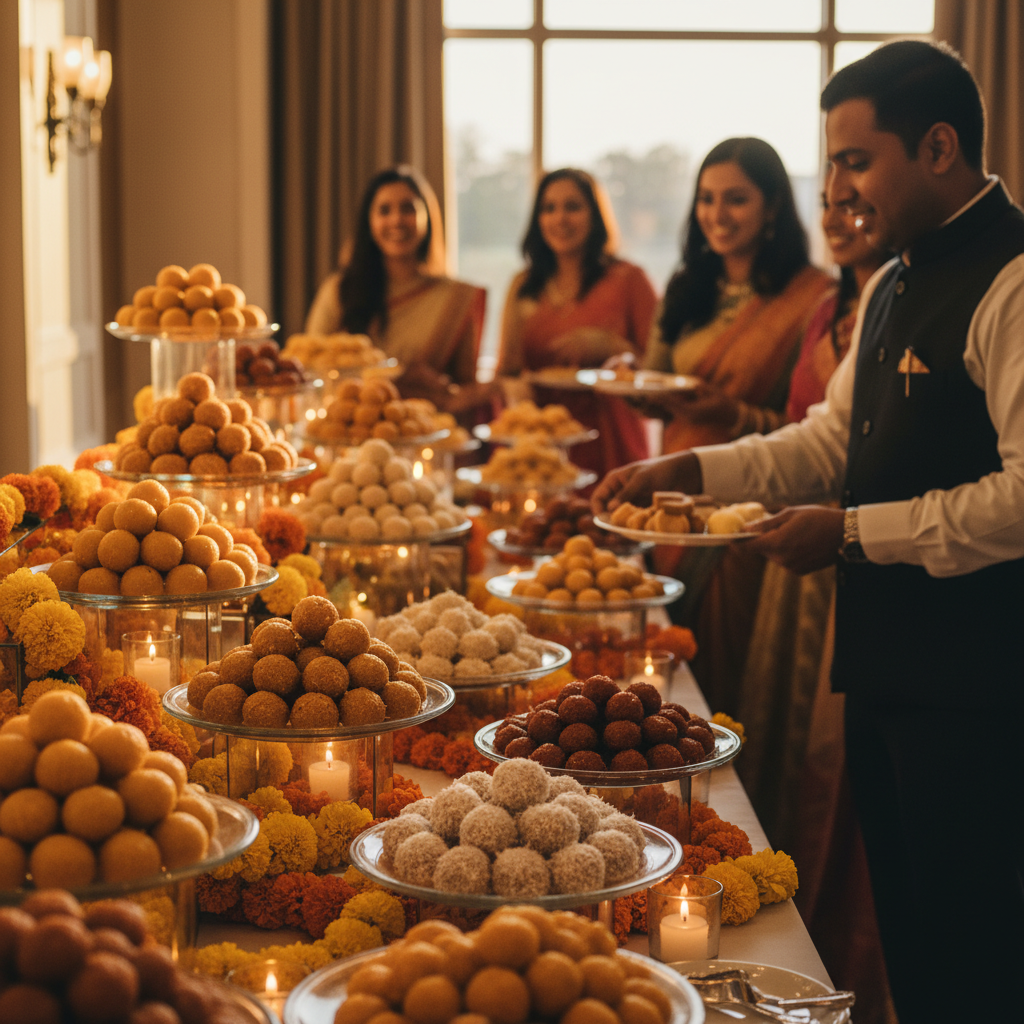
Planning a Box or Dessert Table?
- Tell us your guest count, dietary needs, and display time window.
- We’ll propose a balanced mix (3–7 styles) and packaging that travels cleanly.
- Pickup at our Brampton shop or coordinate timing for your caterer or venue.
Questions about assortments? Visit our website or speak with our in‑store team to finalize your ladoo varieties and flavors today.
Case Studies: Real Brampton Occasions
Balanced assortments win. In recent Brampton events, mixes that included besan, motichoor, coconut, and dry-fruit pleased the widest audiences and photographed best. Nut‑free segments with labels sped up distribution at corporate offices and kept trays tidy for hours.
Self-contained answer: Three event patterns stand out—weddings where motichoor led plated desserts, corporate Diwali trays with nut‑free segments for speed, and kids’ parties spotlighting coconut and chocolate twists. The right balance minimizes leftovers and maximizes guest smiles across the GTA.
-
Brampton wedding dinner (200 guests):
- Motichoor as the plated star, supported by besan and dry‑fruit on side platters.
- Uniform 24 g sizing kept stands symmetrical for photos and service.
-
Corporate Diwali trays (4 floors, mixed-age staff):
- Nut‑free labeled section with coconut/sooji for quick distribution.
- Dry‑fruit/Khowa accents reserved for executive meetings and gifting.
-
Weekend family party near Hwy 410:
- Kids gravitated to coconut and chocolate motichoor; adults favored besan after chaat.
- Separators and flat transport kept the spread pristine on arrival.
In our experience, texture diversity (crumbly + pearled + rich) is the single best predictor of an empty tray by evening.
FAQ
Choose besan for a traditional, nutty crumb; pick motichoor for delicate elegance; add coconut for freshness; and round with a premium dry‑fruit. Store sealed at room temperature and serve within a week, adjusting to moisture level. For nut‑free needs, ask us to segment and label.
Which ladoo is best for a large buffet?
Boondi and besan laddus hold structure well over long service windows. Their sturdier build resists nicks, and the ghee‑roasted flavor stays fragrant at 68–72°F. Mix in a premium dry‑fruit for variety, then place delicate motichoor at the center where it’s protected.
How do I build a nut‑free box without sacrificing variety?
Choose coconut, sooji, besan, and motichoor in a separate, clearly labeled segment. We can pack nut‑free pieces with dedicated separators and simple labels for safe, speedy handout at offices, schools, and community events.
How long do laddus stay fresh?
Most non‑perishable styles stay enjoyable for 3–7 days at room temperature if sealed and kept away from heat. Coconut/khoya styles have a shorter ideal window due to higher moisture. Avoid refrigeration, which can mute ghee aroma and firm texture too much.
What should I pair with a royal dessert table?
Lead with motichoor and dry‑fruit laddus, then add barfi slices and gulab jamun for contrast. Offer masala chai and a chilled beverage option for balance. The result is a table that looks regal and eats beautifully from first pour to final toast.
Can you match ladoo colors to my wedding palette?
Yes—within natural ingredients (saffron, pistachio, rose), we’ll curate a palette that complements your decor. We focus on authentic colors from premium ingredients for a refined, photo‑friendly look without artificial overtones.
Conclusion & Key Takeaways
The smartest ladoo plan balances textures and aromas: roasted besan, pearled motichoor/boondi, fresh coconut, and one regal dry‑fruit. Keep boxes sealed, standardize piece size, and plate right before showtime. This mix delights diverse palates and stays service‑ready across Brampton events.
-
Key Takeaways
- Build around four pillars: roasted, pearled, fresh, and premium.
- Store sealed at room temperature; plate just before service.
- Use separators for travel; protect delicate styles at the center.
- Ask for nut‑free labeling and clear segments for office or school settings.
- Leverage our halwai expertise for a balanced, camera‑ready spread.
-
Next Steps
- Visit our Brampton shop to taste classics side‑by‑side.
- Share guest count and preferences; we’ll design your perfect assortment.
- Finalize pickup timing around travel and service windows.
Want a hand‑curated box with ladoo varieties and flavors for your next celebration? Our team will make it effortless—heritage craftsmanship, royal presentation.
Related Articles
- Premium mithai selection guide for festival gifting
- Barfi varieties and textures: building a balanced dessert table
- Gulab jamun vs. rasgulla: how to pair syrupy sweets with laddus
- Corporate Diwali boxes: labeling, nut‑free segments, and delivery timing