Gulab jamun is a classic Indian milk-based sweet: soft, deep-fried dough balls soaked in warm rose-cardamom syrup. In Brampton, The Mithai Maharaja prepares gulab jamun the authentic halwai way with pure desi ghee, ideal for elegant gift boxes, wedding trays, catering spreads, and everyday treats that travel and serve beautifully.
By The Mithai Maharaja | Last updated: June 22, 2026
Your Gulab Jamun Game Plan (At a Glance)
This guide explains what gulab jamun is, why it matters at celebrations, and how to get consistently soft, syrup-soaked results. You’ll learn authentic techniques, common fixes, and serving ideas, plus how The Mithai Maharaja in Brampton crafts halwai-style mithai and supports gifting and catering for local events.
Here’s how to use this complete guide quickly.
- What is gulab jamun? — Origin, ingredients, textures
- Why it matters — Culture, gifting, wedding uses
- How it works — Dough, frying at ~300°F, syrup at ~205°F
- Types & variations — Khoya, milk powder, kala jamun, fusion
- Best practices — Texture, shape, soak, storage
- Tools & resources — Kitchen gear, internal guides
- Case studies & examples — Real Brampton scenarios
- FAQ — Quick answers to common questions
What Is Gulab Jamun?
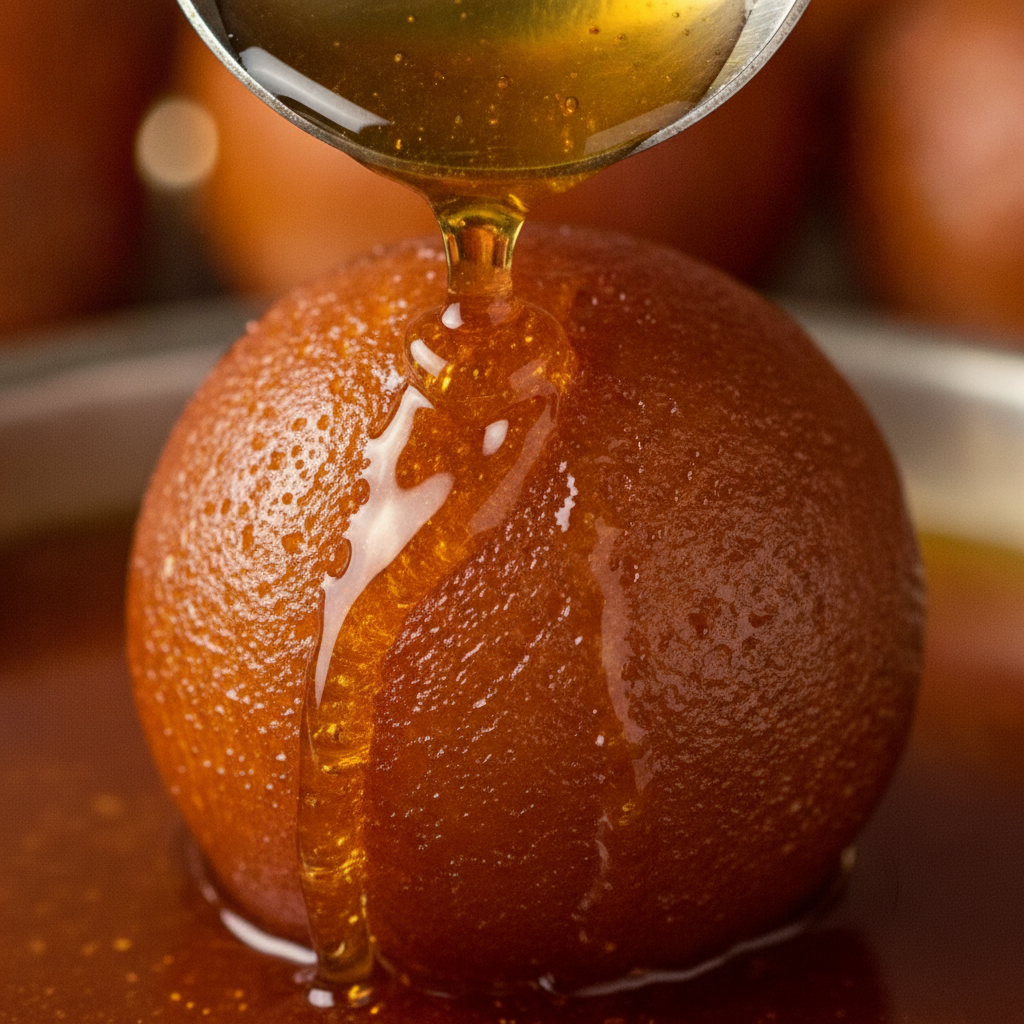
Gulab jamun is a North Indian mithai made by frying milk-based dough balls in ghee or oil, then soaking them in warm sugar syrup flavored with rose and cardamom. The result is a tender, syrup-logged bite with a lightly caramelized shell and a melt-in-the-mouth center.
At its core, gulab jamun blends milk solids with gentle heat and aromatic syrup. Traditional halwais use khoya (reduced milk solids) bound with a small amount of flour, ghee, and leavening. Home versions often use milk powder or a hybrid. Typical ball size is about 1 inch (2.5 cm) before frying, expanding slightly after soaking.
Texture-wise, you’re aiming for a fine crumb with micro air pockets. When fried at a controlled 290–310°F (145–155°C), the surface turns deep honey-brown in roughly 6–9 minutes while the center stays soft. Warm syrup—about a 1:1 sugar-to-water base by volume—at 200–215°F (93–102°C) penetrates best within 30–45 minutes of soaking.
The Mithai Maharaja pairs fifth-generation technique with presentation—saffron, pistachio, or silver leaf, and elegant gift-ready boxes—so even a dozen pieces look regal on a dessert table. For more fundamentals and step photos, see our gulab jamun from scratch kitchen walkthrough.
Why Gulab Jamun Matters for Celebrations
Gulab jamun is a celebration staple because it travels well, keeps tender in syrup, and delights diverse palates. It’s versatile for gifting, buffet service, and plated desserts, making it a reliable centerpiece for weddings, festivals, and family milestones across Brampton and the GTA.
Function matters as much as flavor. Syrup provides moisture and shelf stability for at least a day, so trays hold up through ceremonies and speeches. One medium platter can support 20–30 guests quickly, while mini cups portion cleanly at crowded events. Its milk-forward sweetness pairs well with tea, ice cream, or rabri.
For Brampton hosts, reliability is key. In our event runs, properly soaked batches hold quality during transit across the GTA. Presentation-grade packaging protects texture while signaling care and occasion. Because The Mithai Maharaja offers sweets and savory snacks, you can round out a menu with chaat, samosas, or a thali-style spread without juggling multiple vendors.
Pro tip: For multi-hour buffets, replenish smaller bowls every 45–60 minutes to keep syrup warm and sheen intact. That cadence keeps color even and the bite consistent for late-arriving guests.
How Gulab Jamun Works: Dough, Frying, and Syrup
Soft gulab jamun comes from balanced dough hydration, low-and-slow frying at about 300°F, and soaking in 200–210°F syrup. Let dough rest 10–15 minutes, fry until deep golden (6–9 minutes), then soak 30–45 minutes. Maintain temperatures to avoid dense centers or wrinkled skins.
Key principles (with numbers that matter)
- Dough hydration: Aim for a soft, slightly tacky dough. With milk powder, a ~2:1 powder-to-liquid ratio by volume is common; with khoya, add only enough milk to bind.
- Resting time: 10–15 minutes relaxes gluten and lets leavening start. Skipping this step often causes fine surface cracks.
- Ball size: 12–14 g portions roll into ~1-inch spheres. Keep sizes within ±0.5 g for an even cook.
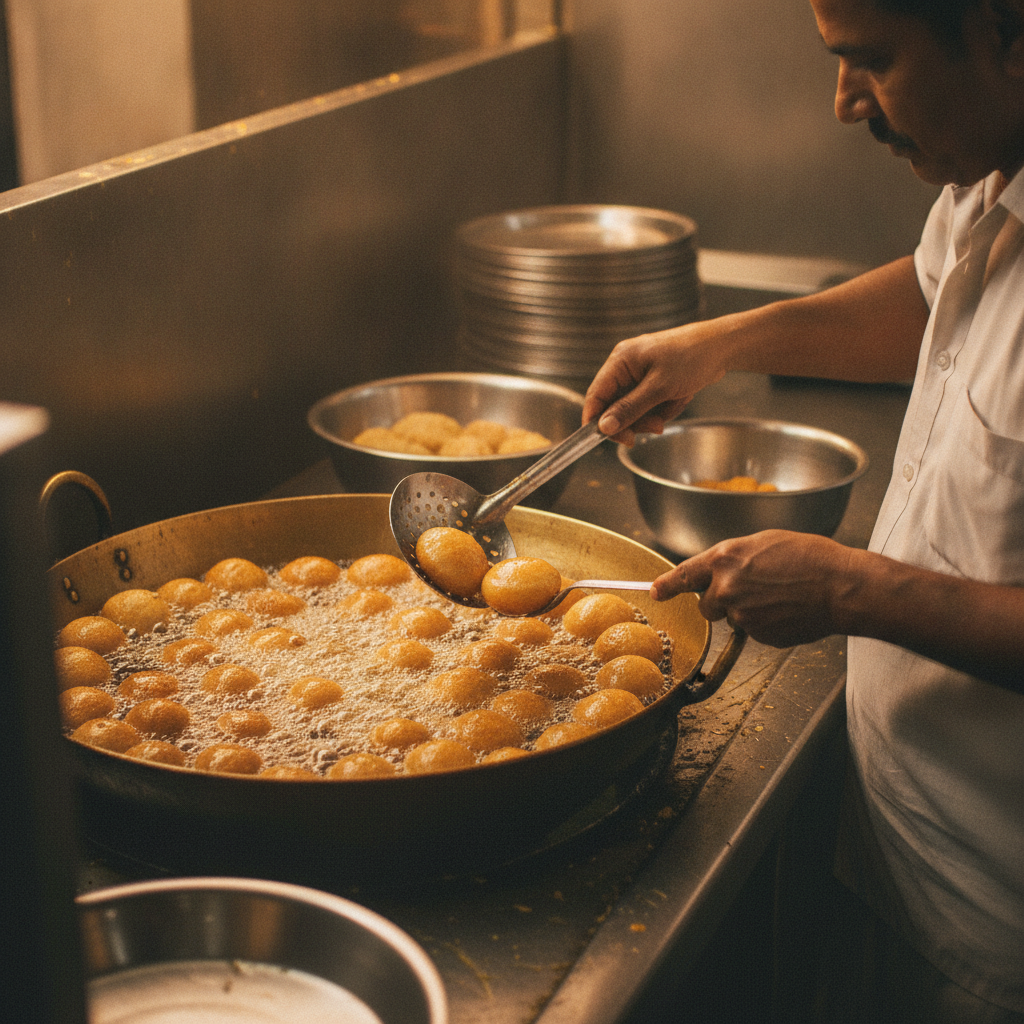
- Frying temperature: Hold 290–310°F. Above 320°F, the exterior darkens before the center cooks; below 285°F, pieces absorb excess fat.
- Frying time: 6–9 minutes to reach deep golden-brown. Turn gently every 30–45 seconds for even color.
- Syrup strength: Start at 1:1 sugar:water by volume. For richer soak, go ~1.25:1. Cardamom pods (3–5 per quart) and a few saffron strands perfume without overpowering.
- Syrup temperature: 200–210°F for absorption. Boiling-hot syrup (212°F+) can wrinkle skins; cool syrup penetrates slowly.
- Soaking window: 30–45 minutes covers most sizes; larger pieces or kala jamun benefit from ~60 minutes.
In our kitchen runs, the most common failure mode is rushing the fry. A 15–20°F swing up or down changes texture dramatically, so a clip-on thermometer is essential. We also keep syrup in a 160–175°F holding zone after the initial soak to maintain gloss without over-softening.
Step-by-step workflow (home or commercial)
- Mix dough until just combined; rest 10–15 minutes.
- Weigh to 12–14 g; roll smooth spheres with no surface cracks.
- Heat ghee or oil to ~300°F; test with a small crumb that should bubble gently.
- Fry 6–9 minutes, stirring lightly for even color.
- Warm syrup to ~205°F with cardamom and rose; rest off heat 2 minutes.
- Transfer fried pieces directly to warm syrup; soak 30–45 minutes.
- Garnish with pistachio, saffron, or silver leaf; serve warm (120–130°F) or at room temperature.
Need a deeper dive into syrup science? Explore our traditional preparation guide and this focused from-scratch walkthrough for visual cues on correct consistency.
Types, Methods, and Delicious Variations
There are three winning paths: classic khoya-based jamun, reliable milk-powder doughs, and deeper-hued kala jamun. Beyond the basics, there are stuffed centers, mini party bites, and bakery fusions like jamun cake, all pair beautifully with cardamom-saffron syrup and pistachio.
Core methods
- Khoya method: Most traditional. Fine mava yields a delicate crumb. Add just enough binder to hold shape; over-flouring leads to dense centers.
- Milk powder method: Accessible and consistent. Hydration is the lever; too much liquid causes collapse during frying.
- Mixed method: Combine khoya + milk powder to balance flavor and structure. This hybrid resists surface cracking.
Comparison at a glance
| Approach | Flavor | Texture | Difficulty | Best for |
|---|---|---|---|---|
| Khoya | Rich, dairy-forward | Very soft crumb | Advanced | Weddings, purists |
| Milk powder | Balanced, slightly caramel | Consistent, slightly springy | Intermediate | Home cooks, potlucks |
| Mixed | Best of both | Soft with structure | Intermediate | Large trays, transport |
Variations you’ll see (and love)
- Kala jamun: Slightly darker fry with a hint of tang; soak 45–60 minutes.
- Stuffed jamun: Nuts or mawa centers; keep stuffing at ~10% of dough weight.
- Mini jamun bites: 8–10 g balls for plated desserts and kid-friendly portions.
- Rabri pairing: Two jamuns with 60–90 ml rabri form an instant plated dessert.
- Fusion bakes: Our audience loves jamun-inspired cakes and pastries; see a few creative takes below.
Curious about modern mashups? Don’t miss our cluster piece on gulab jamun cheesecake for techniques that respect tradition while delivering bakery-style wow.
Best Practices for Soft, Round, Well-Soaked Jamun
For perfect gulab jamun, standardize ball size, control oil at 290–310°F, and soak in 200–210°F syrup for 30–45 minutes. Keep syrup warm for service, and avoid fridge-cold storage that toughens the crumb. These controls lock in color, gloss, and tenderness.
Consistency controls we rely on
- Scale everything: 12–14 g dough balls and a 1:1 syrup baseline reduce variance across 50+ pieces.
- Thermometer discipline: Clip-on reading every 60 seconds; adjust flame in small increments to hold ~300°F.
- Gentle agitation: Stir or swirl oil every 30–45 seconds for even browning; avoid sudden drops that crack skins.
- Immediate soak: Transfer within 30 seconds of draining to leverage capillary action while cores are hot.
- Hold warm: Keep syrup at 160–175°F for buffet service; refresh garnish every 45–60 minutes.
- Storage: Room temperature for day-of service; brief reheats at 150–160°F revive sheen without splitting.
We pair these controls with a visual QC checklist: uniform amber color, smooth skins, and weight checks (a soaked 14 g ball typically finishes around 24–27 g depending on syrup strength). When you need 200+ consistent pieces for an event, these micro-steps prevent surprises.
Local considerations for Brampton
- Plan festival lead times: Diwali, Eid, and summer wedding weekends surge volume. Reserve gift boxes and catering trays several days ahead to secure preferred pickup windows.
- Account for transport: In GTA traffic, insulated carriers help maintain 120–130°F serving temp for up to an hour. Ask for sealed syrup to top off after arrival.
- Menu balance matters: Pair rich jamun with lighter chaats or a thali. The Mithai Maharaja’s savory range, from chole bhature to samosas, keeps guests engaged between sweet courses.
Tools and Resources (Home and Catering)
You’ll get better results with a clip-on thermometer, a wide kadhai or Dutch oven, a spider/skimmer, and heat-safe containers for syrup. For planning, lean on tested guides, internal recipes, and catering coordination from The Mithai Maharaja in Brampton.
Essential gear
- Heat control: Clip-on thermometer with 2°F resolution; IR guns are fine for checks but lag on oil.
- Fryer vessel: Wide kadhai or heavy Dutch oven promotes even heat; fill oil to 1.5–2 inches.
- Tools: Slotted spoon or spider, fine mesh skimmer, and perforated tray for quick draining.
- Syrup containers: Heat-safe bowls with lids hold 160–175°F during service; pre-warm to reduce temperature shock.
Learning resources from our kitchen
- Master syrup cues with this traditional prep guide.
- Compare khoya vs milk powder in our from-scratch tutorial.
- Dial in soak and shine with the syrup consistency guide.
- Explore styles across mithai in 5 classic treats.
From mithai to bakery fusions
Love a pastry riff? See these popular interpretations our community orders alongside classic mithai:
- Layered gulab jamun cake for modern celebrations
- Party-size jamun dessert cups that pack neatly for transport
- Handheld gulab jamun pastry to round out a dessert board
Case Studies and Real-World Examples
From wedding buffets to office celebrations, gulab jamun shines when logistics and portioning are planned. The Mithai Maharaja leverages halwai technique, packaging, and savory pairings to deliver consistent results across guest counts, venues, and timelines.
Wedding reception (150–200 guests)
- Plan: Two jamuns per guest with a 10% buffer; refill bowls every 45 minutes.
- Gear: Two 6-quart syrup containers held at ~165°F on rotation; garnish pre-portioned in small cups.
- Menu balance: Anchor dessert with jamun; add rabri cups and a light chaat starter like dahi bhalla.
- Outcome: Even color, steady service tempo, and minimal waste.
Festival gifting (20–50 families)
- Plan: Gift-ready boxes with protective inserts; 12–24 pieces each.
- Flavor notes: Saffron strands and pistachio signal premium quality; rose kept gentle for universal appeal.
- Outcome: Boxes stack safely; syrup stays clear and glossy for longer when stored properly.
Office team event (25–40 people)
- Plan: Mini jamun (8–10 g) for easy portioning; combine with samosa + chai to balance richness.
- Logistics: Insulated delivery; on-site top-off with warm syrup after setup.
- Outcome: Quick service line and consistent texture across the 90-minute window.
Need a hand planning? Our team can align mithai with your savory menu, from Delhi Wale chole bhature and bedmi puri aloo to paneer pakora, and build a tasting that fits your guest profile.
Taste it in Brampton (soft CTA)
Ready to compare home results with halwai-crafted mithai? Stop by or browse online at The Mithai Maharaja. Ask about elegant gift boxes, wedding selections, and event-friendly packaging for smooth service.
Frequently Asked Questions
These quick answers cover the most common gulab jamun questions: ingredients, frying temperature, syrup consistency, storage, and reheating. Each tip keeps you focused on texture, moisture, and presentation—the trio that defines a great jamun experience.
What is the ideal frying temperature for gulab jamun?
Aim for 290–310°F. This range cooks the center while developing even color. If oil climbs above 320°F, the outside darkens too fast; below 285°F, pieces absorb excess oil and turn heavy.
How sweet should the syrup be?
Start with a 1:1 sugar-to-water ratio by volume. Increase to ~1.25:1 for a richer soak or when serving mini jamuns. Keep syrup around 200–210°F for best absorption.
How long should jamun soak?
Most 1-inch pieces soak well in 30–45 minutes. Larger or darker kala jamun can benefit from ~60 minutes. Serve warm or at room temperature for the softest texture.
Can I refrigerate gulab jamun?
Yes, but refrigeration firms the crumb. If you chill for storage, rewarm gently in 150–160°F syrup before serving. Avoid microwave hot spots that split skins.
What are the best pairings?
Classic matches include rabri, pistachio garnish, and masala chai. For a menu with range, add savory balance—think samosas, dahi bhalla, or a light chaat—so guests can pace sweetness comfortably.
Conclusion and Key Takeaways
Perfect gulab jamun depends on three factors: a soft, well-rested dough, a controlled 290–310°F fry, and a warm 200–210°F soak. Pair those with consistent sizing and gentle handling, and your trays will look and taste celebration-ready every time.
Key takeaways
- Define your method: khoya, milk powder, or mixed—each delivers great results when hydrated correctly.
- Standardize sizes (12–14 g) and temperatures to remove guesswork.
- Soak 30–45 minutes; hold syrup warm for service sheen.
- Plan presentation: pistachio, saffron, or silver leaf elevate gift boxes and buffet bowls.
- For Brampton events, coordinate mithai with savory favorites for a complete menu.
Want halwai-crafted trays without the home-lab setup? Our fifth-generation team is here to help. Explore authentic mithai, chaats, and event-friendly packaging at The Mithai Maharaja.