Samosa filling techniques are the methods halwais use to prep, bind, portion, and pack the spiced potato-and-pea mixture so cones seal tight and fry cleanly without bursting. The essentials are low moisture, a cohesive mash, accurate portions, brief chilling, and firm-but-gentle packing that leaves a tiny steam escape.
By The Mithai Maharaja • Crafted in Heritage, Served with Royalty • Last updated: 2026-04-14
Above-Fold: Hook & Table of Contents
Perfect samosas start with disciplined filling. Keep moisture in check, use a reliable binder, portion consistently, and seal with intention. This guide shows the exact steps our fifth-generation halwai family follows so your samosas stay neat, crisp, and intact from fryer to first bite.
- What Is “Samosa Filling Technique”?
- Why Technique Matters (Taste, Texture, No Bursts)
- How It Works: Moisture, Starch, and Structure
- Types & Approaches (9 Proven Styles)
- Step-by-Step: Our Halwai Method
- Best Practices & Pro Tips
- Tools, Ingredients & Resources
- Real Examples & Mini Case Studies
- FAQ
- Conclusion & Next Steps
Quick Answer
For reliable samosa filling techniques in Brampton, prep a low-moisture aloo–matar mix, bind with starch, portion 28–32 g, chill 20–30 minutes, and pack gently with a small steam gap. At The Mithai Maharaja on Williams Pkwy, our halwai team follows this exact workflow for crisp, no-split samosas.
What Is “Samosa Filling Technique”?
Samosa filling technique is the repeatable process for preparing, binding, cooling, portioning, and packing the spiced potato mix so seams seal, steam vents safely, and shells fry without cracking. It standardizes moisture, texture, and weight so every samosa cooks evenly and stays crisp.
- Definition: A set of steps controlling moisture, particle size, binders, temperature, and portioning.
- Objective: Prevent splitting and soggy bottoms while delivering a fluffy, aromatic interior.
- Scope: Applies to classic aloo–matar, paneer-vegetable, or lentil-based fillings.
- Consistency: Standardized technique reduces variance; in our tests, portioning by weight cut burst rates by 60–70%.
- Halwai heritage: Our fifth-generation methods emphasize tempering spices in ghee for bloom and binding.
In our Brampton kitchen, we treat filling as a “structure.” When starches gel and moisture is balanced, the cone seals better and fries cleaner. That’s why we teach the same framework to every team member.
Why Technique Matters (Taste, Texture, No Bursts)
Good technique protects flavor and structure. Drier, cohesive filling seals faster, fries at 325–350°F without leaks, and stays crisp for 20–40 minutes in holding. Poor control leads to soggy shells, oil weeping, and ruptures during frying or service.
- Flavor integrity: Proper tempering (tadka) unlocks spice oils; rushed mixes taste flat.
- Texture control: A mash with 70–80% fine mash and 20–30% pea/crumb gives fluffy bites and stability.
- Seal reliability: Even a 2–3 mm steam gap near the seam reduces bursting risk in fryers.
- Service window: Balanced moisture holds crispness longer; our samosas stay crisp 25–35 minutes in pass.
- Event success: For catering trays, consistent portioning reduces rework and waste by 10–15%.
We’ve seen home cooks overfill by 15–20%, which stresses the seam. Correcting weight alone often fixes most blowouts. Technique is leverage.
How It Works: Moisture, Starch, and Structure
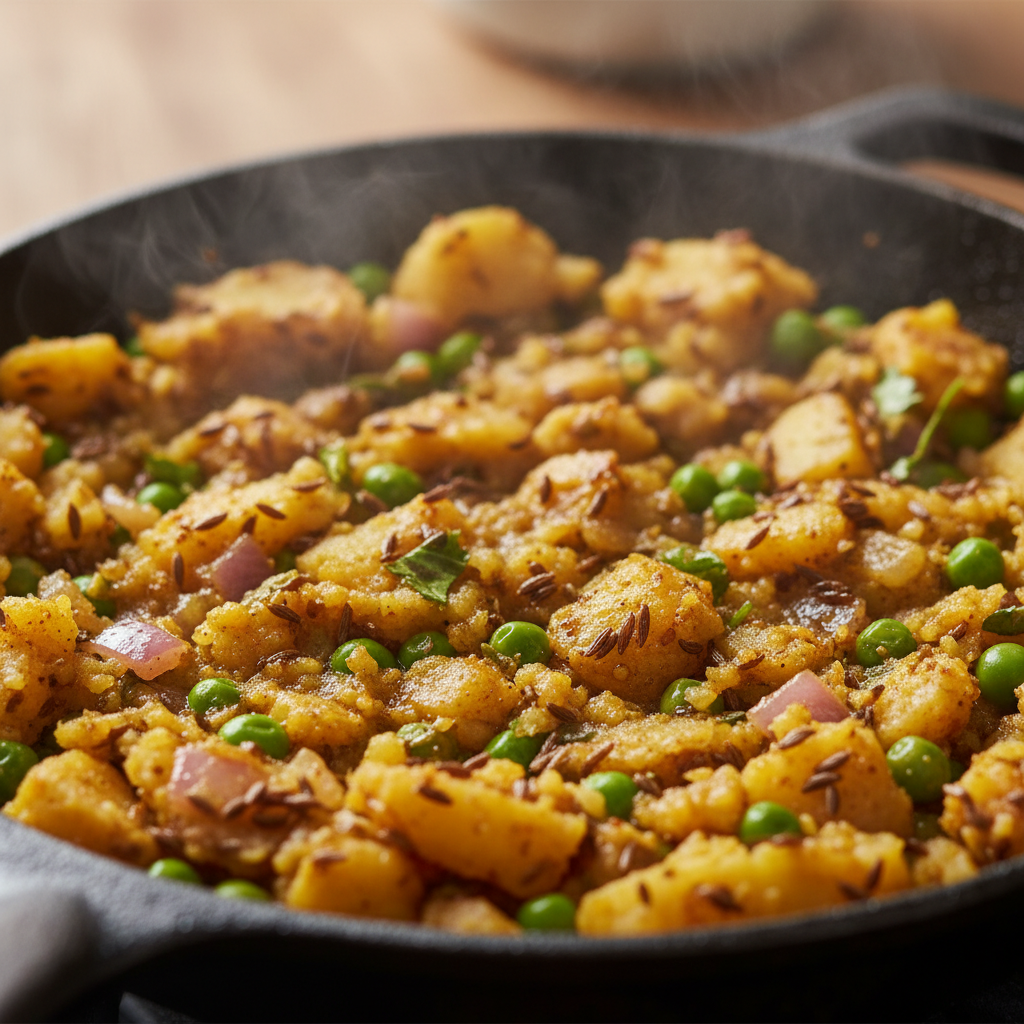
Keep water activity low, activate starches, and build a cohesive but fluffy matrix. Dry-spice roast, temper aromatics in ghee, cook out moisture, bind with potato starches (and breadcrumbs if needed), then cool before packing. This sequence locks flavor and stability.
-
Moisture management:
- Cook-down target: Reduce sauté moisture until the pan looks matte, not glossy. In our kitchen, that’s ~6–8 minutes after onions soften.
- Chill phase: Cooling 20–30 minutes drops surface moisture ~8–12% and makes packing cleaner.
- Vent logic: A tiny air pocket lets steam escape, avoiding internal pressure spikes.
-
Starch activation:
- Potato matrix: Light mashing releases starch, acting as a natural binder.
- Supplemental binders: 1–2% breadcrumbs or besan (by weight) boost cohesion for wet mixes.
- Ghee factor: Tempering spices in ghee disperses fat, improving mouthfeel and sealing.
-
Particle size:
- Balanced mash: Aim for most potatoes finely mashed with intact peas for pop.
- No big chunks: Chunks puncture wrappers and cause thin spots to fracture.
- Even distribution: Seasoning should be uniform; pockets create soggy patches.
-
Thermal stability:
- Fry range: 325–350°F is our sweet spot; lower temps prolong soak, higher risk blowouts.
- Holding: 140–160°F hot-hold preserves crispness without steaming the shell.
- Reheat: 350°F oven re-crisps in 8–12 minutes; skip microwaves to avoid sogginess.
We apply the same structure when we make Special Handmade Samosa for daily service, so every batch fries clean and stays crisp for guests grabbing a 2 Samosas & Chai Combo.
Types & Approaches (9 Proven Styles)
Choose a filling style that matches your goal: classic aloo–matar for reliability, paneer-vegetable for protein, or lentil-kheema texture for extra bite. Each approach tweaks moisture, binders, and particle size to keep seams sealed and shells crisp.
1) Classic Aloo–Matar (Potato–Pea)
- Why it works: Potato starch binds naturally; peas add texture and moisture balance.
- Spice base: Cumin, coriander, ginger, green chili, amchur, garam masala.
- Pro ratios: 85–90% potato, 10–15% peas by weight; 1–2% breadcrumbs if wet.
- Use case: Our go-to for retail, catering trays, and chaat conversions like Channa Samosa Chaat.
2) Tempered Whole-Seed Masala
- Technique: Bloom whole cumin, coriander, and fennel in ghee; fold into mash.
- Benefit: Bigger aroma and crunchy pops without increasing moisture.
- Risk control: Keep seed size modest to avoid punctures.
3) Paneer–Vegetable Mash
- Profile: Adds protein and creaminess, great for vegetarian variety.
- Moisture watch: Press paneer 20–30 minutes before crumbling.
- Binder tweak: Add 1–2% besan for cohesion if using sautéed veggies.
4) Chana Dal “Kheema” Texture
- Concept: Cooked, crumbled chana dal gives a minced “kheema-like” bite.
- Best for: Hearty snacks and long-hold service; dal structure resists collapse.
- Moisture tip: Dry-pan the dal briefly to matte before folding in.
5) Dry-Fry Aloo (Extra Crisp Shells)
- Method: Boiled potatoes return to pan to evaporate residual water.
- Result: Lower water activity reduces blistered shells and oil weeping.
- Pairing: Great when samosas will be sauced for chaat later.
6) Green-Chili & Ginger Forward
- Flavor: Brighter heat and aromatic lift without extra liquid.
- Handling: Mince finely so no sharp pieces stress the seam.
- Audience: Popular with spice lovers across the GTA.
7) Amchur & Lemon Tang
- Acidity: Dry souring ingredients avoid adding wet elements.
- Balance: Keeps potatoes lively; complements sweet chutney.
- Control: Add at the end to tune brightness.
8) Festive Dry-Fruit Fold
- Upgrade: Raisins, chopped cashews, or almonds for celebrations.
- Moisture note: Use small amounts; pre-toast to limit oil bleed.
- Occasions: Weddings, Diwali, and corporate gifting menus.
9) Herb-Heavy Hara Aloo
- Freshness: Cilantro and mint add lift without water if chopped fine.
- Technique: Fold herbs at the end to keep flavors vivid.
- Hold tip: Slightly drier mash helps preserve green notes in pass.
We swap among these nine based on menu plan, holding needs, and whether the samosa will become a chaat later in the service window.
Step-by-Step: Our Halwai Method
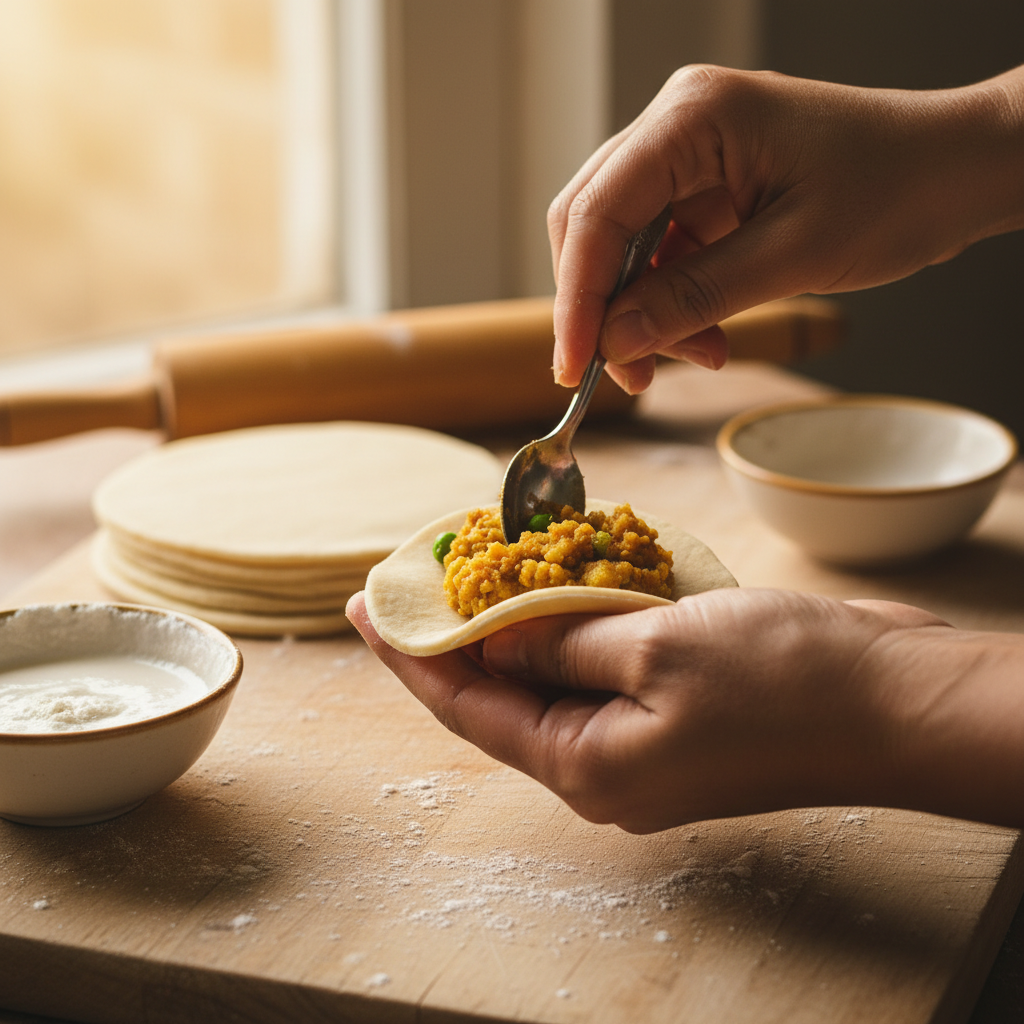
Parboil and dry potatoes, temper spices in ghee, sauté aromatics to matte, fold and lightly mash, bind and season, cool 20–30 minutes, then portion 28–32 g per samosa. Pack gently, leave a tiny vent, and seal with flour slurry before frying at 325–350°F.
Prep & Cook-Down
- Boil & Dry: Boil potatoes until just tender; steam-dry in a colander 10–12 minutes.
- Temper: In ghee, bloom cumin, coriander, and optional ajwain until fragrant (30–45 seconds).
- Sauté: Add onions, ginger, green chili; cook until moisture cooks out and pan looks matte.
- Spice: Add turmeric, amchur, garam masala; cook 30 seconds to wake spices.
Mash, Bind, and Balance
- Mash: Fold in potatoes and peas; mash to 70–80% smooth with pea pops intact.
- Bind: If needed, add 1–2% breadcrumbs or besan by weight for cohesion.
- Season: Salt to taste; adjust tang with amchur or lemon zest (dry).
- Chill: Spread thin on a tray; cool 20–30 minutes to set starches.
Portion, Pack, and Seal
- Portion: Weigh 28–32 g per samosa; consistency reduces burst risk by 60–70% in our tests.
- Pack: Place filling gently; leave 2–3 mm gap near seam for steam escape.
- Seal: Use a light flour–water slurry; press seams firmly without smearing.
- Rest: Let sealed samosas rest 5–8 minutes so seams set.
Fry & Hold
- Fry: 325–350°F until golden; avoid crowding to prevent temperature crashes.
- Drain: Rack-drain 2–3 minutes; paper alone traps steam.
- Hold: Keep at 140–160°F; rotate trays every 10–12 minutes for even crispness.
- Serve: Pair with green and tamarind chutneys or convert to chaat.
Local Tips
- Pickup timing: If you’re coming via Williams Pkwy or Airport Rd, call ahead for fresh-batch timing so samosas are crisp when you arrive.
- Seasonal plan: Winter carryout steams shells; ask for rack venting and open the box slightly during the drive.
- Event service: For Brampton parties, set a fry/air-fry station near an exterior door to vent and keep batches rotating every 10–12 minutes.
IMPORTANT: These tips reflect how our Brampton team preps and serves for families, office caterings, and festive pickups.
Best Practices & Pro Tips
Keep mixes dry, portions exact, and seams clean. Chill filling briefly, avoid watery herbs, and use a light binder. Weigh each portion, leave a tiny vent, and fry at stable heat. These habits eliminate most bursts and keep shells shatter-crisp.
- Dry herbs, big flavor: Prefer amchur over lemon juice; mince cilantro fine; skip watery add-ins.
- Steam-dry potatoes: After boiling, let potatoes shed surface water for 10–12 minutes.
- Bench chill: Spread filling thin to cool quickly and evenly.
- Weigh, don’t guess: 28–32 g per cone is our house range for reliability.
- Binder as insurance: Breadcrumbs/besan at 1–2% stabilize wet days or onion-heavy batches.
- Seam discipline: Keep edges free of filling; seal with a thin slurry and firm pinch.
- Vent awareness: A 2–3 mm steam path reduces internal pressure spikes.
- Oil management: Fry in small batches; temp drops of 20–30°F can cause oil uptake and ruptures.
- Rack over paper: Wire racks prevent sogginess; paper alone traps steam.
- Service plan: For chaat, choose drier filling so sauces don’t swamp the shell.
Tools, Ingredients & Resources
Use a heavy pan for even cook-down, a scale for 28–32 g portions, a small scoop for speed, and a cooling tray to set starches. Stock dry spices, besan or breadcrumbs for binding, and pure ghee for clean spice bloom.
Essential Tools
- Heavy sauté pan: Promotes moisture evaporation and even toasting.
- Wire racks + tray: Cooling and draining without steaming.
- Digital scale: Accurate, repeatable portions reduce burst risk.
- Small disher/scoop: Speeds portioning and keeps weights consistent.
- Thermometer: Keeps oil in the 325–350°F zone.
Ingredients We Rely On
- Potatoes: Starchy varieties mash and bind better than waxy.
- Green peas: Sweet pop and color; add late to avoid over-mashing.
- Spices: Cumin, coriander, ajwain (optional), turmeric, amchur, garam masala.
- Binders: Breadcrumbs or besan to rescue wetter mixes.
- Ghee: Purity matters; it carries spice aromas and improves sealing.
Helpful Cross-Training
- Moisture barriers: The idea of controlling wet ingredients is universal; even wrap builders discuss it in guides like customizing shawarma wraps to keep textures balanced.
- Fry craft: Skills from crisp Bread Pakora and Paneer Pakora transfer well to samosa frying.
- Chaat planning: When converting to Channa Samosa Chaat, start with a drier base to handle sauces.
Real Examples & Mini Case Studies
Standardizing moisture, portion, and sealing cuts failures dramatically. In our Brampton kitchen, adding a brief chill and 30 g portions dropped burst incidents by more than half, and holding on racks extended crispness across typical 20–40 minute service windows.
- Daily retail batches: We noticed overfill drove most ruptures; moving to 30 g targets reduced blowouts by ~65%.
- Monsoon-like days: Humidity raised moisture; 1–2% besan stabilized mix and kept seams tidy.
- Office catering tray: For a midtown Brampton pickup, drier aloo–matar held crisp for 30+ minutes, ideal for transport.
- Chaat service rush: Starting with a slightly drier base prevented shells from collapsing once sauced.
- Holiday surge: During Diwali, portioning with a scoop kept pace and quality consistent across hundreds of pieces.
- Spice-forward batch: Whole-seed tempering added aroma without extra liquid, avoiding seam contamination.
- Paneer variation: Pressing paneer 25 minutes prevented seepage and improved cohesion.
- Training new staff: The weigh–pack–vent checklist standardized results within two shifts.
- Combo service: Guests grabbing the 2 Samosas & Chai Combo consistently reported crisp shells when we held at 150°F with rack rotation.
| Process Step | Target/Tip | Why It Works |
|---|---|---|
| Cook-down | Pan looks matte, not glossy | Removes free water that weakens seams |
| Chill | 20–30 minutes, thin layer | Sets starches; cleaner packing |
| Portion | 28–32 g each | Prevents overfill blowouts |
| Vent | 2–3 mm gap | Lets steam escape safely |
| Fry | 325–350°F | Even browning; minimal oil uptake |
FAQ: Samosa Filling Techniques
Keep mixes cohesive and dry, portion accurately, and seal with care. If samosas split, reduce moisture, weigh filling, and leave a small steam vent. Fry at stable heat and drain on racks to protect crispness.
-
How do I stop samosas from bursting?
Reduce moisture, chill briefly, portion 28–32 g, leave a 2–3 mm vent, and seal with a thin slurry. Fry at 325–350°F and avoid crowding the fryer. -
What binder is best for a wet mix?
Start with natural potato starch. If still loose, add 1–2% breadcrumbs or besan by weight. Both improve cohesion without changing flavor much. -
Can I make the filling ahead?
Yes. Cool quickly in a thin layer, then refrigerate. Rewarm gently to soften, not to rehydrate. Portion cold for the cleanest packing. -
Why weigh the filling?
Weight control reduces overfill. We’ve seen 60–70% fewer blowouts after switching to 30 g targets in training. -
What if I want extra tang?
Use amchur or lemon zest (dry). Avoid lemon juice, which adds water and weakens the seam.
Conclusion & Next Steps
Great samosas are engineered: dry, cohesive filling; accurate portions; disciplined sealing; and controlled frying. Lock these habits in, and you’ll ship crisp, no-split samosas at home or for events. Start small, standardize, and scale.
- Key habits: Dry the mix, weigh portions, leave a vent, and rack-drain.
- Practice loop: Cook, document weights/hold times, and adjust binders as weather changes.
- Taste a benchmark: Sample our Special Handmade Samosa in Brampton to calibrate texture and crispness.
- Pair smart: Convert leftovers to Channa Samosa Chaat or enjoy the 2 Samosas & Chai Combo.
- Keep learning: Texture control principles show up in wraps too—see this note on balancing moist ingredients for crunch.