Halwa and pinni differences center on texture, moisture, and purpose. Halwa is a warm, spoonable sweet (often suji, gajar, or moong dal) cooked with pure ghee and liquid, best enjoyed fresh. Pinni is a firm, hand-shaped Punjabi sweet from roasted flour and ghee, designed for gifting, travel, and longer keeping quality.
By The Mithai Maharaja — Last updated: 2026-04-12
At a Glance
Halwa is soft, warm, and moisture-rich; pinni is dense, shaped, and low-moisture. Choose halwa for immediate comfort and bhog; pick pinni for gifting, travel, and winter energy. At The Mithai Maharaja in Brampton, both are handcrafted with pure desi ghee by a fifth-generation halwai family dating back to 1938.
- Texture: Halwa is spoonable and glossy; pinni is firm, cohesive, and biteable.
- Build method: Halwa relies on liquid absorption; pinni relies on fat-binding and compression.
- Service: Halwa is best served warm; pinni serves at room temperature and travels neatly.
- Display: Halwa suits bowls and thalis; pinnis stack elegantly in gift boxes or platters.
- Local context: Crafted in Brampton with pure desi ghee and time-honored Punjabi techniques.
| Attribute | Halwa | Pinni |
|---|---|---|
| Core base | Suji, gajar, moong dal, atta | Atta, besan, khoya, gond, alsi |
| Texture | Soft, spoonable, glossy | Firm, shaped, cohesive |
| Best moment | Fresh, warm service | Gifting, travel, buffets |
| Moisture | Higher (hydrated) | Lower (stabilized) |
| Presentation | Bowls, thalis | Boxes, platters |
Quick Answer
In Brampton at The Mithai Maharaja, halwa is a warm, soft dessert to enjoy fresh, while pinni is a firm Punjabi sweet ideal for gifting and travel. Use this halwa and pinni differences guide to match texture, shelf life, and occasion—then explore our halwa & pinni range online or in-store.
Local Tips
- Tip 1: If youre coming via Highway 410, our Williams Pkwy location offers easy parking for quick pickup of travel-friendly pinni gift boxes across the GTA.
- Tip 2: Brampton winters make warm suji or gajar halwa a morning favorite—pair with chai for a cozy, satisfying start.
- Tip 3: For weddings and festivals, assorted pinni boxes hold shape during venue setup and look elegant on dessert tables.
IMPORTANT: We handcraft both sweets with pure desi ghee for authentic Punjabi flavor.
Guide Contents
Jump to the sections you need: definitions, why it matters, how each is made, key variations, best practices, tools and resources, real Brampton examples, FAQs, and next steps. Each section includes quick, actionable bullets for confident decisions.
- What Is Halwa? What Is Pinni?
- Why the Differences Matter
- How Each Sweet Is Made (Step-by-Step)
- Popular Types & Variations
- Best Practices: Choosing, Serving, Storing
- Tools & Resources (Home + Brampton Ordering)
- Case Studies & Real-World Examples
- FAQ
- Key Takeaways
- Conclusion & Next Steps
What Is Halwa? What Is Pinni?
Halwa is a ghee-roasted, sweetened preparation with a soft, spoonable body (often suji, gajar, or moong dal). Pinni is a ghee-bound, hand-shaped Punjabi sweet (atta, besan, khoya, or gond) that is dense and travel-friendly. Halwa shines fresh and warm; pinnis deliver longevity and elegant gifting.
Halwa, Defined
- Core method: Roast semolina or another base in desi ghee; hydrate with hot water or milk; sweeten and garnish.
- Texture: Soft, lush, and glossy with plumped granules or smooth puree (gajar/badam styles).
- Occasions: Breakfasts, bhog/prasad, winter comfort, and festive meals.
- Ingredient levers: Milk adds body and richness; water keeps it lighter; nuts add crunch and nutrients.
- Local example: Our suji and gajar halwa are cooked in pure desi ghee for authentic Punjabi flavor in Brampton.
Clarified butter (ghee) is renowned for a high smoke point (around 450°F per multiple culinary references), which supports clean roasting for halwa bases without burnt notes.
Pinni, Defined
- Core method: Roast atta or besan in ghee; blend in khoya or gond; sweeten with sugar or jaggery; fold in nuts and cardamom; shape.
- Texture: Dense and cohesive with a pleasant crumble on bite; never mushy or sticky when made right.
- Occasions: Travel, winter energy bites, elegant gift boxes, and post-meal nibbles.
- Keeping quality: Lower moisture supports longer shelf behavior when stored properly at cool room temperature.
- Explore locally: See our halwa & pinni collection for current varieties.
Dense, low-moisture confections such as pinnis maintain texture through transport and display. That stability is why theyre a favorite in Brampton for weddings, corporate hampers, and temple visits.
Why the Differences Matter
Your choice affects freshness, logistics, nutrition, and guest experience. Halwa satisfies a warm craving now; pinnis stack beautifully, travel across the GTA, and hold up on dessert tables. Many Brampton hosts pair one warm halwa with assorted pinnis for the best of both worlds.
-
Freshness window:
- Halwa excels within hours of cooking; gentle reheating helps for short holds.
- Pinnis stay consistent for days when kept airtight in cool, dry conditions.
-
Logistics and serving:
- Halwa needs bowls/spoons and heat management.
- Pinnis are utensil-free, portion-controlled, and buffet-friendly.
-
Presentation and photography:
- Halwa looks inviting when garnished just before service.
- Pinnis create neat, symmetrical grids in boxes and on platters.
-
Seasonality:
- Cold weather: suji or gajar halwa feels extra cozy.
- Festive/corporate weeks: pinnis simplify gifting and transport.
In our Brampton kitchen, winter weekends skew toward warm halwa servings, while festival weeks lean heavily to assorted pinni boxes. The pattern holds year after year as families plan for both comfort and convenience.
How Each Sweet Is Made (Step-by-Step)
Halwa is built by roasting a base in ghee, hydrating with liquid, then sweetening and garnishing. Pinni is built by roasting flour in ghee, adding binders (khoya/gond) and flavorings, then compressing into shapes. These distinct methods create different textures, moisture levels, and keeping qualities.
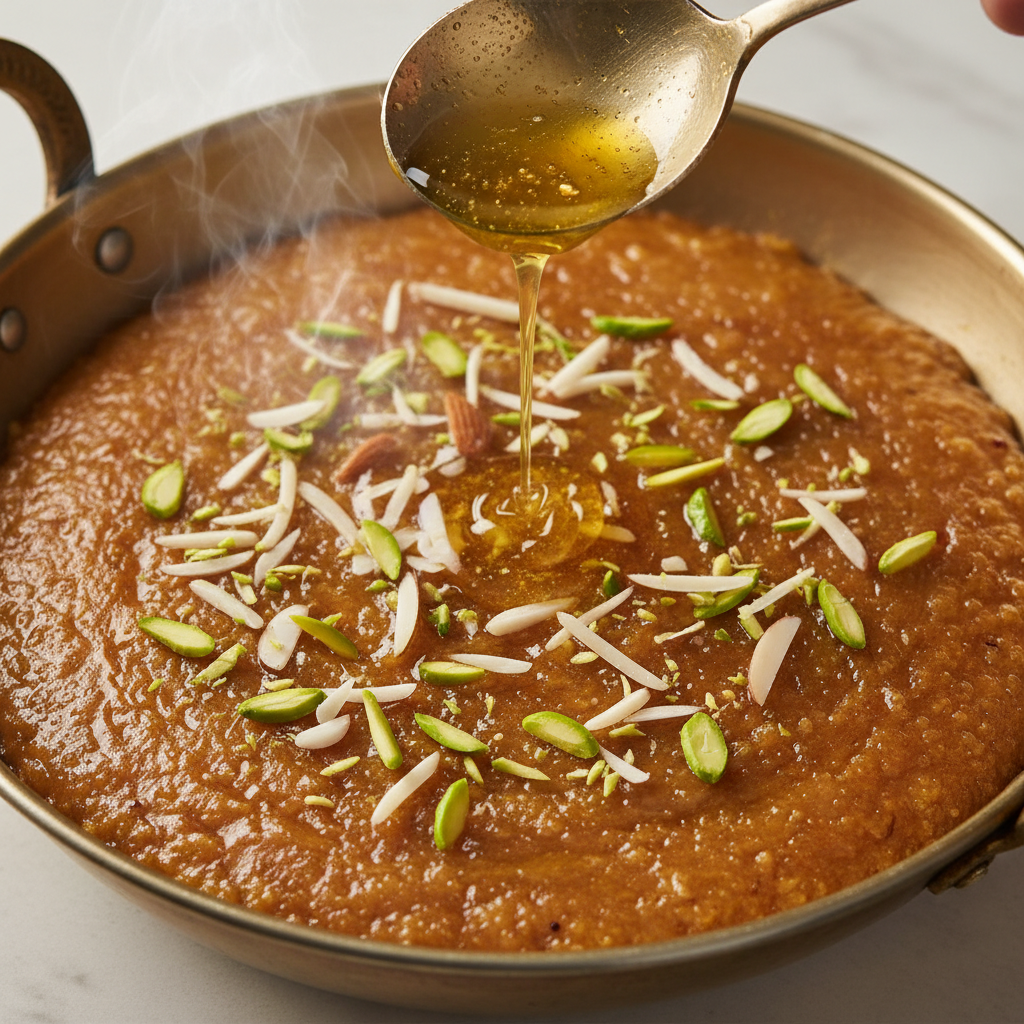
Suji Halwa: Process Snapshot
- Roast: Gently roast semolina in desi ghee until fragrant and lightly golden.
- Hydrate: Add hot water or milk; stir as granules swell and absorb.
- Sweeten: Stir in sugar (or a preferred sweetener) to a glossy cohesion.
- Finish: Cardamom, sliced almonds, pistachios; optional raisins for lift.
- Serve: Ladle warm. Ideal with chai or as prasad/bhog.
- Chef cue: Aim for plumped granules that hold shape on a spoon without oil pooling.
- Nutrition note: One ounce of almonds provides about 6 grams of protein (USDA FoodData Central), supporting satiety.
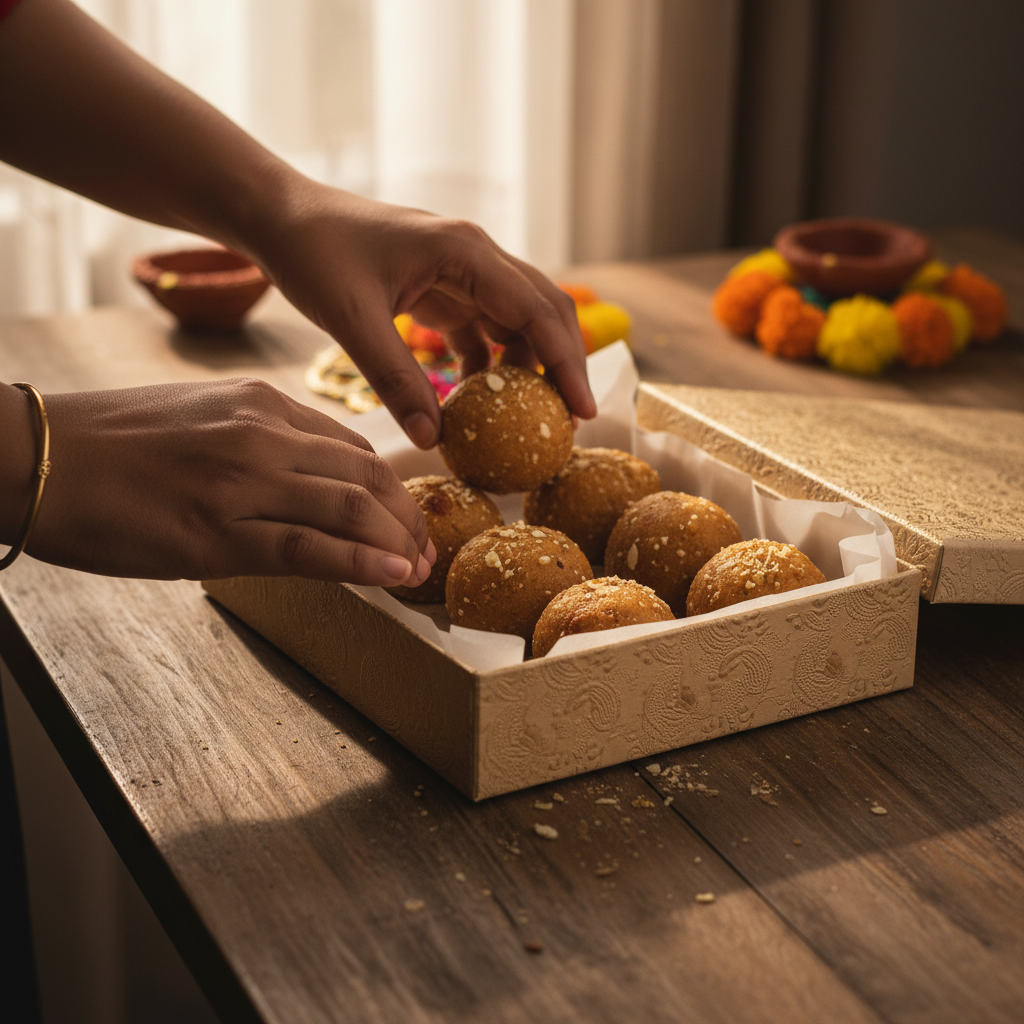
Pinni (Atta/Besan): Process Snapshot
- Roast: Slowly roast atta or besan in ghee until aromatic and nutty.
- Bind: Add khoya or gond for body; fold in sugar/jaggery and chopped nuts.
- Flavor: Cardamom and a pinch of nutmeg or black pepper (optional, Punjabi-style).
- Shape: Compress the warm mixture into tight balls or discs; cool to set.
- Pack: Arrange in parchment-lined, gift-ready boxes.
- Texture target: Firm and cohesive, never greasy. Shape should hold through travel.
- Science corner: Lower water activity creates a more stable sweet for room-temperature handling and display.
Quality Controls We Rely On
- Roast color benchmarks: Golden, never dark brown (avoids bitterness).
- Ghee balance: Enough to bloom aromas, never pooling on the plate.
- Nut selection: Even chop size for consistent bites and safer chewing at buffets.
- Set test (pinni): Shape should hold after cooling; a slight crumb is welcome.
In our daily production, steady roasting and patient binding are the two most reliable levers for texture. We apply these principles across batches to keep results consistent for Brampton guests.
Popular Types & Variations
Halwa spans suji, gajar, moong dal, atta, and nut-based styles. Pinni ranges from atta and besan to khoya-, gond-, flaxseed- (alsi), and panjiri-forward versions. Your pick shifts sweetness, texture, and energy density to fit the occasion.
Halwa Variations Youll See
- Suji Halwa: Classic semolina comfort; quick to prepare and universally loved.
- Gajar Halwa: Carrot-forward, slow-cooked with milk for rich depth.
- Moong Dal Halwa: Split mung lentil base; intensely aromatic and festive.
- Atta Halwa: Whole-wheat warmth with rustic, nutty notes.
- Badam Halwa: Almond-rich and smooth for a luxurious finish.
- Besan Halwa: Roasted chickpea flour comfort with deep nuttiness.
- Combination Halwas: Blends like suji-badam for balanced body and richness.
We observe seasonal shifts in Brampton: richer gajar and moong dal halwas trend up in colder months as families lean into warm, milk-based comfort.
Pinni Variations Youll Love
- Atta Pinni: Whole-wheat foundation with nuts; hearty and balanced. Explore Panjeeri Atta Pinni.
- Khoya Pinni: Milk-solid richness for a softer crumb. See Khoya Pinni.
- Gond Pinni: Edible gum adds body and winter warmth (a Punjabi staple).
- Alsi (Flaxseed) Pinni: Nutty depth and omega-3 appeal; try Alsi Pinni.
- Nishashta Pinni: Traditional flour blend with nostalgic, festive aroma. Browse Nishashta Pinni.
- Besan Pinni: Roasted chickpea flour base with a pronounced nutty profile.
- Panjiri-Style Pinni: Panjiri mixes for a crumbly, nutrient-dense bite.
Almonds deliver about 6 grams of protein per ounce (USDA), while flaxseed contributes fiber and plant omega-3s; together with desi ghee, these ingredients explain why pinnis are prized as winter energy bites.
Best Practices: Choosing, Serving, Storing
Choose halwa when you can serve warm within hours; choose pinnis when you need travel-ready, giftable sweets. Reheat halwa gently with a splash of liquid; store pinnis in airtight boxes at cool room temperature. For buffets, pre-portion pinnis and garnish halwa just before service.
Choosing for the Occasion
- Immediate comfort: Suji or gajar halwa with hot chai.
- Long drives or flights: Assorted pinnis in compact gift boxes.
- Temple visits and bhog: Halwa aligns with many traditions.
- Corporate/wedding gifting: Pinnis stack, label, and distribute with ease.
Serving Tips
- Halwa: Warm in a heavy pan on low heat; add a spoon of water or milk to restore gloss. Garnish last for aroma and color.
- Pinni: Plate at room temperature; a light pistachio dust or silvered almonds add visual lift.
- Pairings: Chai, masala milk, or a light savory snack (e.g., a samosa) balances sweetness.
- Portions: For mixed spreads, plan around 2–3 ounces halwa or 1–2 pinnis per guest.
Food safety guidance widely emphasizes controlling time and temperature for moist foods; thats why halwa belongs in the refrigerator if held beyond service. Low-moisture sweets like pinnis still benefit from clean handling and airtight packaging.
Storage & Transport
- Halwa: Refrigerate covered if holding overnight; reheat gently and only what youll serve.
- Pinni: Store airtight in cool, dry conditions; avoid direct sun and heat.
- Travel tip: For long trips, cushion boxes with parchment layers to preserve finish.
- Allergen notes: Nuts and dairy are common; label clearly for guests.
In our experience, insulated totes help maintain texture without condensation. For halwa, prevent over-thickening by refreshing with a splash of liquid during gentle reheat.
Tools & Resources (Home + Brampton Ordering)
At home, a heavy-bottom pan, sturdy spatula, and airtight boxes cover most needs. In Brampton, rely on The Mithai Maharaja for handcrafted, desi ghee halwas and travel-ready pinnis. Browse our halwa & pinni collection to select varieties tailored for your event or craving.
Home Kitchen Shortlist
- Heavy-bottom kadai or saucepan: Prevents scorching during roasting/hydration.
- Sturdy spatula: For constant stirring and clean edges in the pan.
- Measuring cups/spoons: Repeatable results, batch after batch.
- Airtight boxes: Keep pinnis crisp and aromatic until service.
Order Locally in Brampton
- Explore varieties: Visit our Halwa & Pinni collection to see whats fresh.
- Signature picks: Panjeeri Atta Pinni and Khoya Pinni are guest favorites.
- Wellness-leaning: Consider Alsi (Flaxseed) Pinni for nutty depth.
Youll find us at 2500 Williams Pkwy, Units 6 & 7, with daily hours and online ordering supported by our Shopify storefront for smooth pickup and gifting.
Case Studies & Real-World Examples
Match the sweet to the moment: warm halwa for intimate family meals; assorted pinnis for weddings, corporate gifts, and travel. These Brampton-based scenarios show how texture, shelf life, and presentation guide the right choice without overcomplicating service.
Example 1: Winter Weekend Brunch (Family of 6)
- Goal: Comforting sweet to share after a savory spread.
- Pick: Suji halwa, warm and fragrant.
- Why: Quick service, crowd-pleasing texture, pairs with chai.
- Tip: Toast nuts separately; fold in at the end for crunch integrity.
Our weekend logs show strong halwa demand during cold snaps as families lean into warm desserts that serve immediately.
Example 2: Wedding Gift Boxes (150 Guests)
- Goal: Elegant, consistent gifting that travels across venues.
- Pick: Assorted pinnis (atta, khoya, alsi).
- Why: Low-moisture stability, neat packaging, universal appeal.
- Tip: Add pistachio dust for a photo-friendly pop of color.
Event planners often choose pinnis to minimize mess on white linens and accelerate post-reception cleanup.
Example 3: Corporate Thank-You Hampers
- Goal: Professional presentation with long-lasting freshness.
- Pick: Pinni assortments with flavor cards.
- Why: Room-temperature stability and hand-to-hand portability.
- Tip: Include nut/dairy labels to respect office allergen policies.
In practice, office recipients appreciate individually portioned sweets that share well over several days.
Example 4: Temple Visit and Road Trip
- Goal: Shareable sweet for family and friends during a long day.
- Pick: Atta and gond pinnis in compact boxes.
- Why: No reheating, minimal utensils, easy distribution.
- Tip: Layer parchment to reduce stick and preserve finish.
Travelers often swing by our Williams Pkwy location before getting on Highway 410 for easy, tidy sharing on the road.
Example 5: Cozy Dinner at Home
- Goal: A small-batch dessert for two after a savory meal.
- Pick: Gajar halwa in a compact serving.
- Why: Milk-cooked richness and aroma without needing refrigeration overnight.
- Tip: Finish with a few strands of saffron for a floral note.
Gajar halwa remains a perennial favorite for at-home celebrations because it feels special but familiar.
Example 6: School/Community Event Table
- Goal: Nutritious, tidy bites for diverse participants.
- Pick: Alsi and atta pinnis, clearly labeled for allergens.
- Why: Portion control, neat service, and better travel resilience.
- Tip: Offer tongs and napkins to streamline self-service.
Clear signage reduces hesitation and keeps lines moving—small details matter for large groups.
Soft CTA: Planning an event in Brampton or the GTA? Our team can help you match flavors, textures, and packaging. Explore our Halwa & Pinni options and message us for guidance.
FAQ
Halwa is best warm and fresh; pinnis are firm and built to travel. Below, quick answers help you decide based on texture, occasions, reheating, storage, and dietary preferences. All guidance reflects how we craft these sweets daily in Brampton.
How do I decide between halwa and pinni for a party?
Choose halwa if you can serve warm and fresh with bowls/spoons; its cozy and communal. Choose pinnis if you want easy portioning, tidy platters, and travel-ready gifts. For mixed-age crowds, one warm halwa station plus assorted pinnis balances comfort with logistics.
What are the most popular halwa and pinni varieties?
Suji and gajar remain halwa classics. For pinnis, atta, khoya, and gond are perennial favorites, with alsi (flaxseed) trending among wellness-minded guests. We rotate seasonal specials—check our Halwa & Pinni collection for whats fresh.
Can I reheat halwa? Whats the best method?
Yes. Warm gently in a heavy pan over low heat with a splash of water or milk, stirring to restore gloss. Avoid microwaving on high (it can dry edges). Reheat only what youll serve to keep texture consistent.
How should I store pinnis so they stay fresh?
Keep pinnis in airtight boxes at cool room temperature, away from sunlight. If youre planning multi-day gifting, set aside sealed portions to open as needed. Always label for nuts and dairy to keep guests informed.
Are there nut-free or lower-sugar options?
Talk to our team about current selections. While classic recipes feature nuts and standard sweetness, we sometimes run variants with adjusted profiles. Well guide you to the best match in our lineup.
Key Takeaways
Halwa is warm, spoonable, and best enjoyed fresh; pinnis are firm, portionable, and travel-ready. Pair halwa with cozy meals and bhog moments; choose pinnis for gifting and buffets. In Brampton, The Mithai Maharaja crafts both with desi ghee and heritage technique for reliable results.
- Pick halwa for immediate warmth; pick pinnis for longevity and elegance.
- Moisture and binding methods drive texture and keeping quality.
- Pinnis excel in boxes and on platters; halwa excels in bowls and thalis.
- Garnish halwa just before serving; store pinnis airtight for days of enjoyment.
- When in doubt, combine one halwa with two pinni varieties for universal appeal.
Conclusion & Next Steps
Choose halwa when you want a warm, fresh-served dessert; choose pinnis when you need giftable, travel-smart sweets. Both are Punjabi essentials. For Brampton celebrations, our desi ghee halwas and elegant pinni assortments make planning simple and delicious.
- Plan your spread: Align service style (bowls vs. boxes) with event logistics.
- Mix and match: One warm halwa plus assorted pinnis satisfies most guest lists.
- Get started: Browse our Halwa & Pinni selection and pick up at 2500 Williams Pkwy, Units 6 & 7, Brampton.
Final CTA: Hosting in Brampton or the GTA? Message our team for a quick recommendation that fits your guest list and venue constraints—well guide you like family.