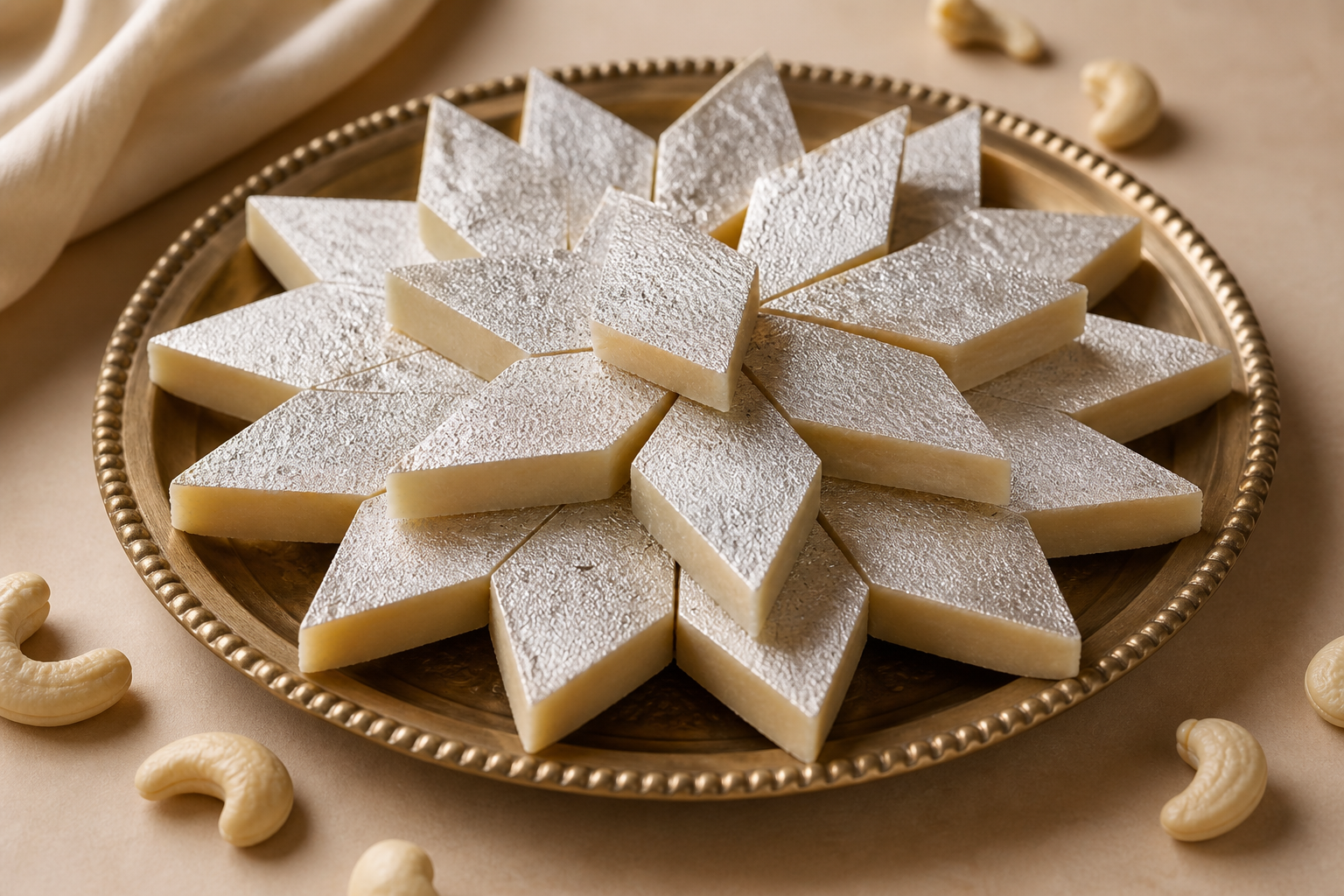
Kaju katli mithai: selection, storage, gifting, and serving tips
Kaju katli mithai is a beloved Indian sweet known for its smooth, melt-in-the-mouth texture and elegant diamond shape. Built on a simple base of cashews and sugar—with gentle support from ghee, cardamom, and occasionally an edible silver leaf—this confection balances richness and restraint. Whether you are choosing a box for a celebration, plating it for guests, or storing it for later, understanding the cues of quality and care can help you get the most from every bite.
What makes kaju katli special
Many mithai rely on milk solids or flours for body; kaju katli leans almost entirely on cashews. Finely ground into a delicate paste and cooked just enough to set, the sweet delivers the natural sweetness, aroma, and creaminess of nuts without heavy spices or syrup-soaked richness. Its appeal often comes down to three hallmarks:
- Minimalist ingredient list: cashews and sugar lead the way, with cardamom and ghee used judiciously.
- Signature texture: a clean, fine crumb that feels smooth and soft rather than sticky or granular.
- Understated elegance: thin, even diamonds with neat edges and, sometimes, a whisper of edible silver leaf.
Because kaju katli focuses on purity of flavor over embellishment, quality of raw cashews and gentle technique are central to its character.
Ingredients and method basics
Every shop and home cook has a slightly different way to prepare kaju katli mithai, but most follow the same fundamentals. Knowing these helps you evaluate what you buy and how you treat it once it’s home.
- Cashews: Typically raw, unroasted halves or pieces. They’re finely ground—often pulsed to avoid releasing too much oil—into a soft meal or paste.
- Sugar: A simple syrup binds the cashew meal. The stage of the syrup (often close to one-string) and the brief cook after mixing determine texture.
- Ghee: Used sparingly to prevent sticking and add a gentle sheen; it should not dominate the flavor.
- Flavor: Cardamom (optional) adds a light aromatic note; rose water or saffron may appear in some versions, but classic kaju katli remains restrained.
- Finish: The mixture is rolled thin, cut into diamonds, and sometimes topped with edible silver leaf.
When done well, the set mithai is supple yet holds a clean cut, with a balanced sweetness and a pronounced, fresh cashew taste.
How to choose quality kaju katli
With a sweet this simple, excellence shows up in texture, aroma, and appearance. Use this checklist when selecting kaju katli mithai in-store or evaluating a gifted box:
- Look for thin, even pieces: The layer should be consistent in thickness, with tidy diamond cuts and minimal crumbling.
- Check the surface: A gentle matte or slight sheen is normal; an excessively oily surface can indicate heavy-handed ghee or overworking.
- Assess aroma: You should smell fresh cashew and, if used, a subtle cardamom note. Any sharp or stale odor is a red flag.
- Press test: A light press should leave a small impression that recovers; it should not be rock-hard or sticky.
- Taste for balance: The sweetness should support, not mask, the nut flavor. Graininess can mean undissolved sugar or overcooked syrup.
- Varq awareness: If silver leaf is present, it should appear thin and even. Many versions skip varq entirely; that’s fine and traditional by many standards.
If you’re buying a gift box, consistent piece size, neat arrangement, and an intact seal all signal careful handling and presentation.
Storage and shelf life
Kaju katli is relatively sturdy when kept dry and cool, but its delicate texture benefits from thoughtful storage. Manage moisture, temperature, and exposure to air for best results.
- Short-term (room temperature): Store in an airtight container in a cool, dry spot away from sunlight and cooking steam. This helps maintain the soft bite and clean flavor.
- Refrigeration: If your kitchen runs warm or you plan to keep it longer, refrigeration can slow staling. Wrap the mithai tightly (parchment or food-safe wrap) and place it in an airtight box to prevent drying and odor transfer.
- Serving from the fridge: Bring pieces back to room temperature before serving for the best texture and aromatics.
- Freezing: If needed, freeze well-wrapped portions in an airtight container. Thaw overnight in the refrigerator, then temper to room temperature before serving. Avoid repeated freeze–thaw cycles.
As with most nut-based sweets, fresher is better. Plan quantities to match your occasion so the mithai is enjoyed at its peak.
Serving and pairing ideas
Kaju katli’s gentle flavor lets it play well across snack, dessert, and celebration tables. Consider these simple, reliable ideas:
- Tea pairing: Offer alongside masala chai or plain black tea; the tannin balances the richness.
- Coffee contrast: A medium-roast coffee underscores the nutty profile without overpowering it.
- Fruit accents: Serve with fresh berries or sliced pears for a bright, cooling counterpoint.
- Assortment plate: Pair with milk-based barfi, gulab jamun, or ladoo varieties to build contrast in textures and sweetness levels.
- Mini dessert course: Plate two thin diamonds per person with a light dollop of unsweetened yogurt or a drizzle of warm saffron milk to soften sweetness.
When plating, a single layer with slight spacing between pieces prevents sticking and preserves the neat edges that define kaju katli mithai.
Gifting etiquette and occasions
Kaju katli’s elegance and broad appeal make it a frequent choice for festivals, weddings, and family milestones. A few pointers keep your gift thoughtful and practical:
- Portion planning: For small households, consider modest boxes to encourage fresh enjoyment; for larger gatherings, an assortment with kaju katli as a centerpiece works well.
- Presentation: Choose a box that secures pieces in a single or neatly layered arrangement to prevent breakage.
- Labeling: If possible, include a simple note with the mithai’s name and any key flavors (e.g., cardamom) for guests with preferences.
- Temperature care: During transport, keep the box cool and level; avoid leaving it in a hot car or direct sun.
- Sharing etiquette: On a buffet, small tongs or a dessert fork beside the tray help keep pieces tidy and inviting.
Because kaju katli is nut-based, it’s considerate to mention this in mixed company, especially when sharing with those who may have dietary sensitivities.
Troubleshooting texture and flavor
If a box you’ve purchased or received isn’t quite right, these quick diagnostics can help you understand why—and how to serve it best anyway:
- Too hard: Often the result of an overly concentrated syrup or extended cooking. Serve thinner slices and pair with a warm beverage to soften the perception.
- Too soft or sticky: May point to undercooked syrup or excess moisture. Chill briefly, then bring to room temperature before serving to improve handling.
- Oily surface: Could indicate overworked cashews or heavy ghee. Blot gently with parchment before plating.
- Bland flavor: Cashews may be older or the sweetness may be masking the nut profile. Pair with unsweetened tea or coffee to restore balance.
- Grainy bite: Undissolved sugar crystals or overcooked syrup can create texture issues. Serve slightly cooler to tighten the structure and reduce grain perception.
Even imperfect kaju katli can shine with thoughtful serving temperature and pairings that tilt the balance back toward cashew-forward comfort.
Checklist for buying and serving
Use this quick reference to keep decisions simple, from store counter to dessert table:
- Visuals: Thin, even diamonds; clean edges; no excessive oiling.
- Aroma: Fresh, nutty, lightly aromatic if cardamom is used.
- Texture: Soft, smooth, not sticky; yields gently to a press.
- Packaging: Snug fit, intact seal, pieces secure in transit.
- Storage: Airtight, cool, and dry; refrigerate only if needed; bring to room temperature to serve.
- Pairings: Tea or coffee; fresh fruit; a compact assortment for variety.
FAQ: kaju katli mithai
Is there a difference between kaju katli and kaju barfi?
Many people use the terms interchangeably for cashew-based diamond sweets. In some contexts, “barfi” is a broader family of milk- or nut-based squares or diamonds, while “kaju katli” typically signals a cashew-forward, thin, smooth, and minimally flavored version. Regional usage and shop traditions influence the naming, but the classic kaju katli emphasizes purity of cashew flavor with a fine, soft set.
Does authentic kaju katli always have edible silver leaf?
No. Edible silver leaf (varq) is a traditional garnish some makers apply for a festive look, but it is not essential to flavor or quality. Plenty of excellent versions omit it entirely. If present, it should appear as a thin, delicate layer that adheres evenly.
How should I store kaju katli during warm weather?
Keep it in an airtight container, shielded from direct heat and humidity. If your space runs warm, refrigerate the sealed box to preserve texture and slow staling. Before serving, let the mithai return fully to room temperature so the cashew aroma and soft bite reemerge.
Can kaju katli be made without ghee?
Yes, some versions minimize or omit ghee, relying on the natural oils of cashews for richness. The outcome can still be smooth and flavorful; the key variables are the fineness of the cashew grind, the sugar syrup stage, and gentle cooking and rolling.
What should I pair with kaju katli on a dessert platter?
Build contrast without overwhelming it. Pair with milk-based barfi for creaminess, gulab jamun for syrupy richness, or ladoo for a grain-based crumb. Add fresh fruit and offer tea or coffee to balance sweetness and refresh the palate.