What this article gives you and when to stop?
This article gives a compact, ordered kheer recipe you can follow in your kitchen, clear stop points so you do not overcook milk or waste ingredients, small halwai technique tips to lift flavour and texture, and a short make versus buy checklist to help you decide when to cook at home or order authentic kheer from a local halwai. If your priority is exact timing or professional catering quantities, stop here and contact a local halwai for a ready-made option.
Ingredient checklist and basic equipment
Gather these pantry items and the simplest equipment before you begin. Better ingredients make a noticeable difference in milk-based sweets.
- Whole milk or your preferred full-fat milk, and a second dairy or non-dairy option on hand if needed for variation.
- Small-grain rice (or pre-roasted vermicelli for semiya kheer), sugar or your sweetener of choice, and a pinch of finishing salt.
- Cardamom pods, saffron threads or cardamom powder for aroma, and optional rose water for finish.
- Garnishes: chopped pistachios, sliced almonds, and toasted cashew pieces made with a light touch of desi ghee if you like the traditional flavour.
- Optional: a small knob of desi ghee for toasting nuts or rice to add an authentic halwai note.
Equipment: a heavy-bottomed saucepan or wide pot, a wooden spoon or heatproof spatula, a small strainer for cardamom or saffron, and airtight containers for cooling and storing. If you want more reading on halwai approaches to milk-based sweets, see the indian dessert kheer guide on The Mithai Maharaja website.
Ordered kheer recipe: step by step with clear stop points
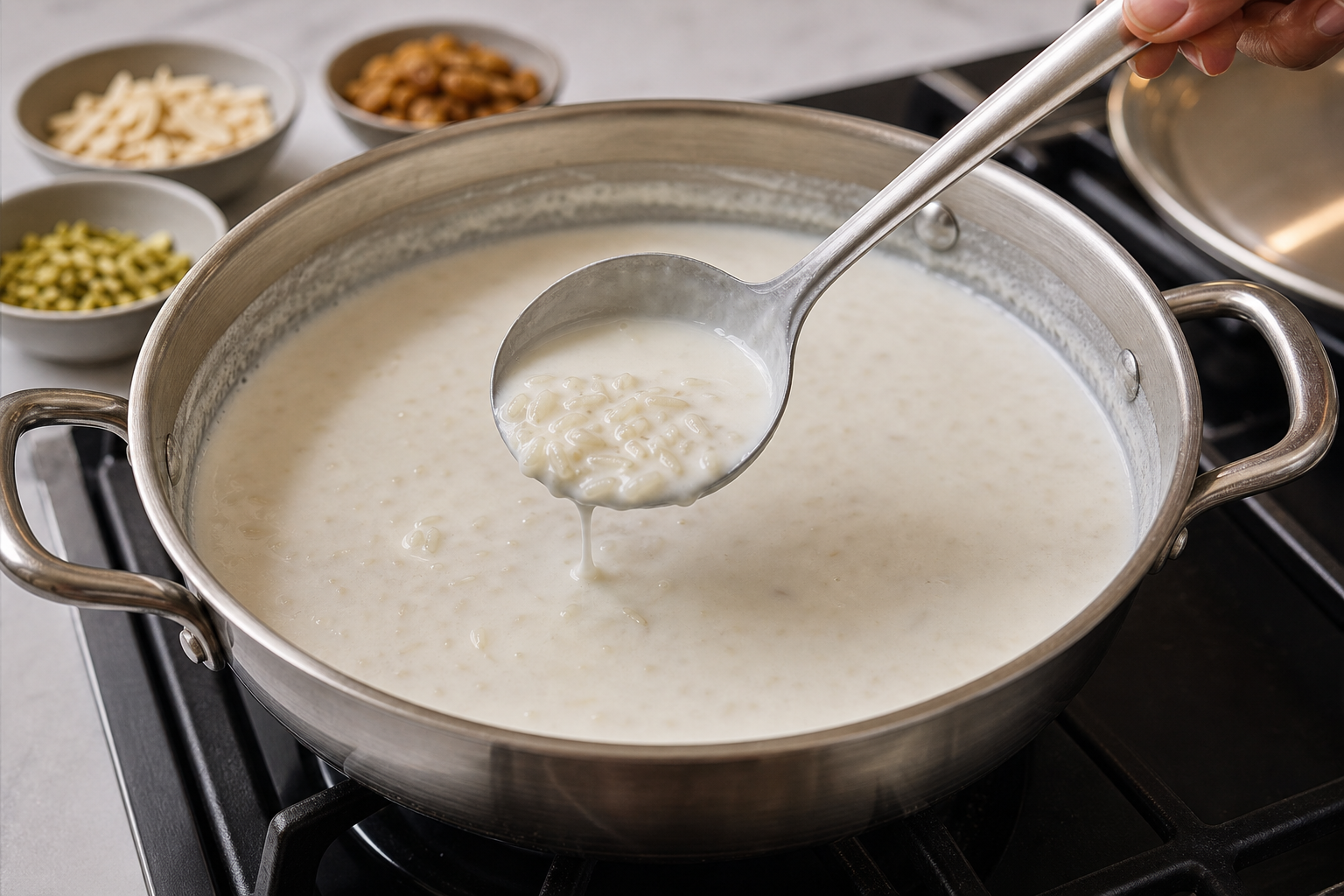
Below are the ordered cooking steps presented as decision-driven actions rather than fixed times. Each numbered step includes a stop point to check before moving on.
-
Prep and rinse
Rinse the rice briefly under cold water until the rinse runs clear, then drain. If you are using vermicelli, break the strands into shorter lengths. Prep your nuts by chopping or slicing and set aside in small bowls.
-
Gentle milk warming
Pour milk into a heavy-bottomed saucepan and bring it up to a gentle simmer over medium heat, stirring occasionally so milk does not stick or form a skin. Stop point: move to the next step when the milk is steaming and small bubbles gather at the edge rather than a vigorous boil.
-
Add rice or vermicelli
Stir in the drained rice or broken vermicelli and lower the heat to maintain a gentle simmer. Stir frequently to prevent sticking. Stop point: advance when the grains look swollen and are tender to the bite, rather than hard at the centre.
-
Slow reduction and texture checks
Allow the milk to reduce slowly while stirring from the bottom and sides. This is the key halwai technique for depth of flavour. Stop point: pause reductions periodically and use a spoon test. The kheer is ready to sweeten when the milk has thickened so a spoon drawn across the pot leaves a thin trail that the milk will not immediately fill.
-
Sweeten and flavour
Add sugar or your preferred sweetener a little at a time, tasting as you go. Add crushed cardamom, a few strands of saffron softened in a teaspoon of warm milk, and any rose water if using. Stop point: adjust sweetness and aroma now because adding sugar at the end is easier than removing it.
-
Finish with nuts and ghee
Fold in half the prepared nuts and reserve some for garnish. For a traditional halwai note, finish with a small spoon of desi ghee warmed briefly with a few cashews or pistachios and stirred into the kheer. Stop point: the finished kheer should be creamy with visible rice or vermicelli and a cohesive, spoonable texture.
-
Cooling and holding
Decide whether to serve warm or chilled. If chilling, cool the pot at room temperature for a short period before transferring to covered containers in the refrigerator. Stop point: do not leave milk-based items at room temperature for extended hours; refrigerate as you would any perishable dairy dish.
Prep and the first stop point
Prep work reduces active cooking time. Rinsing rice removes excess surface starch and helps you avoid an overly gluey texture. The first stop point is when milk reaches a steady gentle simmer; at that stage you should not need to keep it at a rolling boil. Patience in this phase prevents scorching and builds creaminess naturally.
Adding rice, nuts and sweetener then the final stop point
When rice or vermicelli is added, adjust heat so the milk keeps moving around the grains and the mixture thickens gradually. Add sweetener only after the milk has concentrated enough that the sweetness will balance rather than dilute the kheer. The final stop point is a sensory check: taste for tender grains, convincing sweetness, and a rounded aromatic profile from cardamom and saffron.
Variations and dietary considerations
- Rice kheer and semiya (vermicelli) kheer are both traditional. Rice gives a chunkier, rustic feel; vermicelli yields a silkier finish.
- Condensed milk or evaporated milk are common shortcuts but they change texture and sweetness. Use them intentionally when time is the priority.
- Non-dairy milks alter the dessert’s character. If you must avoid dairy, choose a full-fat plant milk and expect a lighter texture and a different flavour profile. If you have dairy allergies, do not serve regular kheer to those guests without checking ingredients.
Make versus buy checklist: how to decide fast
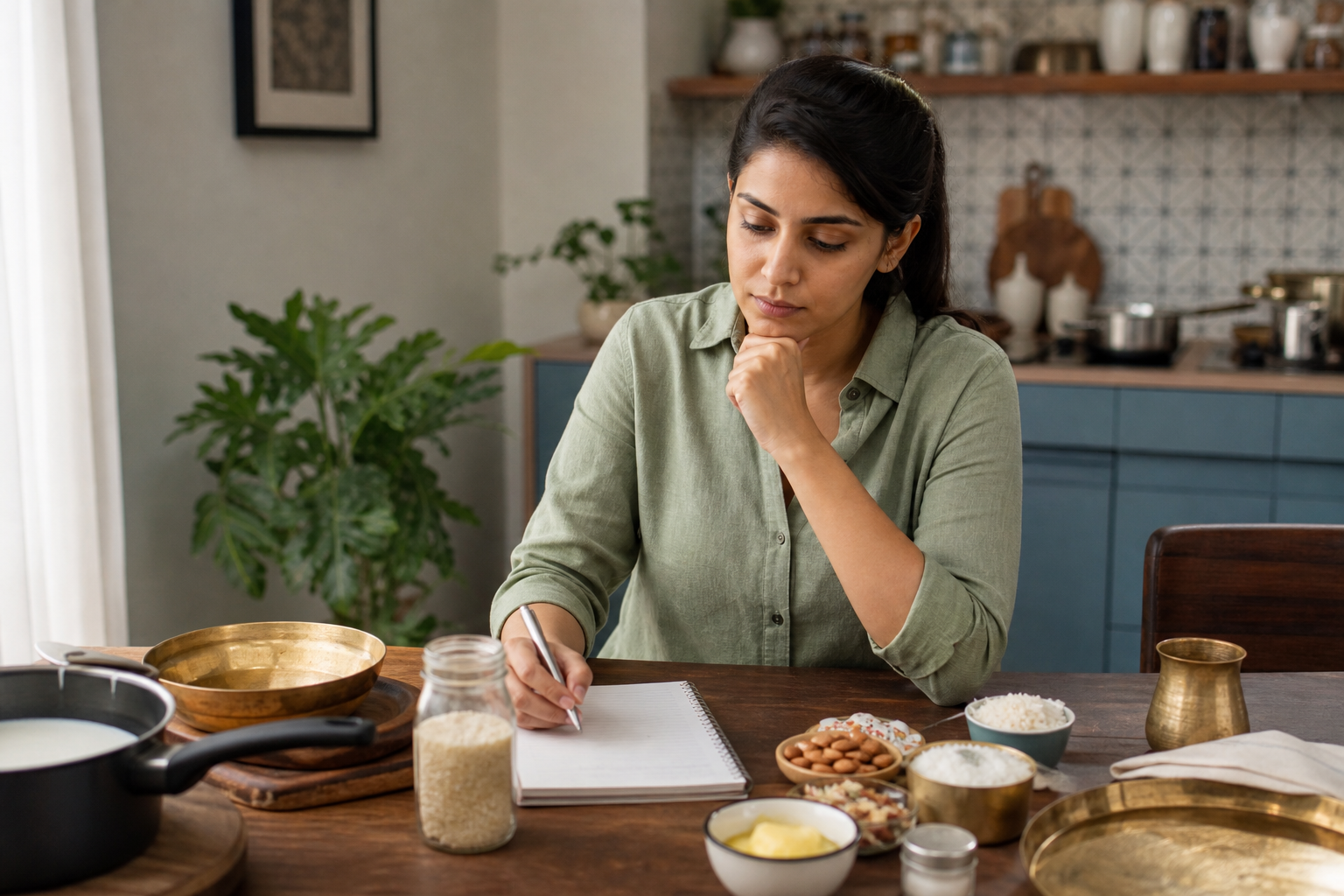
Use this checklist to decide whether to make kheer at home or buy from a halwai. Each bullet is a simple yes/no cue; if several items point toward buying, ordering is the practical choice.
- Occasion and scale: Is this for a small family serving or a large gathering? For large or formal events, an experienced halwai can supply consistent texture and presentation.
- Time and attention: Do you have time to tend milk slowly and reduce it with frequent stirring? If not, buying saves active time and risk of scorching.
- Ingredient access: Can you source good-quality whole milk and desi ghee locally? If you prefer traditional desi ghee flavour and cannot source it, a halwai will deliver that note reliably.
- Presentation and gifting: For wedding gifts, corporate boxes, or festival gifting where elegant packaging matters, a halwai with gift-ready presentation is worth ordering. The Mithai Maharaja emphasizes handcrafted mithai and elegant packaging suitable for gifting; see their storefront and details on their site for offerings and ordering options at 2500 Williams Pkwy, Units 6 & 7, Brampton, Ontario.
- Authenticity over convenience: If you want a result made the authentic halwai way and you value five-generation expertise, buying from an established halwai is practical and time efficient.
Where to buy authentic kheer in Brampton and the GTA
If you decide to buy, evaluate shops on three practical points: halwai heritage, ingredient transparency, and presentation. The Mithai Maharaja is a fifth-generation halwai brand founded in 1938 and highlights handcrafted mithai made with desi ghee and time-honoured recipes, plus online ordering via a Shopify storefront; you can learn more about their milk-based sweets and kheer approaches on their indian dessert kheer guide and main site.
When you contact a shop, ask how they finish kheer, whether they use desi ghee or clarified butter for garnish, and how they package for pickup or event delivery. These details help you match a purchased product to your expectations for flavour and appearance.
Troubleshooting, storage and serving notes
- Grainy kheer: If the milk separates or the texture turns grainy, gentle whisking and a short, slow simmer can help bring it together, but results vary depending on ingredient swaps like condensed milk or non-dairy alternatives.
- Too thin: Continue gentle reduction and frequent stirring until the milk reaches the spoon test described above. Avoid aggressive boiling which can scorch the dairy and alter taste.
- Storage: Cool promptly, cover, and refrigerate. Discard if the kheer develops off-odours, visible mould, or an unusual texture. When in doubt about safety, do not serve.
- Serving: Kheer can be served warm or chilled. Warm kheer highlights aroma; chilled kheer is refreshing for warmer weather. Garnish just before serving for the best texture contrast.
Frequently asked questions
Can I make kheer with non-dairy milk and still expect a similar texture?
Non-dairy milks will give a different texture and flavour. Full-fat plant milks produce the closest creaminess, but the dessert will lack the dairy richness that comes from whole milk and desi ghee. Expect a lighter, less caramelized profile.
How long does homemade kheer keep in the fridge and how should I reheat it?
Store kheer in covered containers in the refrigerator and cool it before covering. Reheat gently on the stove while stirring to avoid sticking. If the kheer smells off or looks unusual, discard it rather than reheating.
What are the quick ways to scale kheer when you need to feed a crowd?
Scaling requires proportionate increases in milk and grains and more active stirring. When feeding a crowd or for a formal event, consider ordering from a halwai to ensure consistent texture and timely delivery.
How can you tell if shop-made kheer is from a traditional halwai?
Look for signs such as clear information on ingredients, mention of desi ghee or traditional finishing methods, heritage or halwai lineage on the shop site, and neat presentation. The Mithai Maharaja highlights five-generation halwai expertise and handcrafted mithai on their website.
Should kheer be served warm or chilled for best flavour?
Both are valid; warm serving emphasizes aroma and a comforting mouthfeel, while chilled kheer is cooling and refreshing. Choose based on occasion and personal preference.
If you prefer to order authentic, handcrafted kheer made the halwai way or to enquire about catering and gift-ready boxes, visit The Mithai Maharaja to see offerings and place an order.