If you are planning a dinner, festival spread, wedding dessert table, or a gift box and you are wondering whether to buy shahi tukda from a shop or make it yourself, this checklist will help. The short, practical questions below let you compare time, cost, authenticity, and logistics so you can choose the right option quickly.
Quick decision checklist: 6 yes or no criteria
Answer these six questions first. If you answer yes to four or more, buying or ordering is usually the better choice. If you answer no to four or more, making it at home may suit you better.
- Do you need a large batch for an event and want consistent presentation?
- Do you want authentic halwai texture and rabri without learning special techniques?
- Is saving time more important than saving money for this occasion?
- Do you need gift-ready packaging or elegant boxes for guests or corporate gifting?
- Are you short on fry-friendly equipment and a quiet kitchen for deep frying bread slices safely?
- Do you prefer to avoid dairy handling and cooling logistics at home for rabri-based sweets?
Decision aids such as checklists help reduce the burden of choice and make tradeoffs clear, which is why a short worksheet is useful when evaluating food purchase options or catering choices (AHRQ). Structured checklists also improve clarity and reproducibility when people compare options (SUNDAE).
How to evaluate authenticity and halwai quality
When authenticity matters, look for concrete ingredient and technique cues. A halwai approach to shahi tukda will show in the balance of rabri, the bread texture, and the aroma of desi ghee.
Ingredient and technique cues to check
- Mawa or milk solids used in the rabri and in the topping. Rabri should taste milky and lightly caramelized, not overly sweet or synthetic.
- Pure desi ghee aroma in the fried bread. Shops that emphasise desi ghee in their recipes are signalling craftsmanship and tradition; this is a stated emphasis at The Mithai Maharaja (The Mithai Maharaja).
- Even syruping. The bread should absorb syrup but remain slightly firm to the bite, not soggy or mushy.
- Visible garnishes such as chopped dry fruits, a dusting of cardamom, and saffron threads in the rabri, used sparingly.
- Small batch appearance. Handcrafted pieces vary slightly in shape and finish, while mass factory trays look mechanically perfect. Handcrafted variation is not a defect when authenticity is the goal.
If you want a quick sample before committing to an event order, ask the shop for a tasting portion or pick a complementary item to test their halwai style. For example, try their shahi paneer or another milk-based sweet to evaluate the same craftsmanship and ingredient quality.
Make versus buy: time, skill, equipment and cost tradeoffs
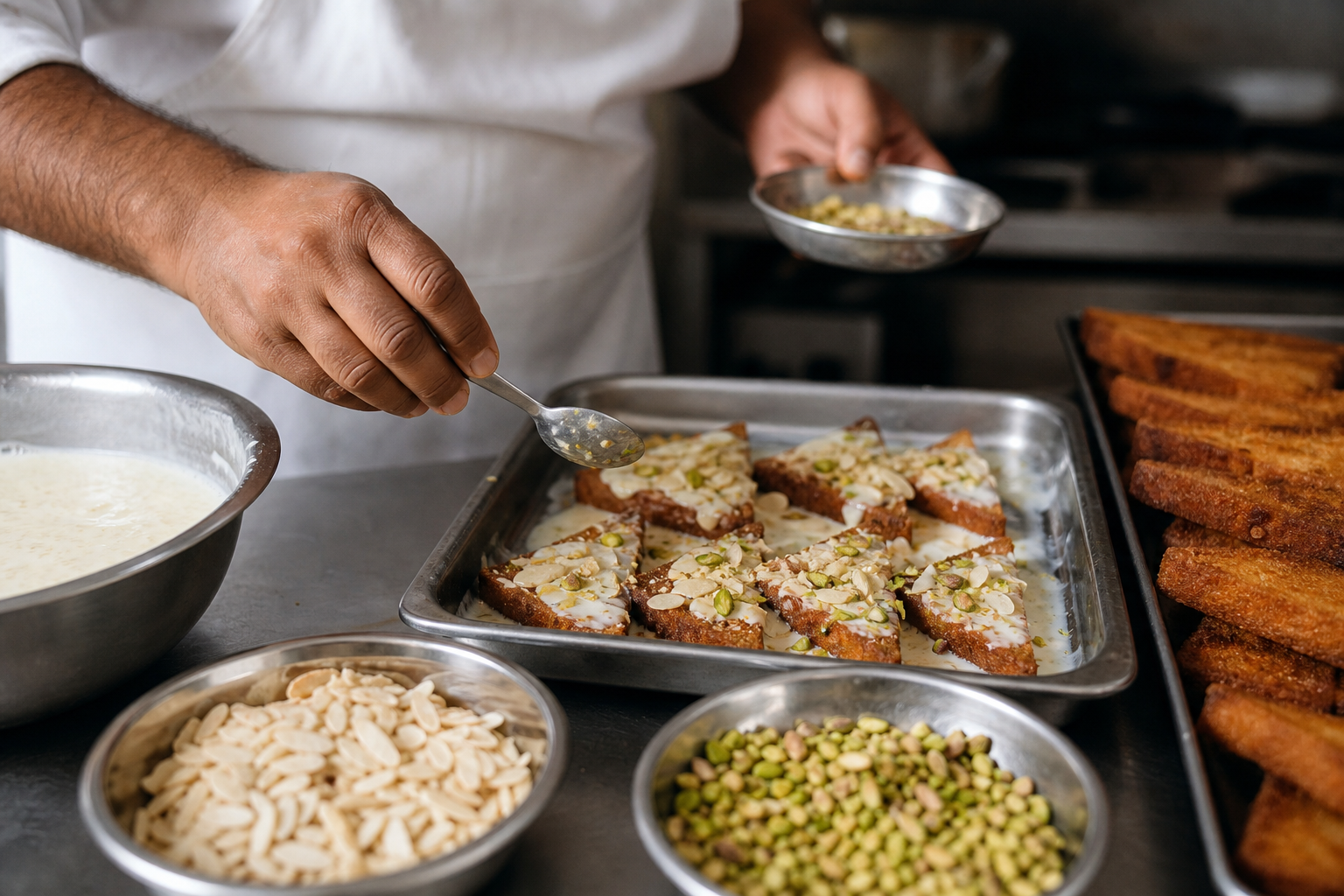
Compare the following practical factors before you decide.
Time and sequence
- Making at home requires planning: cooling and reducing milk for rabri takes time and attention. If your schedule is tight, buying removes that risk.
- Buying shifts work to the shop, letting you focus on presentation and serving logistics at the venue.
Skill and equipment
- Frying uniform bread slices, syruping correctly, and finishing with rabri are skills that experienced halwais perform quickly. Home cooks can succeed but should expect a learning curve.
- If you do not have a safe setup for frying in desi ghee or ample cooling space for dairy, buying will avoid home kitchen safety and equipment issues.
Batch size and consistency
- For large events, shops are better at producing consistent portions and packaging for transport.
- For a small dinner, homemade shahi tukda gives you control over sweetness and garnish choices.
Cost and ingredient control
- Buying shifts ingredient and labour cost into a single purchase. Shops that use premium desi ghee and handcrafted recipes may charge for that quality, but you save time.
- Making at home lets you choose exactly which ingredients to use and can be less expensive if you already stock milk, ghee and bread.
Use the checklist above to score these categories. If labour savings and consistent presentation are highest priorities, ordering from a reputable halwai is usually the right choice.
What to ask a vendor before ordering for a party or wedding
When ordering shahi tukda for events or gifting, prepare a short vendor questionnaire. Ask these items and record the answers so you can compare suppliers objectively.
- Portioning and servings: Ask how many individual pieces or grams per tray and what the shop recommends per guest for dessert stations.
- Packaging and transport: Request details on boxes, internal separators, and whether the shop offers chilled transport for dairy-based sweets.
- Shelf life and holding advice: Ask how long the product will hold under refrigeration and what the vendor recommends for same-day holding. Confirm any guarantees the shop offers.
- Reheating and finishing: Some vendors provide finishing touches on site. Ask if they will pack rabri separately or in a ready-to-serve format.
- Allergens and sourcing: Request a full ingredient list and allergen statement, especially for nut garnishes and ghee sources.
- Sample and trial orders: Ask whether you can taste a small sample or place a small trial order before committing to a large event.
- Lead time and cancellations: Confirm minimum lead time, deposit policies, and how changes are handled close to the event date.
Canadian consumer guidance recommends clear online information and practical checklists to make confident purchases, which you can mirror when comparing vendors (Office of Consumer Affairs).
Storage, transport and serving expectations after pickup or delivery
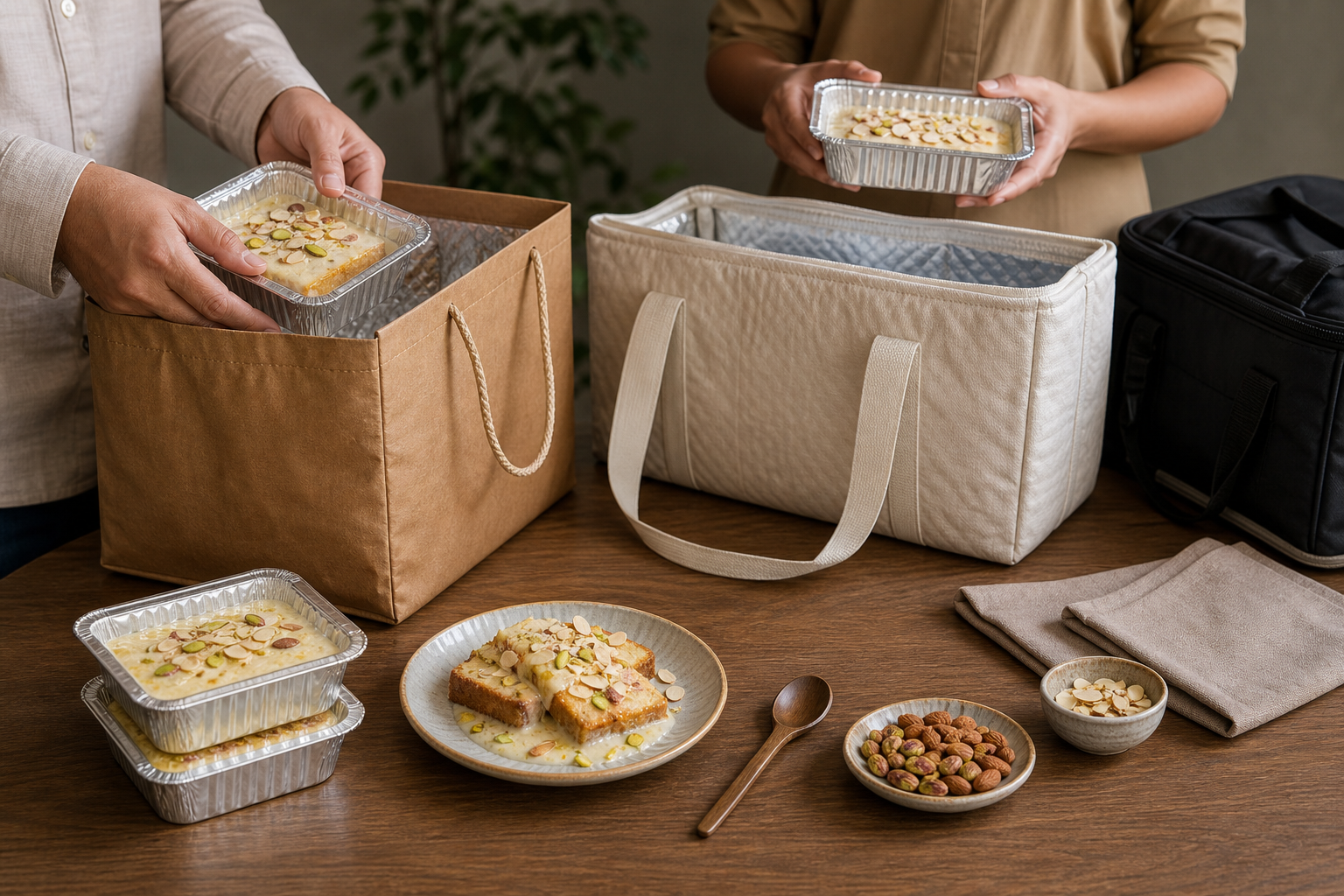
Shahi tukda is a dairy-rich dessert, so plan for safe handling and realistic serving timing.
Storage and short-term holding
- Keep dairy-based sweets refrigerated until shortly before serving. If the vendor provides chilled packing, maintain that cold chain during transit.
- If the event is outdoors in warm weather, arrange chilled display or small serving portions prepared on demand to avoid prolonged exposure to heat.
Transport best practices
- Transport in a level, secure container. Request that the shop use spillproof trays or separators for rabri and toppings when shipping long distances.
- If you expect more than a short drive, ask the vendor to pack rabri separately or to use insulated containers for safer transport.
Plating and portioning at the venue
- Decant pieces onto serving trays just before serving, and garnish with fresh chopped nuts or edible silver leaf if required.
- Provide utensils and small plates. For buffet service, offer napkins and small dessert spoons for ease of eating.
If anything is wrong on arrival, contact the vendor immediately to resolve the issue, and keep a photo and the packaging for reference.
Ordering locally in Brampton: how The Mithai Maharaja can help
The Mithai Maharaja brings a fifth generation halwai heritage and focuses on handcrafted mithai made with desi ghee and traditional recipes. The shop serves Brampton from 2500 Williams Parkway, Units 6 and 7, and supports online ordering via a Shopify storefront (The Mithai Maharaja). For event orders and sample requests you can contact the shop directly through the website.
If you want to sample halwai-made milk sweets before ordering shahi tukda, try one of the shop's milk-based preparations or their shahi paneer to check texture and richness shahi paneer. Ask the shop the vendor questions listed above to confirm portioning, packaging, and lead times for event orders.
Next steps and printable checklist for event planning
Follow this short ordered plan before committing to an event or gift order. Treat it as a one page checklist to print or copy into your event brief.
- Sample first: Buy a tasting portion or try a related milk sweet from the shop to evaluate halwai technique.
- Score the six decision questions above and note your priorities: time, presentation, cost, ingredient control.
- Send the vendor questionnaire to any supplier you consider and compare answers side by side.
- Place a small trial order for the event style you need, confirm packaging and transport, and check it on arrival.
- Confirm final order, deposit and lead time. Keep written confirmation of portion counts and delivery instructions.
This stepwise approach follows recommended decision aid practice and makes the vendor comparison reproducible and less stressful (AHRQ), (SUNDAE).
Frequently asked questions
Is shahi tukda vegetarian?
Yes. Traditional shahi tukda is vegetarian, made from bread, milk products, sugar syrup and nuts. If you require egg free or other dietary confirmation, ask the vendor for a complete ingredient list and allergen statement.
How should I store shahi tukda and how long will it keep?
Store shahi tukda refrigerated until serving. Because rabri and dairy toppings are perishable, follow the vendor's holding advice and use the product within the timeframe they recommend. If you need exact guidance for a large event, request the vendor's storage instructions in writing.
How many servings does one tray or box usually provide for events?
Serving counts vary by piece size and event style. Ask the shop for the recommended portion per guest and the number of pieces per tray. Record those numbers when comparing vendors to avoid surprises.
Can shahi tukda be transported in summer and what packaging should I request?
Yes, but plan chilled transport for hot weather. Request insulated packaging, chilled packs or rabri packed separately if the journey is long. Confirm that the shop will provide secure trays and internal separators to prevent shifting.
What is the simplest test to tell if a shop-made shahi tukda is halwai-made and fresh?
Look for natural milk aroma in the rabri, a gentle desi ghee note on the fried bread, balanced sweetness, and slightly varied handcrafted pieces. If possible, sample the shop's milk-based sweets to check consistency. If anything tastes off or overly artificial, ask the vendor for ingredient details and a sample of the production batch.
The Mithai Maharaja accepts sampling and event enquiries through its website for Brampton orders and gift-ready boxes.
Ready to decide whether to buy or make shahi tukda?