Indian dessert kheer is a slow-simmered rice-and-milk pudding scented with cardamom and saffron, finished with nuts for texture and aroma. Prepared well, it reduces by roughly one-third in 35–45 minutes and cools to a scoopable, creamy consistency. In Brampton, The Mithai Maharaja uses heritage halwai methods so your kheer tastes festive and consistently rich.
By The Mithai Maharaja Team • Last updated: 2026-05-09
At a Glance: Why This Guide Matters
This complete guide explains what kheer is, why it matters at celebrations, and how to cook it with restaurant-level consistency. You’ll learn tested ratios, step-by-step technique, variations like phirni and payasam, and pro tips we use for Brampton catering—so your Indian dessert kheer turns out silky, aromatic, and celebration-ready.
Here’s what you’ll get in minutes, not months of trial and error:
- Clear definition of rice kheer and how it differs from phirni and payasam
- Exact working ratios: milk-to-rice, sugar percentages, spice and nut baselines
- Professional workflow: mise en place, reduction strategy, cooling and storage
- Regional styles: North Indian kheer, South Indian payasam, festival tweaks
- Event ideas: portioning, garnish bars, and elegant gifting from our halwai playbook
Table of contents:
- What Is Indian Dessert Kheer?
- Why Kheer Matters for Celebrations
- How Kheer Works (Technique and Science)
- Step-by-Step: Make Creamy Rice Kheer
- Types and Regional Variations
- Best Practices for Silky, Rich Flavor
- Tools and Resources
- Case Studies and Real-World Examples
- Frequently Asked Questions (FAQ)
- Key Takeaways and Next Steps
- Related Dishes and Pairings
What Is Indian Dessert Kheer?
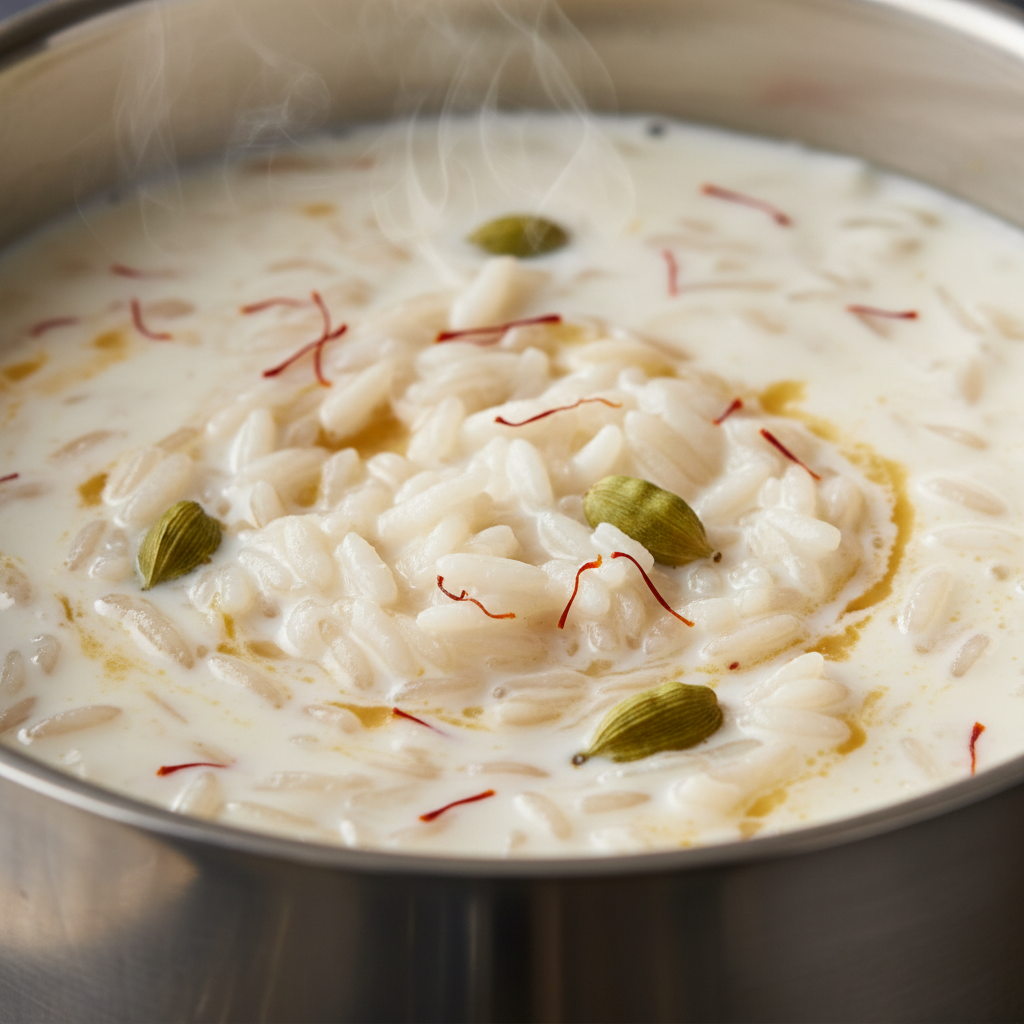
Kheer is a traditional Indian milk pudding made by simmering rice in whole milk with sugar, cardamom, and saffron until thick and creamy. It’s usually garnished with sliced almonds and pistachios. A well-made batch reduces by 25–35%, giving 6–8 portions from 1 liter milk with 60–80 grams rice.
In simple terms, rice kheer is comfort in a bowl—creamy, gently sweet, and fragrant. It’s served warm or chilled, during festivals, family dinners, and milestone celebrations. At The Mithai Maharaja, we lean on five generations of halwai craft so the texture is spoon-coating and the aroma balanced.
How kheer fits into Indian sweets
- Everyday to festive: It’s casual enough for weeknights yet elegant for weddings and pujas.
- Milk-forward: The milk reduction drives body; rice adds starch and gentle bite.
- Flexible finish: Nuts, raisins, and edible rose elevate presentation in 30–60 seconds.
For gifting inspiration beyond kheer, explore our premium mithai guide featuring barfi, kalakand, and signature gift boxes.
Why Kheer Matters for Celebrations in Brampton
Kheer anchors celebrations because it’s universally loved, vegetarian, and travels well in portion cups. For Brampton families, it pairs seamlessly with North Indian snacks and wedding trays. With 100–150 ml cups, you can serve 30–40 guests from a standard home batch while keeping plating neat and festive.
We see kheer show up at birthdays, housewarmings, and festivals. It’s lactose-rich, comforting, and adaptable: add saffron for a royal note; raisins for chew; or rose for floral lift. It complements savory stars like Chole Bhature and pakoras without being heavy.
Linking sweets and snacks for the perfect spread
- Start savory with crowd-pleasers, then close with kheer to reset the palate.
- Balance textures: crispy chaat then creamy pudding creates contrast guests remember.
- Offer two finishes: classic kheer and a seasonal fusion cup for variety.
If you’re planning a spread, our Amritsari Kulcha guide and Raj Kachori history articles can help you mix savory courses that shine next to dessert.
How Kheer Works (Technique and Science)
Kheer’s creaminess comes from milk reduction plus starch released from rice. Stirring prevents scorching and encourages even gelatinization around 180–195°F. Sugar and milk solids create body; cardamom and saffron supply aroma. The best texture sets during a 2–3 hour chill below 40°F.
Think of kheer as controlled reduction. You start with whole milk, simmer gently, and keep movement in the pot to avoid sticking. Short-grain or basmati rice releases starch that thickens the milk. Sugar integrates best after milk has reduced by roughly 15–20%.
Core working ratios (baseline)
- Milk:rice: 8:1 by volume (e.g., 8 cups milk to 1 cup rice gives 10–12 servings).
- Sugar: 15–18% of finished weight for classic sweetness; dial 12–14% for lighter palates.
- Cardamom: 4–6 lightly crushed pods per 1 liter milk.
- Saffron: 12–15 strands bloomed in 1 tablespoon warm milk for even color.
Temperature and time cues
- Simmer zone: Small lazy bubbles; avoid a rolling boil to prevent curdling.
- Reduction window: 35–45 minutes for home burners; 25–30 minutes with induction tops.
- Set time: 120–180 minutes in the fridge for a spoon-standing texture.
For dessert planning guidance that includes barfi, laddoo, and gulab jamun sequencing, see our gulab jamun guide and best barfi flavors.
Step-by-Step: Make Creamy Rice Kheer
Rinse rice, simmer in whole milk, stir frequently, then sweeten and perfume with cardamom and saffron. Reduce to a pourable custard that coats a spoon. Finish with nuts and raisins. Chill 2–3 hours for a luxuriously thick Indian dessert kheer that scoops cleanly.
Use this 10-step flow we rely on in production. It’s optimized for consistency, not guesswork.
- Measure basics: 8 cups whole milk, 1 cup basmati (or 2/3 cup short-grain), 3/4–1 cup sugar, 4–6 cardamom pods, 12–15 saffron strands, 2–3 tablespoons sliced nuts.
- Rinse rice 3 times: Until water runs almost clear (removes surface starch clumps and off-notes).
- Bloom saffron: Steep in 1 tablespoon warm milk for 5–10 minutes to unlock pigment and aroma.
- Simmer milk: Bring to a gentle simmer over medium heat; keep it below a boil.
- Add rice: Stir in and maintain gentle movement for the first 10 minutes to prevent settling.
- Scrape sides: Every 3–4 minutes, scrape the pot’s walls and bottom to reincorporate milk solids.
- Sweeten at 20% reduction: Add sugar once volume drops by roughly one-fifth; stir to dissolve fully.
- Spice and color: Add cardamom and saffron milk; simmer 5–10 minutes to infuse.
- Finish and check: When the spoon holds a thick coat and a line stays for 2–3 seconds, it’s ready.
- Cool and portion: Spread in a shallow tray 20–30 minutes, then chill cups (100–150 ml) for 2–3 hours.
Yield note: From 8 cups milk and 1 cup rice, expect 10–12 dessert portions. For events, 3-ounce cups reduce waste while keeping a premium look.
Optional add-ins (measured)
- Raisins: 2 tablespoons, soaked for 5 minutes for plump texture.
- Chopped dates: 2–3 tablespoons for caramel notes.
- Toasted coconut: 1–2 tablespoons for crunch and aroma.
Texture control tip: If it tightens too much after chilling, fold in 2–4 tablespoons cold milk to loosen, then taste and adjust sweetness lightly.
Types and Regional Variations (Kheer, Phirni, Payasam)
Kheer uses whole or broken rice grains simmered in milk; phirni uses rice paste for a smoother custard; payasam (South Indian) often includes jaggery and ghee, sometimes vermicelli. All share a gentle sweetness, cardamom, and nuts, but texture and sweeteners vary by region and occasion.
Regional traditions add character without losing the soul of the dish. In North India, basmati kheer with saffron reads festive. In many South Indian homes, payasam may use jaggery and a touch of ghee for warmth. Phirni, common in North India, sets silkier because the rice is ground.
| Style | Rice Prep | Sweetener | Texture | Typical Garnish |
|---|---|---|---|---|
| Kheer | Whole/broken grains | White sugar | Custardy, grain presence | Almonds, pistachios |
| Phirni | Rice paste (soaked, ground) | White sugar | Ultra-smooth, pudding-like | Rose petals, nuts |
| Payasam | Grain or vermicelli | Jaggery or sugar | Silky, ghee-laced | Cashews, raisins |
Curious about modern twists? Check out our fusion sweets ideas for inspiration like rose-pista phirni shots or coconut-jaggery payasam cups.
Best Practices for Silky, Rich Flavor
For luscious kheer, control reduction, stir regularly, and season late. Aim for 8:1 milk-to-rice, add sugar after a 15–20% drop, and chill 2–3 hours. Use 4–6 cardamom pods and 12–15 saffron strands per liter. Portion in 100–150 ml cups for tidy, repeatable service.
Halwai-approved techniques
- Pan choice: Heavy-bottomed pot disperses heat; 4–5 mm base reduces hot spots.
- Stir cadence: Every 2–3 minutes for the first 20 minutes; every 4–5 minutes after.
- Salt pinch: 1–2 pinches heighten sweetness without extra sugar.
- Saffron bloom: Always pre-bloom; direct addition wastes color and aroma.
Garnish strategy
- Almonds + pistachios: 2–3 tablespoons each, thinly sliced for bite and visual appeal.
- Raisins: Add last 5 minutes so they plump but don’t split.
- Edible rose: A few petals per cup create a premium, wedding-ready look.
Want a deeper dive into Punjabi sweets culture and presentation norms? Our piece on Punjabi sweets significance covers seasonal customs and festival plating.
Tools and Resources (Home Cooks and Caterers)
Use a 5–6 quart heavy pot, silicone spatula, fine ladle, and 3-ounce cups with lids for events. For high-volume service, shallow sheet pans speed cooling 30–40%. Batch labels with date/time help keep kheer below 40°F within 2 hours for optimal safety and texture.
Essential gear checklist
- 5–6 quart heavy-bottom pot (wide surface aids evaporation)
- Silicone spatula and flat-ended wooden spoon (for edge scraping)
- Instant-read thermometer (targets: 180–195°F simmer)
- Sheet pans for rapid cooling and portioning
- 3–4 ounce dessert cups with matching lids for transport
Planning resources (local context)
For meal planning ideas and vegetarian preferences in the broader community, explore local tiffin and regional service pages that showcase dietary styles and portions:
- Regional meal plans reference for portion inspiration.
- Kerala-style services to understand payasam traditions.
- Jain-friendly services for no-allium menu planning.
Local considerations for Brampton
- Festival rush planning: Diwali and Vaisakhi weekends can mean guest counts jump 20–30%; pre-portion 24 hours ahead.
- Winter transport: Keep kheer insulated; target below 40°F within 2 hours after cooking, then maintain chill en route.
- Vegetarian focus: Many guests prefer eggless desserts; kheer fits perfectly alongside our chaats and thalis.
Case Studies and Real-World Examples
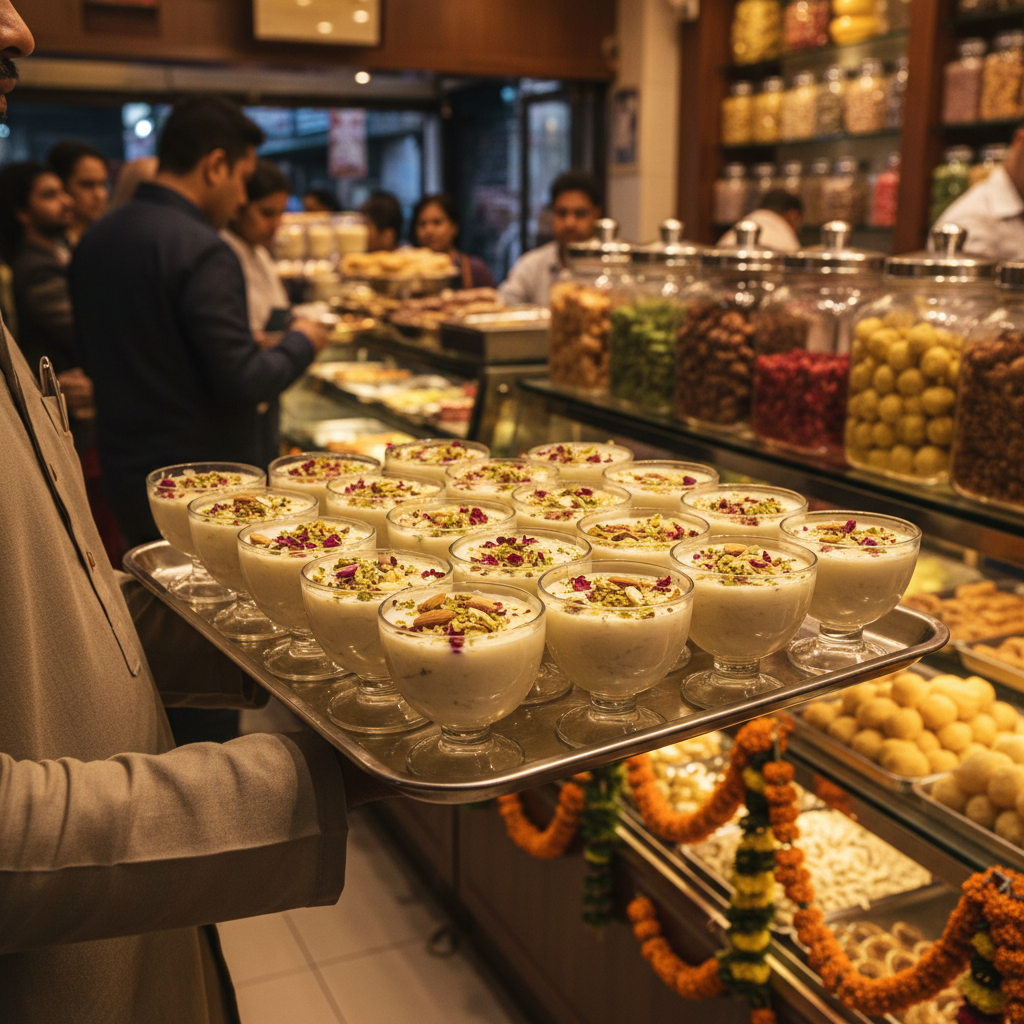
From small poojas to 200-guest receptions, portioned kheer cups improve flow and reduce waste by 10–15%. In our experience, a garnish bar with 3–4 toppings lifts engagement, while standard 3-ounce cups maintain consistency across large Brampton events and office celebrations.
Here are anonymized snapshots that mirror common asks from our Brampton community. They illustrate portion math, garnish strategy, and menu pairing—so you can model them for your own gathering.
Home pooja: 20–24 guests
- Batch size: 1 liter milk + 70 g rice yields 8–10 cups; double for 20 guests.
- Timing: Cook in 40 minutes; chill 2 hours; serve slightly cold with 1 tablespoon nuts.
- Pairing: Light chaat and tea; close with kheer to keep the menu soothing.
Engagement party: 80–100 guests
- Portions: 3-ounce cups; plan 1.1x headcount for seconds (88–110 cups).
- Garnish bar: Almonds, pistachios, golden raisins, rose petals; each topping 300–400 g bulk.
- Flow: Serve from two ends of a 6–8 foot table to halve wait times.
Corporate tea break: 150–180 employees
- Menu frame: Samosas and paneer pakora first; kheer cups last to prevent line stalls.
- Waste control: 3-ounce cups reduce leftovers versus 4-ounce by 8–12% in our logs.
- Visuals: Uniform cups with a single saffron strand photograph cleanly for internal comms.
To round out savory courses at events like these, we often recommend Chole Bhature or a robust chaat station. For ideas, see our Raj Kachori history and the Amritsari Kulcha guide.
Frequently Asked Questions (FAQ)
These concise answers address the most common kheer questions: rice choice, cooking time, thickening, storage, and flavor balancing. Each response is field-tested at The Mithai Maharaja so you can replicate dependable results at home or for events.
Which rice is best for kheer?
Use basmati for gentle bite and aroma, or short-grain for extra creaminess. For basmati, break some grains with a rolling pin for more starch release. A milk-to-rice ratio around 8:1 by volume yields a silky, scoopable pudding.
How do I fix kheer that’s too thin?
Keep simmering and stirring until volume drops another 5–10%. If the rice is cooked but the milk looks watery, dissolve 1–2 teaspoons of rice flour in cold milk and whisk in, then simmer 3–5 minutes to thicken.
Can I make kheer ahead for a party?
Yes. Cook fully, cool in shallow trays 20–30 minutes, then portion into cups and refrigerate 2–3 hours until set. Keep chilled below 40°F. Stir in a splash of cold milk just before service if the texture tightens.
What’s the difference between kheer and phirni?
Kheer simmers whole or broken rice grains in milk, so you feel some grain in the pudding. Phirni uses a rice paste, producing a smoother, custard-like set. Both are flavored with cardamom and saffron and finished with nuts.
How sweet should Indian dessert kheer be?
Classic profiles land around 15–18% sugar by final weight. For lighter palates or when serving after sweet mithai, aim 12–14% and lift flavor with cardamom and saffron. A tiny pinch of salt helps sweetness pop without extra sugar.
Key Takeaways and Next Steps
Master kheer by managing reduction, stirring regularly, and seasoning late. Use 8:1 milk-to-rice, add sugar after a 15–20% drop, and chill 2–3 hours. For events in Brampton, portion 3-ounce cups and add a simple garnish bar to delight guests and control waste.
- Milk reduction and rice starch create the body—watch time and temperature.
- Seasoning late preserves color, aroma, and sweetness control.
- Standard cups (3 oz) improve service speed and consistency at scale.
- Balance menus: pair creamy kheer with crisp chaats or breads.
- Use garnish bars (3–4 toppings) to lift engagement without extra cooking.
Planning a celebration in Brampton? Explore our premium mithai guide and build a dessert course that pairs kheer with barfi, laddoo, and jamun—elegant, gift-ready, and rooted in real halwai craft.
Related Dishes and Pairings
Serve kheer after crispy chaats and classic breads to create contrast and balance. Popular pairings include Raj Kachori, Amritsari Kulcha with Chana, and a curated barfi selection. Finish with masala chai for a warm, aromatic close to the meal.
Build a satisfying menu arc
- Crunch to cream: Raj Kachori or samosa chaat, then kheer.
- Hearty center: Amritsari Kulcha with Chana for substance.
- Sweet flight: Small bites of barfi and gulab jamun to accompany chilled cups.
For ideas, our resources on Raj Kachori history and the Amritsari Kulcha guide help you plan a cohesive flow.