Panjiri ladoo is a North Indian energy sweet made from roasted whole-wheat flour, ghee, and nuts, rolled into bite-size spheres. Rich in warming spices and nutrition, it supports postpartum recovery and winter wellness. In Brampton, The Mithai Maharaja crafts panjiri the halwai way, honoring Punjabi heritage.
By The Mithai Maharaja Team • themithaimaharaja.ca • Last updated: 2026-05-31
Overview
Panjiri ladoo blends roasted whole-wheat flour (atta), pure ghee, nuts, seeds, and gentle spices into nutrient-dense, bite-size sweets. It’s prized for energy, warmth, and recovery support. This guide explains its origins, benefits, step-by-step preparation, variations, storage, and how Brampton shoppers can enjoy it from an authentic, fifth-generation halwai.
Use this complete guide to understand, choose, and enjoy panjiri ladoo with confidence. We cover practical tips from our fifth-generation halwai craft in Brampton and show how to incorporate these ghee-forward sweets into everyday snacking, care hampers, and celebration boxes.
- What panjiri ladoo is, why it matters, and how it’s made (with time and texture cues)
- Key ingredients, nutrition pointers, and heritage context from Punjabi homes
- Types and regional twists, plus a quick comparison with other ladoos
- Actionable storage, gifting, labeling, and serving tips for families and events
- Local notes for Brampton families, new parents, and festival planners
Prefer to explore more ladoos first? See our ladoo varieties and flavors overview, then come back to dive deep into panjiri’s unique warmth and crunch.
What Is Panjiri Ladoo?
Panjiri ladoo is a Punjabi home-style sweet made by roasting whole-wheat flour in ghee, then binding it with powdered sugar or jaggery, nuts, seeds, and warming spices. The mixture is rolled into small, round balls. It’s valued for energy, comfort, and seasonal wellness, especially in postpartum care and cold climates.
Panjiri began as a practical, nourishing mix in North Indian homes. Over time, it took a festive turn, rolled into ladoo for easy serving, gifting, and travel. The core profile: roasted atta for nuttiness, pure ghee for aroma and satiety, and nuts/seeds for crunch. A typical ladoo weighs about 25–30 grams and delivers a balanced bite in 2–3 mouthfuls.
At The Mithai Maharaja in Brampton, our halwai craft shows in panjiri’s balance, gently toasted flour, measured spice, and a clean bind. Families choose it for daily snacking, new-mom care hampers, and festival trays alongside barfi and gulab jamun. For a broader cultural lens, skim our piece on Punjabi sweets and traditions before you get into ingredients and methods below.
Why Panjiri Ladoo Matters for Energy, Wellness, and Tradition
Panjiri ladoo matters because it delivers steady energy, warmth from ghee and spices, and a heritage-backed approach to recovery and winter wellness. For Punjabi households and Brampton families today it’s both food-as-care and celebration-ready mithai, bridging health, tradition, and convenience.
Whole grains, nuts, and seeds contribute protein, healthy fats, and fiber in every 25–30 gram serving. Almonds and pistachios often add 3–4 grams of plant protein per small handful, while ghee provides satiety and a pleasing aroma. Cardamom (about 1/2 teaspoon per cup of flour) brightens the profile without overpowering.
- Energy you can feel: Roasted atta + ghee create slow-release satisfaction. A single ladoo pairs well with chai for a mid-afternoon lift.
- Seasonal warmth: Ginger, ajwain, and nutmeg (pinches, not spoons) help a winter blend feel cozy, especially useful in Canadian cold snaps.
- Care tradition: In many Punjabi homes, panjiri shows up in postpartum weeks as a gentle, familiar snack. Families customize spice and nut levels to taste.
In our experience serving Brampton, panjiri ladoo is also practical. It stacks neatly for transport, keeps its shape on buffet trays for 2–3 hours, and fits elegantly into wedding or Diwali assortments. To see how it complements festive menus, browse our Diwali sweets guide next.
How Panjiri Ladoo Is Made: Step-by-Step
Make panjiri ladoo by slow-roasting whole-wheat flour in ghee until aromatic, mixing in toasted nuts/seeds and gentle spices, sweetening with sugar or jaggery, then binding into warm balls. Low heat, patient stirring, and balanced seasoning are the keys to flavor and texture.
Below is a straightforward, halwai-tested flow you can follow at home. Quantities scale easily; aim to keep the flour-to-ghee ratio consistent so the mixture binds without greasiness.
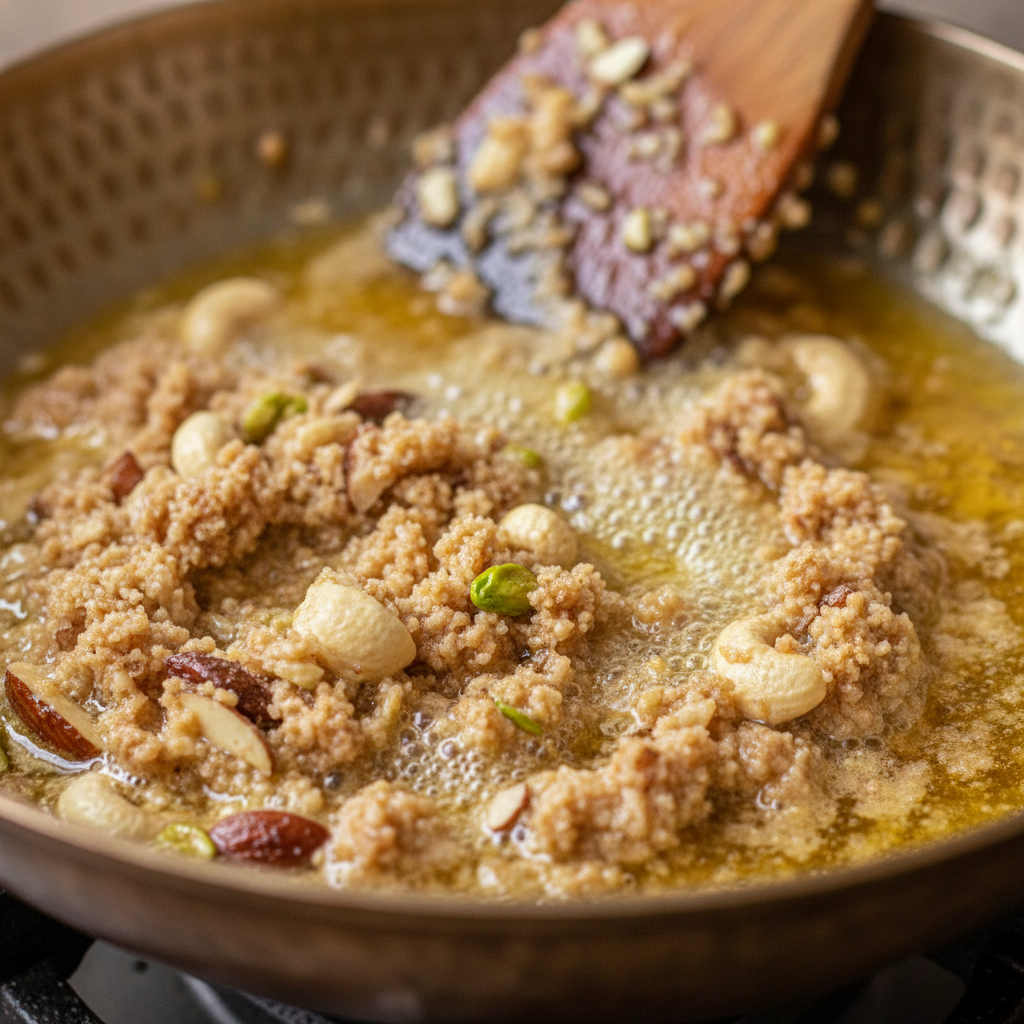
- Roast atta in ghee (10–14 minutes): Stir on low heat until sandy, toasty, and fragrant. Color changes from pale to golden. Too dark? Bitterness creeps in.
- Toast add-ins (4–6 minutes): Almonds, cashews, pistachios, melon/poppy seeds, and edible gond (if used) until lightly golden and crunchy.
- Season (30–60 seconds off heat): Cardamom for lift; optional ginger, ajwain, or nutmeg for warmth. Spices bloom in residual heat.
- Sweeten (2–3 minutes mixing): Powdered sugar for a classic, lighter crumb or finely grated jaggery for caramel depth.
- Bind and roll (12–20 minutes): While warm, shape into compact, even 25–30 gram balls. If cracking, add 1–2 teaspoons warm ghee.
Tip: The atta color shift, from pale to deep golden, signals readiness. Over-roasting toughens texture. Under-roasting flattens flavor. We keep the pan moving with a flat spatula and let mixtures cool just enough for safe, firm rolling (usually 6–8 minutes after sweetener goes in).
Want a side-by-side sweet for contrast? Our ghee ladoo guide explains another ghee-forward favorite that’s smoother and more melt-in-mouth than panjiri’s crunch-led bite.
Ingredient ratios that work
- Base: 1 cup atta to 1/3–1/2 cup ghee (adjust by climate and brand)
- Add-ins: 1/2–3/4 cup total chopped nuts/seeds per cup of atta
- Sweetener: 1/2–2/3 cup powdered sugar or grated jaggery per cup of atta
- Spice: 1/2 teaspoon ground cardamom; optional 1/4 teaspoon ginger or a pinch of nutmeg
These ranges let you tailor texture (crunch vs. melt) and sweetness. Warmer kitchens may need a touch less ghee; Canadian winters often welcome the higher end of the range for a cohesive bind.
Types and Variations of Panjiri
Panjiri spans classic atta-based mixes, postpartum blends with gond, and dry-fruit-forward versions. Sweeteners vary, powdered sugar for a lighter crumb or jaggery for caramel notes. Texture ranges from soft-melt to rustic-crunch based on nut ratio, grind size, and binding temperature.
Popular variations you’ll encounter
- Atta panjiri ladoo: The everyday classic with balanced crunch and melt; easy to serve 1–2 per person at gatherings.
- Gond panjiri: Includes edible resin for body; common in postpartum mixes and mid-winter gifting.
- Dry-fruit rich: Almond-forward with pistachios, cashews, and seeds for extra texture; pairs well with light chai.
- Jaggery-bound: Earthy sweetness and slightly softer bind than sugar versions; a favorite for caramel lovers.
- Festival spice: Cardamom-led with saffron or nutmeg for celebratory aroma; beautiful in mixed mithai trays.
How it compares with other ladoos
| Sweet | Main Base | Typical Profile | When to Choose |
|---|---|---|---|
| Panjiri Ladoo | Roasted atta + ghee | Toasty, warm spices, crunchy nuts | Postpartum, winter, everyday energy |
| Pinni | Atta + ghee, often gond | Hearty, denser, Punjabi winter staple | Cold months, robust gifting |
| Besan Ladoo | Roasted chickpea flour | Nutty, smooth, melt-in-mouth | Festivals, classic mithai box |
| Ghee Ladoo | Varies; ghee-forward | Pronounced ghee aroma | Rich, indulgent treat moments |
Consider allergens and preferences. Nut-heavy blends delight crunch-lovers; jaggery fans chase caramel notes. For festive assortments, mix panjiri ladoo with sesame and groundnut ladoos for texture variety across a box—then explore more ideas in our ladoo flavor guide.
Best Practices for Buying, Storing, and Serving
For the best panjiri ladoo experience, buy from a trusted halwai, keep airtight at cool room temperature, and finish within a reasonable window for peak aroma. Serve with warm chai, balance sweet trays with savory chaats, and label nut ingredients when gifting.
Buying tips from a halwai lens
- Ask about the roast: Even golden color and nutty aroma signal skill; patchy color often tastes flat.
- Check ghee quality: Pure, clean ghee underpins flavor and digestibility; you should smell aroma in 2–3 seconds.
- Scan the spice balance: Cardamom should lift, not overpower; if you can’t taste the atta, it’s over-spiced.
- Consider the season: Winter blends may lean warmer (ginger, ajwain). Summer batches trend lighter.
Storage and freshness
- Airtight containers: Preserve aroma and crunch in a cool, dry cupboard; avoid heat sources.
- Sunlight control: Heat and light degrade fragrance within days; opaque tins help.
- Travel and gifting: Nested trays and dividers keep shapes intact; plan 2–3 pieces per guest for events.
- Allergen labels: Call out nuts, seeds, or gluten for recipients; add a simple ingredients card.
At family functions, we often suggest alternating panjiri with melt-in-mouth mithai like besan barfi. If you’re curating a mix, our besan barfi guide offers pairing ideas that complement panjiri’s toasty bite.
Serving and pairing ideas
- With chai: The warmth amplifies spice and ghee notes; 1–2 ladoos per person is a comfortable range.
- On mithai platters: Alternate textures with barfi, kalakand, and gulab jamun to delight varied palates.
- Balance with savory: Pair with samosa, chole bhature, or kachori to create a full North Indian spread.
- Gifting cue: Add a card explaining ingredients and the tradition behind panjiri; it turns sharing into storytelling.
Local considerations for Brampton
- For winter celebrations, choose warmer spice profiles and include insulated packaging for longer drives across the GTA.
- Festival weeks get busy; pre-order gift boxes and party trays early to secure fresh batches and pickup time slots.
- For new parents in the community, assemble a gentle snack kit: panjiri ladoo, light chai masala, and a few melt-in-mouth mithai.
Tools, Ingredients, and Resources
Use a heavy kadai or wide pan, a flat spatula, and airtight tins. Favor pure desi ghee, fresh atta, and whole nuts you can chop or slice. For nutrition context and roasting know-how, consult reputable food resources and traditional halwai guidance.
Kitchen gear we rely on
- Heavy-bottom kadai: Prevents scorching; retains steady heat for 10–14 minute roasts.
- Flat wooden spatula: Sweeps the base for even roasting and breakup of lumps.
- Wide mixing bowl: Tosses add-ins without compacting; widens cooling surface.
- Airtight tins: Keep aroma locked and moisture out for up to 10–14 days at cool room temp.
Ingredient checklist
- Whole-wheat flour (atta), pure desi ghee
- Almonds, cashews, pistachios; melon or poppy seeds
- Cardamom; optional ginger, ajwain, or nutmeg
- Powdered sugar or jaggery (finely grated)
Almonds are a familiar source of vitamin E and plant protein per ounce, while pistachios contribute color and crunch. Meanwhile, ghee’s higher smoke point supports gentle, controlled roasting that protects aroma and prevents scorching in the first 6–8 minutes of cooking.
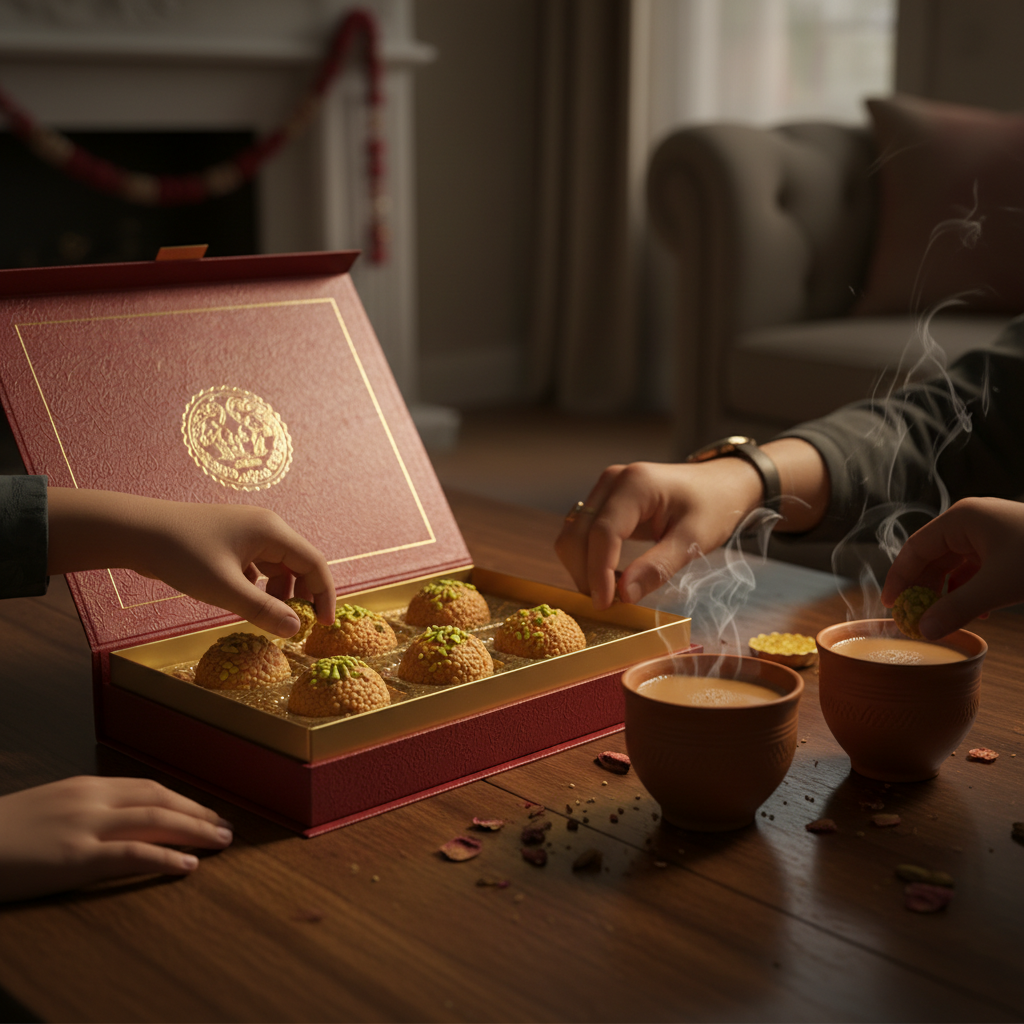
Thinking of a custom gift box? Panjiri ladoo pairs beautifully with barfi and premium ghee-forward sweets. Explore festive options in our Punjabi sweets overview and seasonal picks in popular Indian desserts.
Brampton’s food scene is diverse. For a sense of everyday meal solutions many families use, browse these local tiffin overviews (Punjabi tiffin services and Jain tiffin services). And across the GTA, dessert culture spans many cuisines, see a Mediterranean example like baklava in Toronto a reminder of how sweet traditions meet in one city.
Real-World Examples from Brampton
In Brampton, families choose panjiri ladoo for postpartum care kits, winter gatherings, and wedding favors. As a fifth-generation halwai shop, we shape batches to your season, spice comfort, and presentation so care and celebration show up in every bite and box.
- New-parent hamper (week 1–6): A gentle spice mix with soft barfi variety. We include a simple ingredient card and suggest 1–2 ladoos per tea break.
- Winter chai meetups (10–20 guests): Ladoos with a ginger lift, served alongside samosa and pakora platters so guests can pick sweet or savory first.
- Wedding trays (50–200 favors): Panjiri ladoo alternating with two other sweets in brand-matched sleeves, easy to portion and stack.
- Corporate gifting (teams of 12–40): Premium boxes with nut/gluten labels for offices; we suggest 3–5 assorted pieces per person.
We’ve found that guests appreciate clear labeling and a mix of textures, something crunchy (panjiri), something soft (gulab jamun), and something fudgy (kalakand). It turns a box into an experience, not just a selection. If you’re planning a large celebration, our festival planning notes can help you sketch counts and combinations quickly.
Frequently Asked Questions about Panjiri Ladoo
Common questions include ingredients, seasonality, storage, and how panjiri differs from other ladoos. The answers below give quick, practical guidance you can use for home snacking, care hampers, and celebration boxes in Brampton.
What is panjiri ladoo made of?
A classic panjiri ladoo includes roasted whole-wheat flour (atta), pure ghee, chopped nuts and seeds, powdered sugar or jaggery, and cardamom. Optional warm spices like ginger or ajwain appear in winter or postpartum versions.
Is panjiri good for new moms?
Panjiri is traditionally offered in Punjabi households during postpartum for gentle energy and warmth. It’s a food tradition, not medical advice. Preferences vary, some families choose lighter spice and nut profiles in early weeks.
How is panjiri different from pinni?
Both use roasted flour and ghee. Pinni often includes gond and is shaped denser, making it a winter staple. Panjiri ladoo is typically a bit lighter in crumb with more visible nut texture.
How should I store panjiri ladoo?
Keep them in airtight containers in a cool, dry cupboard away from sunlight. For travel and gifting, use trays or separators so shapes hold. Label nuts and gluten when sharing with mixed groups.
Conclusion and Next Steps
Panjiri ladoo offers warmth, steady energy, and cultural care in one compact sweet. Choose skilled halwais, store thoughtfully, and pair with complementary mithai and chaats. In Brampton, you can bring this tradition home or to your next celebration with an authentic, heritage-led shop.
- Key takeaways: Roast with patience, balance spice, and protect aroma with airtight storage.
- Action ideas: Build a mixed-texture gift box, plan a winter chai spread, or curate a new-parent hamper.
- Explore more: Compare textures in our ghee ladoo guide and scan seasonal picks in popular Indian desserts.
- Local next step: If you’re in Brampton, plan your pickup ahead of rush weeks and share ingredient notes with your gift recipients.
Ready to plan a box or tray? We’d be happy to help you curate a balance of flavors and textures tailored to your guests and the season.