Aloo sabzi is a North Indian potato curry made by tempering potatoes with warm spices into either a dry (sukhi) or saucy (rasedar) style. In Brampton, The Mithai Maharaja prepares puri aloo and thali-ready versions rooted in Punjabi halwai tradition. It’s versatile, comforting, and pairs well with puri, paratha, or rice.
By The Mithai Maharaja • Last updated: May 12, 2026
Above-Fold Overview: Hook + Table of Contents
This guide explains what aloo sabzi is, why it matters in North Indian cooking, and how to cook it perfectly. You’ll get step-by-step methods, pro tips, variations, and serving ideas aligned with Punjabi halwai craft. Use the table of contents to jump to what you need.
Craving that bright, homestyle potato curry that makes puri taste like a celebration? You’re in the right place. Here’s what you’ll find.
- Clear definition of aloo sabzi and core ingredients
- Why it’s a staple with puri, paratha, and thali meals
- How to cook dry and gravy versions with step-by-steps
- Regional styles: dhaba, Bedmi Puri Aloo, Jain/no-onion, and more
- Best practices for texture, spice balance, and consistency
- Tools, pantry checklist, and troubleshooting tips
- Real-world examples from our Brampton kitchen and thalis
Quick Summary
- Definition: Aloo sabzi is a spiced potato curry, dry or saucy, built on a cumin-forward tadka and turmeric color.
- Time window: Many home cooks finish a batch in about 30 minutes, depending on cut size and stovetop.
- Perfect pairings: Puri, paratha, Bedmi puri, and everyday thalis.
What Is Aloo Sabzi?
Aloo sabzi is a North Indian potato preparation made by tempering (tadka) whole or diced potatoes with spices, then finishing dry or with a light gravy. Its cumin-turmeric base, chili heat, and tang from amchur or tomatoes deliver the signature, homestyle flavor loved with puri and paratha.
At The Mithai Maharaja in Brampton, we rely on fifth-generation halwai methods to keep aloo sabzi honest: well-bloomed spices, consistent potato cuts, and just enough moisture to cling. This forms the backbone of our puri aloo and thali rotations.
Core building blocks
- Potatoes: Yukon Gold or russet for fluff; red potatoes for firmer cubes.
- Tadka: Cumin seeds, mustard seeds (optional), hing, green chilies, and curry leaves.
- Body and color: Turmeric, coriander, and sometimes Kashmiri chili for a bright hue without excessive heat.
- Tang: Tomatoes or amchur (dried mango powder) for balance.
- Finishers: Garam masala and cilantro to lift aroma at the end.
Want that street-food snap, crackle, and tang? Our Bedmi Puri Aloo notes in this Bedmi guide explain how urad-studded puri meets chunky, spicy potatoes for a festival-ready bite.
Why Aloo Sabzi Matters
Aloo sabzi matters because it anchors North Indian breakfasts and thalis, travels well for catering, and flexes to dietary needs. The dish is budget-friendly, scales predictably, and pairs with puri, paratha, and rice—making it a dependable crowd favorite across homes and celebrations.
In our Brampton kitchen, we see aloo sabzi serve three roles at once: breakfast star with puri, weekday comfort in a thali, and event workhorse on vegetarian spreads. For wedding sangeets or corporate gatherings, it holds texture through service and warms evenly.
- Everyday reliability: Potatoes keep structure under simmer and reheat evenly for next-day meals.
- Menu agility: Dry aloo for puri; gravy aloo for rice; Jain variant for no-allium days.
- Catering-friendly: Consistent seasoning and viscosity reduce service risk at scale.
Exploring puri pairings? Cross-reference our Chole Poori walkthrough or go bolder with Delhi Wale Chole Bhature techniques for a full North Indian breakfast spread.
How Aloo Sabzi Works (Technique)
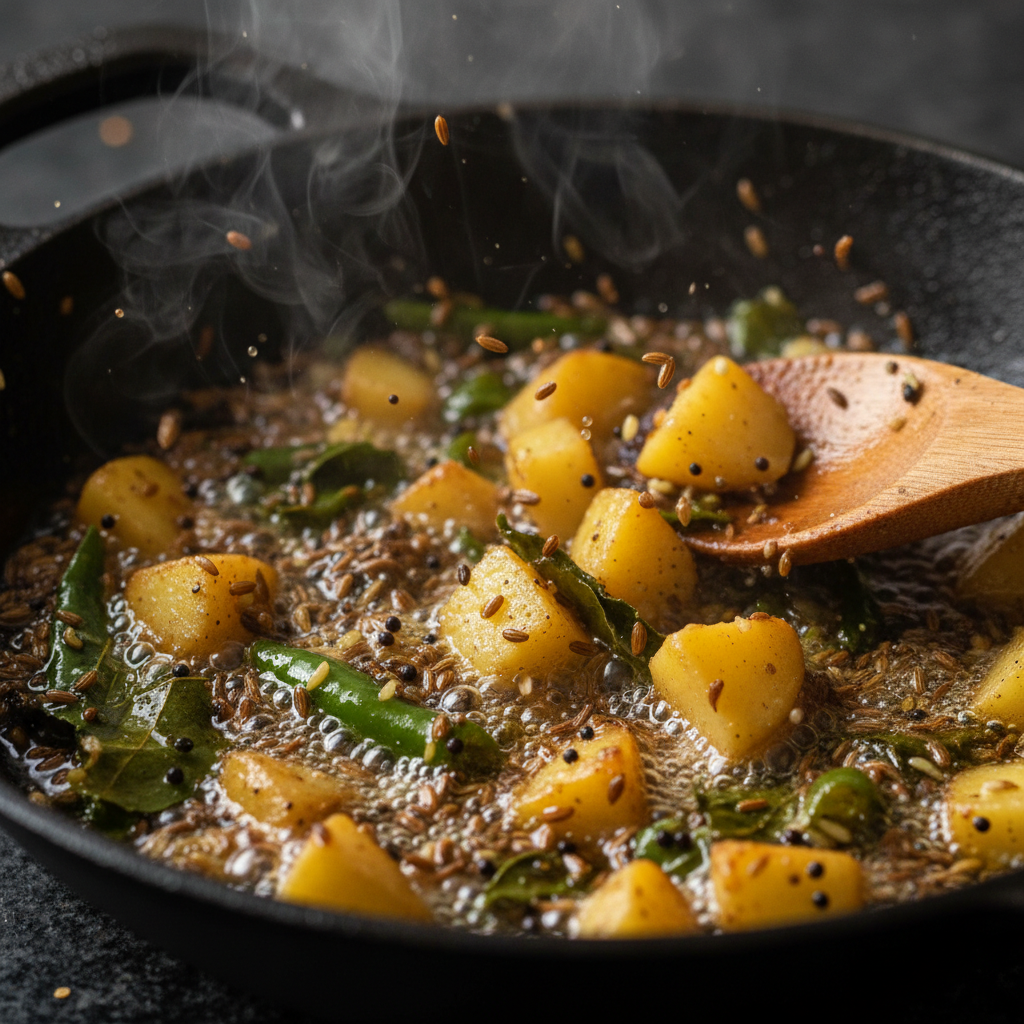
Great aloo sabzi starts with a hot, aromatic tadka that blooms cumin and chilies, then coats evenly cut potatoes. Control moisture early, build color with turmeric and chili, and finish with a quick covered rest. The result is potatoes that are seasoned through, not just sauced.
Step-by-step method (stovetop)
- Prep the potatoes: Rinse and cut into even 3/4-inch cubes for uniform cooking. Keep in water to prevent browning.
- Bloom the tadka: Heat oil; add cumin seeds until nutty, then green chilies, hing, and curry leaves.
- Spice the base: Stir in turmeric, coriander, and Kashmiri chili briefly to wake aromatics.
- Add potatoes: Drain, add, and stir to coat. Salt early to season the interior.
- Moisture control: For dry style, add splashes of water as needed; for gravy, add tomatoes and water to cover halfway.
- Simmer and set: Cook until fork-tender; finish with garam masala and cilantro. Rest covered 3–5 minutes so flavors settle.
Even, well-salted cubes deliver that restaurant-style consistency. If you prefer ultra-fluffy edges, parboil first, then pan-fry with the tadka to finish.
Moisture, heat, and texture
- Dry vs. gravy: Dry (sukhi) clings to puri and paratha; gravy (rasedar) suits rice or thali.
- Heat level: Kashmiri chili gives color with moderate heat; add green chilies for a sharper bite.
- Tang balance: Amchur sharpens a dry sabzi; tomatoes mellow and add body in gravy versions.
For a puri-day spread, pair with a crisp snack like special handmade samosa or keep it street-style with Aloo Tikki Chaat inspiration.
Types, Regional Styles, and Variations
Aloo sabzi spans dry dhaba-style, saucy rasedar, Bedmi Puri Aloo, Jain/no-onion versions, and pressure-cooked takes. Each style tweaks tadka, acidity, and moisture to match its pairing—puri, paratha, or rice—without losing the cumin-forward potato character.
Popular styles you’ll cook again
- Dry dhaba-style: Chunky potatoes, extra coriander, and amchur. Great with puri.
- Rasedar (gravy): Tomatoes and water simmered to a light curry for rice or thali.
- Bedmi Puri Aloo: Spicier, with a little fennel and hing—see our Bedmi guide.
- Jain/no-onion-garlic: Asafoetida and tomatoes carry savoriness in place of alliums.
- Instant Pot: Quick sauté for tadka, then pressure 3–4 minutes for tender cubes.
Quick comparison
| Style | Key spices | Texture | Best with |
|---|---|---|---|
| Dry dhaba | Coriander, amchur, green chilies | Clingy, oil-polished cubes | Puri, paratha |
| Rasedar gravy | Turmeric, tomatoes, garam masala | Light sauce, scoopable | Rice, thali |
| Bedmi style | Hing, fennel, chili | Bold, chunky | Bedmi puri |
| Jain variant | Hing, cumin, tomatoes | Clean, savory without alliums | Puri, phulka |
| Instant Pot | Classic tadka, quick finish | Evenly tender | Busy weekdays |
For a street-food detour, explore layered textures and tang in our Aloo Chaat guide and bring that flavor memory back to your sabzi.
Best Practices for Consistent, Flavorful Results
Cut potatoes evenly, bloom spices in hot oil, salt early, and manage moisture based on your target style. Finish with a brief covered rest to let starches relax and flavors meld. These small steps produce restaurant-level consistency at home or in catering.
Prep and cut
- Uniform cubes: 3/4-inch cubes cook evenly and resist breaking down.
- Rinse and soak: Reduce surface starch for cleaner sauté and brighter color.
- Parboil option: For extra-fluffy edges, parboil to 70–80% doneness, then finish in tadka.
Tadka that pops
- Heat matters: Seeds should sizzle immediately; if they don’t, the oil isn’t ready.
- Spice timing: Ground spices go in briefly after the seeds to avoid scorching.
- Color vs. heat: Use Kashmiri chili for redness without overpowering spice.
Moisture management
- Dry style: Add water by tablespoons to steam through without pooling.
- Gravy style: Tomatoes and water create a light sauce that reduces in 8–12 minutes.
- Rest: A covered 3–5 minute rest yields a steadier, seasoned bite.
Hosting brunch? Pair with a crispy snack like Amritsari Kulcha with Chana or fold leftover sabzi into roll-ups alongside the ideas in our Chole Poori guide.
Tools, Pantry Staples, and Resources
You need a sturdy kadhai or sauté pan, a reliable spatula, and a pressure cooker or Instant Pot for speed. Stock cumin seeds, turmeric, coriander, amchur, garam masala, and Kashmiri chili to build consistent flavor across dry and gravy versions.
Essential cookware
- Kadhai or deep skillet: Even heat for fast tadka and sautéing.
- Pressure cooker/Instant Pot: Consistent tenderness on busy days.
- Sharp knife + board: Even cuts make or break texture.
Staple spices for your shelf
- Cumin seeds, mustard seeds (optional), and hing for savory depth
- Turmeric for color, coriander for body, and Kashmiri chili for hue
- Amchur powder or tomatoes for balanced tang; garam masala to finish
Building a weekend menu? Use sabzi as the anchor, then add festive touches from our snack playbook—see samosa tips or our Chole Bhature primer to round out the spread.
Case Studies and Real-World Examples (Brampton)
In Brampton, we use aloo sabzi in puri breakfasts, thali service, and vegetarian catering. The dish holds texture on the line, reheats cleanly, and pairs across breads and rice—making it reliable for family orders and large events alike.
Example 1: Weekend puri-aloo rush
On busy weekend mornings, dry dhaba-style aloo anchors puri plates. A cumin-heavy tadka, bright turmeric, and amchur keep it lively without overwhelming heat. The texture clings to puri so each bite feels composed, not slippery.
Example 2: Thali rotation
For thalis, a light rasedar gravy helps sabzi nestle alongside rice. The sauce reduces to a spoonable consistency that doesn’t flood the tray. This format keeps flavors balanced across compartments.
Example 3: Vegetarian catering trays
In catering, we favor sturdier cuts and a controlled finish so the potatoes stand up to holding and transport. The flavor stays bright after reheating, especially with a final sprinkle of garam masala at service.
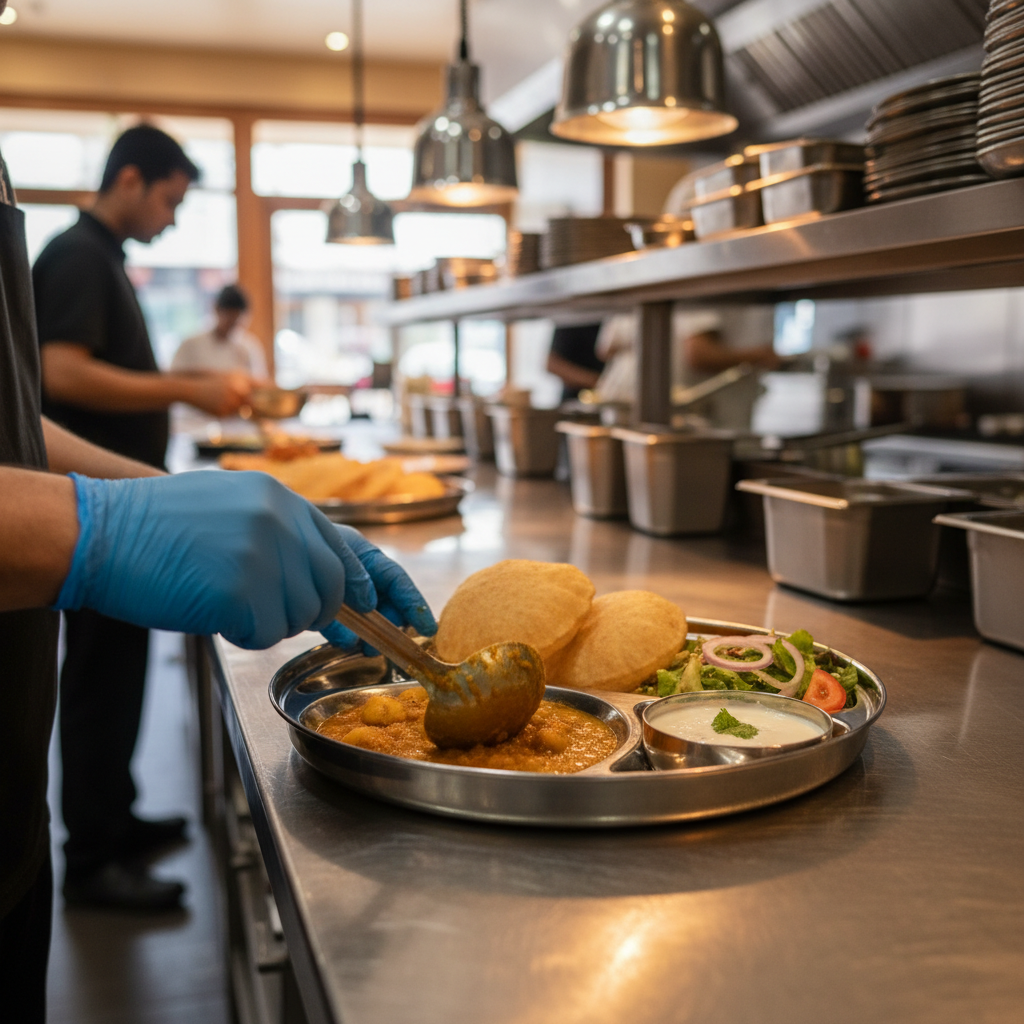
Want more street-style crunch and tang on the side? Build a mini board inspired by our Aloo Chaat guide with papdi, yogurt, and chutneys.
Local considerations for Brampton
- Weekend mornings get busy for puri-aloo plates; consider ordering ahead if you’re coordinating a family brunch or small gathering.
- Festival seasons bring higher demand for thalis and vegetarian spreads. Plan catering lead times early to secure preferred dates.
- For winter events, choose a rasedar style that retains moisture during transport and service, especially for outdoor setups.
Serving Ideas and Pairings
Serve dry aloo sabzi with puri or paratha for a classic breakfast, or choose a light gravy version for rice and thali. Add crunchy sides like pakoras, bright chutneys, and cooling yogurt to round out heat and texture.
- Puri day: Dry dhaba-style aloo, tangy pickle, and fresh cilantro.
- Thali night: Rasedar potatoes, jeera rice, raita, and salad.
- Street-food vibes: Use leftover sabzi in rolls or riff off ideas in our Aloo Tikki Chaat steps.
Curious about pairing protein and crunch? Paneer, chickpeas, and gram-flour fritters (pakoras) all complement the spice profile. If you love layered textures, take notes from our Amritsari Kulcha with Chana playbook.
Troubleshooting and Pro Fixes
If potatoes break, cut larger or parboil less. If sabzi tastes flat, add salt and a touch of acid (amchur or tomato). If it’s watery, uncover and reduce. These quick corrections rescue texture and balance without starting over.
- Breaking potatoes: Reduce stirring; let a crust form before tossing.
- Under-seasoned: Salt early and taste as moisture reduces; finish with garam masala.
- Too spicy: Fold in plain yogurt on the side; serve with cooling raita.
- Too sour: Balance with a pinch of sugar or a knob of butter.
- Greasy feel: Add a splash of hot water and toss to emulsify the fat back into the sauce.
Nutrition and Notes
Potatoes provide carbohydrates, potassium, and vitamin C. Portion control and cooking fats determine richness. Use moderation with oil and finishers; add peas or spinach to boost fiber and color without changing the core flavor profile.
For everyday eating, consider complementing your sabzi with yogurt and salad to create balance. Leftovers typically reheat well on the stovetop with a small splash of water to revive the seasoning and texture.
If you’re exploring meal services in the region, browse examples of Punjabi-style meal trays and snack listings like this general Punjabi tiffin collection or a sample samosa menu item to understand how potato dishes are commonly paired in takeout contexts.
Planning a Family Brunch or Vegetarian Spread?
Build an easy North Indian menu around aloo sabzi: pair with puri, add a chickpea curry, and finish with mithai. Our Brampton kitchen prepares thali-style combinations and festive boxes so you can focus on hosting, not hovering over the stove.
We’ve helped local families plan joyful puri-aloo mornings, festive thalis, and vegetarian buffets for milestone moments. If you’re gathering in Brampton, drop by or explore our blog to spark a menu that fits your style—street-food casual or regal and gift-ready.
Frequently Asked Questions
These quick answers address the most common aloo sabzi questions—ingredients, texture, reheating, and pairing—so you can troubleshoot fast and serve confidently.
What potatoes work best for aloo sabzi?
Yukon Gold offers tender, creamy cubes for both dry and gravy versions. Russet gets fluffier at the edges, which helps spices cling. Red potatoes stay firmer and hold shape well, especially in dry, dhaba-style preparations.
How do I make a no-onion, no-garlic (Jain) version?
Use a hearty tadka of cumin seeds and hing, then let tomatoes provide body and savoriness. Balance with turmeric, coriander, and chili for color and warmth. Finish with garam masala and cilantro to lift aroma without relying on alliums.
How can I keep the sabzi from getting watery?
For dry style, add moisture by tablespoons and reduce uncovered so steam escapes. For gravy style, simmer until sauce lightly coats the potatoes, then rest covered for a few minutes to stabilize the consistency.
What should I serve with aloo sabzi for a complete meal?
Pair dry sabzi with puri or paratha, pickle, and yogurt. Choose rasedar potatoes with rice, raita, and a crunchy snack like pakora or samosa. For street-food flair, add elements inspired by our Aloo Tikki Chaat notes.
Key Takeaways
Even cuts, a hot tadka, smart moisture control, and a brief rest are the four habits that guarantee flavorful, consistent aloo sabzi—whether you cook dry for puri or gravy for rice and thalis.
- Keep cubes even and salt early for interior seasoning.
- Let spices bloom properly before adding potatoes.
- Match moisture and tang to the pairing you plan to serve.
- Rest covered 3–5 minutes to stabilize texture and flavor.
Conclusion
Aloo sabzi is the reliable, flexible centerpiece of North Indian comfort cooking. Master the tadka, cut size, and moisture, and you’ll own both dry and gravy styles—perfect for puri breakfasts, thali nights, and festive vegetarian spreads in Brampton.
From Bedmi Puri Aloo to thali-ready gravy, the method stays simple and repeatable. Browse our street-food inspirations—like aloo chaat and aloo tikki chaat—and build a menu that feels like home.