Aloo chaat is a North Indian street-food salad of crispy potatoes tossed with sweet-tart chutneys, cooling yogurt, and bright spices. It’s fast to assemble, built for customization, and beloved for its hot-and-cold contrast. In Brampton, The Mithai Maharaja makes it easy to enjoy authentic flavors at home or in store using real halwai methods.
By The Mithai Maharaja • Last updated: 2026-05-11
Quick Summary
Aloo chaat pairs crisp potatoes with tangy-sweet chutneys, yogurt, and spices for a balanced, crunchy bite. Make it by frying or air-frying potatoes (10–15 minutes), then layering chutneys, yogurt, chaat masala, and garnishes. In Brampton, you can also order fresh chaats directly from The Mithai Maharaja.
- Core idea: hot, crispy potatoes + cool, creamy yogurt + sweet-tart chutneys + fresh crunch.
- Time guide: parboil 12–15 minutes; crisp 8–12 minutes; assemble in 2–3 minutes.
- Texture target: 70–80% crisp surface area on potatoes for the best crunch.
- Flavor balance: 4 levers — salty, sour, sweet, spicy. Adjust each in 1–2 gram pinches.
- Enjoy it your way: classic, aloo tikki chaat, papdi chaat mash-ups, or dahi-forward bowls.
What is aloo chaat?
Aloo chaat is a tangy, crunchy street snack made from fried or air-fried potatoes tossed with chutneys, yogurt, and chaat masala. The dish balances heat, sweetness, spice, and acidity in minutes. It’s a staple across North India and a favorite at The Mithai Maharaja for quick, customizable snacking.
Aloo chaat literally means “potato chaat,” where chaat refers to a craveable, tangy snack layered with chutneys and crunch. The base is diced or cubed potatoes, parboiled until tender and then crisped until the edges register deep golden brown.
- Core components: potatoes, tamarind-date chutney, green cilantro-mint chutney, whisked yogurt, and chaat masala.
- Garnishes: sev (fine chickpea noodles), chopped onions, pomegranate arils, chopped cilantro, and sometimes crushed papdi.
- Serving size: plan about 200–250 grams cooked potatoes per portion with 30–40 grams total chutneys.
- Temperature play: serve immediately; the hot-cold contrast peaks within 3–4 minutes of assembly.
In our Brampton kitchen, we see two patterns: weeknight bowls that lean light (air-fried, extra herbs) and celebration platters that go big on toppings. Both work — the method is flexible by design.
Local considerations for Brampton
- Plan for weekend rush: festivals and family gatherings spike demand. Pre-order chaats and mithai early to avoid waits.
- Weather swing: cold evenings favor warm tikki and extra gravy; summer days lean toward yogurt-forward, herb-lifted bowls.
- Catering nuance: for mixed dietary groups, keep chutneys and yogurt on the side in labeled squeeze bottles for easy, mess-free service.
Why aloo chaat matters
Aloo chaat matters because it delivers big flavor with minimal prep, scales for parties, and suits vegetarian diets. It’s a fast, crowd-pleasing way to showcase real halwai craft. At The Mithai Maharaja, it also complements premium mithai for weddings, festivals, and corporate gifting.
Here’s the thing: great snacks solve real problems. You want speed, variety, and that “one more bite” pull. A properly built aloo chaat delivers each in under 20 minutes start to finish, including a 12–15 minute parboil and an 8–12 minute crisp.
- Flavor payoff per minute: a 3:1 ratio of active effort to taste impact compared with many hot appetizers.
- Diet-friendly: fully vegetarian; easy to adapt for no-onion/no-garlic preferences by leaning on chutneys and spices.
- Scales cleanly: 1 kilogram of potatoes yields 4–5 generous plates; double to serve a small gathering.
- Menu synergy: pair a chaat station with classic North Indian mains for balance of light and hearty.
We’ve found that chaat boards are conversation starters. At family events, guests assemble 2–3 mini bowls each, trying different ratios. That interactivity keeps lines moving and palates engaged without heavy lift on the host.
How aloo chaat works
Aloo chaat works by engineering contrast: 70–80% crispy potato surface meets 20–30% cool, saucy toppings. Salt, sour, sweet, and heat are adjusted in small increments. Assemble fast to keep the crust from softening — ideally within 2–3 minutes after crisping.
Think of the build like an equation. Texture plus temperature differentials create excitement on the palate. The potatoes carry salt and fat; chutneys drive acidity and sweetness; chilies and chaat masala lift aromatics. When these align, each forkful lands clean and bright.
- Texture math: target 1–1.5 cm cubes. Smaller cubes over-crisp; larger cubes can taste mealy.
- Moisture control: drain potatoes for 3–5 minutes after boiling; steam-dry on a tray for a drier surface.
- Heat transfer: cast-iron or heavy stainless maintains 180–190°C (356–374°F) pan surface for even browning.
- Assembly speed: add chutneys in 15–20 gram zigzags; yogurt in 20–25 grams; finish with 5–7 grams sev per portion.
In our experience, the number-one failure is soggy potatoes. That’s almost always a moisture issue: insufficient steam-dry time or overcrowding the pan. Fix those, and your success rate jumps noticeably.
Types/Methods/Approaches
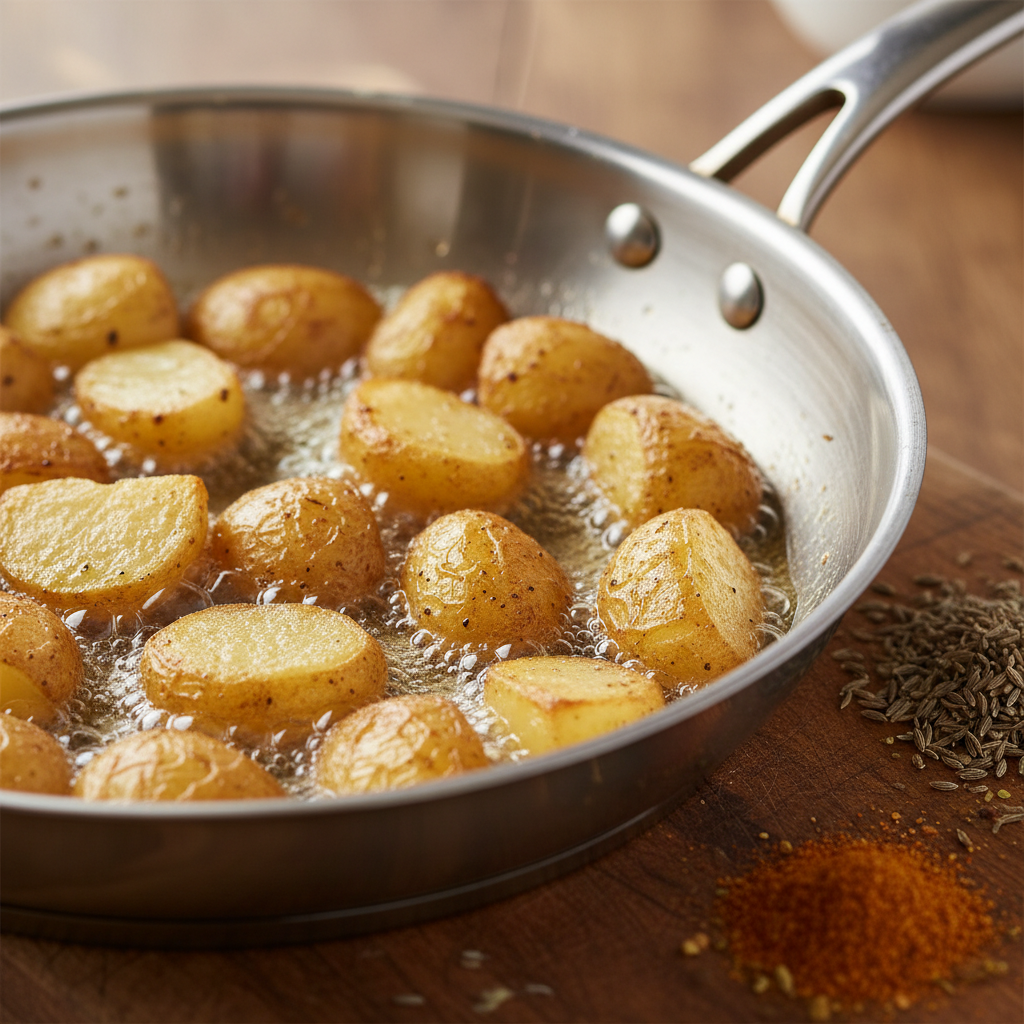
There are three reliable approaches: pan-fried cubes, air-fried cubes, and aloo tikki patties. Choose pan-fried for maximum crust (8–12 minutes), air-fried for lower-oil convenience (14–18 minutes), or patties for street-style nostalgia and layering potential.
1) Pan-fried potato cubes (maximum crunch)
- Cut: 1–1.5 cm cubes for even browning and fork-friendly bites.
- Parboil: 12–15 minutes in salted water until easily pierced at the edges.
- Dry: 3–5 minutes steam-dry; toss with 5–7 ml neutral oil and a pinch of turmeric.
- Pan: preheat heavy skillet 2–3 minutes; brown in a single layer, turning every 90 seconds.
- Season: add chaat masala off-heat to keep its acidity aromatic.
2) Air-fried cubes (lighter, weeknight win)
- Prep: same boil-and-dry, then 5–7 ml oil total for 500 g potatoes.
- Cook: 400°F for 14–18 minutes, shaking basket at minutes 6 and 12.
- Finish: hot bowl toss with salt and 1–2 grams chaat masala before plating.
3) Aloo tikki patties (chaat-cart classic)
- Mash: 500 g boiled potato + 20–25 g rice flour for structure.
- Shape: 60–70 g patties; shallow-fry 3–4 minutes per side until bronze.
- Top: yogurt 20–25 g, green chutney 10–12 g, tamarind 12–15 g, sev 5–7 g, onion, cilantro.
Flavor variations you’ll love
- Delhi style: extra tamarind-date chutney and a dusting of roasted cumin.
- Mumbai style: more sev and raw onion, with a squeeze of lime for brightness.
- Punjabi flair: add pomegranate and a touch of garam masala for warmth.
- Green kick: double the cilantro-mint chutney; add diced cucumber (30–40 g) for freshness.
- Heat seeker: 1–2 chopped green chilies, seeds in, per 2 portions.
Process comparison at a glance
| Method | Time (min) | Oil use | Crisp index (1–10) | Best for |
|---|---|---|---|---|
| Pan-fried cubes | 8–12 | Moderate | 9–10 | Maximum crunch, parties |
| Air-fried cubes | 14–18 | Low | 7–8 | Weeknights, meal prep |
| Aloo tikki patties | 12–16 | Moderate | 8–9 | Street-cart nostalgia |
Best practices
The best aloo chaat starts with dry potatoes, hot pans, and fast assembly. Steam-dry after boiling, avoid crowding, season while hot, and layer chutneys in thin zigzags. Keep crunch by adding sev and papdi last. Serve immediately — flavor and texture peak within minutes.
Crispness chemistry
- Steam-dry: 3–5 minutes on a sheet tray removes surface water that blocks browning.
- High heat: maintain 180–190°C (356–374°F). Add potatoes only when oil shimmers.
- Don’t stir too soon: wait 90 seconds before the first turn to set crust.
- Hot seasoning: salt and chaat masala distribute more evenly on hot surfaces.
Balance the four levers
- Salt: 1–1.5% by potato weight (10–15 g per kilogram) is a reliable starting range.
- Sour: tamarind and lime prevent palate fatigue; add in 5 g passes, taste, repeat.
- Sweet: 8–10 g tamarind-date chutney per portion rounds edges without cloying.
- Heat: fine-tune with green chilies or red chili powder in 0.5 g sprinkles.
Service that scales
- Batch plan: 2–3 kilograms of potatoes serve 8–12 people with toppings.
- Station setup: yogurt and chutneys in squeeze bottles (250–500 ml) improve speed by ~30% at events.
- Hold time: store crisped potatoes in a 200°F oven for up to 15 minutes; re-crisp 2 minutes in a hot pan.
When we cater celebrations in Brampton, we often pre-label mild/medium/spicy chutney bottles. That single step cuts guest confusion and keeps the line moving.
Tools/Resources
You only need basic tools: a pot for boiling, a heavy skillet or air fryer for crisping, squeeze bottles for chutneys, and a shallow bowl for plating. Keep a digital scale for repeatability and a microplane for fresh lime zest and ginger.
- Boiling vessel: 4–5 quart pot to give potatoes room to roll and cook evenly.
- Crisping tool: 10–12 inch stainless or cast-iron skillet; or a 4–5 quart air fryer.
- Dispensers: 2–3 squeeze bottles for chutneys and whisked yogurt (sets a neat drizzle).
- Measuring: digital scale for 1–2 gram spice adjustments that make a big difference.
- Serving: shallow bowls or rimmed platters maximize surface for even topping.
Ingredient quality matters. Using bright, house-made chutneys and properly roasted spices can swing perceived flavor by what feels like 20–30%. That’s why our team batches chutneys fresh and roasts whole cumin until aromatic.
Case studies and real examples
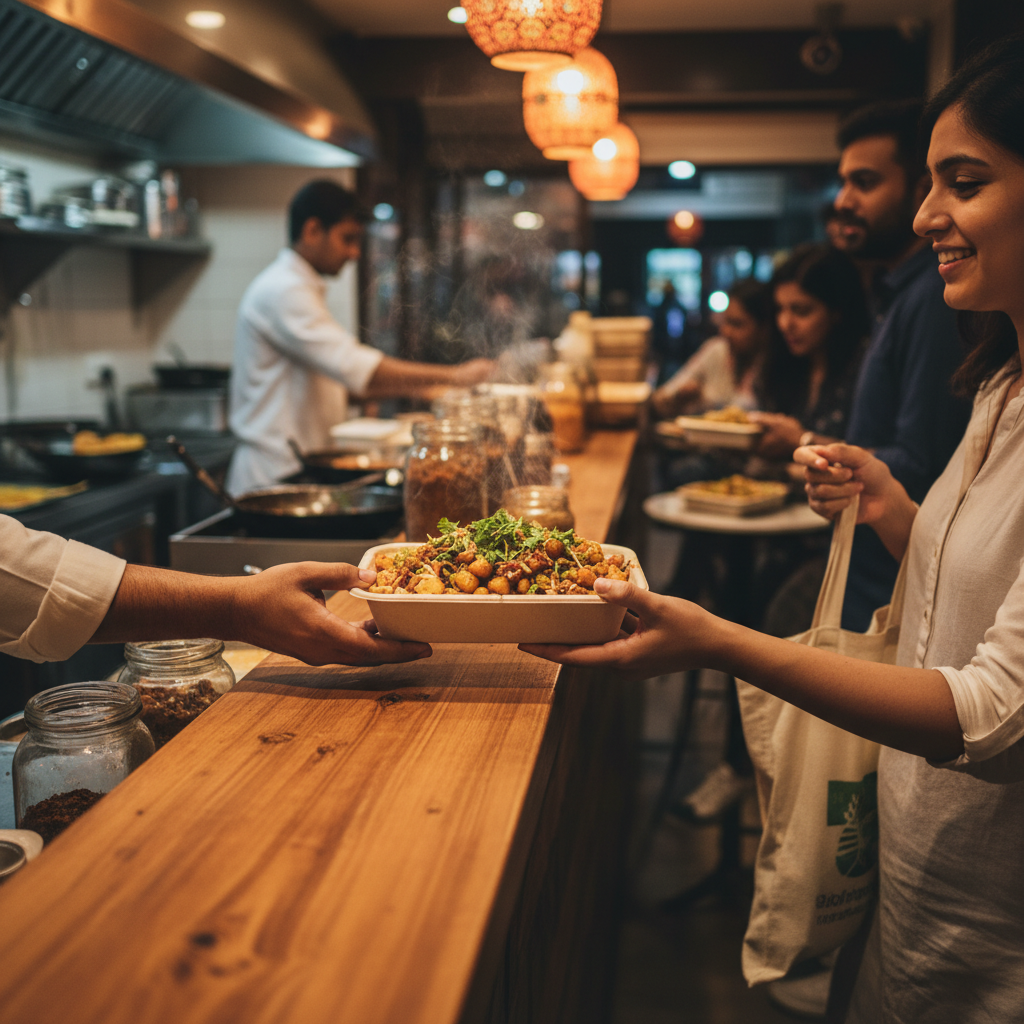
In Brampton, we’ve used chaat stations to delight mixed-diet groups, speed service at festivals, and pair savory snacks with premium mithai boxes. The flexible assembly format, 10–15 minute prep cycles, and bold flavors consistently earn repeat orders.
Scenario 1: Family festival open house (12–16 guests)
- Plan: 2.5 kg potatoes; 600 ml total chutneys; 500 ml whisked yogurt; sev and pomegranate for finish.
- Flow: fry in two 10–12 minute batches; hold in a 200°F oven; assemble to order.
- Pairing: samosa chana, gulab jamun, and a light beverage for contrast.
For inspiration on building a companion snack, peek at our samosa chana chaat guide — the texture logic mirrors aloo chaat perfectly.
Scenario 2: Wedding sangeet tasting (30–40 guests)
- Plan: set up a two-lane chaat bar with clear mild/medium/hot signage.
- Menu: aloo tikki chaat, papdi add-ins, and a dahi-forward bowl for kids.
- Gift moment: close with premium mithai boxes on a tiered display.
When celebrations call for tikki style, consider our made-for-layering Aloo Tikki Chaat and Aloo Tikki with Channa — both are built to handle toppings and hold their structure.
Scenario 3: Corporate afternoon social (50+ attendees)
- Efficiency: squeeze bottles increase service speed; pre-diced onions in 200–250 g batches reduce prep friction.
- Balance: offer a no-onion, extra-herb bowl; label allergens clearly.
- Sweet finish: pair with mini barfi selections for a bright, elegant exit bite.
Explore our chaat technique notes in papdi crispness secrets — the same airflow and moisture ideas keep potatoes crunchy under sauce.
Step-by-step: Classic aloo chaat at home
Boil, dry, crisp, and assemble. Parboil 500 g potatoes 12–15 minutes, steam-dry 3–5 minutes, then pan-fry 8–12 minutes to deep golden. Toss hot with salt and chaat masala, layer chutneys and yogurt in thin lines, and finish with onion, sev, pomegranate, and cilantro.
Ingredients (serves 2–3)
- Potatoes: 500 g, peeled and cubed 1–1.5 cm
- Yogurt: 60–75 g, whisked with a pinch of salt
- Tamarind-date chutney: 25–30 g
- Green chutney (cilantro-mint): 20–25 g
- Chaat masala: 2–3 g
- Red chili powder: 0.5–1 g, to taste
- Sev: 10–12 g
- Onion: 40–50 g, finely chopped
- Pomegranate: 20–25 g arils (optional)
- Cilantro: 5–7 g, chopped
- Neutral oil: 10–15 ml
- Salt: 5–7 g for boiling water, more to finish
Method
- Parboil: in salted water, 12–15 minutes until edges are tender.
- Steam-dry: drain; spread on a tray 3–5 minutes until surfaces look matte.
- Crisp: heat oil in a heavy pan; brown cubes 8–12 minutes, turning every 90 seconds.
- Season: toss hot potatoes with salt and chaat masala.
- Assemble: plate potatoes; zigzag tamarind and green chutneys; spoon yogurt.
- Finish: add onion, sev, cilantro, pomegranate; a final pinch of chaat masala.
Prefer tikki? Our kitchen walkthrough for aloo tikki chaat prep shows how to shape and brown patties that hold up under generous toppings.
Pairings and menu ideas
Combine aloo chaat with a hot bread-and-chana centerpiece and a sweet finish. Popular trios include chaat + Chole Bhature + gulab jamun or aloo tikki chaat + Amritsari Kulcha with Chana + assorted barfi. The interplay of textures and temperatures keeps guests satisfied.
- Chaat + Chole: chaat cleans the palate between rich, spicy chana bites.
- Tikki + Kulcha: crisp patties meet flaky bread — a festival favorite in our community.
- Sweet landing: mini barfi or gulab jamun gives a memorable, elegant close.
Curious how Delhi-style chole and breads shape the experience? Our culture notes in the street-food roundup share context and tips: North Indian street food culture.
Ordering and catering options
You can enjoy aloo chaat in store, for takeout, or as part of a catered spread in Brampton. For events, keep toppings modular and label heat levels. Pair chaat with premium mithai boxes for a complete, gift-ready experience that travels well.
Need a reliable savory-sweet arc for celebrations? We routinely anchor menus around chaat, a bread-and-chana hero, and a curated mithai selection. The flow feels light yet festive, and the assembly-style service adjusts to guest traffic in real time.
Local note: some community hubs coordinate tiffin-style meals and menus. For a snapshot of how organized Indian meal plans are presented in Canada, browse these third-party examples of Punjabi tiffin services, Gujarati tiffin services, and a Toronto-area tiffin meal plans page. These are not affiliated with us but illustrate portioning and rotation ideas.
Troubleshooting guide
If potatoes are soggy, reduce moisture and crowding. If flavors feel flat, increase acidity by 5 g tamarind or lime. If heat overwhelms, add 20–25 g yogurt and a pinch of sugar. For stalled service, move toppings to squeeze bottles and pre-portion herbs.
- Soggy crust: extend steam-dry to 5–7 minutes; cook in two batches.
- Under-seasoned: weigh salt; aim near 1–1.5% of potato weight.
- Too sweet: increase green chutney by 5 g and dust with roasted cumin.
- Messy plating: shallow bowls, tighter zigzags, add sev last.
- Slow line: pre-dice onions into 200–250 g tubs; switch to squeeze bottles.
Nutrition and diet notes
Aloo chaat is vegetarian and flexible. You can reduce oil by air-frying, increase protein by adding chana, and manage heat with chili control. Portion sizes around 250–300 g per person keep it snack-like; larger amounts turn it into a light meal.
- Oil management: air-fry to reduce added oil while maintaining 7–8 crisp index.
- Protein boost: add 80–100 g boiled chana per portion for satiety.
- Sodium awareness: season in small 1–2 g passes; taste between steps.
- Allergens: sev contains chickpea flour; check yogurt if dairy-sensitive.
For dairy-free guests, swap yogurt for a smooth, salted cashew cream and lean on tamarind for brightness. Keep the structure identical so plating and portions stay predictable.
Get help or order
Prefer to skip the stove? Visit The Mithai Maharaja in Brampton for fresh, made-to-order chaats and premium mithai. Our team can also assemble chaat stations for events, with labeled heat levels and vegetarian-friendly toppings.
Explore technique crossovers in our kitchen notes on papdi crispness and our stepwise aloo tikki playbook. They show, in pictures and minutes, how small adjustments keep crunch alive under sauce.
Frequently Asked Questions
These quick answers cover the most common aloo chaat questions: what it is, how to keep potatoes crisp, essential toppings, serving size, and the difference between cubes and tikki. Each tip focuses on fast, repeatable wins you can use immediately.
What is the key to crispy aloo chaat potatoes?
Dry the potatoes after boiling (3–5 minutes steam-dry), use a hot pan, and don’t crowd. Turn every 90 seconds until deep golden. Season while hot so salt and chaat masala cling evenly.
What are the essential aloo chaat toppings?
Tamarind-date chutney for sweetness and tang, green cilantro-mint chutney for freshness, whisked yogurt for cool creaminess, chaat masala for brightness, and sev for crunch. Onion, cilantro, and pomegranate are popular add-ons.
How is aloo tikki chaat different from classic aloo chaat?
Classic versions use crispy potato cubes; tikki versions use shallow-fried patties made from mashed potatoes (and often rice flour). Tikkis offer a bigger surface for sauce and hold up well under layering.
Can I make aloo chaat ahead for parties?
Yes. Parboil and dry potatoes up to 24 hours ahead and refrigerate. Crisp just before serving. Hold in a 200°F oven for up to 15 minutes. Keep toppings in squeeze bottles for speed and neat plating.
What’s a good serving size?
Plan 250–300 grams per person as a snack or side, or 350–400 grams for a light meal. For kids, 150–200 grams is usually plenty, especially with yogurt-forward bowls.
Conclusion
Aloo chaat shines because it’s quick, customizable, and built on contrast. Master steam-drying, hot pans, and fast assembly, and you’ll get repeatable crunch every time. In Brampton, The Mithai Maharaja can also prepare chaats and premium mithai pairings for your next celebration.
Build it at home with a 12–15 minute boil, 3–5 minute dry, and 8–12 minute crisp, then top in thin lines to maintain crunch. Or stop by our Brampton shop for fresh chaats, elegant mithai boxes, and friendly guidance from our fifth-generation halwai family.
Key takeaways
- Core formula: hot crisp potatoes + cool yogurt + tangy chutneys + crunchy sev.
- Time map: 12–15 minute parboil; 8–12 minute crisp; 2–3 minute assembly.
- Event-ready: modular toppings, labeled heat levels, squeeze bottles for speed.
- Local help: order chaats or book catering with The Mithai Maharaja in Brampton.
Ready to enjoy aloo chaat without the prep? Visit The Mithai Maharaja in Brampton for fresh chaats, premium mithai, and elegant, gift-ready boxes — or talk to us about a chaat station for your next gathering.