Barfi is a classic Indian dessert made from reduced milk solids (khoya or milk powder), sugar, and ghee, set into fudge-like squares and finished with nuts or saffron. It’s celebrated for its creamy bite and festival-ready presentation. In Brampton, barfi shines at weddings, holidays, and everyday gifting, especially when handcrafted by a fifth-generation halwai team.
By The Mithai Maharaja • Last updated: 2026-06-27
Above-the-fold: hook + table of contents
This guide shows exactly what barfi is, how it’s made, the main varieties, and the best ways to serve and gift it in 2026. You’ll get chef-tested steps, plating ideas, and Brampton-specific tips drawn from our fifth-generation halwai heritage.
Whether you say barfi or burfi, you’re talking about milk-based Indian fudge with incredible range. Use this quick table of contents to jump to what you need now.
- What is barfi?
- Why barfi matters for celebrations and gifting
- How barfi is made step-by-step
- Types, textures, and classic pairings
- Best practices for fresh, flavorful mithai
- Tools, ingredients, and resources
- Case-style examples from our Brampton kitchen
- FAQ: quick answers
Quick summary
Barfi is India’s iconic milk fudge. The essentials are milk solids, sugar syrup cooked to soft-ball, and pure ghee. Variants like pista, kaju, coconut, and besan change flavor and texture. Serve as bite-size squares, in gift boxes, or alongside chaats and thalis for a complete Indian experience.
Here’s the short version before we go deep:
- Definition: Barfi is a milk-based mithai set into squares or diamonds, often topped with pistachios, almonds, or saffron.
- Core method: Cook milk solids with a controlled sugar syrup, enrich with ghee, set, and slice.
- Popular flavors: Milk barfi, pista, kaju katli, coconut, besan, chocolate, and rose.
- Occasions: Weddings, Diwali, Eid, Raksha Bandhan, birthdays, and corporate gifting.
- Serve with: Chai, chaats, or a North Indian thali for contrast and balance.
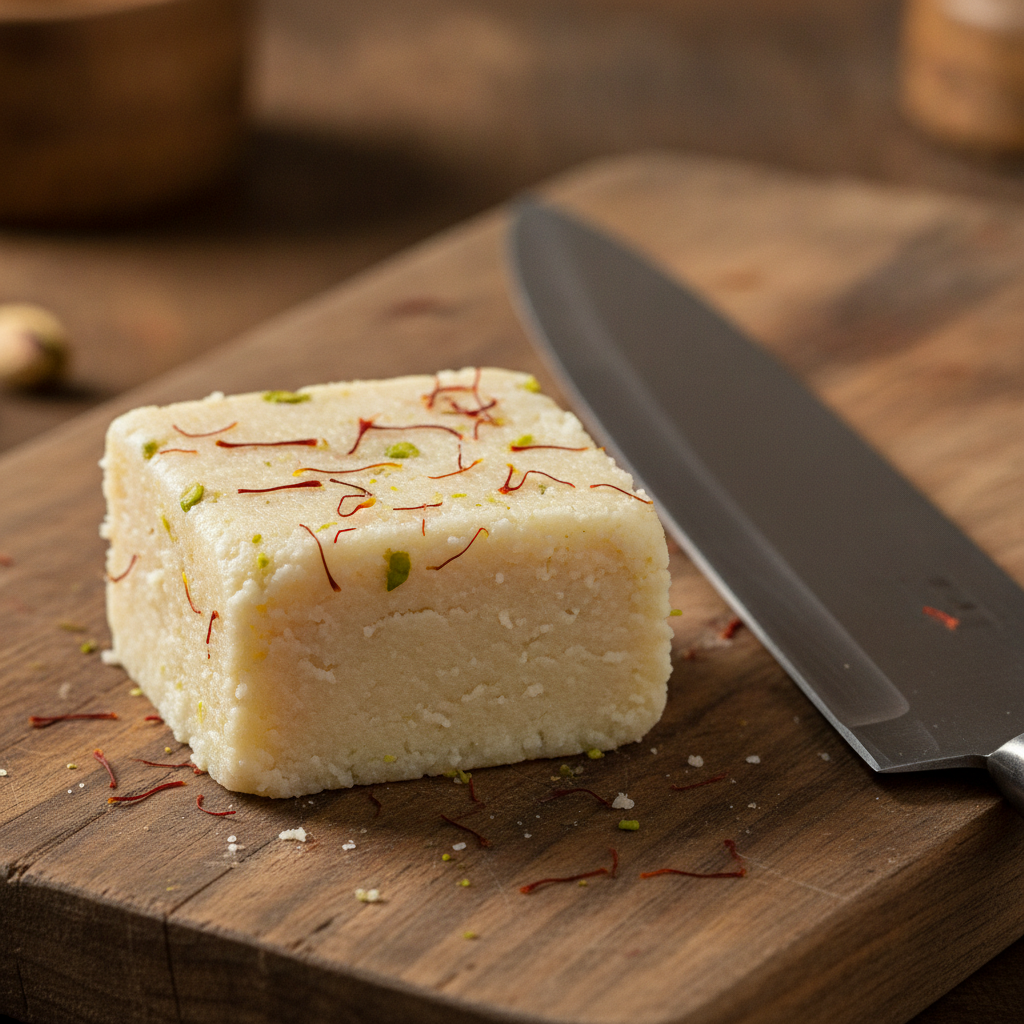
What is barfi (the Indian dessert)?
Barfi is a traditional Indian dessert made from milk solids, sugar syrup cooked to soft-ball stage, and ghee, then set into bite-size pieces. It’s dense yet tender, with flavors ranging from plain milk to pistachio, cashew, coconut, or chickpea flour.
At The Mithai Maharaja, barfi is part of our “Barfi Treasures,” reflecting five generations of halwai technique and premium desi ghee. In our experience, the best barfi balances clean dairy notes, a gentle sweetness, and a smooth, non-grainy set.
- Texture: Fudge-like, firm enough to slice, soft enough to melt.
- Base: Khoya (mawa) or milk powder; coconut and besan versions swap the base.
- Finish: Nuts (pistachio/almond), saffron, cardamom, and sometimes edible silver leaf.
Want a deeper flavor tour? Explore our quick primer on dairy-based confections in Indian milk desserts and browse focused flavor notes in our barfi varieties guide.
Why barfi matters for celebrations and gifting
Barfi anchors Indian celebrations because it stores well, slices neatly, and signals festivity. It’s ideal for elegant gift boxes, large events, and everyday chai moments, offering versatility, polished presentation, and a crowd-pleasing flavour profile.
Here’s why we see barfi at the center of Brampton festivities year-round:
- Presentation: Clean edges and vibrant toppings look stunning in gift-ready boxes.
- Portion control: Slices can be sized for samplers or generous servings without crumbling.
- Dietary-friendly: Many varieties are vegetarian and can be nut-free or gluten-free depending on type.
- Event-ready: Holds shape on buffets and passes well for tray service.
Gifting is part of our brand DNA, “Elegance in Every Box.” When you need something refined for weddings or corporate moments, pair premium mithai assortments with seasonal snacks for a thoughtful, complete experience. For a broader sweets overview, see our Indian sweets explained.
How barfi is made: step-by-step method
Great barfi depends on precise sugar syrup (soft-ball), well-roasted base, and pure ghee. Cook, fold, and set: control moisture, stir patiently, and rest the slab before slicing. This sequence yields a smooth, creamy finish and clean edges.
Below is the high-level process our halwais follow for milk barfi. Times vary by batch size and humidity, but the flow remains constant.
Ingredients (base method)
- Milk solids: khoya/mawa or milk powder
- Granulated sugar
- Water for syrup
- Pure desi ghee
- Flavorings: cardamom, saffron, rose water (optional)
- Toppings: pistachios, almonds, or coconut
Core technique (9 practical steps)
- Prep the pan: Line a rectangle tray with parchment; lightly grease.
- Warm the base: Crumble khoya or mix milk powder with a splash of milk to make a soft, lump-free base.
- Cook sugar syrup: Simmer sugar and water. Target a soft-ball stage to help set without grittiness.
- Combine: Slowly fold syrup into the warm base, stirring to avoid lumps.
- Enrich: Add ghee; keep stirring. The mixture will thicken and leave the pan’s sides.
- Flavor: Stir in cardamom or saffron for aroma and a golden hue.
- Set: Spread evenly in the lined tray; tap to release air pockets.
- Finish: Press nuts on top. Let cool until firm but sliceable.
- Portion: Cut into squares or diamonds with a sharp, warm knife.
Helpful guardrails
- Moisture control: Too much liquid leads to weeping; too little causes dryness.
- Heat management: Medium heat prevents scorching and maintains a smooth crumb.
- Rest time: A short rest sets structure for crisp, non-crumbly edges.
For adjacent mithai traditions and dough-based biscuits that pair nicely with barfi, see these curated Indian biscuit styles and this overview of Indian cookies.
Types of barfi, textures, and pairings
Barfi styles pivot on the base (milk, coconut, chickpea flour, or cashew) and the finish (nuts, saffron, rose). Each has a distinct texture, from ultra-smooth kaju katli to tender milk barfi and toasty besan varieties.
Here are varieties we craft regularly in Brampton, along with serving ideas.
Milk barfi (plain or saffron)
- Texture: Creamy, classic, lightly aromatic with cardamom or saffron.
- Serve with: Masala chai or a simple dessert sampler.
Pista (pistachio) barfi
- Texture: Slightly firmer bite with nutty richness and a soft green hue.
- Serve with: Thandai-inspired beverages or as a highlight in gift assortments.
Kaju katli (cashew fudge)
- Texture: Ultra-smooth, delicate, thin diamonds—sleek and elegant.
- Serve with: Festive trays for weddings and high-visibility events.
Coconut barfi
- Texture: Tender, lightly chewy, naturally aromatic.
- Serve with: Spicy chaats for sweet-heat contrast; see our focused coconut barfi guide.
Besan (chickpea flour) barfi
- Texture: Toasty, slightly granular crumb from well-roasted besan.
- Serve with: Classic chai breaks; deep dive in our besan barfi guide.
Comparative snapshot
| Type | Base | Signature texture | Great with |
|---|---|---|---|
| Milk barfi | Khoya/milk powder | Creamy, classic | Masala chai, thali |
| Pista | Milk + pistachio | Nutty, firm | Gift boxes |
| Kaju katli | Cashew | Ultra-smooth, thin | Weddings |
| Coconut | Desiccated coconut | Tender, aromatic | Chaats contrast |
| Besan | Chickpea flour | Toasty, granular | Tea breaks |
For flavor inspiration beyond barfi, browse our broader Indian desserts guide.
Best practices for consistent, premium barfi
Use pure desi ghee, control sugar stage, and roast your base properly. Keep heat moderate, stir steadily, and rest before slicing. These small disciplines produce the clean edges, glossy crumb, and true-to-tradition flavor people remember.
Ingredient quality
- Ghee purity: Drives aroma and mouthfeel; a hallmark of premium mithai.
- Fresh khoya: Minimizes graininess; milk powder versions benefit from careful hydration.
- Whole spices: Crack cardamom pods fresh; buy saffron from trusted vendors.
Process control
- Sugar stage: Aim for soft-ball behavior; undercooking risks weeping, overcooking makes it brittle.
- Roast to aroma: Besan and coconut need a fragrance cue (nutty for besan, toasty-sweet for coconut).
- Even set: Gently tap the tray; smooth with a greased spatula for uniform thickness.
Service and storage
- Cut smart: Warm, sharp knife; clean between cuts for perfect facets.
- Short-term: Room temperature service highlights texture; store airtight to prevent drying.
- Gifting: Mix two familiar flavors with one adventurous pick to delight every palate.
For regionally inspired snack pairings that travel well alongside mithai, see this round-up of popular Indian street foods.
Tools, ingredients, and resources we rely on
You don’t need a commercial kitchen to appreciate good barfi—just a heavy pan, spatula, lined tray, and patience. Quality ghee, fresh dairy, and aromatic spices do the rest. For gifting, sturdy boxes with separators keep pieces pristine.
Tools
- Heavy-bottom kadai or saucepan for even heat
- Silicone spatula or flat wooden spatula
- Rectangle tray with parchment lining
- Sharp chef’s knife for clean cuts
Ingredients
- Khoya or high-quality milk powder
- Pure desi ghee
- Granulated sugar and filtered water
- Cardamom, saffron, rose water (optional)
Resources
- For cookie-style accompaniments, explore Indian biscuits that complement mithai boxes.
- For crunchy add-ins, browse Indian cookie assortments you can pair with barfi selections.
Case-style examples from our Brampton kitchen
In Brampton, clients choose barfi for weddings, workplace gifting, and festival platters. Mixed assortments, two classics plus one bold flavor, consistently earn repeat requests. Pair with chaats or a thali to create a complete North Indian experience.
Wedding welcome boxes
- Brief: Elegant box for out-of-town guests.
- Solution: Milk barfi, pista barfi, and kaju katli in separators; cardamom aromatics and a saffron accent for color.
- Add-on: A mini-chai blend and a savory mix for balance.
Corporate holiday gifting
- Brief: Festive but universally appealing.
- Solution: Coconut barfi, besan barfi, and milk barfi with almond finish. Clean labeling and allergen notes help office sharing.
- Add-on: Include a QR code to a sweet story or brand message (on card, not on the food!).
Festival family platter
- Brief: Something for every generation.
- Solution: Milk barfi, pista, and rose-infused squares. Serve beside chaats for a sweet-spicy rotation.
- Add-on: Consider a North Indian dessert medley with gulab jamun and ladoo to round out the spread.
Local considerations for Brampton
- Plan ahead for festival surges, Diwali and Eid weeks see higher demand for premium mithai boxes and catering add-ons.
- Summer humidity can influence set time; allow a little extra rest before slicing to keep edges crisp.
- Weekend pickups move fastest mid-morning; schedule early for large assortments and wedding trays.
Serving ideas that elevate barfi
Cut smaller for samplers, larger for plated desserts. Contrast sweet with spicy snacks or serve barfi as a refined chai companion. For events, stack tiers by flavor and color to create a visual gradient guests remember.
At home
- Create a chai board: milk barfi, pista barfi, almonds, and dried rose petals.
- Make mini-diamonds for bite-size variety; dust with cardamom sugar.
- Pair with a light savory like aloo tikki for contrast.
At events
- Build color-coordinated tiers (green pistachio, white milk, off-white kaju).
- Label flavors clearly and separate nut-free options.
- Complement with chaats and a North Indian thali to balance the menu.
For a deep dive into flavor combinations across the barfi spectrum, check our focused best barfi flavors insights.
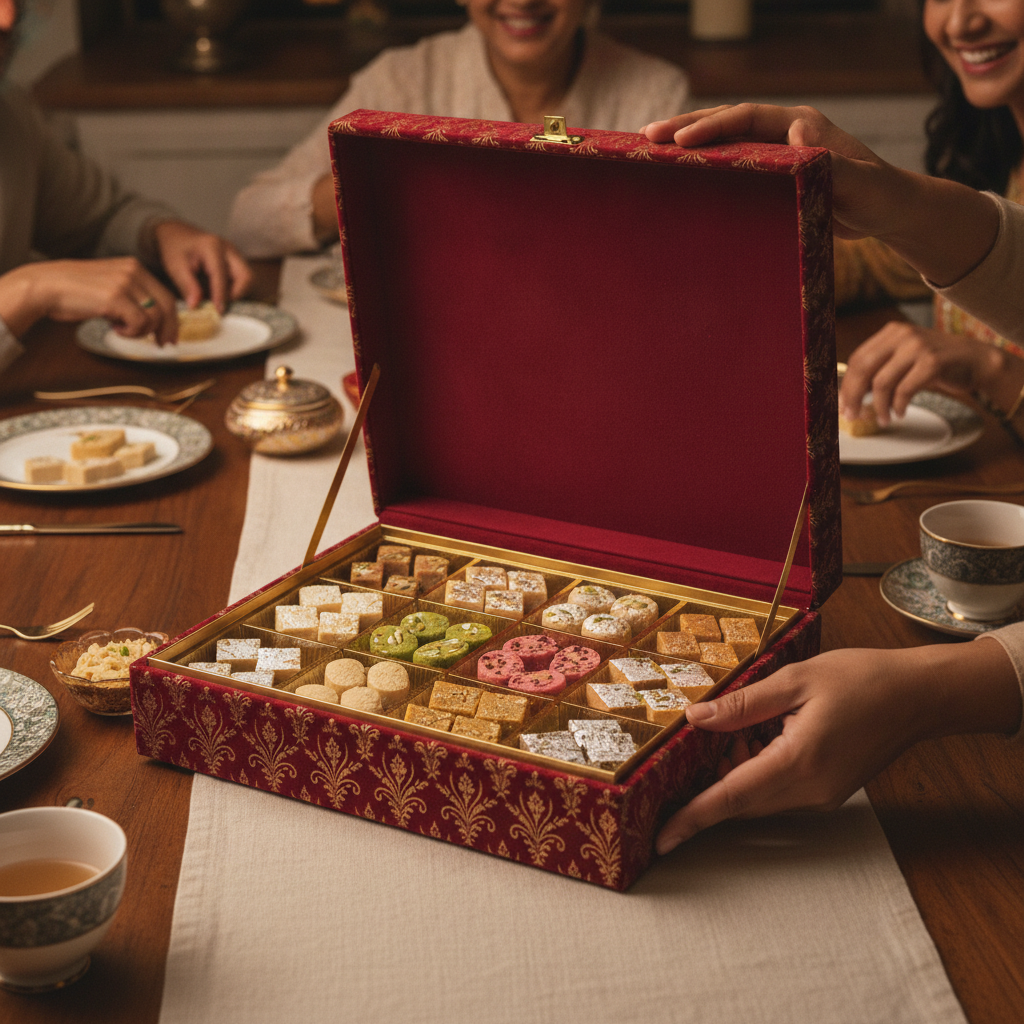
How barfi fits a complete Indian menu
Barfi finishes a North Indian menu with elegance and balance. Anchor your spread with chaats for spice, a thali for heartiness, and barfi for a clean, dairy-sweet finale that travels and plates beautifully.
- Start: Street-style chaats and snacks for crunch and tang.
- Main: A curated thali for comfort, color, and variety.
- Dessert: Barfi plus a syrup dessert (like gulab jamun) for a classic duo.
Explore companion reads: our Indian sweets guide and this overview of popular Indian desserts.
Planning a celebration in Brampton?
From intimate gifting to multi-day weddings, we craft premium barfi assortments with pure desi ghee and fifth-generation technique. Ask about flavor curation, allergen-friendly assortments, and elegant, ready-to-present boxes.
Let’s make your moment feel royal. Our team supports flavor selection, box design, and timing for pick-up or local coordination. We can also suggest savory pairings, chaats and snacks, that keep your menu balanced and memorable.
Frequently asked questions
Get quick, practical answers about barfi: ingredients, storage, nut-free options, and pairing ideas. These cover the basics so you can choose flavors and plan servings confidently.
What is the difference between barfi and kaju katli?
Barfi refers to milk-based Indian fudge in many flavors. Kaju katli is a specific cashew variety that’s ultra-smooth and usually cut into thin diamonds. Think of kaju katli as one elegant member of the broader barfi family.
How should I store barfi so it stays fresh?
Keep barfi in an airtight container. For short windows, room temperature preserves texture best. For longer windows, refrigerate in a sealed box and let it come to room temperature before serving to restore the soft, creamy bite.
Can I order nut-free or gluten-free barfi?
Yes—many milk barfi styles are naturally gluten-free, and nut-free versions are possible when toppings and cross-contact are controlled. Always check labels and let us know your needs so we can guide you to the right assortment.
What do I serve with barfi for balance?
Serve spicy chaats, savory snacks, or a North Indian thali for contrast. For beverages, classic chai or lightly spiced milk drinks complement dairy-sweet flavors without overpowering them.
Key takeaways
Barfi is India’s iconic milk fudge—versatile, elegant, and event-ready. Focus on quality ghee, proper sugar stage, and patient stirring. Serve in mixed assortments, pair with chaats or thalis, and package in sturdy, elegant boxes for memorable gifting.
- Choose 2 classics + 1 adventurous flavor for mixed boxes.
- Cut smaller for samplers, larger for plated desserts.
- Keep textures pristine with airtight storage and smart handling.
- Pair sweet with savory for a balanced spread guests love.
Where to go next
Ready to explore flavors? Start with milk barfi and add pista or coconut for contrast. Then browse deeper guides to refine your assortment and plan your celebration menu with confidence.
Continue your journey with in-depth reads on our blog: a focused look at barfi varieties, a broad survey of milk-based desserts, and our practical Indian sweets guide.