Coconut barfi is a traditional Indian sweet made by cooking coconut with milk solids and sugar until it sets into soft, fragrant squares. It’s popular for festivals and gifting because it keeps well, slices cleanly, and delights a crowd. In Brampton, The Mithai Maharaja crafts coconut barfi with authentic halwai methods for dependable texture and classic flavor.
By The Mithai Maharaja • Last updated: June 19, 2026
Above-the-Fold Overview + TOC
This guide shows you how to make coconut barfi with soft, sliceable texture, plus storage, gifting, and serving ideas. We cover fresh vs. desiccated coconut, khoya and condensed-milk methods, vegan swaps, and halwai best practices refined over five generations at The Mithai Maharaja in Brampton.
Here’s the thing: coconut barfi looks simple, but consistency comes from a few precise choices, coconut type, sugar concentration, and finishing temperature. We’ll explain those choices, then translate them into clear steps you can use at home or when ordering for celebrations.
- What coconut barfi is and how it differs from other barfi styles
- Why it’s a Brampton favorite for weddings, Diwali, and Raksha Bandhan
- Core methods: fresh coconut, desiccated coconut, khoya, condensed milk, vegan
- Texture tuning: moisture ratios, sugar stages, and pan choices
- Storage windows (24 hours to 10 days) and gifting etiquette
- How The Mithai Maharaja approaches consistency and presentation
For a broader tour of flavors, see our best barfi flavors in Brampton and our deep dive on Indian desserts with milk.
Quick Summary
Use a 1:1 coconut-to-dairy base ratio and reduce until a spatula leaves a clear trail for 2–3 seconds. Finish around 220–225°F (104–107°C), fold in cardamom, and set in a greased 8-inch pan. Chill 30–45 minutes, then slice 1.25-inch squares and garnish with pistachio.
- Primary ratio (home batch): 300 g coconut : 300 g dairy base : 180–220 g sugar
- Cook time: 18–30 minutes depending on moisture
- Yield: ~20–24 squares (3–4 cm each)
- Shelf life: 4–7 days refrigerated in an airtight container
What Is Coconut Barfi?
Coconut barfi is an Indian confection made by cooking coconut with sugar and milk solids until it sets into tender, sliceable squares. It’s prized for clean cuts, gentle chew, and cardamom-forward aroma, ideal for festivals, gifting, and party platters across Brampton’s vibrant South Asian community.
Coconut barfi belongs to the broader Indian “barfi” family: milk-forward sweets that set without deep frying. Compared with cashew or besan barfi, coconut barfi brings a juicy bite from coconut fiber and a snow-white to ivory color when made with desi ghee and cardamom.
- Core building blocks: coconut (fresh or desiccated), dairy base (khoya, milk, or condensed milk), sugar, ghee, cardamom.
- Setting style: cooked to a soft-fudge stage, then pressed 1–1.5 inches thick and cut after cooling 30–60 minutes.
- Flavor accents: saffron, rose, kewra; garnishes like pistachio dust, almond slivers, or edible silver leaf.
At The Mithai Maharaja, coconut barfi sits alongside our barfi treasures, kalakand, besan barfi, and more, offered in elegant, gift-ready boxes that fit weddings, corporate hampers, or everyday joy.
Local considerations for Brampton
- Plan festival orders early during Diwali or Raksha Bandhan week; local demand spikes and gift boxes move quickly.
- Winter dryness can firm barfi faster; keep lids sealed between servings to preserve moisture and aroma.
- For workplace celebrations around the GTA, request mixed barfi trays so guests can sample coconut, besan, and kalakand together.
Why Coconut Barfi Matters for Gifting, Events, and Everyday Treats
Coconut barfi balances approachability and elegance: it slices cleanly, travels well, and suits vegetarian diets. For Brampton families and event planners, it anchors festive assortments, pairing easily with ladoo and gulab jamun while fitting modern, gift-ready presentation from The Mithai Maharaja.
Why does this matter? Because the perfect mithai box isn’t only rich, it’s reliable. Coconut barfi’s fiber structure resists crumbling, so squares hold shape in transit and on buffet displays for 2–4 hours at room temperature. That’s a practical win for weddings and corporate events.
- Guest-friendly texture: soft chew, not sticky; easy to pick up with fingers or tongs.
- Flavor versatility: pairs with masala chai, rose falooda, and salted snacks like samosas or pakoras.
- Presentation power: pale base contrasts beautifully with green pistachio and rose petals.
In our experience supporting Brampton celebrations since opening locally, hosts often combine coconut barfi with kalakand for creamy notes and besan barfi for nutty depth. Mixed textures make a platter memorable and inclusive.
How Coconut Barfi Works: Texture, Moisture, and Sugar Stages
Great coconut barfi relies on moisture control. Reduce the coconut-dairy-sugar mixture until a spatula leaves a 2–3 second trail and the mass pulls into a soft ball. Finishing near 220–225°F (104–107°C) creates sliceable firmness without turning crumbly.
Think of three levers working together: coconut hydration, sugar concentration, and heat transfer. Fresh coconut adds moisture and aroma; desiccated coconut needs extra dairy or a splash of milk. Sugar concentrates as water cooks off, binding coconut and milk solids into a fine matrix.
- Trail test: drag a spatula; the base should part cleanly and hold for a slow 2–3 count.
- Soft-ball proxy: around 220–225°F (104–107°C) on a candy thermometer in small batches.
- Pan choice: a heavy-bottom 3–4 quart saucepan prevents hotspots and promotes even reduction.
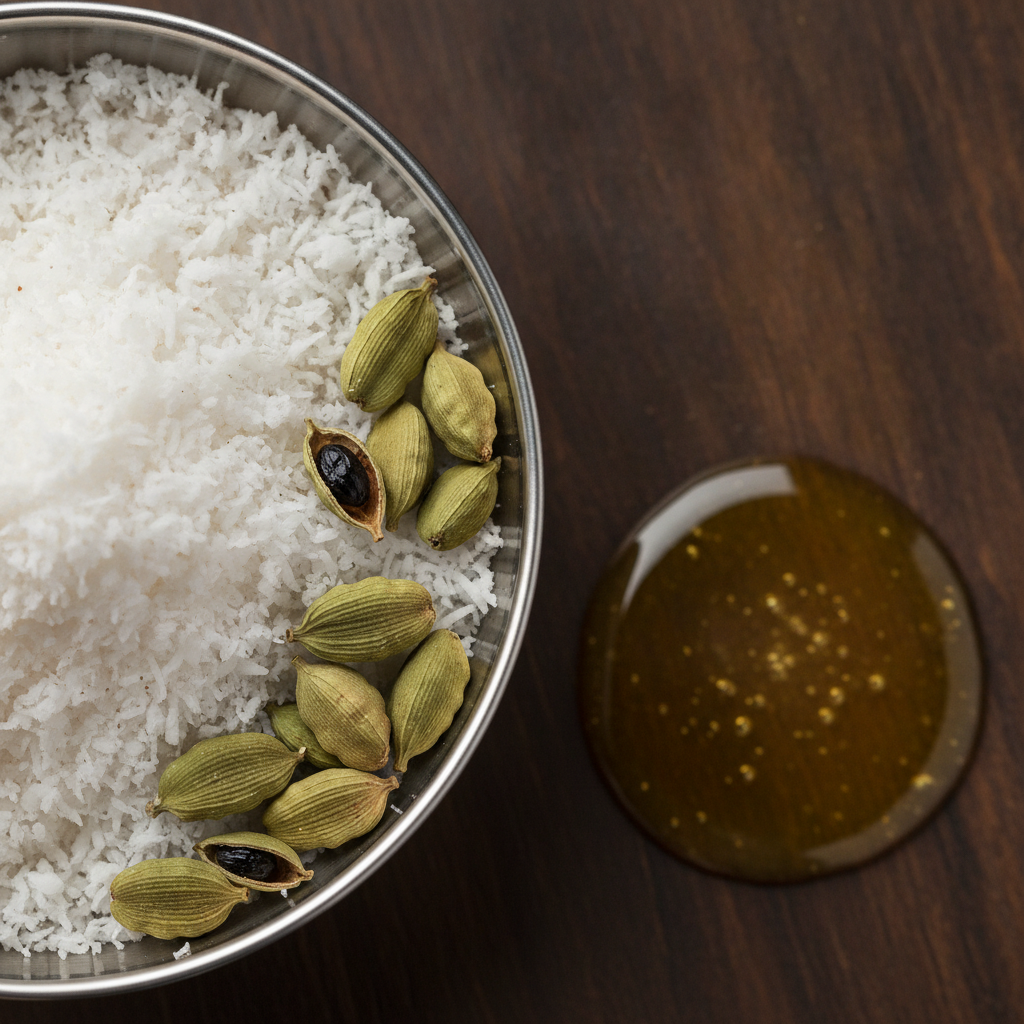
Finish with ghee for sheen (5–8 g per 300 g coconut base) and crush 3–4 cardamom pods for about 1 teaspoon of spice. Press into a lined 8-inch square pan to 1–1.25 inches thickness for tidy, giftable squares.
Types, Methods, and Approaches to Coconut Barfi
Choose your path by moisture and richness: fresh coconut for aroma, desiccated for consistency, khoya for dairy-forward bite, condensed milk for speed, or coconut milk for vegan. Match method to your timeline, tools, and audience preferences.
Five reliable methods
- Fresh coconut + milk: 300 g freshly grated coconut, 300 g whole milk reduced to 150–180 g, 180–220 g sugar. Aroma-packed and soft.
- Desiccated coconut + khoya: 300 g medium desiccated coconut, 250–300 g soft khoya, 180–200 g sugar. Consistent, dense, slice-perfect.
- Condensed milk shortcut: 300 g desiccated coconut, 380–400 g condensed milk, 10–15 g ghee. 12–15 minute cook; kid-friendly sweetness.
- Vegan coconut-milk base: 300 g desiccated coconut, 350–400 g full-fat coconut milk, 160–200 g sugar, 10 g neutral oil. Balanced coconut-on-coconut.
- Low-sugar aromatic: 300 g fresh coconut, 220–240 g evaporated milk, 120–160 g sugar, saffron and rose for lift.
Comparison at a glance
| Method | Key dairy | Cook time | Texture | Best for |
|---|---|---|---|---|
| Fresh coconut + milk | Whole milk | 25–30 min | Soft, aromatic | Festive gifting |
| Desiccated + khoya | Khoya/mawa | 18–24 min | Dense, sliceable | Display platters |
| Condensed milk | Condensed milk | 12–15 min | Fudgy, sweet | Quick parties |
| Vegan | Coconut milk | 18–22 min | Soft, creamy | Mixed diets |
| Low-sugar aromatic | Evaporated milk | 20–24 min | Light, floral | Tea pairings |
Want to explore beyond coconut? Our besan barfi guide and cashew barfi tutorial outline textures from nutty to ultra-smooth.
Best Practices from a Fifth-Generation Halwai
Measure by weight, cook in a heavy-bottom pan, and stop reducing when the mixture forms a soft mass that leaves a clean trail. Line the pan, press evenly to 1–1.25 inches, cool 30–45 minutes, and make decisive, straight-down cuts for clean edges.
Consistency and texture
- Weigh ingredients: 1–2% swings in sugar or moisture change chew noticeably.
- Stir rhythm: every 20–30 seconds early; near-constant in the last 5 minutes.
- Finish temp: target 220–225°F (104–107°C) for clean slices that aren’t dry.
Flavor and aroma
- Cardamom timing: add in the last 60 seconds to keep volatile aromas bright.
- Ghee sheen: 5–8 g per batch adds gloss without greasiness.
- Garnish contrast: pistachio dust, almond slivers, and rose petals add color and bite.
Storage and transport
- Cool before boxing: condensation dulls nuts; allow 30–45 minutes uncovered, then seal.
- Refrigerated shelf life: 4–7 days in airtight containers; bring to room temp 15–20 minutes before serving.
- Display windows: 2–4 hours at room temperature for buffet-style events.
Presentation matters as much as taste. Our team assembles gift-ready assortments that mix textures and colors—coconut, kalakand, and besan—with elegant dividers so every square arrives neat.
Tools and Resources You’ll Actually Use
Use a 3–4 quart heavy-bottom saucepan, silicone spatula, digital scale, and an 8-inch square pan lined with parchment. A candy thermometer improves repeatability, and airtight containers keep barfi fragrant for 4–7 days.
- 3–4 quart pan: prevents scorching as sugars concentrate.
- Digital scale: maintain 1:1 coconut-to-dairy ratios; weigh to the gram.
- Candy thermometer: track the 220–225°F finish for home batches.
- Silicone spatula: flexible edges keep corners from catching.
- Parchment and offset spatula: for even pressing and smooth tops.
Planning a mixed dessert spread? Explore complementary treats like classic biscuits and cookies for your tea station—browse curated selections of Indian biscuits and Indian cookies for pairing inspiration. For milk-dessert fans, don’t miss our guide to Indian desserts.
Step-by-Step: Soft, Sliceable Coconut Barfi
Combine coconut, dairy base, and sugar; cook on medium, stirring often, until the mixture thickens and leaves a 2–3 second trail. Finish with ghee and cardamom, press into a lined pan to 1–1.25 inches, cool 30–45 minutes, then slice and garnish.
- Prep: Line an 8-inch square pan. Weigh 300 g coconut, 300 g dairy base, and 180–220 g sugar. Lightly grease parchment.
- Combine: Add coconut, dairy base (khoya/milk/condensed), and sugar to a 3–4 quart pan; heat to a gentle simmer.
- Reduce: Stir every 20–30 seconds, scraping edges. Look for thicker ribbons after 12–15 minutes.
- Check: At ~220–225°F, the spatula leaves a clean trail; the mass pulls as a soft ball.
- Finish: Stir in 5–8 g ghee and 1 tsp freshly ground cardamom; mix 30–45 seconds.
- Set: Press evenly to 1–1.25 inches; tap the pan to release air pockets.
- Cool & slice: Rest 30–45 minutes; cut 1.25-inch squares with a sharp, warm knife.
- Garnish: Pistachio dust, almond slivers, or edible silver leaf for a festive finish.
Tip: If the batch crumbles, fold in 1–2 tablespoons of warm milk and press again. If it feels sticky, extend cooking 1–2 minutes while stirring constantly.
Case Studies and Real-World Examples
For Brampton events, coconut barfi shines in mixed boxes and display trays. We’ve seen it hold shape for 2–4 hours on buffet tables, pair effortlessly with chai, and photograph beautifully—key reasons hosts rely on it for weddings, festivals, and corporate gifting.
Mini case 1: Festival gifting in Brampton. A local family requested coconut-forward boxes for Raksha Bandhan. We built 24-piece assortments featuring coconut, kalakand, and besan, layered with pistachio and rose. Feedback: “clean cuts, balanced sweetness, traveled perfectly across the GTA.”
Mini case 2: Corporate Diwali trays. An office near Brampton ordered display trays to serve 80 guests. Coconut barfi anchored the spread next to samosas and chai. Trays looked pristine for the 3-hour window with steady foot traffic.
Mini case 3: Wedding welcome boxes. The couple wanted a vegetarian, nut-conscious mix. Coconut barfi provided the creamy base while we labeled components clearly. Guests highlighted the aroma and texture in post-event notes.
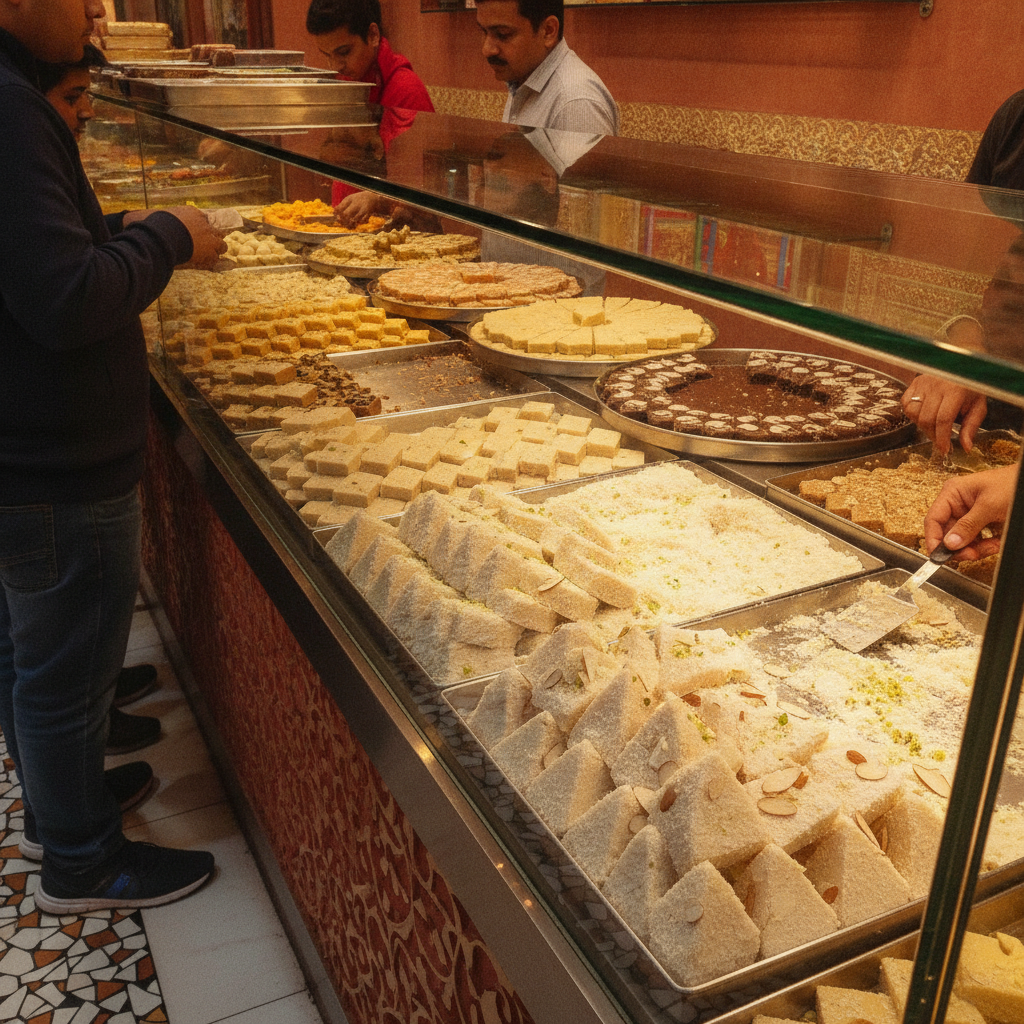
Ready to plan your own spread? Explore our barfi lineup in Barfi Varieties & Flavors and see how textures layer on a single platter.
Plan Your Coconut Barfi Box
Hosting in Brampton? Tell us your headcount, flavor preferences, and dietary notes. We’ll assemble elegant, gift-ready boxes or display trays with coconut barfi as the anchor and complementary mithai around it.
- Mix-and-match coconut, besan, kalakand, and seasonal picks.
- Vegetarian and egg-free selections for inclusive menus.
- Gift-ready packaging with dividers and festive accents.
Pair sweets with savory classics from our kitchen, think samosas, chaat, and North Indian snacks, to balance your table and keep guests satisfied.
Troubleshooting and Quick Fixes
If barfi crumbles, add 1–2 tablespoons warm milk and re-press. If sticky, cook 1–2 minutes longer. For greasy tops, reduce ghee by 2–3 g; for muted aroma, add cardamom during the final 60 seconds.
- Crumbly squares: under-reduced or too little sugar. Return to heat briefly; add a splash of milk.
- Sticky finish: excess moisture. Extend reduction with constant stirring.
- Oily surface: too much ghee or late-stage separation. Fold vigorously off heat.
- Dull flavor: cardamom added too early; refresh with a pinch on top.
- Uneven thickness: use an offset spatula; measure edges to 1–1.25 inches.
For style inspiration, treat trays like a color wheel, soft ivory coconut, green pistachio, ruby rose petals, so every box opens with a “wow.”
Pairings, Serving Sizes, and Display Ideas
Serve 2–3 coconut barfi squares per guest for dessert platters, or 1–2 squares in mixed boxes. Pair with masala chai or rose falooda, and add savory contrast like samosas or pakoras to balance sweetness and texture.
- Tea time: 1–2 squares with chai; add a salty biscuit for contrast, see curated dessert inspirations for variety.
- Event platters: 2–3 squares per guest alongside besan barfi and kalakand.
- Welcome boxes: mix coconut with a nut-free option for diverse groups.
For deeper genre context, our article on why Indian desserts are so loved explores flavor-building and tradition across mithai.
Related Articles and Next Reads
To round out your mithai knowledge, explore guides that cover milk-based sweets, nut-forward barfi, and texture techniques. Understanding these styles helps you order or make assortments that taste balanced and look beautiful.
Curious about adjacent styles? Dive into smooth nut confections in our cashew tutorial, explore the nutty warmth of besan barfi, or learn how milk desserts get their signature grain from slow reduction.
Coconut Barfi FAQ
These short answers address the most common coconut barfi questions, from coconut choices to storage and event planning. Each response is practical and easy to apply at home or when ordering from The Mithai Maharaja.
Which coconut is best for coconut barfi?
For the most aroma, use freshly grated coconut. For consistency and cleaner cuts, use medium desiccated coconut and add a bit more dairy. Both work; choose based on flavor vs. uniform texture.
How do I keep coconut barfi soft?
Stop cooking when a spatula leaves a 2–3 second trail and the mixture reaches roughly 220–225°F. Press to 1–1.25 inches and cool 30–45 minutes before sealing in an airtight container.
How long does coconut barfi last?
Refrigerated in an airtight container, coconut barfi stays fresh 4–7 days. Bring to room temperature 15–20 minutes before serving to restore aroma and gentle chew.
What should I pair with coconut barfi for a party?
Pair with masala chai and a savory bite like samosa or pakora for contrast. On dessert platters, combine coconut barfi with besan barfi and kalakand to vary texture and color.
Conclusion and Key Takeaways
Coconut barfi succeeds when you control moisture and finish at the right stage. Measure by weight, reduce to a clean spatula trail, and press evenly. For Brampton events, it’s the dependable anchor sweet, presented beautifully by The Mithai Maharaja.
- Use a 1:1 coconut-to-dairy base and finish near 220–225°F.
- Press to 1–1.25 inches; cool 30–45 minutes before slicing.
- Plan 2–3 squares per guest for events; refrigerate 4–7 days.
- Build assortments with coconut, besan, and kalakand for balance.
Planning a celebration in Brampton? We’ll help you choose flavors, pack elegant boxes, and coordinate pickup, so your sweets arrive picture-perfect and crowd-pleasing.