Buffet catering is a service format where guests serve themselves from an organized selection of hot mains, sides, salads, and desserts. It speeds service, suits mixed dietary needs, and scales from small gatherings to large events. In Brampton, The Mithai Maharaja pairs vegetarian North Indian dishes and premium mithai to deliver smooth, crowd-pleasing buffet experiences.
By The Mithai Maharaja • Last updated: 2026-06-24
Quick overview and table of contents
Use buffet catering to serve many guests quickly while keeping variety high and stress low. This guide covers menu design, service flow, dietary accommodations, and logistics, with real Brampton examples and action checklists you can use to plan your next event.
Here’s how this complete guide is organized so you can jump straight to what you need:
- What is buffet catering?
- Why buffet catering matters in Brampton
- How buffet catering works
- Types, methods, and menu approaches
- Best practices and checklists
- Tools and helpful resources
- Case studies and examples
- FAQ
- Conclusion + key takeaways
What is buffet catering?
Buffet catering is a self-serve meal service that arranges entrées, sides, salads, chutneys, and desserts on a central line so guests can portion their own plates. It increases speed, offers choice, reduces staffing needs, and adapts to varied preferences and dietary restrictions.
In our experience, buffet catering shines when your guest list is diverse and time is tight. You can showcase signature items without slowing the line, and hosts get more control over pacing and portions.
- Speed and flow: Multiple stations or a double-sided line keeps guests moving with minimal wait time.
- Menu breadth: Mix mains (e.g., chole, paneer, dal), fresh breads, salads, and a premium mithai spread.
- Dietary fit: Clear labeling and smart sequencing support vegetarian, vegan, nut-free, and gluten-conscious choices.
- Visual appeal: Uniform chafers, garnishes, and an elegant dessert table elevate the experience.
For Brampton hosts, The Mithai Maharaja offers a vegetarian-forward lineup, chaats, thalis, rice and curry combos, and desserts, so your buffet feels generous, organized, and authentically North Indian.
Why buffet catering matters in Brampton
Buffet catering matters because it balances volume, variety, and dietary needs, key for multicultural guest lists in Brampton. It lets you serve classic North Indian flavors alongside premium mithai, while maintaining efficient service and a celebratory presentation.
Here’s the thing: guests remember two moments, the first bite and the last. A warm, fragrant main and a memorable mithai finish create lasting impressions at weddings, festivals, and office gatherings.
- Match the moment: Chaats for cocktail hour, hearty mains for dinner, and a mithai finale for sweetness.
- Serve everyone well: Vegetarian standards plus vegan and nut-conscious picks help avoid exclusion.
- Keep logistics simple: Self-serve reduces staffing pressure and supports staggered arrivals.
- Present with polish: Coordinated platters and labeled stations make your event feel organized.
We’ve found that clear portion planning and an intuitive buffet map lower host stress dramatically. When lines are short and labels are clear, guests relax, so do you.
Local considerations for Brampton
- Build vegetarian-first menus with familiar North Indian flavors for broad appeal at family and community events.
- Account for seasonal patterns, lighter chaats and cool beverages in summer; heartier thali-style combos in cooler months.
- Plan pickups and staging around weekend peaks so hot items land on your buffet right on time.
How buffet catering works
Buffet catering works by sequencing a clear plan: confirm headcount and dietary needs, map stations, finalize the menu, coordinate delivery/staffing, and label items. On event day, set lines, replenish proactively, and close with an organized dessert service.
Use this practical flow to keep your event on schedule and your food at its best:
- Define the brief: Occasion, venue, guest count, timing, and dietary needs.
- Shape your menu: Choose chaats, mains, breads, rice, sides, and a mithai selection.
- Map the line(s): Salads and chaats first; mains at center; bread/rice near the end; mithai on a dedicated table.
- Plan serviceware: Chafers, serving spoons, ladles, tongs, and labels for allergens and spice level.
- Confirm logistics: Delivery window, setup area, staff roles, and replenishment cadence.
- Event execution: Hot-hold, replenish, maintain clean utensils, and guide traffic as needed.
- Dessert arc: Open mithai after mains to avoid early crowding and preserve presentation.
Want templates you can adapt? Review our catering overview for service options and coordination details that fit real events in Brampton.
| Phase | Owner | Key actions |
|---|---|---|
| Planning (2–3 weeks out) | Host + Caterer | Finalize headcount, dietary notes, menu, and delivery window |
| Pre-event (48–72 hours) | Caterer | Confirm order, prep schedule, equipment, labels, and staff |
| Setup (60–90 minutes) | Staff | Arrange stations, hot-hold mains, stage breads, set mithai table |
| Service (60–120 minutes) | Staff | Guide flow, replenish, and maintain clean utensils |
| Dessert + close | Staff | Open mithai, tidy stations, pack leftovers per host request |
For weddings and business lunches, see our focused pages on corporate catering and wedding buffet planning to align service with schedules, speeches, and presentations.
Types, methods, and approaches
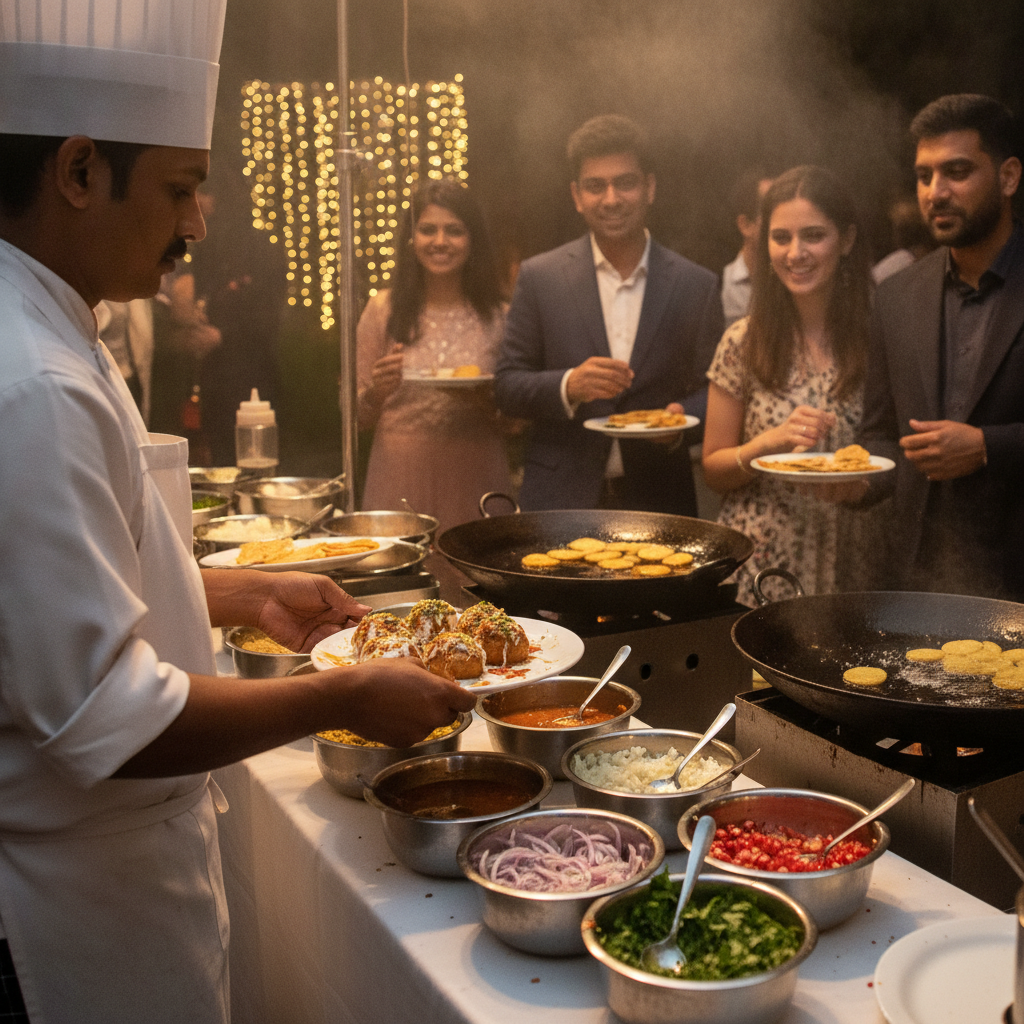
Choose from self-serve lines, double-sided stations, or staffed action stations like live chaat. Build menus around vegetarian mains, breads, rice, salads, and a signature mithai table. Use labels and sequencing to support vegan, nut-conscious, and gluten-aware guests.
Buffet formats are flexible. Your choice depends on venue space, guest count, and how interactive you want service to feel.
Service styles that work
- Single line: Efficient for small groups; easiest to staff and manage.
- Double-sided line: Doubles throughput in peak minutes without sacrificing choice.
- Two parallel lines: Best for larger headcounts to reduce wait time during openings.
- Action stations: Live chaat or tawa stations for freshness and theater at receptions.
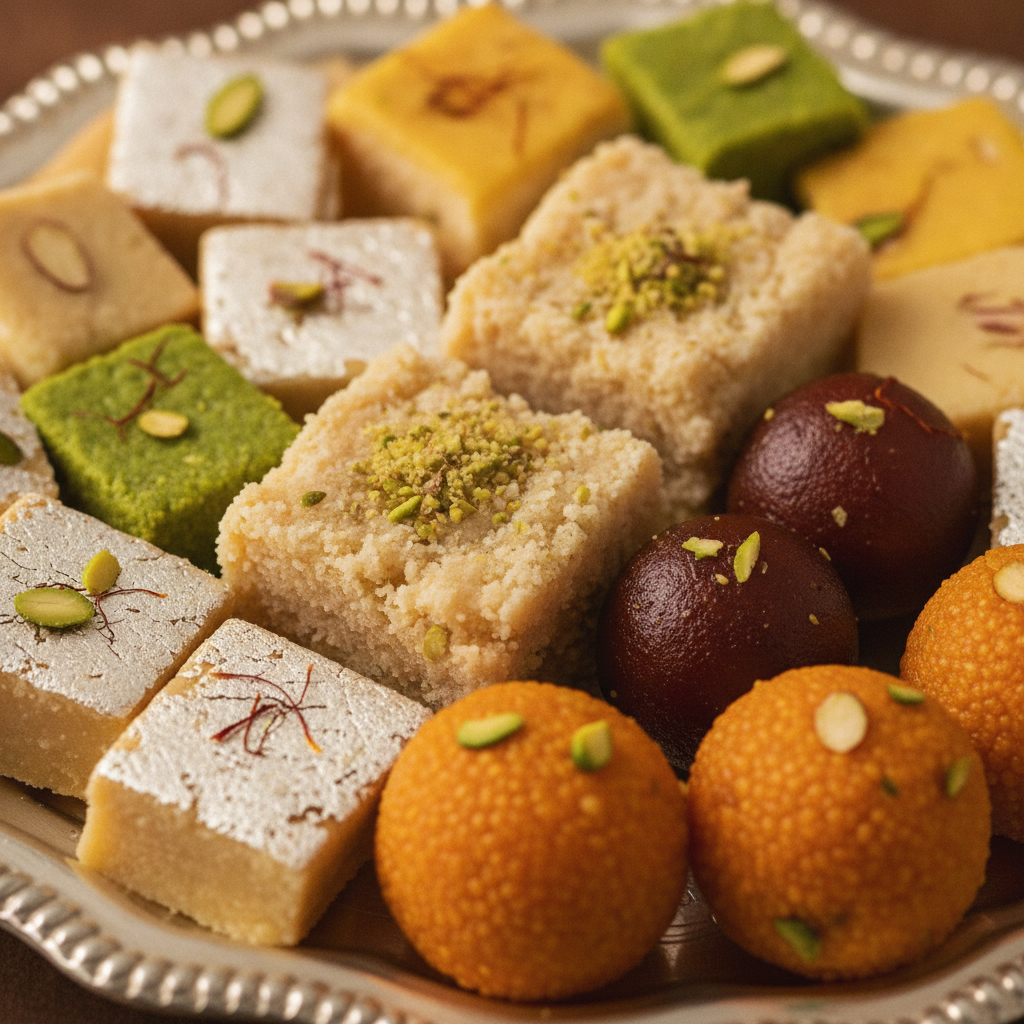
- Dessert showcase: A dedicated mithai table featuring barfi, kalakand, gulab jamun, and ladoo.
Menu building blocks
- Chaats & starters: Dahi bhalla, chaat papdi, aloo tikki chaat.
-
Hearty mains: Chole, paneer gravies, dal.
- Pair with Amritsari Kulcha or fresh naan for comfort and balance.
-
Thali logic: Combine rice, roti, one dry and one gravy sabzi, salad, and pickle for balance.
- Explore how we build variety in our thali guide.
- Mithai finale: Premium mithai curated for elegance in every box, barfi treasures, kalakand, halwa & pinni.
Prefer a vegetarian-only spread? That’s our specialty. We can also guide gluten-aware and nut-conscious selections and suggest clear signage to help guests choose confidently.
Best practices and checklists
Lock in buffet success by planning portions, sequencing stations, labeling allergens, and assigning replenishment roles. Use sturdy chafers, correct utensils, and a clean flow from starters to mithai so guests can navigate quickly and safely.
These practices come from hands-on events across Brampton, from family milestones to corporate town halls.
Menu and portion planning
- Anchor the menu: One signature chaat, two hearty vegetarian mains, breads, rice, and a curated mithai tray.
- Complementary textures: Balance crispy starters with creamy gravies and fresh salads.
- Flavor sequencing: Place milder dishes before spicier options to help guests pace themselves.
- Kid-friendly picks: Keep a familiar, milder option available for younger palates.
Labeling and dietary clarity
- Simple labels: Name, spice level, and key allergens help everyone choose comfortably.
- Separate tongs: Avoid cross-contact between gluten-containing breads and gluten-aware trays.
- Allergen-aware dessert: Offer clearly labeled mithai for nut-conscious guests when needed.
Line design and flow
- Start light: Salads and chaats at the beginning prevent crowding near hot mains.
- Heat at center: Gravies and proteins in the middle keep plates steady as guests serve.
- Carbs last: Breads and rice near the end reduce overflow and keep plates tidy.
- Dessert table: Separate mithai service so guests can return without blocking mains.
Staffing and roles
- One lead coordinator: A single point of contact avoids mixed signals on timing.
- Replenishment team: Assign one person to monitor each hot station consistently.
- Guest guidance: A friendly attendant can smooth traffic at the first 10 minutes of service.
Want a simple one-pager you can share with volunteers or venue staff? Our sweet shop guide explains our heritage-first approach that carries into catering setups too.
Tools and helpful resources
Successful buffet catering depends on reliable hot-holding, clean serving utensils, sturdy platters, and clear labels. Prepare backups for key tools and keep a simple checklist so nothing’s missed during fast-paced setups and quick turnarounds.
Essential equipment
- Chafing dishes: Uniform look, steady heat for gravies and dry sabzi.
- Serving utensils: Ladles for gravies, tongs for breads and fried items, spoons for chutneys.
- Plates and flatware: Sized to encourage sensible portions without overflowing.
- Service tableware: Heat-safe trays, risers for elevation, and garnishes for visual pop.
- Labels: Clear, legible tags for dish names, spice levels, and dietary notes.
Helpful checklists
- Staging map: Sketch stations and label the order of dishes before setup.
- Transport list: Trays, backups, and cleaning supplies for quick resets.
- Closing plan: Dessert timing, leftovers, and a short cleanup checklist.
If you prefer full-service coordination, explore our catering options or contact our team through the catering page to align gear with your venue’s setup.
Case studies and examples
Great buffet catering combines menu balance, clear labeling, and smooth timing. These Brampton scenarios show how vegetarian mains, live chaats, and premium mithai come together to serve large groups without stress, and with a sweet, elegant finish.
Wedding reception: 180 guests
- Plan: Cocktail hour chaats (dahi bhalla and chaat papdi), mains (chole, paneer, dal), breads, rice, and a showpiece mithai table.
- Setup: Two parallel lines for speed; mithai staged to open after speeches.
- Result: Fast flow, happy guests, and a celebratory dessert moment with barfi treasures and kalakand.
For a step-by-step playbook tailored to celebrations, review our wedding buffet planning guide.
Corporate town hall: 60 attendees
- Plan: Compact line with one chaat, two mains, rice, bread, salad, and a curated mithai tray.
- Setup: Single line near the AV area so teams can eat during presentations.
- Result: Quick service, minimal disruption, and a positive close with premium mithai.
For recurring office needs, our corporate catering page outlines menu patterns that stay consistent across sessions.
Festival pickup: community gathering
- Plan: Bulk trays for chaats, mains, and breads with clear labels for on-site volunteers.
- Setup: Self-serve line with signage; mithai opened after the main queue clears.
- Result: Easy transport and an authentic Delhi/Punjab taste that delights a wide audience.
Frequently asked questions
How do I choose the right buffet menu for mixed guests?
Start with familiar favorites, one signature chaat, two hearty vegetarian mains, breads, rice, and salads, then add a curated mithai tray. Sequence milder items first and clearly label spice levels. This lets guests pace themselves and ensures everyone finds something they love.
What’s the best way to keep lines moving?
Use a double-sided line for larger groups and keep light items (salads, chaats) at the start. Place breads and rice near the end to prevent plate overload. A friendly attendant guiding guests for the first few minutes can reduce bottlenecks significantly.
How should I handle dietary restrictions?
Plan vegetarian-first, then designate vegan, nut-conscious, and gluten-aware choices. Use separate tongs where cross-contact could occur and label items with clear notes. If in doubt, group similar items together and keep allergen-aware picks on a dedicated section of the line.
When should I open the dessert table?
Open mithai after the main line clears to avoid crowding and preserve presentation. Guests enjoy sweets more when they’re not balancing full plates. A dedicated table helps everyone return for a relaxed, celebratory finish.