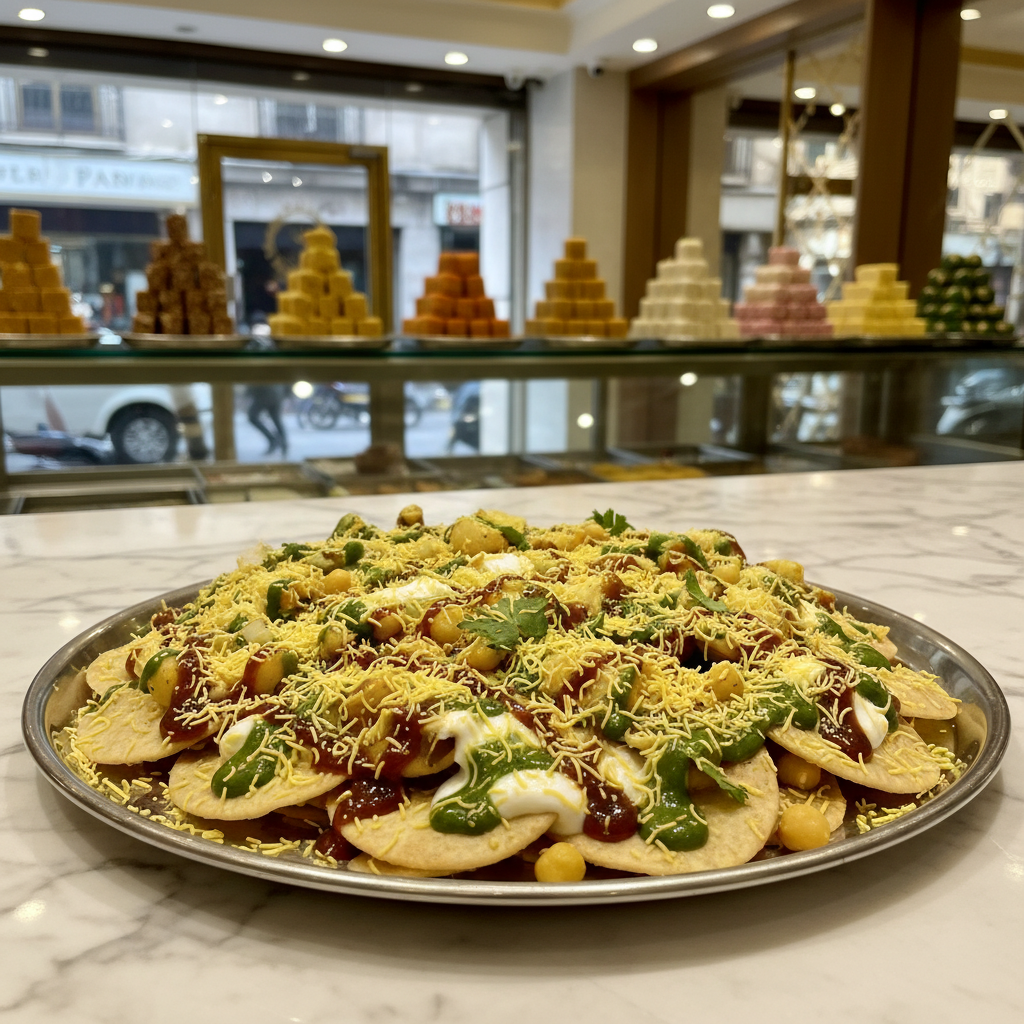
Chaat papdi is a North Indian street snack of crisp flour wafers topped with potatoes, chickpeas, cool yogurt, tangy-tart chutneys, and crunchy sev. It balances sweet, sour, spicy, and salty in each bite. In Brampton, The Mithai Maharaja prepares papdi chaat so the wafers stay crisp and the yogurt stays chilled for peak flavor.
By The Mithai Maharaja • Last updated: 2026-05-25
At a Glance
Papdi chaat is built on contrast: crispy papdi, soft potatoes and chickpeas, cool yogurt, and lively chutneys. To keep it perfect, assemble fast (under 5 minutes), chill the yogurt below 40°F, and portion chutneys sparingly so papdi stays crisp. This section summarizes the guide and links to each topic.
This complete guide is tailored to Brampton families, students, and event hosts who love North Indian chaats. You’ll learn how to keep papdi crisp, yogurt cool, and flavors balanced—plus how our fifth-generation halwai team plates chaat for dine-in, takeout, and catering.
- What chaat papdi is and why it’s beloved in Punjabi/Delhi food culture
- How to assemble in 7 precise steps with reliable ratios
- Variations: dahi papdi, bhalla papdi, and Delhi-style tweaks
- Best practices for crunch, temperature, and timing
- Tools, prep lists, and make-ahead ideas for parties in Brampton
- Mini case studies from The Mithai Maharaja kitchen
Local considerations for Brampton
- Plan for weekend rushes and festival seasons by ordering ahead; our Chaat Papdi is popular during community celebrations.
- For summer gatherings, keep yogurt under 40°F and assemble within minutes of serving to maintain food safety and texture during warm afternoons.
- For office events across the GTA, request separate components; our team labels chutneys and toppings so guests can customize heat and sweetness.
What Is Chaat Papdi?
Chaat papdi (also called papdi chaat) is a Delhi-Punjabi snack made with crisp wafers layered with potatoes, chickpeas, chilled yogurt, green and tamarind chutneys, and sev. The dish delivers sweet, tangy, spicy, and salty notes in seconds, making it a go-to crowd-pleaser for street stalls and home kitchens alike.
At its core, papdi chaat is about balance and speed. A typical plate uses 10–12 papdis, 1/2–3/4 cup boiled potatoes and chickpeas, 1/3–1/2 cup whisked yogurt, and 2–3 tablespoons total chutneys. Those ratios keep wafers crunchy while delivering enough sauce for flavor without sogginess.
- Base: Papdi (small, crisp wheat wafers) provide the crunch that defines the dish.
- Body: Boiled potatoes and chickpeas add soft texture and hearty bite; a 60:40 potato-to-chickpea split works well.
- Cooling element: Yogurt (salted, lightly sweetened) cools heat and carries spices.
- Flavors: Green chutney (cilantro-mint, spicy-herbal) and tamarind chutney (sweet-tart) deliver contrast; use roughly a 1:1 drizzle.
- Crunch + finish: Sev, pomegranate arils, and chaat masala add snap and brightness.
In our Brampton shop, papdi is kept dry and sealed, yogurt is held below 40°F, and chutneys are portioned in squeeze bottles for even, light drizzles. These simple controls support speed-of-service and consistent flavor for dine-in, takeout, and catering platters.
Want a deeper dive on potato-forward chaats? Explore our Aloo Chaat guide for a spice-first variant that spotlights pan-tossed potatoes.
Why Chaat Papdi Matters
Papdi chaat matters because it’s fast, vegetarian, and universally crowd-pleasing. It delivers four contrasting textures and flavors in one bite, scales for events, and fits many diets. In Brampton, it anchors snack tables at family gatherings, student meetups, and festival nights.
Chaat papdi solves a real hosting challenge: it satisfies mixed palates quickly. A standard 12–15 papdi plate can be shared by 2–3 snackers, while event trays scale to dozens of portions with consistent results. Because components are modular, you can accommodate nut-free, egg-free, and vegetarian preferences in one spread.
- Speed: A well-staged station assembles a portion in under 90 seconds, ideal for busy evenings.
- Balance: A 2:1 yogurt-to-chutney ratio keeps heat in check while allowing herb and tamarind notes to shine.
- Versatility: Add-ons like paneer cubes, sprouts, or extra sev let guests personalize texture and spice.
- Event-ready: Separate containers prevent sogginess; trays travel well across Brampton and the GTA.
For hosts who also want a warm, indulgent option alongside chaat, our Bhalla Papdi Chaat adds soft lentil dumplings soaked in yogurt for extra body—great for cooler evenings.
How Chaat Papdi Works (Assembly Mechanics)
Papdi chaat works because dry, crisp wafers meet wet, cool toppings at the last moment. Keep papdi sealed, yogurt chilled, and chutneys thin but controlled. Assemble fast—ideally in under 5 minutes—so the base stays crunchy while flavors meld.
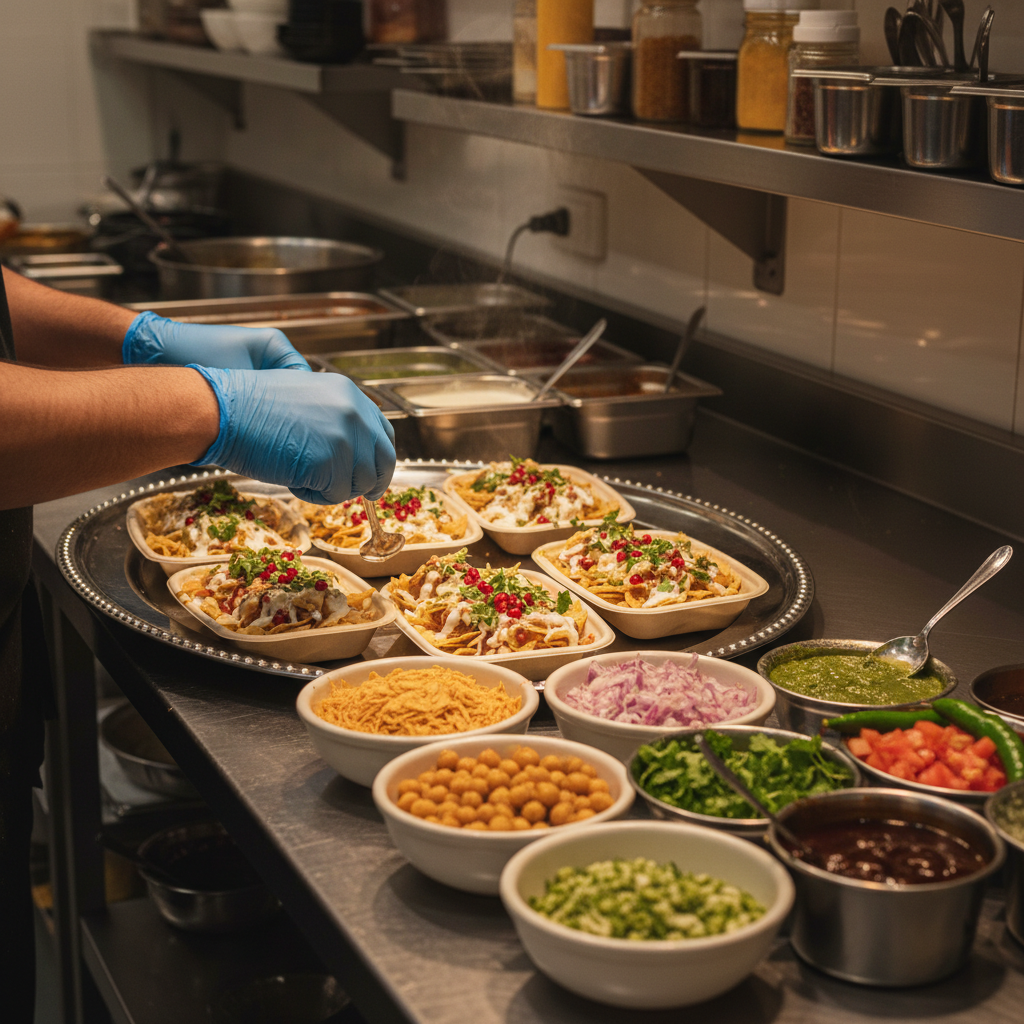
Here’s the assembly flow we train our team on in Brampton. The timing protects crunch, the ratios protect balance, and the order creates clean, photogenic plating for both dine-in and catering trays.
- Stage dry items (1 minute): Lay 10–12 papdis on a platter; keep extras covered to prevent moisture exposure.
- Add potatoes + chickpeas (1 minute): Use 1–2 teaspoons per papdi; aim for a thin layer, not a mound.
- Season lightly (15 seconds): A pinch of salt and chaat masala primes the base.
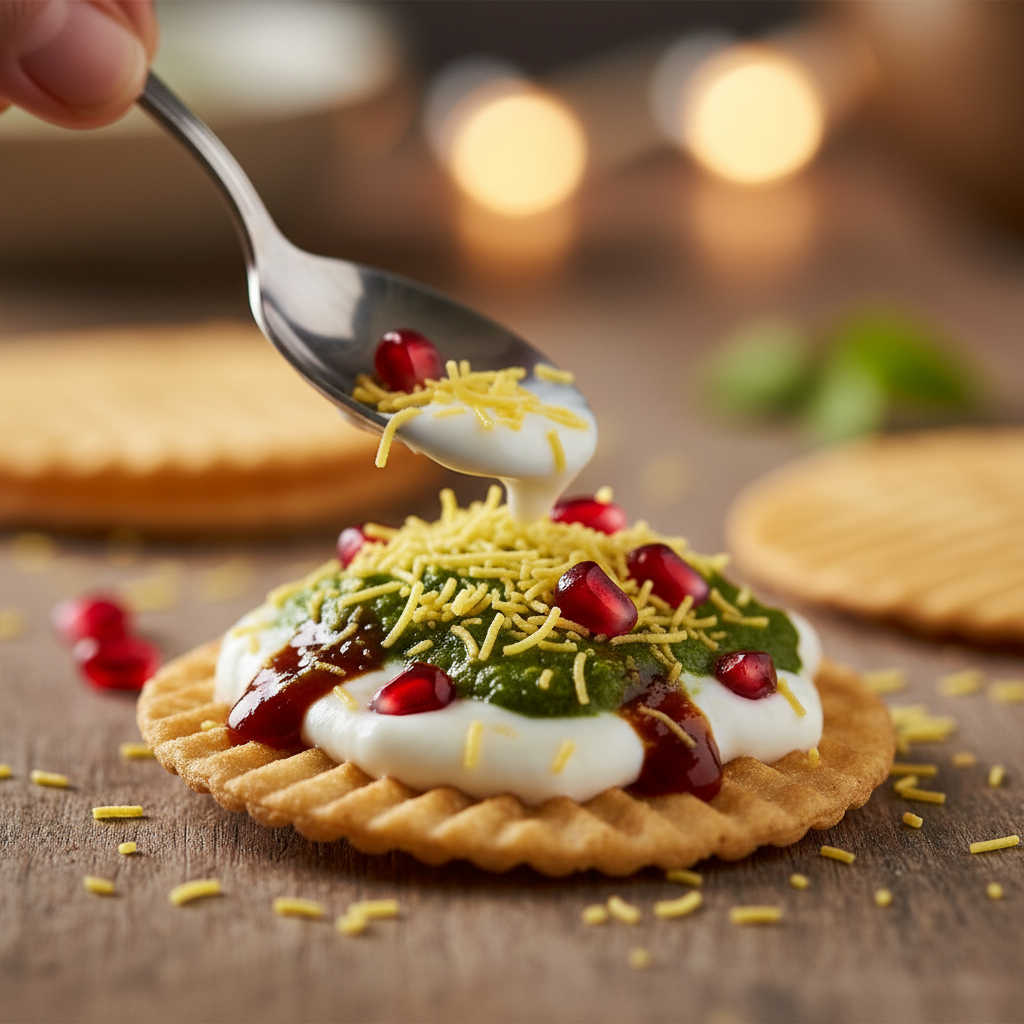
- Yogurt layer (30 seconds): Whisk until pourable; about 1–2 teaspoons per papdi maintains crunch.
- Green chutney (15 seconds): A quick zigzag for herb heat; thin to a drizzle consistency.
- Tamarind chutney (15 seconds): Mirror the green chutney with a sweet-tart line.
- Finish (30 seconds): Sev, pomegranate, micro cilantro; serve immediately.
Texture depends on viscosity. Yogurt should coat a spoon but still fall in a ribbon. Chutneys should pour in thin lines, not blobs. If either is too thick, the first bite can dislodge the toppings; if too thin, papdi softens too fast.
| Component | Ideal Texture | Target Amount (per papdi) | Common Pitfall |
|---|---|---|---|
| Papdi | Crisp, dry | 1 piece | Exposed to humidity before plating |
| Potato + Chickpea | Soft cubes + tender | 1–2 tsp | Overloading causes sogginess |
| Yogurt | Pourable ribbon | 1–2 tsp | Too much drowns crunch |
| Green Chutney | Thin drizzle | 1/2 tsp | Thick blobs, uneven heat |
| Tamarind Chutney | Thin drizzle | 1/2 tsp | Sticky pools, extra sweetness |
| Sev + Garnish | Crispy scatter | 1 tsp | Added too early, loses snap |
For a deeper dive into texture control and dough handling, see our internal notes in crisp papdi texture secrets, where we cover hydration, resting, and frying cues.
Types, Methods, and Regional Variations
Papdi chaat varies by region and preference: classic Delhi style emphasizes heat from green chutney, dahi papdi boosts yogurt for a milder profile, and bhalla papdi adds lentil dumplings for extra body. Each version adjusts yogurt and chutney ratios to preserve crunch and balance.
Classic Delhi Papdi Chaat
- Heat-forward: Extra green chutney and fresh chili give a lively kick.
- Acidity: Tamarind is bright but restrained; a light 1:1 with green chutney.
- Crunch timing: Assemble within 3–4 minutes of serving for street-style snap.
Dahi Papdi (Yogurt-Forward)
- Mild + cooling: Increase yogurt by ~25% and reduce green chutney slightly.
- Family-friendly: Great when mixed spice tolerances are expected.
- Event fit: Travels well because the extra yogurt buffers spice.
Bhalla Papdi (With Lentil Dumplings)
- Hearty bite: Soft bhallas soak up yogurt; finish with extra sev for contrast.
- Seasonal pick: Popular in cooler months and late evenings.
- Menu note: Try our in-house Bhalla Papdi Chaat for a ready-made version.
Prefer a potato-first snack? Our Aloo Tikki Chaat steps article covers crisping techniques, spice layering, and plating—a natural sibling to papdi chaat.
Best Practices for Crunch, Cooling, and Consistency
Best practice is simple: protect crunch and control moisture. Keep papdi sealed, whisk yogurt until pourable, thin chutneys to drizzle, and assemble last-minute. For events, portion toppings separately and label heat levels so guests can customize without compromising texture.
Protect the Crunch
- Humidity control: Store papdi in airtight containers with a small silica pack; open only when plating.
- Right order: Dry items first (papdi, potato, chickpea), then wet (yogurt, chutneys), then garnish.
- Light hands: Use squeeze bottles and a teaspoon to avoid heavy pours.
Keep It Cool
- Chill line: Hold yogurt below 40°F; keep a nested bowl over ice for outdoor events.
- Thin smartly: Add 1–2 tablespoons cold water per cup of yogurt to reach ribbon stage.
- Stagger plating: Work in 10–12 papdi batches so the first bite stays snappy.
Consistency for Events
- Label sauces: “Mild,” “Medium,” “Hot” keeps queues moving and reduces mistakes.
- Pre-portion dry: Small deli cups with potato-chickpea mix speed service by ~30–40 seconds per plate.
- Garnish late: Add sev at the pass to preserve texture.
For a chaat menu that travels beautifully with papdi chaat, pair it with Samosa Chana Chaat and warm mains like chole. Guests love jumping between hot and cold textures.
Tools, Ingredients, and Prep Resources
You don’t need fancy tools—just airtight storage, squeeze bottles, mixing bowls, and serving platters. Prep potatoes and chickpeas a few hours ahead, chill yogurt, and portion chutneys. For parties, pack components separately and assemble in small waves to keep papdi crunchy.
- Core tools: Airtight containers, mixing bowls, ladles, and squeeze bottles for neat drizzles.
- Serving ware: Flat platters so liquids don’t pool; sloped plates encourage runoff.
- Make-ahead: Boil potatoes and chickpeas up to 24 hours ahead; cool quickly and refrigerate covered.
- Flavor control: Keep chaat masala, Kashmiri chili, and roasted cumin in small shakers for precise pinches.
- Guest options: Offer chopped onions, cilantro, and extra sev for custom textures.
Hosting a large event? Our catering team can stage a chaat station with labeled components and a service rhythm tuned to your guest count. For context on how regional tiffin-style operations schedule meals and rotations, see this overview of Punjabi tiffin services operating models.
Papdi Chaat vs. Other Favorites
Papdi chaat is crisp and cool. Aloo chaat is pan-tossed and spice-forward. Dahi bhalla is soft and yogurt-soaked. Each snack hits a different texture and heat level, so pairing two or three creates a complete chaat spread for mixed preferences.
| Dish | Primary Texture | Heat Level | Signature Element | Best Pairing |
|---|---|---|---|---|
| Papdi Chaat | Crisp + cool | Mild–Medium | Crunchy papdi, tamarind-green chutneys | Hot chole for contrast |
| Aloo Chaat | Crispy potatoes | Medium–Hot | Pan-tossed spiced potatoes | Dahi drizzle for balance |
| Dahi Bhalla | Soft + creamy | Mild | Lentil dumplings soaked in yogurt | Extra sev for snap |
Explore our yogurt-forward option Bhalla Papdi Chaat, or jump to potato-led notes in our Aloo Chaat guide for spice variation.
Case Studies and Real-World Examples
We’ve plated papdi chaat for family dinners, office socials, and wedding sangeets in Brampton. The winning pattern is consistent: separate components, clear labels, and fast final assembly. The result is repeatable crunch, controlled heat, and happy guests.
Family Birthday (25 Guests)
- Setup: Two platters, each staged with 60 papdis (five waves of 12) to avoid sogginess.
- Controls: Yogurt over ice; chutneys in squeeze bottles.
- Outcome: Under 2-minute plating per wave, zero leftovers of sev and tamarind.
Office Social (40 Guests)
- Setup: Dry components pre-portioned in deli cups; garnish containers at the pass.
- Controls: “Mild” and “Hot” green chutney lines to manage heat quickly.
- Outcome: Queue time cut by ~30%; guests paired chaat with tea and samosas.
Wedding Sangeet (120 Guests)
- Setup: Two parallel stations; runners refreshed papdi and sev every 10 minutes.
- Controls: Microgreens and pomegranate reserved for VIP tables to keep plating pace.
- Outcome: Consistent crunch across a 90-minute service window; strong feedback on balance.
If you’re coordinating food across multiple vendors, scanning how other regional providers design recurring meal plans can help with timing. Here’s a snapshot of how one group structures tiffin meal plans for predictable service windows.
Food Safety, Holding, and Transport
Keep yogurt below 40°F and avoid holding assembled papdi longer than 10–15 minutes. Transport components separately in sealed containers, and assemble in small waves at the destination. This protects crunch and supports safe, enjoyable service for guests.
- Cold chain: Yogurt and cooked potatoes/chickpeas should travel in chilled containers; use ice packs for trips over 20 minutes.
- Two-hour window: Perishable dairy should not sit at room temperature beyond two hours; under an hour in hotter conditions.
- Transport logic: Keep papdi and sev sealed and high in the stack so condensation from cold items cannot migrate upward.
- Assembly cadence: Plate 10–12 papdis at a time; refresh every 5 minutes at large events.
For broader perspective on how snack items fit within fast-casual menus across the GTA, here’s an example of a regional operator listing a simple samosa item that often appears alongside chaat-style sides.
Planning a Chaat Table in Brampton?
Tell us your guest count, spice preferences, and timing. We’ll stage papdi, yogurt, and chutneys in separate containers, label heat levels, and recommend pairings like samosa chana chaat or bhalla papdi for balance.
Our team at The Mithai Maharaja builds chaat tables for family get-togethers, student socials, corporate mixers, and weddings. Share headcount, duration, and any dietary notes. We’ll suggest a mix of cool papdi chaat with warm Punjabi mains so guests can graze without lines or soggy plates.
Explore menu details and availability on our Chaat Papdi page, and browse yogurt-forward options like Bhalla Papdi Chaat. For spice lovers, our Aloo Chaat guide explains crispy potato techniques that pair beautifully with papdi chaat.
Frequently Asked Questions
These quick answers address the questions we hear most in Brampton about papdi chaat—covering assembly timing, make-ahead storage, and heat control. Each answer is concise and designed for fast planning.
How far in advance can I prep components for chaat papdi?
Prep potatoes and chickpeas up to 24 hours ahead, cool promptly, and refrigerate in sealed containers. Whisk and chill yogurt the same day you’ll serve. Keep papdi sealed and dry until assembly, which should happen in small waves just before guests eat.
What’s the best way to keep papdi crunchy for takeout?
Pack papdi, potato-chickpea mix, yogurt, chutneys, and garnishes separately. Add a small sev packet. Assemble right before eating. If you must pre-assemble, use slightly less yogurt and chutney and eat within 10–15 minutes.
Is papdi chaat spicy?
It’s typically mild to medium. Heat mainly comes from green chutney and optional chili. To keep it mild, emphasize yogurt and tamarind, and offer the green chutney on the side so guests can add heat to taste.
What should I serve with papdi chaat for a complete spread?
Pair it with a warm option and a yogurt-forward dish for contrast. Popular combos include samosa chana chaat, dahi bhalla or bhalla papdi, and hot chole. Sweeten the finish with premium mithai like gulab jamun or barfi.
What to Try Next
Round out your chaat repertoire with potato-led aloo chaat, lentil-soft dahi bhalla, and hearty samosa chana chaat. These classics pair naturally with papdi chaat, letting guests toggle between hot and cold textures and a range of heat levels.
- Learn potato crisping in our Aloo Chaat guide.
- Master yogurt balance in Bhalla Papdi Chaat.
- Build hearty plates with our Samosa Chana Chaat notes.
Conclusion and Key Takeaways
Great papdi chaat is about crisp papdi, cool yogurt, and restrained chutneys assembled fast. Stage components separately, drizzle with precision, and plate in small waves. With this rhythm, your chaat stays snappy, balanced, and event-ready.
- Assemble last: 10–12 papdis per wave protect crunch.
- Control moisture: Pourable yogurt and thin chutneys prevent sogginess.
- Label heat: Offer mild and hot lines for smooth service.
- Pair smartly: Balance cool papdi chaat with one warm, hearty dish.
Next step: Plan your Brampton chaat table with The Mithai Maharaja. Browse our Chaat Papdi, skim our crunch guide, and lock in dates early for festivals and family milestones.