Dry fruit laddu is a no-added-sugar Indian sweet made by binding roasted nuts and dried fruits with warm spices and a touch of ghee. In Brampton, The Mithai Maharaja crafts premium, gift-ready versions, while this guide shows you how to make dry fruit laddu at home with consistent texture, clean ingredients, and elegant presentation.
By The Mithai Maharaja • Last updated: 2026-06-05
At a Glance: Summary & Table of Contents
This complete guide explains what dry fruit laddu is, why it’s beloved in Brampton celebrations, and how to make it step by step. You’ll learn ideal ingredient ratios, roasting and binding techniques, storage rules, allergen labeling tips, and elegant boxing ideas, plus pro examples from our fifth-generation halwai craft.
Use this section to jump straight to what you need:
- What is dry fruit laddu?
- Why it matters for health, festivals, and gifting
- How it works: ingredients, ratios, and technique
- Types and methods you can try
- Best practices (shelf life, allergens, storage)
- Tools and resources
- Case studies and real examples
- FAQ
What Is Dry Fruit Laddu?
Dry fruit laddu is a bite-size Indian sweet made by roasting and crushing nuts, then binding them with dates (or jaggery), ghee, and spices like cardamom. It’s chewy, crunchy, and travel-friendly, making it perfect for gift boxes, festivals, and everyday snacking without refined sugar syrup.
In the mithai tradition, dry fruit laddu refers to truffle-like balls built from a base of almonds, pistachios, cashews, and sometimes walnuts, with sticky dried fruits (dates, figs, raisins) providing natural sweetness and structure. Cardamom rounds out aroma, while a teaspoon or two of warm ghee adds silkiness and helps the mixture hold shape.
Why does this matter? Because you get balanced energy without having to rely on syrup. Nuts contribute protein and unsaturated fats, while dates supply potassium and fiber. According to American Heart Association guidance, including a variety of nuts can support heart health as part of an overall eating pattern.
Allergen note: Tree nuts are common allergens. For gifting and office trays, clear labels matter. According to the U.S. Food & Drug Administration, the major food allergens must appear on labels, important when you curate mixed mithai boxes for events.
Why Dry Fruit Laddu Matters for Brampton Celebrations
Dry fruit laddu travels well, fits vegetarian diets, and packs clean energy, ideal for weekend gatherings, wedding favors, and corporate gifting in Brampton. The pieces stack neatly, resist syrup leaks, and pair beautifully with classics like boondi laddu in mixed assortments.
For families across Brampton and the GTA, planning sweets that please a crowd can be tricky. Dry fruit laddu helps because it’s:
- Refined-sugar-light: Sweetness comes primarily from dates or figs.
- Sturdy for transport: No syrup drip; pieces keep their shape in sleeves and tins.
- Vegetarian and festival-friendly: A natural fit for puja trays and return favors.
- Customizable: Nut, seed, and spice combinations adapt to taste and dietary needs.
At The Mithai Maharaja, our fifth-generation halwai lineage emphasizes premium desi ghee, balanced roasting, and polished presentation. For a well-rounded gift box, we often pair dry fruit laddu with festive favorites, think a bright, classic boondi laddu, a fragrant ghee ladoo, and one smooth milk-based barfi. That mix covers chewy-crunchy, syrupy-soft, and melt-in-the-mouth textures.
Gifting reality check: Most hosts plan for 2–3 pieces per guest at receptions. Laddu sized at 20–25 grams each tends to satisfy without overwhelming, fits standard paper cups, and stacks 2–4 layers per box with dividers.
How Dry Fruit Laddu Works: Ingredients, Ratios, and Technique
Use a 2:1 ratio of roasted nuts to sticky dried fruit by volume. Pulse nuts to a coarse crumb, warm the dates into a paste, then fold together with cardamom and 1–2 teaspoons ghee. Portion at 20–25 grams, roll, and rest 30–60 minutes for structure.
Here’s a reliable framework you can repeat batch after batch:
- Core ratio: 2 parts mixed nuts (almonds/pistachios/cashews) : 1 part dates/figs.
- Roast window: 300–325°F (149–163°C) for 8–12 minutes; cool 10 minutes.
- Grind texture: Pulse to a coarse meal, visible flecks improve mouthfeel.
- Binder: Warmed date paste (microwave 90–120 seconds or stovetop on low).
- Fat: 1–2 teaspoons ghee for silk and cohesion; optional but helpful.
- Aroma: 1/2–1 teaspoon ground cardamom; pinch of salt to brighten.
Step-by-step you can trust:
- Spread 2 cups nuts on a sheet pan; roast 8–12 minutes until aromatic. Cool 10 minutes.
- Pit 1 packed cup dates; warm until pliable. Mash or process into a smooth paste.
- Pulse nuts in a processor to a crumb. Avoid overgrinding into butter.
- Fold nuts, date paste, cardamom, and a pinch of salt together. Add 1–2 teaspoons warm ghee if crumbly.
- Weigh and roll portions (20–25 g) between palms; garnish with pistachio dust or sesame.
- Rest on a tray 30–60 minutes so the set firms before boxing.
Dates don’t just sweeten; they also contribute minerals and fiber. USDA FoodData Central profiles dates with notable potassium per 100 g, which is handy when you’re replacing refined sugar syrup with whole-food sweetness.
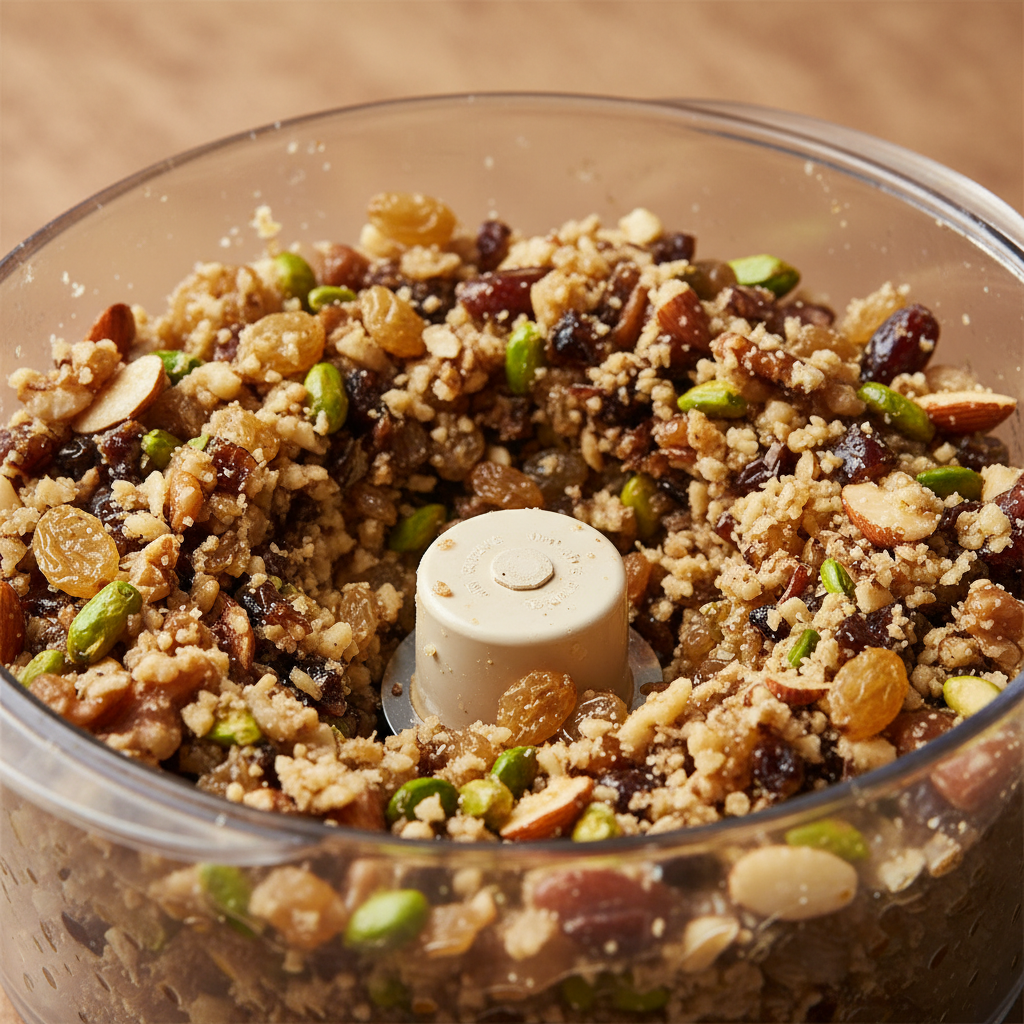
Texture troubleshooting at a glance:
- Too crumbly: Knead in 1–2 teaspoons warm ghee or 1 tablespoon date paste.
- Too sticky: Fold in 1–2 tablespoons almond meal; chill 10 minutes, then roll.
- Flat flavor: Add 1/4 teaspoon extra cardamom or a saffron bloom (a few strands in 1 tablespoon warm milk).
Types, Methods, and Flavor Approaches
Choose a base method, dates-only, light jaggery, or seed-forward, then layer flavors like saffron, rose, or nutmeg. Keep the 2:1 nuts-to-binder rule in mind and adjust ghee by teaspoons to fine-tune cohesion and mouthfeel.
Popular styles that work
- Dates-only (no refined sugar): Gentle chew; kid-friendly. Use Medjool for easier binding.
- Light jaggery: Classic mithai notes; melt 2–3 tablespoons to a soft ball stage, then mix with nuts.
- Honey assist: Floral edge; drizzle 1–2 teaspoons only or it turns sticky fast.
- Seed-forward: Pumpkin + sunflower in place of some nuts; toast 5–7 minutes for snap.
- Protein add-ons: 1–2 tablespoons almond flour or peanut powder for post-workout snacks.
- Festive mix-ins: Saffron, dried rose petals, nutmeg, or edible silver leaf for weddings.
Comparison: Binders and textures
| Binder | Typical Ratio | Sweetness | Texture | Notes |
|---|---|---|---|---|
| Dates (paste) | 2:1 nuts:dates | Medium | Chewy-crunchy | Whole-food sweetness; easiest to roll |
| Jaggery (melted) | 2:1 nuts:jaggery | Higher | Firm bite | Work quickly before it hardens |
| Honey (drizzle) | 2:0.25 nuts:honey | Variable | Softer | Use sparingly to avoid stickiness |
When we assemble premium assortments, we balance mouthfeel across the box: one dates-only dry fruit laddu, one syrupy boondi laddu, one ghee-rich ghee ladoo, and a milk-based barfi. That contrast keeps guests reaching for “just one more.”
Best Practices: Storage, Shelf Life, Allergen Clarity
Store in airtight tins at 64–70°F for 10–14 days, or refrigerate up to 3–4 weeks. Cup each piece, label allergens, and separate nut-free orders. If crumbly, add 1–2 teaspoons warm ghee; if sticky, fold in almond meal and chill before rolling.
- Room temperature (64–70°F): Airtight tins for 10–14 days; keep away from direct sunlight.
- Refrigeration: Extends to roughly 3–4 weeks; serve at room temperature for best aroma.
- Freezer: Up to 2 months; thaw overnight in fridge, then temper 30 minutes.
- Transport: Use paper cups + partitions; add a silica gel pouch to large tins (kept separate from food).
- Allergen protocol: Dedicated tools/lines for nut-free orders; clear box labels and flavor cards.
- Garnish control: Pistachio dust, sesame, or desiccated coconut improves grip and reduces surface stick.
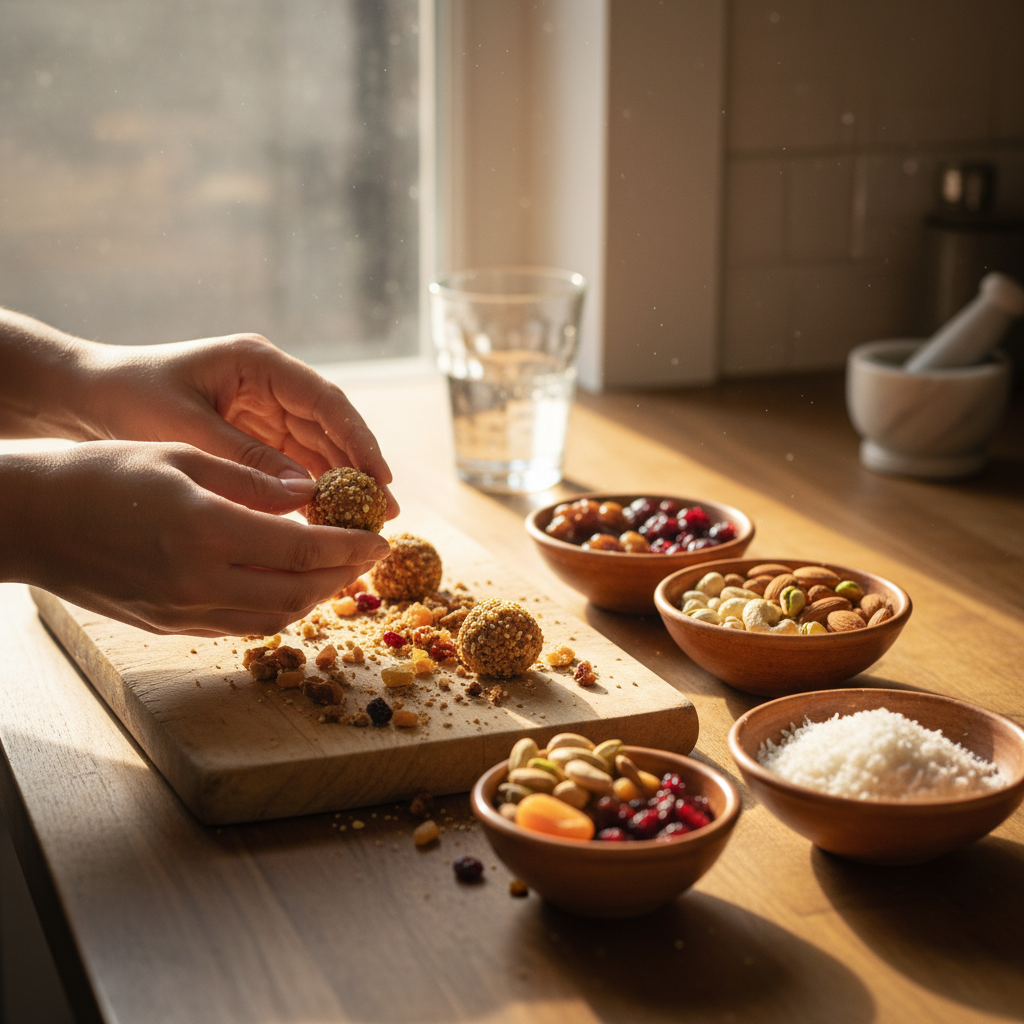
Local considerations for Brampton
- Plan for weekend rushes by Thursday if you’re boxing for Friday pickups or events.
- In winter, keep tins insulated during short commutes so texture doesn’t firm up excessively.
- Festival spikes are real, Diwali and wedding seasons run hot. Pre-order mixed boxes early to secure your preferred assortments.
For ingredient transparency in corporate trays, we include concise flavor tags and allergen highlights. That practice aligns with expectations set by the FDA allergen guidance and helps hosts serve confidently.
Tools and Resources
You only need a baking sheet, a food processor with pulse control, a small skillet, a digital scale, and airtight tins. For gifting polish, use paper cups, dividers, and ribboned sleeves that keep 20–25 gram pieces neat and scuff-free.
Keep your setup simple and consistent:
- Food processor with pulse: Prevents overgrinding to nut butter.
- Heavy skillet or oven sheet: Even roasting yields better snap and aroma.
- Digital scale: Targets 20–25 g per piece for uniform boxes.
- Airtight tins: Maintain dryness and aroma for up to two weeks at room temp.
- Paper cups + dividers: Protect finish; enable multi-layer stacking without smearing.
Looking for pairing inspiration? Browse our seasonal guides. Our team’s roundup of Diwali sweets Brampton favorites lists crowd-pleasers for large gatherings. Want a texture tour across the category? Skim our ladoo varieties and flavors guide, then explore protein-forward options like groundnut ladoo and energizing panjiri ladoo.
Nutrition note: Nuts carry beneficial fats and micronutrients, and dates add natural sugars plus fiber. For a broad nutrient profile of common binders, see USDA FoodData Central.
Case Studies and Real Examples
From wedding return favors to corporate Diwali trays, dry fruit laddu holds its shape, labels cleanly, and pairs well with classics. These brief scenarios show how small tweaks in portioning, garnishes, and boxing solve real hosting challenges in Brampton.
Wedding return favors
A Brampton couple wanted a regal, not-too-sweet favor. We built 4-piece sleeves: two dry fruit laddus (dates-only; green pistachio dust), one boondi laddu, and one ghee ladoo. Each piece weighed ~22 g, sat in its own cup, and survived a two-hour reception without scuffing or slump.
Corporate Diwali gifts
A local office needed vegetarian-friendly assortments with clear allergen cues. We used color-coded flavor tags, placed an ingredient card on top, and kept dry fruit laddus in the corners of the box so the cups locked them in. Feedback highlighted the tidy look and easy serving flow.
Family snack prep
For weekend prep, one family portioned a 24-piece batch at 20–23 g each. Two tins (12 per tin) lasted 10–14 days at room temperature. They mixed walnuts into the nut blend for extra crunch and added 1 tablespoon toasted sesame for aroma.
Frequently Asked Questions
Common questions center on sweeteners, shelf life, nut choices, and shaping. Use dates for refined-sugar-free binding, store airtight at room temperature for about two weeks, and portion at 20–25 grams for uniform boxes that travel well and look polished.
Is dry fruit laddu sugar-free?
Most recipes skip refined sugar by using dates or figs as the binder. If you add jaggery or honey, keep the amount conservative to avoid stickiness. Always read or provide ingredient labels, especially for party platters and corporate boxes.
How long does dry fruit laddu last?
At room temperature (around 64–70°F) in an airtight tin, expect 10–14 days of good texture and aroma. Refrigeration can extend that to roughly 3–4 weeks. For the freezer, plan up to two months, then thaw and temper before serving.
Which nuts work best?
Almonds, pistachios, and cashews offer a classic profile and balance crunch with richness. Walnuts bring deeper nuttiness. For nut-free adaptations, increase toasted seeds like pumpkin and sunflower, but always label clearly to prevent confusion.
How do I keep each laddu round and neat?
Weigh portions at 20–25 grams, roll with lightly greased palms, garnish with a fine dust (pistachio or sesame), then rest on a tray 30–60 minutes before boxing. If the mix crumbles, add 1–2 teaspoons warm ghee and knead briefly.
Conclusion and Next Steps
Master the 2:1 nuts-to-binder ratio, roast for aroma, and portion consistently for polished boxes. For Brampton celebrations, pair dry fruit laddu with boondi and ghee laddus to cover textures, label allergens clearly, and pre-order during festival peaks.
- Key takeaways:
- 2:1 nuts to dates is a reliable starting point; adjust ghee by teaspoons.
- Portion at 20–25 g for tidy cups and stackable boxes.
- Store airtight at room temp 10–14 days; refrigerate for longer.
- Label allergens on every box, clarity builds trust with guests.
Soft CTA: Planning a celebration in Brampton? Explore seasonal assortments and elegant gift boxes on our site, or talk to us about custom vegetarian-friendly trays that pair dry fruit laddu with classics.
Related Articles in Our Ladoo Series
Build your laddus toolkit by exploring texture, technique, and pairing ideas across our series. These guides expand on ghee-forward styles, festive boondi pearls, and category overviews so your boxes look beautiful and taste balanced.
If you love nutty, aromatic profiles, our concise ghee ladoo guide covers roasting cues and shaping habits that translate directly to dry fruit batches. For a syrup-kissed contrast, the boondi laddu guide walks through pearl size and syrup absorption—great knowledge for pairing variety in one box. And to sample the full spectrum before you finalize a wedding or Diwali lineup, flip through our broader ladoo varieties and flavors overview.
For heart-health context on nuts, see the American Heart Association. For allergen labeling best practices, review the FDA guidance. For broad nutrient data on binders like dates, reference USDA FoodData Central.