Chole poori is a North Indian meal pairing spiced chickpea curry with puffed whole-wheat bread. It’s hearty, vegetarian, and perfect for breakfast, brunch, or a festive spread. In Brampton, The Mithai Maharaja celebrates this classic through authentic techniques and related dishes, guiding you to cook it at home or enjoy it fresh in-store.
By The Mithai Maharaja • Last updated: 2026-05-10
Quick Overview and Table of Contents
Chole poori combines tangy, spiced chickpeas (chole) with crisp, puffed pooris made from whole-wheat dough. This guide explains what it is, why people love it, how to cook it step by step, pro tips for perfect puffing, and where to enjoy authentic variations in Brampton with The Mithai Maharaja.
Here’s what you’ll get from this complete, step-by-step guide:
- Clear definition and history of chole poori
- Evidence-based prep tips, timing, and temperatures
- Exact steps for dough, rolling, and frying for tall puffed pooris
- Two reliable chole methods (stovetop and pressure-assisted)
- Approaches for no-onion-no-garlic, gluten-friendly, and low-oil serving
- Best practices we use across our North Indian snack lineup
- Local context for Brampton kitchens and weekend brunch timing
- How to pair chole poori with chaats, thalis, and premium mithai
What Is Chole Poori?
Chole poori is a classic North Indian combo: chickpea curry simmered with warm spices alongside deep-fried, puffed whole-wheat breads. The contrast—creamy chickpeas and crisp pooris—creates a satisfying, vegetarian meal served for breakfast, brunch, or festive spreads across Punjabi and Delhi traditions.
At its core, chole poori is comfort food built on texture and spice. Chole is typically simmered with a base of aromatics, tomatoes, and a garam masala profile. Pooris are quick-fried discs of atta (whole-wheat flour) that balloon when moisture turns to steam inside a well-kneaded dough.
- Chole: Cooked chickpeas with cumin, coriander, ginger, and often amchur or pomegranate powder for tang.
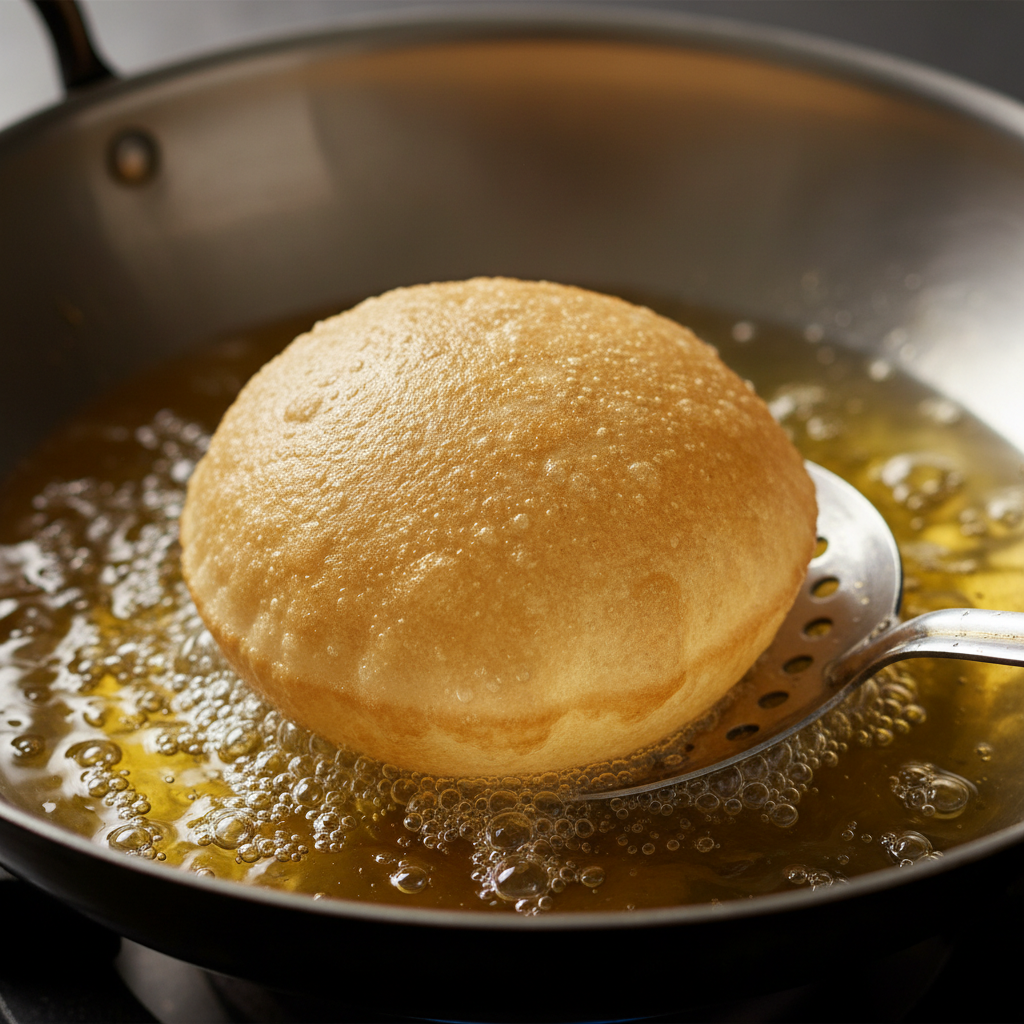
- Poori: Unleavened dough rolled to 4–5 inches, fried around 350–375°F until fully puffed and golden.
- Traditional sides: Sliced onions, lemon, raita, tangy pickles, and sometimes a sweet like halwa for balance.
In our Brampton kitchen, we apply the same fifth-generation halwai discipline we bring to sweets to our snacks: consistent spice roasting, controlled oil temperatures, and dough handling that yields dependable puffing for every batch.
Why Chole Poori Matters
Chole poori matters because it’s a balanced, vegetarian staple that delivers protein from chickpeas and energy from whole-wheat pooris. It anchors family breakfasts, festival brunches, and catered events, pairing beautifully with chaats and premium mithai for an all-in-one North Indian experience.
Here’s why this combo endures in Punjabi and Delhi households—and why it resonates in Brampton’s community:
- Nutrition with comfort: Chickpeas contribute plant protein and fiber; proper frying technique keeps pooris light and crisp.
- Festive versatility: Works for small family breakfasts and large celebrations; easy to scale with thalis and snack platters.
- Flavor layering: Tart notes (amchur/lemon), warmth (garam masala), and texture contrast (creamy vs. crisp) keep every bite engaging.
- Local relevance: Brampton’s South Asian community embraces traditional weekend brunches—our team sees peak interest around holidays and long weekends.
We often see guests pair chole poori with chaats for a contrast of crisp, cool, and tangy. If you enjoy textural variety, explore our guidance on Aloo Tikki Chaat preparation steps to complete a crowd-pleasing spread.
How Chole Poori Works (Process Overview)
Make chole poori by cooking tender chickpeas in a spiced base while you knead, rest, and roll whole-wheat dough into discs. Fry pooris at 350–375°F for 30–45 seconds each to puff. Serve immediately with lemon, onions, and raita for optimal crunch and aroma.
Timing at a glance
- Chickpea prep: 8–12 hours soaking, or use canned chickpeas rinsed well.
- Chole simmer: 25–40 minutes depending on method and desired thickness.
- Dough rest: 20–30 minutes covered to relax gluten and aid puffing.
- Fry window: 30–45 seconds per poori at target oil temperature.
Process table
| Stage | Key Action | Target | Chef’s Cue |
|---|---|---|---|
| Soak/Cook Chickpeas | Soak 8–12 hrs; boil or pressure-cook | Tender, intact beans | Press with fingers; soft without crumbling |
| Spice Base | Sauté aromatics; add dry spices | Fragrant, not burnt | Spices deepen in color, release aroma |
| Simmer Chole | Add tomatoes and chickpeas; reduce | Coating consistency | Stands on spoon, glossy finish |
| Knead Dough | Mix atta, salt, water; 6–8 min knead | Firm, smooth dough | Springs back when pressed |
| Roll | Divide into 20–25 g balls; 4–5 in discs | Even thickness | Edges not translucent, center uniform |
| Fry | Oil at 350–375°F; gentle press to puff | Golden, fully puffed | Flip once; drain on rack |
For related breads, our team also crafts regional favorites. Compare our guide to Amritsari Kulcha with Chana and our deep-dive on Chole Bhature to understand dough, leavening, and frying differences.
Ingredients and Equipment
Use chickpeas, onions, tomatoes, ginger, garlic, and a garam masala blend for chole; use atta (whole-wheat flour), salt, and water for pooris. A heavy kadhai or Dutch oven, slotted spoon, rolling pin, and thermometer help you hit reliable textures and puffing every time.
Chole essentials
- Cooked chickpeas (soaked and boiled, or well-rinsed canned)
- Onion, tomatoes, ginger, garlic (or ginger-only for Jain-style)
- Spices: cumin, coriander, turmeric, chili, garam masala, amchur
- Whole spices optional: bay, cinnamon, cloves, black cardamom
- Tea bag or dried amla (optional) for deeper color
Poori dough
- Atta (whole-wheat flour), fine grind for smooth rolling
- Salt, a touch of oil or ghee, and warm water
- Semolina (optional, 10–15%) for extra crispness
Helpful gear
- Heavy-bottom kadhai or Dutch oven for stable 350–375°F heat
- Thermometer for accurate frying temperature control
- Wire rack or perforated tray to preserve crispness
- Rolling pin and board; pastry brush for light oiling if needed
We’ve found that a steady oil temperature and even disc thickness create a 90% success rate for full puffing. In professional service, we rotate small batches to keep pooris crisp and the chole glossy and hot.
Step-by-Step: Chole Poori at Home
Cook chole first, then fry pooris just before serving. Soak chickpeas, build a fragrant base, and simmer until the curry coats each bean. Knead a firm dough, rest 20–30 minutes, roll 4–5 inch discs, and fry at 350–375°F until fully puffed and golden.
1) Prepare the chickpeas
- Soak dried chickpeas 8–12 hours; drain and rinse.
- Boil or pressure-cook until tender but intact; reserve cooking liquid.
- Shortcut: Use canned chickpeas, rinsed thoroughly for clean flavor.
2) Build the masala
- Heat oil; sauté cumin and aromatics until golden and fragrant.
- Add ground spices; toast 30–45 seconds to bloom flavors.
- Stir in tomatoes; reduce to a thick, shiny base.
3) Simmer and finish chole
- Add chickpeas and some cooking liquid; simmer 15–25 minutes.
- Adjust salt, tang (amchur/lemon), and garam masala near the end.
- Optional: Mash a few chickpeas to thicken to a coating consistency.
4) Knead, rest, and roll pooris
- Mix atta, salt, a touch of oil; add warm water gradually.
- Knead 6–8 minutes to a smooth, firm dough; cover and rest 20–30 minutes.
- Divide into 20–25 g balls; roll evenly to 4–5 inches, edges not thin.
5) Fry for puffing
- Heat oil to 350–375°F; slide in a disc carefully.
- Gently press the center with a slotted spoon to encourage puffing.
- Flip once; drain on a rack. Serve immediately for maximum crunch.
Want to compare with a leavened cousin? Study our Chole Bhature authentic recipe to see how dough enrichment and fermentation change texture and timing.
Variations and Approaches
Adapt chole poori to your kitchen: use canned chickpeas to save time, swap spices for regional profiles, or choose no-onion-no-garlic for religious observances. Adjust the poori with a little semolina for extra crispness, or mix in a spoon of ghee for richer flavor.
Chole variations
- Restaurant-style: Thicker gravy, deeper color using tea or amla, finished with kasuri methi.
- Home-style: Lighter, tomato-forward, slightly tangy with amchur or lemon.
- No-onion-no-garlic: Lean on ginger, hing (asafoetida), and whole spices for depth.
- Pressure-cooker/Instant Pot: Consistent tenderness and reduced hands-on time.
Poori approaches
- Sooji addition (10–15%): Enhances snap and helps pooris hold shape longer.
- Ghee-enriched: Adds aroma and a slightly softer bite while keeping full puff.
- Gluten-friendly: For sensitivities, pair chole with aloo sabzi and papad instead; pooris rely on gluten for structure.
Pairings and plating
- Serve with sliced onions, lemon wedges, and a cucumber raita.
- Add a bright chaat—see our Aloo Tikki Chaat guide—for contrast.
- Finish with premium mithai like barfi or gulab jamun for a celebratory close.
Craving a cousin to this dish? Explore our Bedmi Puri Aloo method for a spiced-dough alternative popular in Delhi homes.
Best Practices and Pro Tips
Aim for even rolling, firm dough, and stable oil heat. Roll pooris to uniform thickness, rest dough to relax gluten, and maintain 350–375°F for instant steam expansion. Season chole in layers—bloom spices, reduce tomatoes, and finish with garam masala and tang.
Poori perfection
- Firm, smooth dough: Too soft = oil absorption; too stiff = poor puffing.
- Even discs: Thin edges deflate quickly; keep thickness uniform.
- Heat discipline: Use a thermometer; reheat oil between batches.
- Drain on a rack: Paper towels trap steam; racks keep pooris crisp.
Chole consistency
- Roast spices properly: 30–45 seconds maximizes aroma without bitterness.
- Tomato reduction: Cook to a jammy base before adding chickpeas.
- Right thickness: Mash a few beans to achieve a coating gravy.
- Finish bright: Balance garam masala with a squeeze of lemon or amchur.
Service flow
- Hold chole hot while you fry pooris to order.
- Plate with onions and lemon; serve immediately to protect crunch.
- Batch for gatherings: keep pooris warm in a low oven with airflow.
In our experience, consistent puffing hinges on even thickness more than anything else. If your first poori doesn’t balloon, increase oil temperature slightly and press the center gently with a slotted spoon to kick-start steam expansion.
Poori vs. Bhature vs. Kulcha
Poori is unleavened and fried for a quick, crisp puff. Bhature is leavened and often larger with a chewier bite. Kulcha is typically tawa-baked or tandoor-cooked, not fried. Each pairs differently with chole and offers a distinct texture and timing.
| Bread | Leavening | Cooking Method | Texture | Typical Size | Best Pairing Notes |
|---|---|---|---|---|---|
| Poori | None (unleavened) | Deep-fried at 350–375°F | Crisp exterior, hollow puff | 4–5 inches | Great for quick brunches; stays crisp when served promptly |
| Bhature | Yeast or yogurt/soda | Deep-fried, slightly lower heat | Chewier, airy crumb | 6–9 inches | Iconic with robust chole; see our guide |
| Kulcha | Baking powder/yogurt | Tawa or tandoor | Soft, layered | 6–8 inches | Lovely with chana; compare Amritsari Kulcha |
Prefer a ready-made experience? Our kitchen offers Chole Bhature in-store—perfect when you’re craving the chole pairing but want a leavened, slightly chewier bread.
Tools and Resources
A steady-heat frying vessel, a reliable thermometer, and a slotted spoon are your non-negotiables. For consistency, set a wire rack for draining, prep mise en place, and keep chickpea cooking liquid on hand to adjust chole thickness quickly.
- Temperature control: Clip-on or instant-read thermometers prevent soggy pooris.
- Drainage: A rack preserves crispness better than towels by reducing steam traps.
- Mise en place: Pre-measure spices; you’ll turn out uniform batches repeatedly.
Curious how regional snacks evolve on modern menus around the GTA? Browse examples from local eateries like this falafel-on-poutine mash-up on a Toronto menu (creative fusion idea) or area meal services (Punjabi tiffin options) to see how classics inspire new formats.
Serving Ideas and Menus
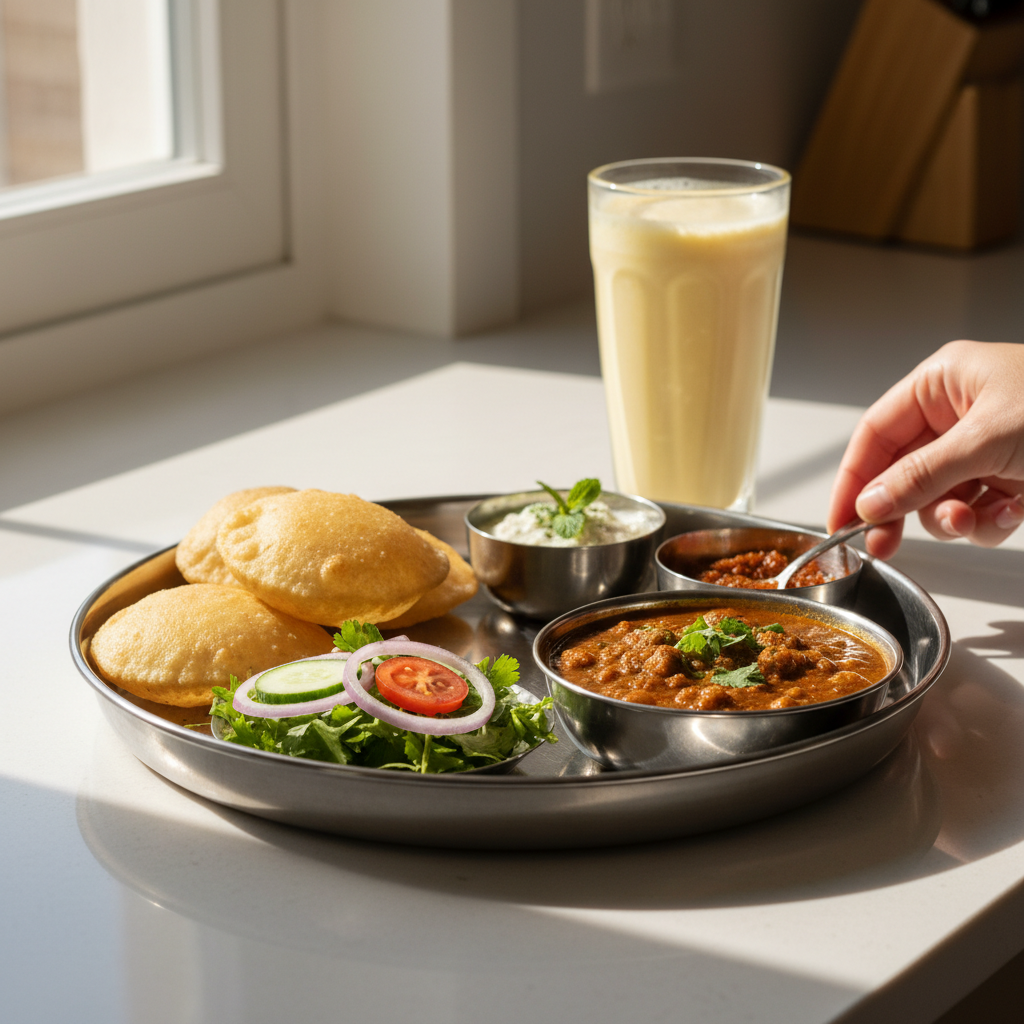
Serve chole poori hot with onions, lemon, and raita. Build a balanced menu by adding a bright chaat and one premium mithai. For larger gatherings, scale with thalis and keep pooris warm with airflow to protect their crisp, hollow structure.
Build a brunch plate
- 2–3 hot pooris, a generous ladle of chole, onion-lemon garnish
- Side: cucumber raita or boondi raita for coolness
- Sweet close: a classic barfi or gulab jamun from our mithai counter
Entertaining at home
- Batch chole earlier; fry pooris right before serving.
- Add a chaat station anchored by Aloo Tikki Chaat.
- Round out with a mithai assortment—barfi, ladoo, and fusion sweets for variety.
Local considerations for Brampton
- Weekend mornings fill up fast—prep dough early to minimize brunch-hour rush at home.
- Festival weeks increase demand; plan make-ahead chole and quick-fry poori batches for guests.
- For vegetarian gatherings, combine chole poori with chaats and premium mithai to satisfy a wide range of tastes.
When you want the restaurant experience without the hassle, stop by our counter or explore our in-house classics like Delhi Wale Chole Bhature crafted by a fifth-generation halwai family.
Case Examples from Our Kitchen
In our Brampton shop, chole poori techniques shape how we serve similar dishes at scale. Dough handling, oil rotation, and spice layering translate directly into consistent quality during weekend rushes, festival orders, and vegetarian catering menus.
Family weekend brunch
- A Brampton family pre-soaked chickpeas overnight and visited us for mithai afterward.
- They followed our 20–30 minute dough rest tip and hit near-100% puffing success.
- They paired the meal with a small box of barfi treasures—simple, celebratory finish.
Festival drop-in
- During peak festive weeks, guests often request a chole pairing and a bright chaat.
- We guide them to add a tangy option from our Aloo Tikki Chaat tutorial for balance.
- Mithai boxes become easy takeaways for hosts and guests alike.
Vegetarian catering sets
- For office lunches and family gatherings, we recommend a chole centerpiece.
- Add breads like bhature or kulcha depending on texture preference and holding time.
- Finish with premium mithai for an elevated, gift-ready impression.
These scenarios reflect what we see daily: carefully timed frying, consistent gravies, and elegant sweets win hearts. For more on North Indian snack culture, see our internal overview on street food culture.
Frequently Asked Questions: Chole Poori
Find quick, direct answers about chole poori—ingredients, puffing tips, holding methods, and pairing ideas. Each Q&A is designed for fast scanning and voice answers so you can get cooking without scrolling endlessly.
How do I keep pooris puffed and crisp?
Use a firm, smooth dough, roll to even thickness, and fry at 350–375°F. Press the center gently with a slotted spoon to help puffing. Drain on a wire rack with airflow instead of paper towels to prevent steam from softening the crust.
Can I make chole without onions and garlic?
Yes. Lean on ginger, asafoetida (hing), and whole spices like bay, cinnamon, and cloves for depth. Reduce tomatoes to a jammy base, simmer gently, and finish with garam masala and a tangy element like amchur or lemon for balance.
What oil is best for frying pooris?
Choose a neutral, high-heat oil that holds steady at 350–375°F. Use a heavy kadhai or Dutch oven for thermal stability, and avoid overcrowding so the temperature doesn’t drop—steady heat is the key to quick puffing and minimal oil absorption.
Is chole poori good for catering menus?
It’s great when managed well. We typically hold chole hot and fry breads to order or offer bhature/kulcha for easier holding. Round out the menu with chaats and premium mithai for a complete vegetarian spread that travels and serves beautifully.
Conclusion and Key Takeaways
Chole poori shines when you control dough feel, oil heat, and seasoning layers. Cook chole to a coating consistency, roll even discs, and fry hot for instant puffing. Pair with onions, lemon, and raita—and add a chaat plus mithai for a complete North Indian meal.
- Master the basics: Even rolling and 350–375°F oil produce consistent puffing.
- Season in layers: Bloom spices, reduce tomatoes, finish bright.
- Serve hot: Fry pooris last and plate immediately to protect crunch.
- Plan menus: Add a chaat and a premium mithai for balance and celebration.
Ready to enjoy the real thing? Visit The Mithai Maharaja in Brampton for authentic North Indian snacks crafted by a fifth-generation halwai family, or explore our classics like Chole Bhature and Amritsari Kulcha with Chana to round out your experience.
Planning a vegetarian gathering in Brampton? Our team curates balanced snack spreads and mithai assortments built around chole, bhature, kulcha, and chaats—crafted the real halwai way. Stop by or explore our menu online.