North Indian snacks are savory and sweet bites from Punjab and Delhi traditions, including samosas, pakoras, chaats, kachori, Chole Bhature, and Amritsari Kulcha. At The Mithai Maharaja in Brampton, our fifth‑generation halwai heritage shapes every crispy, fluffy, and tangy bite, using pure desi ghee and time‑honored methods for authentic flavor and texture.
By The Mithai Maharaja • Last updated: 2026-06-17
Above‑the‑fold: hook, quick summary, and table of contents
This guide quickly maps the North Indian snacks landscape, what they are, why they matter, how they’re made, and how to enjoy them in Brampton. You’ll see core categories, expert prep tips, serving timelines, and catering ideas from The Mithai Maharaja’s fifth‑generation halwai playbook.
Craving that perfect crunch and chaat tang? You’re in the right place. We combine royal Punjabi lineage (since 1938) with modern presentation to help you choose, serve, and savor North Indian snacks with confidence, whether you’re planning a family brunch, a festive gathering, or an elegant corporate event.
Overview at a glance
- Core categories: fried classics, bread‑and‑chana pairs, chaats, and mithai add‑ons.
- Essential textures: crispy shells, fluffy breads, creamy yogurt, and bright chutneys.
- Timing windows: most fried snacks peak within 10–20 minutes after frying.
- Hosting ideas: build‑your‑own chaat bars, sampler platters, and vegetarian thali pairings.
What are North Indian snacks?
North Indian snacks are small savory or sweet foods rooted in Punjabi and Delhi street traditions, think samosa, pakora, chaat, kachori, and bread‑with‑chana combinations. They emphasize layered textures (crisp, fluffy, creamy) and bold flavors built from spice blends, chutneys, yogurt, and pure ghee techniques.
In our kitchen, North Indian snacks center on contrast: crackly shells against creamy fillings, or fluffy breads that soak up spiced chickpeas. A chaat typically layers 3–5 components, base, chutneys, yogurt, spices, and crunch, so every bite delivers brightness and balance. Fried items depend on batter thickness, oil temperature, and cooling method to set that signature crunch.
Key characteristics
- Texture stacks: Samosa shell vs. soft potato mash; crispy papdi vs. cool yogurt; airy bhature vs. saucy chana.
- Signature spices: Cumin, coriander, ajwain, and chaat masala add citrusy lift; amchur supplies gentle tang.
- Desi ghee finesse: We finish select snacks and sweets with pure ghee aromas for warmth and depth.
For a deeper dive into crunch styles and fillings, see our in‑house primer on texture choices in the Indian snacks guide, where we map variations across samosas and pakoras to help you choose with confidence.
Why North Indian snacks matter in Brampton
North Indian snacks matter in Brampton because they’re a shared cultural language, vegetarian‑friendly, crowd‑pleasing, and adaptable for festivals, family meals, and corporate events. They pair everyday convenience with celebration‑ready presentation, making them staples for the city’s South Asian community.
Brampton’s vibrant South Asian population brings daily demand for samosas, pakoras, and chaats that taste like home yet look event‑ready. That’s our niche: “Crafted in Heritage, Served with Royalty.” We blend fifth‑generation techniques with modern plating and gift‑ready boxes so your snacks feel special at first glance and first bite.
Local considerations for Brampton
- Plan for weekend surges around midday; pre‑order platters for smoother pickups during popular festival periods.
- Cold winters favor hearty combos like Chole Bhature and Amritsari Kulcha; warmer days call for yogurt‑forward chaats and refreshing beverages.
- For office events, opt for mixed trays with 3–4 snack styles to satisfy varied spice tolerances and dietary preferences.
If you’re exploring the broader street‑food scene, our cultural overview of North Indian favorites adds context and serving tips, browse the North Indian street food guide we assembled from front‑of‑house and kitchen experience.
How North Indian snacks are made
North Indian snacks rely on precise prep: spice‑balanced fillings, consistent batters, and controlled frying or griddling. The workflow moves from mise en place to shaping, to frying at stable temperatures, and finally to draining, cooling, and finishing with chutneys, yogurt, or ghee.
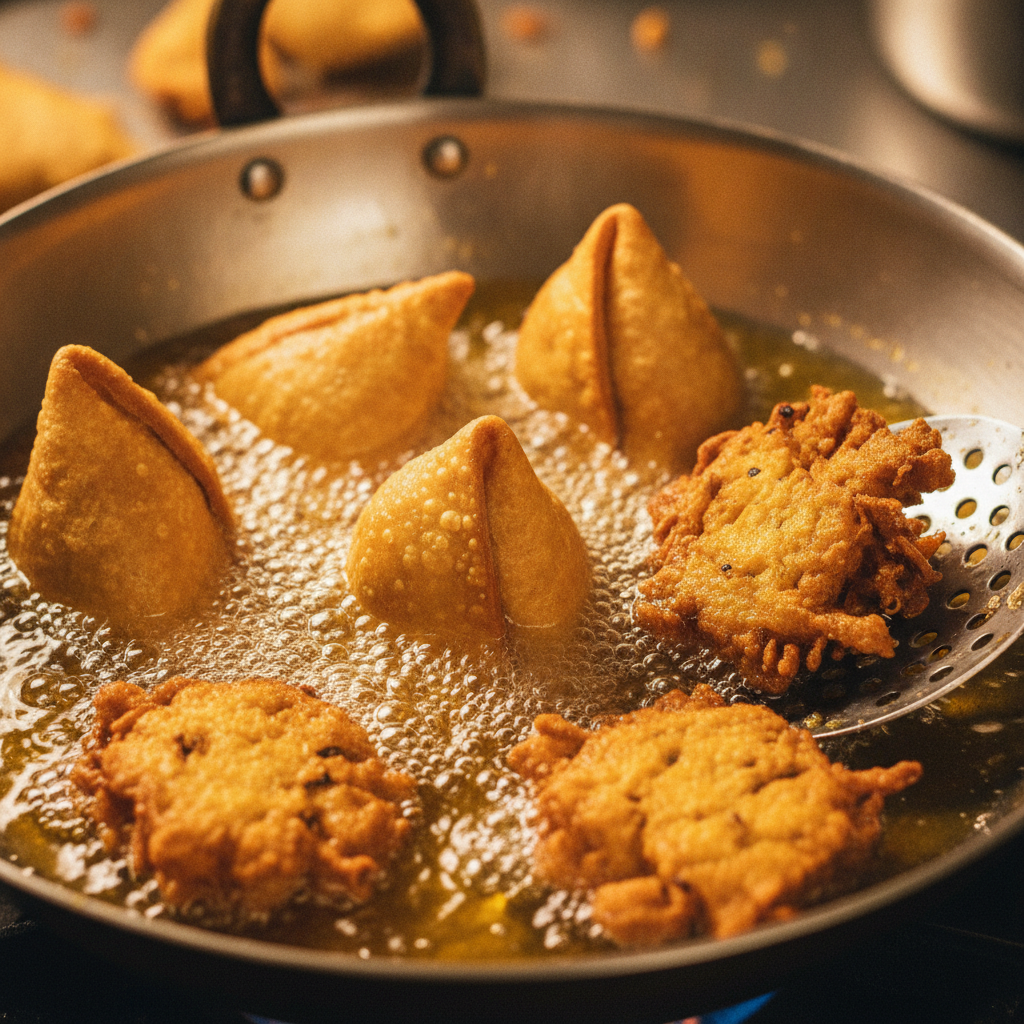
Our process protects both flavor and texture. We prep fillings and batters in small, frequent batches to keep moisture and spice levels consistent. Frying happens in clean, appropriately heated oil with space between items so they brown evenly. Draining and resting preserve crispness before plating or chaat assembly.
Typical sequence
- Mise en place (10–20 minutes): Chop aromatics; measure spices; make chutneys; prepare yogurt.
- Fillings and doughs (20–40 minutes): Cook potato mash, chana, or paneer; knead dough; rest as needed.
- Shaping and battering (15–30 minutes): Fold samosas; slice vegetables; whisk batters to coat thinly and evenly.
- Frying/griddling (12–18 minutes in cycles): Maintain steady heat; avoid crowding to prevent steam‑sog.
- Drain, cool, and finish (5–10 minutes): Use racks, not paper towels, for airflow; season while warm.
For bread‑and‑chana combos, griddling and tandoor‑style cues drive texture: bhature should puff within seconds, while a well‑made Amritsari Kulcha blisters and chars in spots but stays soft enough to tear.
Want a walkthrough of these two classics? Our kitchen team documented tips in the Chole Bhature guide and the Amritsari Kulcha with Chana guide, including common shaping pitfalls and how to stage large orders without losing fluff.
Types of North Indian snacks
Core types include fried bites (samosa, pakora, kachori), bread‑and‑chana pairs (Chole Bhature, Amritsari Kulcha), and chaats (Aloo Tikki Chaat, Dahi Bhalla, Chaat Papdi). Many hosts round out platters with mithai gulab jamun, barfi, or laddoo for a sweet finish.
At The Mithai Maharaja, our menu spans classic fried items, hearty bread‑and‑legume combinations, and bright, layered chaats plus gift‑ready mithai assortments. Below is a quick reference you can use to plan orders for family brunches, festival evenings, or corporate tea breaks.
| Category | Examples | Texture focus | Best for |
|---|---|---|---|
| Fried classics | Samosa, Paneer Pakora, Bread Pakora, Gobhi Pakora | Crisp shell, soft interior | Tea breaks, snack trays |
| Stuffed breads + chana | Chole Bhature, Amritsari Kulcha with Chana | Fluffy, chewy, saucy | Hearty lunches, cold‑weather meals |
| Chaats | Aloo Tikki Chaat, Dahi Bhalla, Chaat Papdi, Channa Samosa Chaat | Crisp + creamy + tangy | Festivals, receptions |
| Mithai add‑ons | Barfi, Kalakand, Gulab Jamun, Ladoo, Halwa & Pinni | Rich, ghee‑kissed | Gifting, dessert platters |
Want to compare flavors and textures before you order? Our expanded overview inside the all‑in‑one sweets and snacks guide explains how batter thickness and spice ratios shift crunch and heat, especially across pakora varieties.
How to mix and match
- Three‑style rule: Pair one fried item, one chaat, and one bread‑and‑chana dish to cover contrasting textures.
- Heat ladder: Offer mild, medium, and zingy options; keep chutneys on the side for control.
- Sweet finish: Add 4–6 bite‑size mithai per guest; gulab jamun or barfi squares work well on snack tables.
Best practices: cooking, serving, and storage
For peak results, fry in small batches, rest snacks on wire racks, and serve chaats immediately after assembly. Reheat fried items in a hot oven or air fryer, never a sealed microwave. Label trays clearly when catering to keep spice levels and allergens obvious.
Small choices safeguard texture and aroma. Airflow during cooling preserves crispness; holding sauces separately protects crunch. When reheating, dry heat wins because it revives the crust without introducing new moisture. Keep yogurt cold and chutneys chilled until service, then bring trays forward in 10–15 minute waves.
Service timing windows
- Fried items: Best within 10–20 minutes of frying; if staging, use racks and warming cabinets under 30 minutes.
- Chaats: Assemble à la minute; components can be prepped 2–4 hours ahead and chilled separately.
- Breads + chana: Serve hot; hold chana over gentle heat; wrap breads in breathable towels to prevent sogginess.
Reheating guide
- Oven/air fryer: 375–400°F for 6–10 minutes to re‑crisp samosas and pakoras; avoid over‑browning edges.
- Skillet refresh: Light film of oil revives par‑fried items; 2–4 minutes per side over medium heat.
- Avoid sealed microwaving: Trapped steam softens shells; if you must, vent and finish in dry heat for 2–3 minutes.
Curious how pros build consistency across big orders? Our hands‑on notes in the samosa and pakora guide break down batch sizes, batter cues, and cooling setups that scale without sacrificing crunch.
Food‑aware hosting
- Dietary clarity: Mark vegetarian items (most are), highlight nuts/dairy, and color‑code spice levels.
- Traffic flow: Place chutneys and yogurt at the end of the line to prevent spills early in the queue.
- Clean bite sizes: Halve large samosas and cut pakoras to two‑bite pieces for easy mingling.
Tools and pantry essentials
A sturdy kadai or deep pot, reliable skimmer, wire racks, and an instant‑read thermometer anchor snack success. Pantry must‑haves include chaat masala, tamarind and mint chutneys, ajwain, amchur, and pure ghee for finishing.
Great snacks are systems. With the right tools, textures become repeatable, light batters, even browning, and ultra‑crisp shells that stand up to chutneys. Keep spice blends fresh and chutneys bright; store yogurt cold and whisk just before service for silky flow.
Equipment checklist
- Kadai/deep pot: High sides reduce splatter and help maintain temperature during back‑to‑back batches.
- Spider/skimmer: Quick retrieval prevents over‑browning and lets excess oil drain mid‑air.
- Wire racks + sheet pans: Airflow underneath prevents steam‑softening; use racks rather than towels.
- Instant‑read thermometer: Consistent heat equals consistent crunch; spot‑check between batches.
- Mixing bowls + whisks: For gauging batter viscosity; aim for thin, even coverage on vegetables.
Pantry starters
- Spice core (6–8 items): Cumin, coriander, ajwain, turmeric, red chili, black pepper, amchur, chaat masala.
- Chutneys: Tamarind‑date for sweet‑tang; mint‑cilantro for freshness; keep portions in squeeze bottles.
- Legumes + flours: Chickpeas for chana and bhalla; besan (gram flour) for pakoras; maida/atta for breads.
- Pure desi ghee: Finish select snacks and sweets for aroma and sheen without weighing them down.
Examples and mini case studies
From family brunches to office receptions, North Indian snacks adapt effortlessly. At The Mithai Maharaja, we’ve guided Brampton hosts to combine three textures, crisp, creamy, fluffy, then finish with a sweet touch for a complete, crowd‑friendly spread.
Here are real‑world scenarios we see often in Brampton and how we approach them using our actual menu. Use them as templates, then customize details to your guest count and spice comfort.
Family brunch sampler (8–12 guests)
- Anchor: Aloo Tikki Chaat assembled fresh; keep yogurt and chutneys chilled until plating.
- Crunch pair: Samosa halves and Paneer Pakora for contrast; re‑crisp in a hot oven before service.
- Sweet finish: Bite‑size barfi and gulab jamun; 4–6 pieces per person covers light dessert appetites.
Winter comfort lunch (10–16 guests)
- Main: Chole Bhature or Amritsari Kulcha with Chana; hold chana gently and bring breads hot to table.
- Side crunch: Vegetable Pakora with mint chutney; keep batches small so they stay crisp.
- Warm dessert: Halwa or pinni squares for cozy, ghee‑forward notes.
Office tea reception (20–30 guests)
- Chaat bar: Aloo Tikki, Chaat Papdi, Dahi Bhalla components in separate bowls with portion spoons.
- Grab‑and‑go: Mini samosas and kachori in two‑bite sizes; label spice levels clearly.
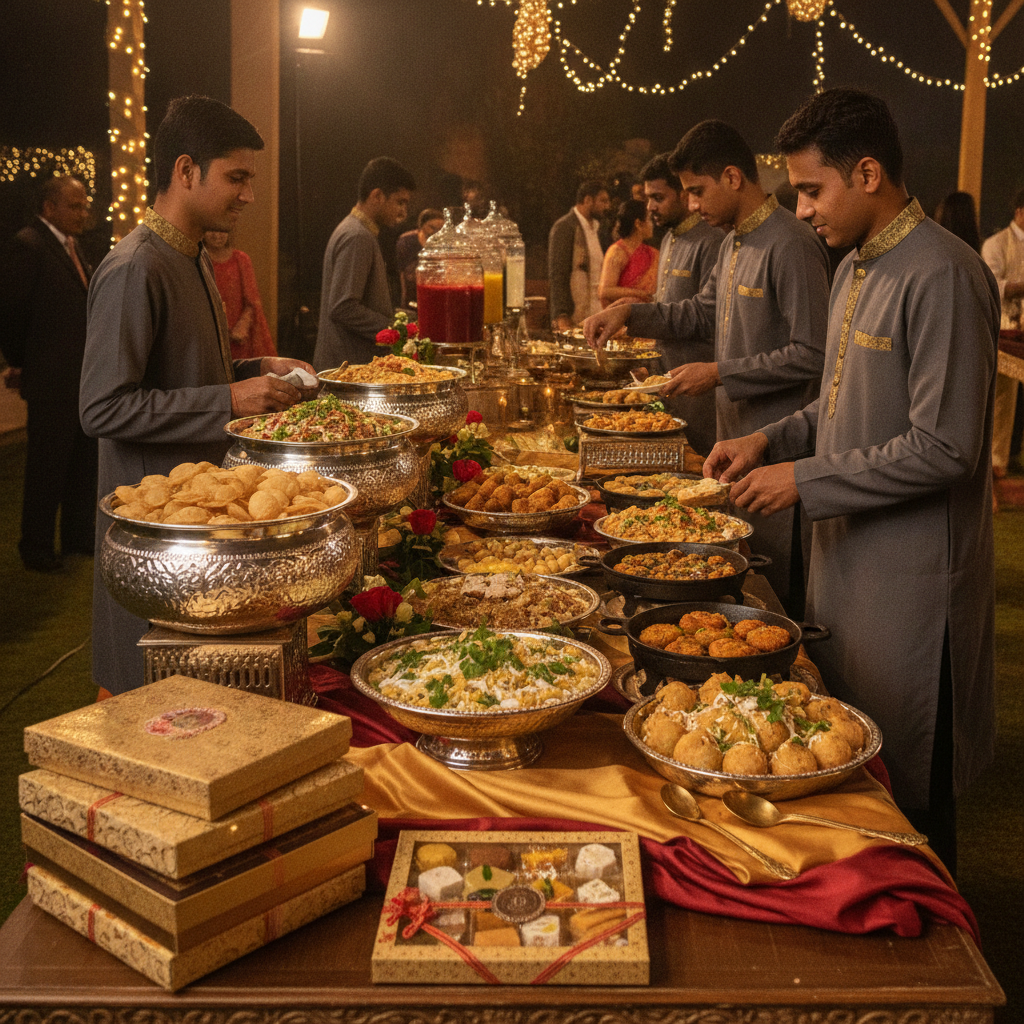
- Corporate‑ready finish: Gift‑ready mithai boxes in elegant packaging for take‑home treats.
For more snack‑pairing ideas and cultural context, flip through our Indian snacks guide and our quick tour of North Indian street food. If biscuits and cookies are on your radar for teatime platters, this local round‑up of Indian biscuits styles shows popular textures for pairing.
Our team can stage build‑your‑own chaat bars, mixed platters, and elegant mithai boxes. Share your headcount, spice preferences, and dietary needs, we’ll propose a flow and tray sizes that keep lines moving and textures intact.
Snack‑to‑occasion planner
| Occasion | Recommended snacks | Why it works |
|---|---|---|
| Family brunch | Aloo Tikki Chaat + Samosa + Barfi | Covers crisp, creamy, and sweet in a compact spread. |
| Winter lunch | Chole Bhature + Vegetable Pakora | Hearty, warming carbs with a crunchy side for balance. |
| Office tea | Mini Samosa + Kachori + Dahi Bhalla | Easy mingling bites; dairy cools spice for mixed groups. |
| Festival reception | Chaat Papdi + Paneer Pakora + Mithai box | Colorful, celebratory textures with take‑home sweets. |
Frequently asked questions
Here are concise answers to the questions Brampton hosts ask most about North Indian snacks, covering spice levels, reheating, dietary clarity, and how to keep textures perfect for guests.
How do I keep samosas and pakoras crispy for guests?
Use wire racks instead of paper towels so steam escapes. Hold in a warm oven with light airflow and bring out smaller batches every 10–15 minutes. Re-crisp briefly in a hot oven or air fryer right before serving.
What are the must-have chaats for a first-timer?
Start with Aloo Tikki Chaat, Dahi Bhalla, and Chaat Papdi. You’ll get the signature trio of crisp, creamy, and tangy flavors. Keep chutneys on the side so guests can adjust sweetness and heat.
Can I order North Indian snacks for corporate events?
Yes. We regularly assemble mixed snack trays, chaat bars, and gift-ready mithai boxes for offices in Brampton. Share your headcount, spice preferences, and dietary needs and we’ll plan a smooth serving flow.
What sweets pair best with savory snacks?
Barfi, kalakand, gulab jamun, and laddoo balance salty, spiced snacks. Offer 4–6 bite-size pieces per guest on dessert trays or provide elegant take-home boxes for a polished finish.
Conclusion and key takeaways
North Indian snacks thrive on contrast, crisp shells, fluffy breads, creamy yogurt, and bright chutneys. For Brampton hosts, mixing three textures and finishing with mithai creates crowd-pleasing variety, whether it’s family brunch, festival night, or a polished office tea.
From samosas and pakoras to Aloo Tikki Chaat, Chole Bhature, and Amritsari Kulcha, the classics earn their status because they’re versatile, vegetarian-friendly, and easy to scale. With the right prep windows and serving rhythm, you’ll protect that prized crunch and keep lines moving.
Key takeaways
- Anchor spreads with three textures: crisp, creamy, and fluffy.
- Serve fried items in waves and assemble chaats à la minute.
- Use racks, dry heat, and labeled trays to protect crunch and clarity.
- Finish with gift-ready mithai for celebration-worthy presentation.
Explore more snack ideas in our Indian snacks guide and browse cultural context in our street food explainer. For packaged teatime add-ons, this overview of popular snacks styles can jump-start planning.