Aloo pakora is a North Indian potato fritter coated in spiced chickpea flour and fried until crisp. It delivers a tender center with a light, crunchy crust. In Brampton, The Mithai Maharaja prepares aloo pakora the real halwai way, pairing it with tangy chutneys and serving it fresh for maximum snap.
By The Mithai Maharaja • Last updated: 2026-05-17
Overview and table of contents
This guide explains what aloo pakora is, why it’s beloved, and how to make it perfectly crisp. You’ll learn batter science, frying methods, spice variations, and pro tips from a fifth‑generation halwai brand in Brampton, plus FAQs and local notes.
Here’s what you’ll find below:
- What aloo pakora is and how it differs from other pakoras
- Why texture, spice balance, and oil temperature matter
- Step‑by‑step method, troubleshooting, and pro tips
- Variations: sliced vs smashed potato, deep‑fry vs air‑fry
- Local considerations for Brampton and serving ideas
Quick summary
Aloo pakora is potato dipped in seasoned gram‑flour batter and fried at steady heat for a crisp shell and creamy center. The keys are 3–4 mm slices, a ribboning batter, 350–360°F oil, and draining on a rack. Serve hot with bright chutneys for balance.
For home cooks and snack lovers in the GTA, this guide distills what our Brampton team does every day: consistent slicing, rested batter, and disciplined batch control. If you’re building a platter, pair aloo pakora with chaat classics or a family thali for a satisfying, vegetarian spread.
What is aloo pakora?
Aloo pakora is a thin or thick slice of potato dipped in a seasoned gram‑flour (besan) batter and fried until golden. The result is a crisp shell and creamy center. Classic versions keep spices simple—salt, turmeric, chili—while Punjabi shops often add ajwain for aroma and digestibility.
Aloo pakora goes by names like potato pakoda or potato bhajji. The core idea is simple: a starch‑rich vegetable meets a protein‑rich, gluten‑free batter. That contrast is why the bite feels both snappy and soft. At The Mithai Maharaja, we focus on a clean spice profile so chutneys shine.
Curious how paneer behaves in the same batter? Our paneer pakora guide explains why dairy protein crisps differently than potato starch and how to adjust heat for both.
Why aloo pakora matters
Aloo pakora matters because it’s fast, vegetarian, and deeply comforting. Potatoes provide structure and mild sweetness, while gram flour brings nutty flavor and protein. Balanced heat and proper frying make it a reliable crowd‑pleaser for families, festivals, and catering menus.
Beyond nostalgia, there’s practical value. Potatoes have a high water content, which steams the interior quickly. Gram flour browns fast, building a crust that locks moisture in. When oil temperature is kept near 350–360°F (177–182°C), the crust forms in under two minutes per side, limiting oil absorption and preserving crunch.
That balance is why aloo pakora anchors mixed platters at The Mithai Maharaja. Guests often order it alongside chaat—see our aloo chaat guide—or roll it into a family thali as a hot starter. For vegetarians, it ticks four boxes at once: satisfying texture, quick service, familiar spice, and easy pairing with chai.
How aloo pakora works (the science)
Crisp pakora depends on three controls: moisture in the potato, viscosity in the batter, and heat in the oil. Dry the potato surface, mix a medium‑thick batter, and fry at a stable 350–360°F to create rapid steam that puffs the crust without turning it greasy.
Here’s the mechanism in plain terms:
- Moisture balance: A rinsed, patted‑dry potato slice steams from within. Excess surface water dilutes batter and causes sputtering.
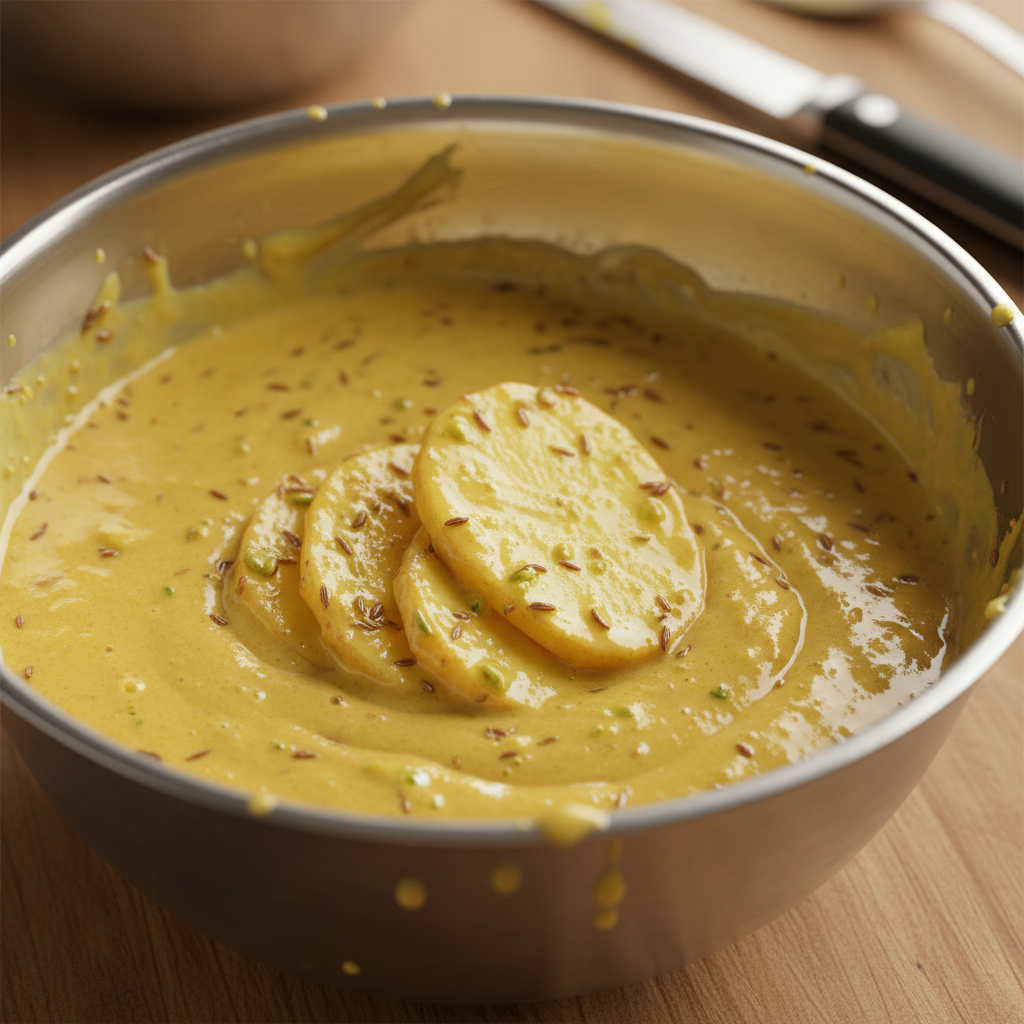
- Batter viscosity: A 1:1.1 flour‑to‑water ratio (by weight) yields a ribboning batter that clings without glopping. A pinch of baking soda increases lift; rice flour adds brittleness.
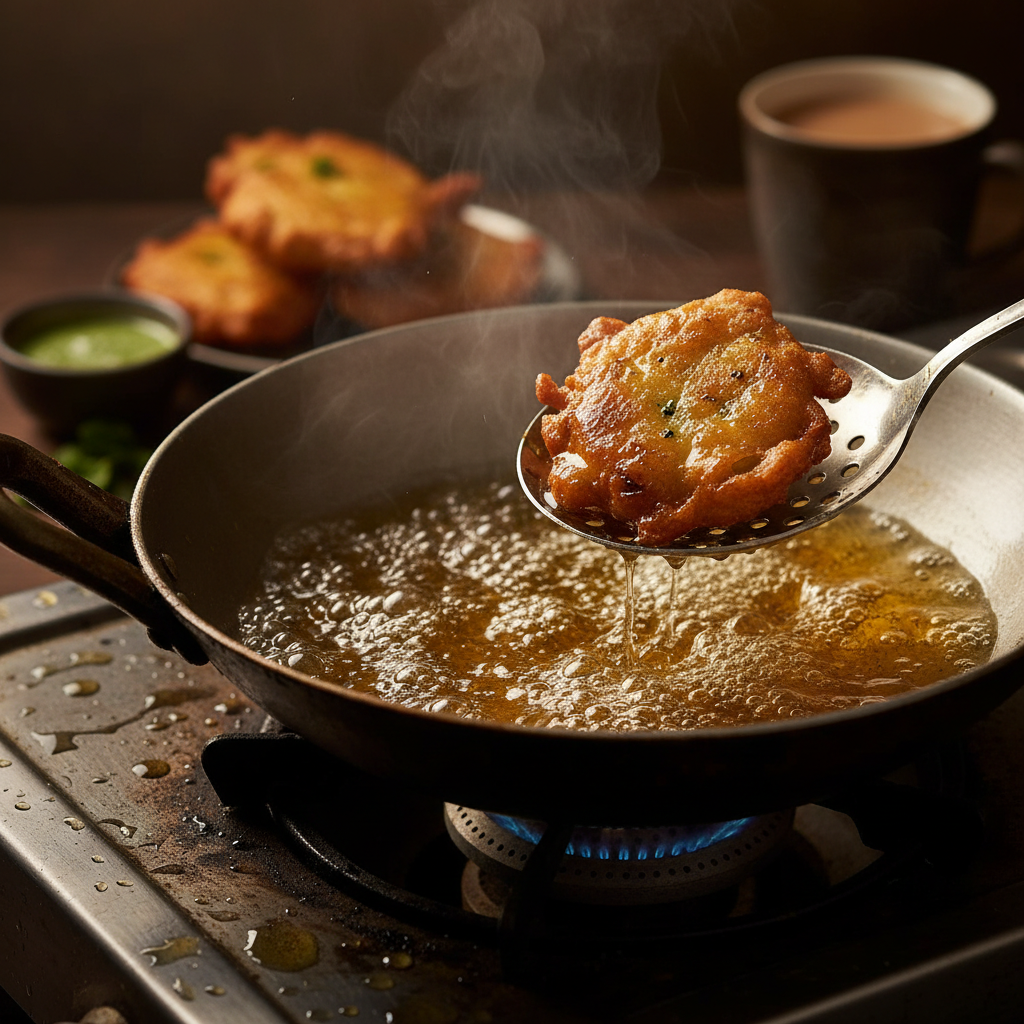
- Heat management: Oil near 350–360°F forms a crust in ~90 seconds per side. Too cool, and pakoras drink oil; too hot, the crust scorches before the center softens.
Small adjustments compound. Resting batter 10–15 minutes hydrates besan particles, smoothing texture. Slicing potatoes 1/8–1/6 inch (3–4 mm) standardizes cook time. And frying in batches prevents temperature crashes that cause sogginess.
Texture also depends on the starch type in your potatoes. Russet tends to crisp more because of higher starch, while Yukon Gold leans creamy. If you love ultra‑crisp edges, add 5–10% rice flour to the besan by weight; if you prefer tenderness, skip the rice flour and slice at 5–6 mm.
Below is a close view of how seasoned batter should coat each slice for even frying.
Types, methods, and approaches
You can make aloo pakora with thin coins for extra snap, thicker slices for creamy centers, or smashed chunks for craggy edges. Deep‑fry for classic results, shallow‑fry for less oil, or air‑fry for convenience—each method trades texture, speed, and aroma differently.
Potato cuts you can use
- Thin coins (2–3 mm): Maximum crispness; cook fast; best for chaat toppings.
- Medium slices (3–4 mm): Balanced crunch and softness; the most versatile.
- Thick slices (5–6 mm): Silky center; requires steadier heat and a minute longer.
- Smashed chunks: Rustic ridges trap batter; great in rainy‑day snack platters.
Frying approaches
- Deep‑fry: Even heat and fast browning; the benchmark for texture and aroma.
- Shallow‑fry: Works in a skillet; flip carefully to avoid tearing the crust.
- Air‑fry: Lightly brush with oil; cook at 375°F, turning once; expect a lighter crunch.
| Method | Texture | Time (per batch) | Notes |
|---|---|---|---|
| Deep‑fry | Best crunch + aroma | 3–4 min | Maintain 350–360°F; fry in batches |
| Shallow‑fry | Crisp edges, softer center | 5–7 min | Flip once; don’t crowd the pan |
| Air‑fry | Light, drier crunch | 10–12 min | Brush oil lightly; turn halfway |
If you’re assembling a street‑style platter, combine textures. A small pile of thin‑coin pakoras layered over tangy chutneys gives you the crunch of papdi with the comfort of potato. For inspiration, check how we stack textures in our chaat pieces like chaat papdi texture secrets.
Best practices for pro‑level crisp
For reliable crunch, slice evenly, salt potatoes lightly, rest the batter, and stabilize oil heat. Skim crumbs between batches, drain on a rack—not paper—and season immediately. Pair with bright chutneys so the nutty besan and gentle heat feel balanced, not heavy.
Step‑by‑step method
- Slice potatoes 1/8–1/6 inch; rinse, then pat very dry.
- Whisk besan, salt, turmeric, red chili, ajwain; add water until ribboning.
- Optional: 5–10% rice flour for extra snap; a pinch of baking soda for lift.
- Heat oil to 350–360°F in a kadhai or heavy pot.
- Dip slices; let excess drip; slide in gently. Don’t crowd.
- Fry ~90 seconds per side until deep golden; skim crumbs.
- Drain on a rack; season while hot; serve with chutneys.
Troubleshooting
- Soggy: Oil too cool; batter too thin; overcrowding the pan.
- Raw center: Slices too thick or oil too hot; extend fry by 30–45 seconds.
- Greasy feel: Not drained on a rack; crumbs carried into new batches.
- Pale color: Insufficient heat or under‑seasoned batter (turmeric/chili also color).
Here’s the moment you’re aiming for—pakora leaving the oil at a deep golden hue with steady bubbles and a firm shell.
Menu pairing tip: Many families in Brampton add aloo pakora to a thali or pair it with a hot favorite like Chole Bhature for a hearty, North Indian experience. For a lighter plate, match it with yogurt‑based snacks such as dahi bhalla.
Planning an event? Our team routinely prepares mixed pakora trays and chaat add‑ons for gatherings. If you need vegetarian variety with consistent crunch, reach out via our website and ask about finishing instructions for pickup so the shell stays crisp.
Tools and resources
Use a heavy kadhai or Dutch oven, a reliable thermometer, and a wire rack for draining. Fresh besan, fragrant ajwain, and starchy potatoes make the difference. Learn about oil heat, ingredient freshness, and safe handling to keep texture crisp and flavors clean.
Gear that pays off:
- Thermometer: Consistent 350–360°F is the crispness backbone.
- Spider/slotted spoon: Gentle handling preserves the shell.
- Wire rack: Airflow prevents steam‑sog while resting.
- Wide prep bowls: Better batter toss and drip control.
Ingredient cues:
- Besan freshness: Should smell nutty, not stale. Rotate stock every few months.
- Ajwain: Pinch and rub—if the aroma blooms, it’s potent enough for batter.
- Potatoes: Russet or Yukon Gold both work; slice consistently for even cooking.
If you love potato‑forward snacks, explore our complete write‑ups on aloo tikki and the classic Delhi combination in Bedmi Puri Aloo. Both pieces share timing and texture cues that translate directly to pakora work.
Case studies and real‑world examples
At The Mithai Maharaja in Brampton, festival days mean steady pakora service for hours. Batch staging, batter rotation, and crumb‑skimming hold crunch. For catering trays, we par‑fry, finish‑fry on order, and pack with vents so steam doesn’t soften the shell in transit.
Example 1 — Rainy‑day snack rush: Weekend showers spike orders for samosas, paneer pakoras, and aloo pakoras. We set two fry stations: one for slicing coins, one for medium slices. Result: consistent 3–4 minute turnarounds and stable color across batches.
Example 2 — Family thali add‑on: Many guests pair pakoras with thalis or chaat. Keeping chutneys bright (mint‑cilantro and tamarind) offsets the richness, and a squeeze of lemon lifts besan’s nuttiness—small touches that keep plates balanced. For a crunchy‑tangy plate, see our notes in the aloo tikki chaat steps.
Example 3 — Corporate catering: For large orders, par‑frying to 75–80% doneness, then finishing on arrival, preserves snap. Vented containers and a wire‑rack layer reduce condensation. These process controls keep feedback high and waste low.
Trend context: In the GTA, vegetarian lunchboxes remain a steady habit; quick snacks like pakoras complement that routine. See how regional tiffin services package Punjabi staples here: Punjabi tiffin services. Meanwhile, fusion trends—think crispy falafel over poutine—show how diners love crunch across cuisines; one example is this falafel on poutine item from a Toronto spot.
Frequently asked questions
Home cooks ask about slicing thickness, air‑fryer timing, and why pakoras turn soggy. The short answers: 3–4 mm slices are forgiving, air‑fry at 375°F and flip once, and sogginess comes from low oil heat or crowding. Drain on a rack for the best finish.
How thick should potato slices be for aloo pakora?
Aim for 1/8–1/6 inch (about 3–4 mm). This thickness cooks the center without burning the crust. Thinner coins get extra crisp; thicker slices need steadier heat and a slightly longer fry.
Why do my pakoras soak up too much oil?
Usually the oil is too cool or the batter is too thin. Keep oil near 350–360°F, rest the batter 10–15 minutes, and avoid crowding the pot. Drain on a wire rack to let steam escape.
Can I air‑fry aloo pakora instead of deep‑frying?
Yes. Lightly brush with oil and cook at 375°F, turning once when the top looks set. The crunch will be lighter than deep‑fried, but the flavor stays true if your batter is well seasoned.
Which potatoes work best?
Starchy varieties like Russet crisp well and cook fast; Yukon Gold gives a creamier center with gentle sweetness. Slice evenly and keep oil temperature stable for consistent results.
Conclusion and next steps
Perfect aloo pakora comes from steady heat, hydrated batter, and disciplined batch control. Slice evenly, rest the batter, fry hot, drain on a rack, and season fast. Pair with bright chutneys and serve immediately for that halwai‑shop crunch.
- Key takeaways: Even slices, rested batter, hot oil, rack drain, fast seasoning.
- Action steps: Start with 3–4 mm slices, test one pakora to confirm color in ~3 minutes, then fry the batch. Keep a rack ready and chutneys chilled.
- Explore next: Build a street‑style spread with Chole Poori and potato‑forward snacks from our library.
Visit us in Brampton: If you’d rather enjoy perfectly hot, crisp pakoras without the setup, stop by The Mithai Maharaja or order online. For gatherings, mention you’d like vented packaging and a brief finish‑fry window to keep that signature snap.
Local considerations for Brampton
- Festival weekends drive higher demand—pre‑order mixed pakora boxes to avoid waits and keep family gatherings on schedule.
- Winter evenings call for heartier snacks—pair aloo pakora with chai and warming chaats to round out the spread.
- For catering pickups, ask for vented packaging and a brief finish‑fry window to preserve crunch during travel across the GTA.