Gulab jamun from milk powder is a quick, halwai-style take on India’s beloved fried milk dumplings soaked in scented sugar syrup. It combines milk powder, a little flour, and ghee to form soft dough balls that fry low and slow, then soak until pillowy. In Brampton, The Mithai Maharaja prepares classic versions daily and shares this milk-powder method for home cooks.
By The Mithai Maharaja
Last updated: 2026-05-18
Overview: What you’ll learn + Table of contents
This complete guide shows you how to make milk-powder gulab jamun that stays soft, evenly browned, and syrup-soaked. You’ll learn the science of the dough, ideal oil and syrup temperatures, a step-by-step method, troubleshooting, and party-ready variations we serve and cater from our Brampton kitchen.
Here’s the thing: perfect jamun is equal parts craft and control. Our fifth‑generation halwai lineage has taught us to watch moisture, temperature, and timing. In this guide you’ll:
- Understand the role milk powder plays versus khoya and mixes
- Use syrup ratios and one-string tests with confidence
- Follow a precise, repeatable frying method
- Fix cracks, dense centers, or pale color fast
- Scale for parties, gifting, and catering in Brampton
Quick navigation:
- What Is Gulab Jamun from Milk Powder?
- Why This Method Matters
- How the Method Works
- Step-by-Step Recipe
- Types & Variations
- Best Practices
- Tools & Resources
- Case Studies & Examples
- FAQ
- Conclusion & Key Takeaways
Quick summary
Milk powder gulab jamun is reliable, scalable, and quick. Use a gentle dough, oil held around 300–320°F (149–160°C), and a 1:1 syrup with cardamom and rose. Rest, fry low and slow, then soak 1–2 hours warm. This sequence yields round, crack-free, evenly soaked jamun.
If you’re short on time, remember three numbers: 300–320°F oil, 1:1 sugar-to-water syrup, and 1–2 hours of warm soaking. Those alone solve most texture problems. When you’re ready to taste a benchmark, visit our gulab jamun made with desi ghee.
What is gulab jamun from milk powder?
Gulab jamun from milk powder replaces traditional khoya with full-fat milk powder, flour, and ghee to create a soft dough. Fried gently and soaked in cardamom-rose syrup, it achieves the classic taste and texture faster, with consistent results and fewer specialty ingredients.
Traditional jamun uses khoya (reduced milk solids). Milk powder streamlines that by delivering concentrated dairy proteins and lactose that brown beautifully during frying. The payoff is speed and consistency for home cooks and caterers alike without losing the hallmark softness and syrupy bite.
- Flavor profile: Milky-sweet, perfumed with cardamom, hint of rose or saffron.
- Texture: Light, soft crumb that springs back after soaking; no raw centers.
- Serving: Warm or room temperature, often garnished with pistachios.
Curious about how this compares with the classic? See our short notes in the comparison table and explore our traditional preparation guide for khoya-based technique.
Why this method matters (for Brampton homes and events)
Milk powder jamun matters because it removes sourcing barriers, shortens prep, and scales easily for Brampton gatherings. You get halwai-level texture with pantry staples. It also travels and reheats well, which is crucial for gifting, potlucks, and local catering menus.
For families in Brampton, availability wins. Full-fat milk powder is shelf-stable and easy to stock, making spontaneous mithai nights possible even when khoya isn’t on hand. For event planners, uniformity matters; this method produces even coloring and predictable yields batch after batch.
- Consistency at scale: Even browning and soaking mean fewer rejects when plating dozens of portions.
- Reliable reheating: Gentle reheats keep texture intact, ideal for next‑day serving.
- Flexible menus: Pairs with savory hits like Chole Bhature and chaats for balanced spreads.
When clients choose our sweets table, gulab jamun usually anchors dessert alongside barfi and kheer. If you want a ready-made benchmark before you try the recipe, browse our best gulab jamun in Brampton overview and tasting notes.
How the milk powder method works (the science)
The method relies on protein hydration from milk powder, minimal gluten from flour, and Maillard browning at 300–320°F. A warm 1:1 syrup then diffuses inward, equalizing sweetness and moisture. Control hydration, temperature, and soak time to keep jamun soft and crack-free.
Milk powder hydrates fast. Give it just enough liquid to hold together; over-hydration leads to collapse, while dryness causes cracking. Frying below 325°F prevents tough crusts and over-browning before the centers cook through. One-string syrup (about 215–220°F/102–104°C) pulls into the crumb as the jamun cools.
- Hydration window: Dough should feel soft, not sticky; it should roll without lines.
- Oil discipline: Keep steady heat; large swings produce pale or burst skins.
- Syrup diffusion: Warm syrup plus warm jamun accelerates absorption and even sweetness.
To go deeper on the soak, read our practical syrup consistency guide where we outline one-string testing and spice infusions we use in service.
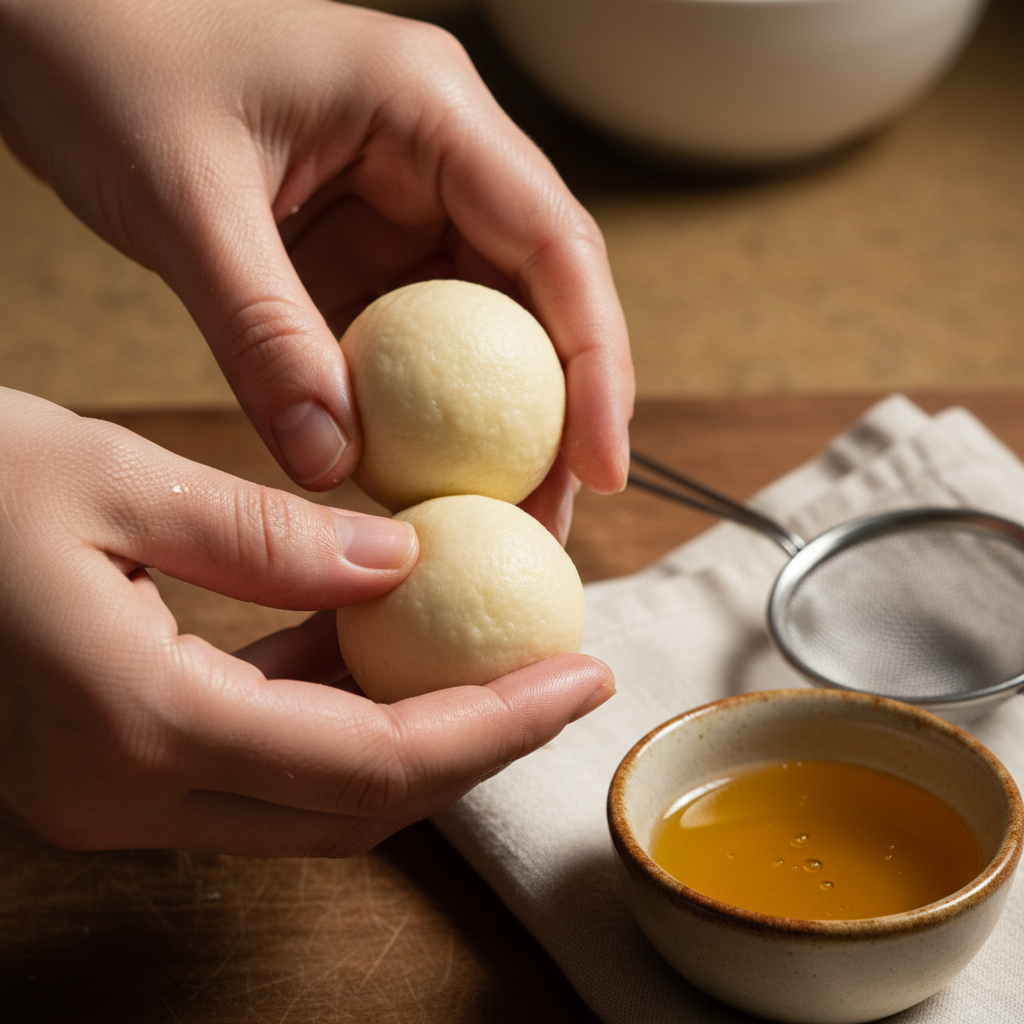
Step-by-step: gulab jamun from milk powder (repeatable method)
Use full-fat milk powder, a small amount of flour, baking soda, ghee, and milk to form a soft dough. Rest briefly, shape smooth balls, fry at 300–320°F to deep golden, then soak 1–2 hours in warm 1:1 cardamom-rose syrup. This sequence yields soft, evenly soaked jamun.
Ingredients (core formula)
- Full‑fat milk powder
- All‑purpose flour (minimal, to bind)
- A pinch of baking soda
- Ghee (clarified butter)
- Milk (or a milk-water mix), warm
- Sugar + water (1:1) for syrup
- Cardamom pods, optional saffron, and a few drops of rose water
- Pistachios or almonds, finely chopped, for garnish
Method (10 clear steps)
- Make syrup first: Combine equal parts sugar and water, simmer to one-string (about 215–220°F). Add crushed cardamom; keep warm.
- Blend dry mix: Whisk milk powder with a little flour and a pinch of baking soda to distribute evenly.
- Add ghee: Rub ghee into the dry mix until it feels like damp sand—this shortens gluten and promotes tenderness.
- Hydrate: Sprinkle in warm milk gradually; stop when the dough holds together softly. Avoid stickiness.
- Rest: Cover and rest 5–10 minutes so moisture equalizes.
- Shape: Oil your palms lightly; roll small, smooth balls with no surface lines. Aim for uniform size for even frying.
- Heat oil: Bring oil to 300–320°F. Use a heavy pot; keep a thermometer clipped for accuracy.
- Fry low and slow: Slide in a few balls; stir gently so they turn and color evenly. Cook until deep golden-brown.
- Soak warm: Transfer immediately to warm syrup. Let soak 1–2 hours, gently spooning syrup over occasionally.
- Serve: Garnish with nuts; serve warm or room temperature. Store leftovers chilled; rewarm gently to serve.
Tip: If a test piece sinks and stays pale, the oil is too cool; if it darkens in under 2 minutes, reduce heat. Color should develop in a steady 5–7 minute window so the center cooks through without hard crusts.
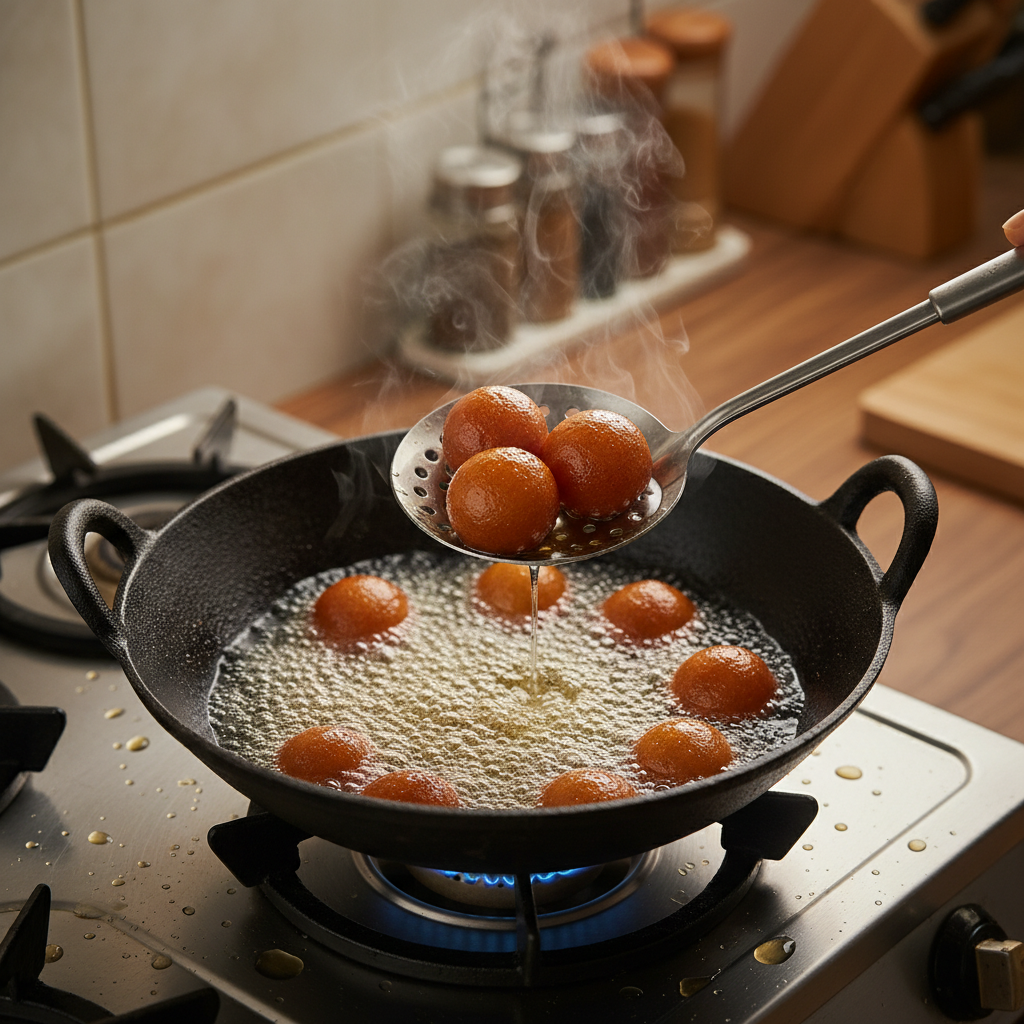
Types, methods, and delicious variations
Start with the standard milk-powder dough, then vary shaping, stuffing, frying appliances, and flavor infusions. We use dry fruit cores, rabri pours, baked or air-fried options, and spice blends to tailor jamun for weddings, gift boxes, and weeknight desserts.
Popular variations we serve
- Classic rose-cardamom: Our house profile—balanced sweetness, light floral finish.
- Stuffed jamun: Tiny center of mawa or chopped nuts; seal flawlessly to prevent leaks.
- Rabri-soaked: Finish with a drizzle of chilled rabri for contrast.
- Kesariya: Saffron-infused syrup for festival plates.
- Mini jamun bites: Half-size for tasting platters and kids’ menus.
- Air-fryer assist: Par‑fry then finish with a brief air-fry for color without over-oiling.
Comparison: milk powder vs alternatives
| Method | Ingredients | Texture | Skill Level | Use Case |
|---|---|---|---|---|
| Milk powder | Milk powder, flour, ghee | Soft, consistent | Beginner‑friendly | Home cooks, parties |
| Khoya (traditional) | Khoya, flour, ghee | Rich, classic crumb | Intermediate (khoya sourcing) | Purist trays, festivals |
| Premix packets | Branded mixes | Variable | Beginner | Quick experiments |
If you want to taste our heritage version, compare it against the milk-powder batch using our khoya guide, then pick your favorite for your next celebration.
Best practices to avoid cracks, bursts, or dry centers
Keep dough soft, rest briefly, and remove all surface lines while shaping. Fry at 300–320°F with gentle movement. Use warm, not hot, one‑string syrup and allow 1–2 hours of soaking. These controls prevent cracks, hard shells, and under‑soaked centers.
Shaping and dough care
- Moisture check: Dough should press without crumbling or sticking.
- Seamless spheres: Any visible lines become cracks when fried—polish each ball.
- Uniform size: Aim for even cooking and color.
Frying control
- Thermometer on: Hold 300–320°F; add small batches to minimize temperature drops.
- Gentle agitation: Stir lightly so pieces rotate and color evenly.
- Golden, not dark: Deep golden signals cooked centers without bitterness.
Soaking science
- Temperature match: Warm jamun into warm syrup speeds infusion.
- Time on task: 60–120 minutes creates that signature pillow feel.
- Flavor layering: Cardamom, rose, saffron—add once syrup is off heat for aroma.
For reference batches, we regularly plate jamun next to soojI halwa during tastings. That pairing highlights textural contrast; when your jamun feels plush next to halwa, you’ve nailed it. Explore our short sooji halwa guide for the complementary dessert.
Tools and resources (home and catering scale)
Use a heavy pot, reliable thermometer, and fine-mesh skimmer for control. For parties, upgrade to an induction setup and hotel-pan soaking. Organize garnish cups, warming units, and lidded trays for transport so texture survives from kitchen to table.
Home kitchen checklist
- Heavy 4–6 quart pot or kadai
- Clip-on thermometer (range to 400°F)
- Fine-mesh skimmer or slotted spoon
- Wide bowl or shallow pan for syrup soaking
- Cooling rack and sheet tray
Event and catering setup
- Induction burner for steady frying heat
- Hotel pans for batch soaking and transport
- Insulated carriers to hold warmth
- Pre-portioned nut garnish and foodservice ladles
When you’re planning a full menu, jamun pairs naturally with Punjabi snacks and chaats. Our Brampton team can help you balance sweets with savories from our signatures like samosa and paneer pakora, then finish with a premium mithai box. Skim our premium mithai selection guide for ideas.
Case studies and real-world examples
In our Brampton kitchen, we standardize milk-powder jamun for weddings, office trays, and weekend family boxes. The same temperature and soaking controls apply whether you’re serving 12 or 200 guests, and they keep color, shape, and softness consistent.
Weekend family box (home scenario)
- Plan: Make dough Friday night; fry Saturday morning; soak and serve by lunch.
- Numbers: Fry in 2–3 small batches to keep 300–320°F stable.
- Serve: Plate with pistachios; add a side of rabri if you like extra richness.
Office dessert tray (corporate request)
- Uniformity: Use a portion scoop to size pieces identically.
- Transport: Soak in hotel pans; transfer to lidded trays with a splash of syrup to prevent drying.
- At service: Warm gently in a water bath; never boil syrup.
Wedding tasting (Brampton event)
- Palette: Offer classic, kesariya, and stuffed versions.
- Pairings: Place next to kaju katli and pista barfi for visual contrast.
- Backup plan: Keep a small reserve batch soaking for late arrivals.
Benchmark what you’re aiming for by sampling our kitchen-made jamun here: shop gulab jamun. Or learn what sets our citywide favorite apart in this Brampton roundup.
Local considerations for Brampton
- Festival surge planning: Around Diwali and Vaisakhi, prep batter the night before and organize soaking pans early; citywide demand spikes for mithai boxes.
- Winter deliveries: Keep jamun insulated during transit; warm desserts hold texture better in cold Ontario weather.
- Menu balance: Brampton crowds often order a mix of chaats and Punjabi mains—pair jamun with savory favorites like samosa or chole for satisfying spreads.
Need a sure-win dessert tray? Our team at The Mithai Maharaja prepares gift‑ready boxes and catering trays anchored by gulab jamun, barfi, and kheer. If you’d rather taste than whisk, we’re happy to help you plan.
Frequently Asked Questions
These quick answers solve the most common milk-powder jamun issues—cracks, density, oil color, and storage. Follow the temperatures and times here and your next batch will feel restaurant‑quality with minimal tweaking.
Why do my milk-powder jamun crack while frying?
Cracks come from dry dough or surface seams. Soften the dough with a teaspoon of warm milk and re-roll each piece until perfectly smooth. Keep oil at 300–320°F and stir gently so pieces rotate and color evenly.
How do I test one-string syrup without a thermometer?
Pinch a cooled drop of syrup between thumb and forefinger and pull apart; a single thread should form. If it beads and breaks immediately, cook longer; if it forms a hard thread, add a splash of water and re-simmer.
Can I air-fry instead of deep-frying?
You can par‑fry to set structure, then finish briefly in an air fryer for color. Fully air-fried versions tend to dry out; a short pre‑fry preserves softness before soaking in warm syrup.
How long can soaked jamun sit out at room temperature?
Serve within a few hours for best texture. For longer holding, refrigerate in syrup and gently rewarm before serving. Dairy-based desserts keep quality longer when chilled and handled with clean utensils.
What should I serve with jamun for a full Brampton-style spread?
Balance sweets with savory chaats and Punjabi mains. Think samosa, paneer pakora, and chole with fluffy bhature. Finish with milk-based sweets like rabri or kheer for a crowd-pleasing lineup.
Conclusion and key takeaways
Gulab jamun from milk powder succeeds when you control three levers: hydration, heat, and soak. Keep the dough soft, fry at 300–320°F, and soak 1–2 hours in warm 1:1 syrup. With that, you’ll plate soft, evenly colored, perfectly perfumed jamun every time.
- Hydration: Soft, crack‑free dough is step one.
- Heat: Hold 300–320°F for even browning and cooked centers.
- Soak: Warm one‑string syrup, 1–2 hours of rest.
- Scale smart: Small batches for frying; hotel pans for soaking.
- Benchmark often: Taste pro-made jamun to calibrate sweetness and texture.
Want the convenience without the cleanup? Order our heritage version here: visit the gulab jamun product page, or sample across our Brampton favorites in this editorial roundup. If you’re planning an event menu, we can anchor your dessert tray with premium mithai and fresh chaats.
Related reading inside our kitchen
Strengthen your mithai skills by layering syrup mastery, heritage technique, and smart menu planning. These in‑house notes connect directly to the milk-powder method and help you plan balanced spreads for Brampton gatherings.
If syrup makes you nervous, our concise syrup consistency guide removes the guesswork. For purists, the traditional preparation guide shows the khoya path we still use in our shop. And for dessert curation across seasons, skim our premium mithai selection guide.
Extras and community notes
Brampton’s vibrant food scene inspires smart pairings and thoughtful dessert planning. Explore local menus for savory balance, observe festival rhythms, and remember that a warm, well‑soaked jamun wins smiles at any table, from weeknights to weddings.
Exploring neighborhood menus can inspire spread ideas beyond mithai alone. You’ll see why samosa and chaats work so well with a soft, syrupy dessert course when browsing places like this samosa menu example. Community demand for Punjabi-style meals is strong; a quick scan of regional offerings such as Punjabi tiffin services shows how often sweets appear alongside homestyle mains. Even bakery showcases like this local bakery reference remind us how cherished milk-based desserts are across occasions.