Sooji halwa is a North Indian semolina dessert made by slow-roasting sooji (semolina) in desi ghee, then hydrating it with a hot sugar syrup or milk until fluffy and aromatic. It’s a temple-style comfort sweet, served for festivals and everyday treats alike at The Mithai Maharaja in Brampton, crafted the real halwai way.
By The Mithai Maharaja • Last updated: May 16, 2026
Overview
This guide explains what sooji halwa is, why it’s beloved, and how to make a soft, rich version every time. You’ll learn exact roasting cues, golden ratios, and pro tricks from a fifth-generation halwai brand in Brampton. We also cover variations, storage, gifting, and catering uses.
Here’s what you’ll get from this complete guide, built on our fifth-generation halwai heritage:
- Plain-language definition and cultural context of sooji halwa
- Ingredient science, golden ratios, and step-by-step method
- Texture troubleshooting and chef-level best practices
- Festive variations and how to scale batches reliably
- Gifting, pairing, and catering ideas for Brampton celebrations
Local considerations for Brampton
- Plan festival orders early during Diwali and Gurpurab peaks; popular halwa and pinni boxes move quickly across the Greater Toronto Area.
- Cold winters favor warm, ghee-forward desserts; keep halwa covered and insulated during transport to retain steam and softness.
- For vegetarian events, include halwa alongside classic chaats and snacks; it complements regional tastes in Brampton’s Indian community.
What Is Sooji Halwa?
Sooji halwa is a Pan-Indian semolina sweet made with roasted sooji, desi ghee, and a hot sugar syrup or milk. Proper roasting separates grains and unlocks a nutty aroma, while controlled hydration creates a light, melt-in-the-mouth texture prized in temples and family kitchens.
At The Mithai Maharaja, we honor the temple-style profile—ghee-forward, gently sweet, and perfumed with cardamom and saffron. This classic is part of our broader Halwa & Pinni tradition, handcrafted by an authentic halwai lineage dating back to 1938.
Regional names vary—suji ka halwa (Hindi), sheera (Marathi), and rava kesari (South Indian variant with vibrant color and fruit). Despite differences, the core technique stays the same: roast, hydrate, finish.
Curious how sooji halwa compares to other halwas? See our take on texture and ingredients in the halwa and pinni differences breakdown, and explore cousins like moong dal halwa and gajar halwa on our menu.
Why Sooji Halwa Matters
Sooji halwa matters because it’s comfort food, prasad, and dessert in one. It travels well, scales cleanly for events, and satisfies across age groups. With balanced ghee and cardamom, it offers warmth and aroma that pair naturally with North Indian snacks and thalis.
In our experience, a well-made semolina halwa consistently delights at birthdays, housewarmings, and pujas. The texture stays plush when held warm for service, and it plates elegantly for gifting. Pair it with samosas, pakoras, or include it in festive thalis for a complete North Indian spread.
Want to try a house style? Our sooji halwa features pure desi ghee and traditional roasting to deliver a nutty aroma and soft crumb. For selection tips across sweets, bookmark our premium mithai guide.
How Sooji Halwa Works (Science, Ratios, and Heat)
Sooji halwa works by toasting semolina in ghee to coat and separate grains, then rapidly hydrating with hot liquid so starches swell without clumping. Golden ratios (1:1:2–3 for sooji:ghee:liquid) and a rolling, careful stir create a fluffy, glossy finish.
Understanding what’s happening in the pan gives you control:
- Coating and separation: Ghee coats each grain, preventing gluey clumps when liquid hits. You’ll see grains turn from pale to golden and smell a toasted, nutty aroma.
- Hydration and swelling: Hot liquid (water or milk) activates semolina’s starch. Adding it all at once minimizes uneven hydration and keeps texture uniform.
- Emulsion and gloss: As sugar dissolves and ghee disperses, the halwa turns glossy. Gentle folds (not aggressive whisking) preserve the granular crumb.
Typical home-batch data points we trust:
- Ratio: 1 cup sooji : 1 cup ghee : 2.5–3 cups liquid, plus 3/4–1 cup sugar
- Roast time: 8–12 minutes on medium, stirring almost constantly
- Hydration time: 3–5 minutes to absorb, then 2–3 minutes covered rest
- Flavoring: 1/2 teaspoon cardamom; saffron strands bloomed in warm milk
We also consider service context. For buffet holding, slightly higher liquid (closer to 3 cups per cup of sooji) keeps halwa supple under chafing-dish heat. For boxed gifting, a tighter liquid range preserves structure.
Ingredients and Smart Substitutions
Use medium-grain semolina, pure desi ghee, sugar, and water or milk. Cardamom and saffron add aroma, while nuts provide crunch. For vegan or dairy-light versions, swap ghee with neutral oil and use water, adjusting sweetness and garnish to balance flavor.
Core ingredients (and why they matter)
- Semolina (sooji): Medium grind to balance absorption and texture. Too fine turns pasty; too coarse stays chewy.
- Desi ghee: High smoke point and nutty flavor; it’s central to sheen and aroma.
- Liquid: Water delivers a classic, lighter crumb. Milk adds body and a dairy-sweet note.
- Sugar: White sugar for clarity; jaggery for a caramel undertone (strain to remove impurities).
- Cardamom and saffron: Classic aroma markers; bloom saffron in warm milk for even color.
- Nuts and raisins: Cashews and almonds for crunch; golden raisins plump in ghee for bursts of sweetness.
Smart substitutions
- Dairy-light: Use 100% water; finish with a teaspoon of ghee for aroma.
- Vegan: Neutral oil instead of ghee; optimize with roasted nut butters for depth.
- Lower refined sugar: Cut sugar by 15–20% and add chopped dates for body.
- Gluten-aware: Semolina is wheat-based; those avoiding gluten can consider alternatives like moong dal halwa, which is naturally wheat-free.
If you’re building a dessert box, contrast sooji halwa with fudgier items like barfi or syrupy kheer-inspired treats to create varied textures in one gift.
Make Soft, Rich Sooji Halwa: Step-by-Step
Roast sooji evenly in hot ghee, then add a pre-heated sugary liquid in one go. Stir and fold until the mixture thickens and turns glossy. Rest covered for 2–3 minutes, finish with cardamom and saffron, and garnish with nuts for warm service.
Before you start
- Heat liquid separately (water or milk with sugar) to near-boil; hot liquid prevents lumps.
- Use a heavy-bottomed pan to avoid scorched spots and uneven browning.
- Keep a long-handled spatula ready; steam bursts when liquid meets hot ghee.
Step-by-step method (home batch)
- Bloom saffron in 2 tablespoons warm milk; set aside.
- Make syrup by heating 2.5–3 cups water/milk with 3/4–1 cup sugar until dissolved; keep hot.
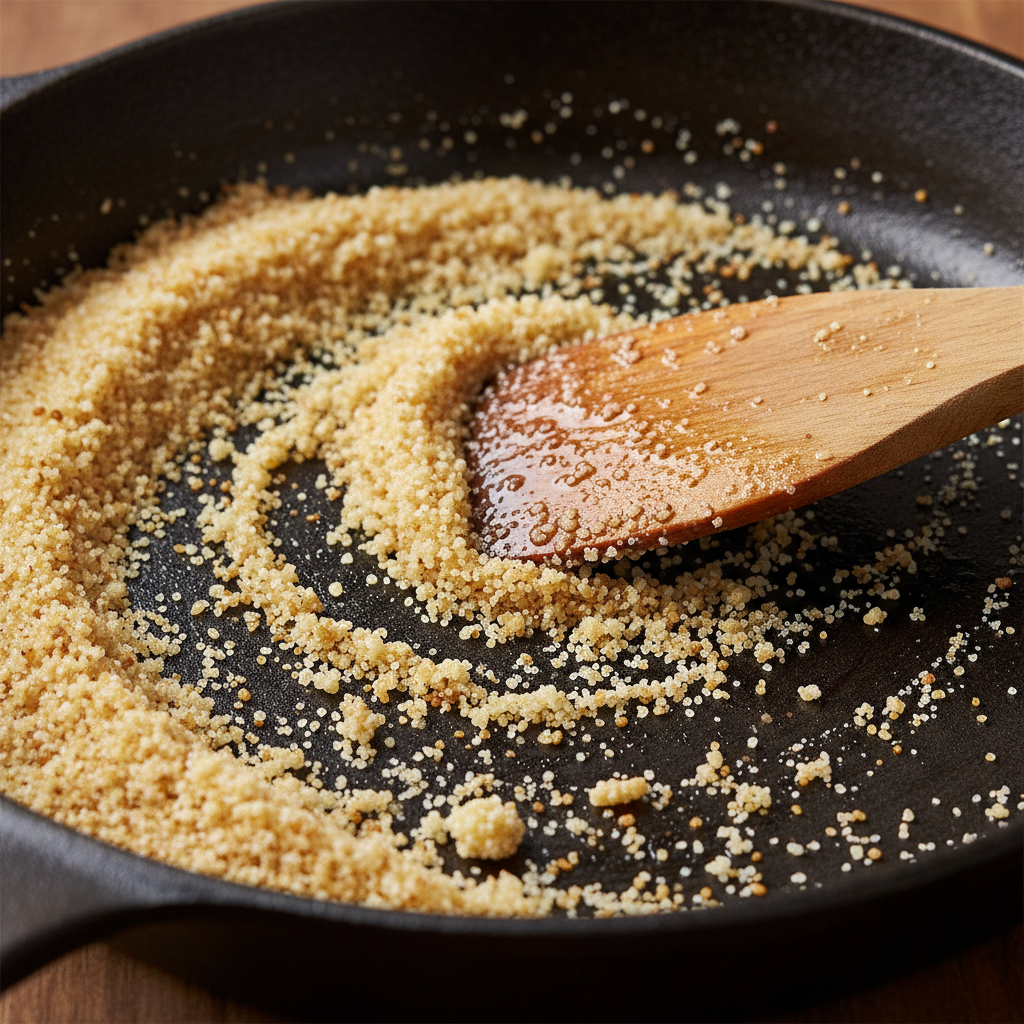
- Roast sooji (1 cup) in 1 cup hot ghee over medium heat, 8–12 minutes, stirring to an even golden color and nutty aroma.
- Add liquid carefully in one go; stir continuously as semolina swells and thickens.
- Cover and rest 2–3 minutes off heat; grains finish hydrating.
- Finish with cardamom and saffron milk; fold in toasted nuts and raisins.
- Serve warm. For neat portions, rest 5 minutes, then scoop with a damp spoon.
Scaling tips
- Double or triple by maintaining the 1:1:2.5–3 ratio; roasting time increases modestly, not linearly.
- Event trays benefit from slightly higher liquid for hold; re-stir gently every 20–30 minutes.
- Infusions like saffron or rose water scale linearly; add at the end to preserve aroma.
Types, Methods, and Approaches
Two reliable methods dominate: sugar-in-liquid (make a hot syrup first) and sugar-in-pan (add sugar after roasting). Syrup-first offers smoother hydration and fewer lumps, while pan-added sugar deepens caramel notes. Variations include milk-based sheera and fruit-forward styles.
Method comparison
| Method | What you do | Pros | Watch-outs |
|---|---|---|---|
| Syrup-first | Dissolve sugar in hot liquid, then add to roasted sooji | Smoother hydration; fewer lumps; consistent sweetness | Must keep liquid hot; steam control is key |
| Pan-added sugar | Roast sooji, stir in sugar, then add hot liquid | Deeper caramel tone; slightly chewier crumb | More clump risk; stir decisively when adding liquid |
Popular variations
- Milk sheera: All-milk liquid for a richer, pudding-adjacent body.
- Kesari style: Vivid saffron-orange hue; pineapple or banana garnish optional.
- Nut-forward: Cashew ghee fry for crunch; pistachio dust for a luxe finish.
- Jaggery note: Replace some sugar with jaggery syrup for molasses depth.
- Fruit swirls: Gently fold in stewed apricots or dates at the end for contrast.
If you’d like a side-by-side of halwas by base ingredient, glance at our halwa and pinni explainer to choose the right sweet for your mood or event.
Best Practices (Texture, Aroma, and Consistency)
Master three controls: even roasting, hot liquid addition, and gentle finishing folds. Keep grains separate, use liquid at a near-boil, and rest covered briefly. The result is a plush, glossy halwa with clear cardamom-saffron notes and a clean ghee aroma.
Texture control
- Stir to the edges: Scrape pan walls so no patch over-browns; color should be uniformly golden.
- Spread test: Press a spoon across roasted sooji; it should spread like wet sand and release a nutty whiff.
- Liquid shock: Add hot liquid in one go; partial additions create gluey streaks.
Aroma and finish
- Bloom spices: Cardamom goes in late to keep its floral top note.
- Saffron milk: Add off heat for maximum color and fragrance.
- Nut handling: Fry cashews in a teaspoon of ghee until pale gold; fold at the end for crunch.
Consistency and holding
- Buffet hold: A touch more liquid prevents drying; stir every 20–30 minutes.
- Gift boxes: Slightly firmer set travels better; line cups to keep shape.
- Reheat gently: Splash of hot water or milk revives gloss within 1–2 minutes over low heat.
Prefer a ready-made version? Our sooji halwa is prepared by experienced halwais so you can focus on the rest of your menu.
Tools and Resources You’ll Actually Use
Choose a heavy-bottomed pan, a long spatula, and accurate measuring cups. Keep a small saucepan for syrup and a ladle for controlled pouring. For events, use insulated carriers and small portion cups to plate quickly and cleanly.
- Heavy-bottomed kadai or saucepan: Prevents hot spots and burnt semolina.
- Long silicone or wooden spatula: Safe scraping along pan curves.
- Measuring set: Ratios drive texture; keep them consistent across batches.
- Insulated carry bags and chafers: Maintain warmth during winter service in Brampton.
- Portion cups and garnishing spoons: Speed up plating for 25–200 guests.
Planning a broader spread? Event menu primers like halal menu planning tips and cross-cultural catering ideas can inspire crowd-pleasing pairings where warm Indian desserts shine.
Gifting, Pairings, and Menu Integration
Sooji halwa anchors premium gift boxes and complements chaats, snacks, and thalis. Balance textures by pairing halwa with fudge-like barfi or syrupy classics, and add salty snacks for contrast. For events, pre-portion for quick service and consistent presentation.
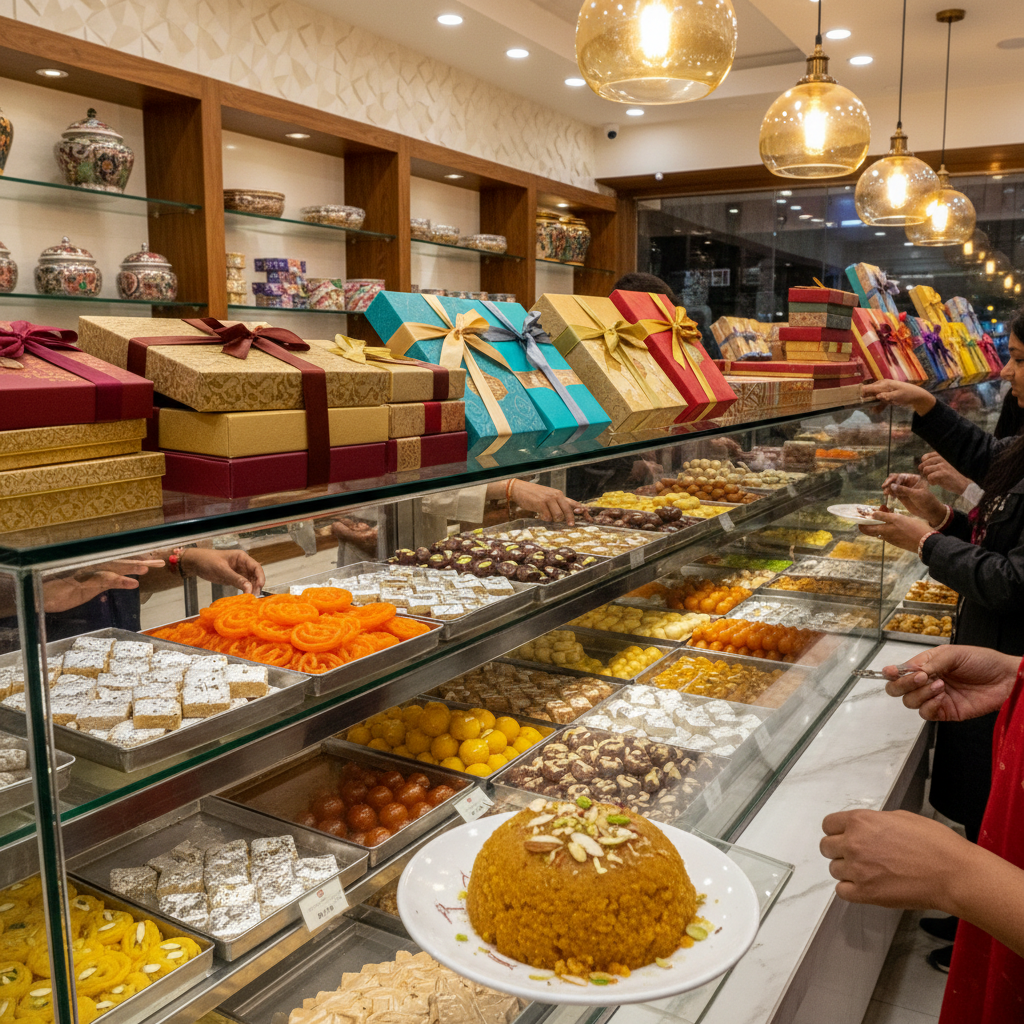
We build elegant assortments that mix soft halwa portions with firm barfi and airy ladoo so recipients get varied bites in one box. For inspiration across sweets, our premium mithai selection guide outlines balance by texture and flavor family.
- With chaats and snacks: Serve halwa after savory highlights like samosas and pakoras; sweetness lands better post-spice. Regional eateries show how snacks anchor crowds—see a local samosa example for context here.
- With thalis: A small katori of halwa adds warmth and ceremony to North Indian meals.
- In gift boxes: Cup portions travel neatly; garnish with pistachio dust and saffron for a royal look.
Explore our related classics: gajar halwa for winter menus and kheer-style desserts for milky, spoonable comfort.
Troubleshooting: Quick Fixes for Common Issues
If halwa is dry, add hot liquid in tablespoons and fold. If gluey, thin with hot liquid and break clumps by gentle pressing. If bland, finish with cardamom-saffron and toasted nuts. Adjust sweetness last to avoid overcorrection.
- Clumpy texture: Caused by cool liquid or staggered additions. Fix with 2–4 tablespoons hot liquid, press and fold to re-separate.
- Greasy surface: Too much ghee or insufficient sugar. Stir another minute to emulsify; a pinch of salt can round flavor.
- Under-roasted notes: Return to low heat for 1–2 minutes; keep moving to avoid scorching.
- Too sweet or not sweet enough: Balance with nuts and spice; adjust in small increments at the end.
- Color too pale: Saffron milk or a few threads bloomed in hot water brighten without overcooking.
Storage, Shelf Life, and Food Safety
Store sooji halwa covered in the refrigerator for short-term service and reheat gently with a splash of water or milk. For the next-day buffet, hold warm and stir occasionally. Clean utensils and tight covers preserve aroma and prevent drying.
- Room temperature: Keep service under 2 hours when uncovered; re-cover between guests to retain steam.
- Refrigeration: Cover well; reheat over low heat with 1–2 tablespoons liquid per cup of halwa to restore gloss.
- Freezing: Portion in small containers; thaw overnight, then reheat gently to keep grains distinct.
- Allergens: Contains wheat (semolina) and often dairy. Clearly label when gifting or catering.
For a ready-to-serve option crafted by authentic halwais, order our house sooji halwa, or mix-and-match with moong dal halwa in dessert assortments.
Pro Setup for Events and Catering
For events, pre-portion sooji halwa in cups or katoris, garnish ahead, and hold warm with light stirring. Offer complementary snacks and a second dessert texture for contrast. Clear labeling and vegetarian icons help guests choose quickly.
- Portioning: 2–3 ounce cups plate fast and keep lines moving for groups of 50–200.
- Serving line: Dessert last, after savory spice peaks. Nuts in a separate bowl help with allergen clarity.
- Menu planning: Use broad event guides like these menu planning basics to map appetizer–main–dessert flow.
Coordinating a larger Brampton gathering? Our team can pair halwa with chaats, snacks, and thalis so each table experiences a full Punjabi spread from one trusted, heritage brand.
Golden Ratios and Results (Quick Table)
Start with 1:1:2.5–3 for sooji:ghee:liquid. Higher liquid favors buffets; lower liquid favors gifting. Keep sugar at 3/4–1 cup per cup of sooji and finish with fresh cardamom for a clear, classic profile.
| Use Case | Sooji | Ghee | Liquid | Sugar | Result |
|---|---|---|---|---|---|
| Home dessert | 1 cup | 1 cup | 2.5 cups | 3/4–1 cup | Classic, spoonable, glossy |
| Buffet hold | 1 cup | 1 cup | 3 cups | 3/4–1 cup | Softer, stays moist longer |
| Gift cups | 1 cup | 1 cup | 2.25–2.5 cups | 3/4 cup | Firmer set for travel |
Mini Case Studies and Real Examples
From small pujas to large receptions, sooji halwa scales predictably. Pre-portioning, balanced pairings, and clear labeling keep lines moving and guests happy. Our Brampton team uses these patterns weekly across gift boxes, thalis, and buffet-style desserts.
- Home puja (12 guests): Single batch at 1:1:2.5 liquid, served warm with pistachio dust. Paired with chai and samosas.
- Office treat day (40 guests): Two trays at 1:1:3 liquid for holding; portioned into cups with almond slivers for speed.
- Wedding reception (200 guests): Mixed dessert table: sooji halwa cups, barfi assortment, and gulab jamun. Clear vegetarian icons and nut labels.
For deeper craft notes on classic sweets, see our gulab jamun preparation guide and explore seasonal fusion sweets ideas.
Frequently Asked Questions
These quick answers address the most common sooji halwa questions—ratios, milk vs. water, storage, and event service. Each response is direct and action-ready so you can get cooking or plan your dessert table with confidence.
Is sooji halwa better with milk or water?
Milk makes a richer, rounder halwa; water yields a lighter, classic profile. For events, many choose water for clean flavor and longer hold, then finish with saffron milk and nuts for richness without heaviness.
What’s the best sooji:ghee:liquid ratio?
A dependable starting point is 1:1:2.5–3 by volume. Use the lower end for gift cups and the higher end for buffets. Sugar generally sits at 3/4–1 cup per cup of sooji, adjusted to taste.
How do I fix dry or clumpy halwa?
Add hot liquid a tablespoon at a time and fold gently until it loosens and turns glossy. If clumps persist, press them against the pan with your spatula while stirring; avoid overworking once texture returns.
Can sooji halwa be part of a thali?
Yes. A small katori of warm halwa brings ceremony and comfort to a North Indian thali. It’s a natural follow-up to savory mains and chai, rounding the meal with familiar festival flavors.
Conclusion
Great sooji halwa depends on even ghee-roasting, hot liquid hydration, and a calm, covered rest. Keep ratios consistent, finish with cardamom-saffron, and portion thoughtfully for service. With these moves, you’ll get a soft, rich halwa—every single batch.
- Key takeaways: Roast evenly; add hot liquid in one go; rest covered 2–3 minutes.
- Action step: Start with the 1:1:2.5 ratio today; adjust sweetness and liquid to your service style.
- Next: Explore our house sooji halwa or pair it with gajar halwa in a curated box.
Planning a celebration in Brampton? Reach out to our team to design a dessert lineup featuring authentic halwai-crafted sweets, chaats, and thalis—elegant, vegetarian, and ready for your guests.