Ram ladoo is a North Indian street snack of airy lentil fritters topped with grated radish and tangy chutneys. It’s made from soaked, whipped moong dal (often with a little chana dal) that’s fried until crisp outside and soft inside. In Brampton, it’s a beloved chaat you can enjoy out or make at home.
By The Mithai Maharaja Culinary Team — themithaimaharaja.ca
Last updated: 2026-07-07
Quick Summary & Table of Contents
Ram ladoo are fluffy lentil fritters served as a chaat with radish, cilantro, and tamarind chutneys. This complete guide covers what they are, why they matter, how to make them, methods and variations, chef best practices, tools, storage, Brampton tips, and real-world examples for families and events.
- Definition, origin, and flavor profile
- Why this chaat resonates with Brampton families and events
- How hydration, aeration, and frying create signature texture
- Step-by-step method with timings and temperatures
- Variations: dal blends, spice profiles, and air-fryer/baked options
- Chef tips, troubleshooting, and plating ideas
- Tools, storage, reheating, and serving for crowds
- Local considerations and use cases in Brampton
- FAQ answers for quick troubleshooting
What Is Ram Ladoo?
Ram ladoo are Delhi-style fritters made from soaked, whipped split moong dal, often with a touch of chana dal, seasoned with cumin and chilies, then fried golden and served as a chaat with grated white radish and two chutneys. The harmony of crisp, fluffy, cool, and tangy defines this snack.
At heart, ram ladoo are about contrast. The fritters measure roughly 1–1.5 inches and develop tiny internal air pockets when the batter is whipped well. A standard home batch using 1 cup of dried moong dal yields about 20–24 fritters, enough for 4–6 starters. Vendors typically finish with lemon juice, chaat masala, and fresh cilantro.
The Mithai Maharaja serves a wide chaats and snacks lineup in Brampton, so ram ladoo fit naturally alongside familiar favorites. For a deeper dive into the local street-food context, see our North Indian street food culture overview that spotlights how crunchy, tangy, and fresh elements come together on one plate.
Why Ram Ladoo Matters
Ram ladoo matters because it balances protein-rich lentils with cooling radish and bright chutneys. It’s vegetarian, scalable, and plates quickly, making it ideal for Brampton family nights, festivals, and catered mixers where 60 to 120 portions can be served in waves without losing crunch.
Flavor-wise, lentils bring earthy depth, cumin adds warmth, green chilies contribute lift, and tamarind chutney layers sweet-sour brightness. Texture-wise, a crisp shell protects a cloud-like center; freshly grated radish cools each bite, and a squeeze of lemon sharpens the finish. Visually, green and amber chutneys with white radish give instant “chaat” appeal.
How Ram Ladoo Works (Science + Steps)
Great ram ladoo depend on hydration, aeration, and steady frying. Soak split moong 3–4 hours, grind thick with minimal water, whip 3–5 minutes to trap air, then fry at 340–350°F in small batches. Dress with grated radish and chutneys just before serving to keep crunch.
- Rinse 1 cup split moong dal until water runs clear; soak 3–4 hours.
- Drain thoroughly; grind to a thick paste with 2–3 tablespoons water.
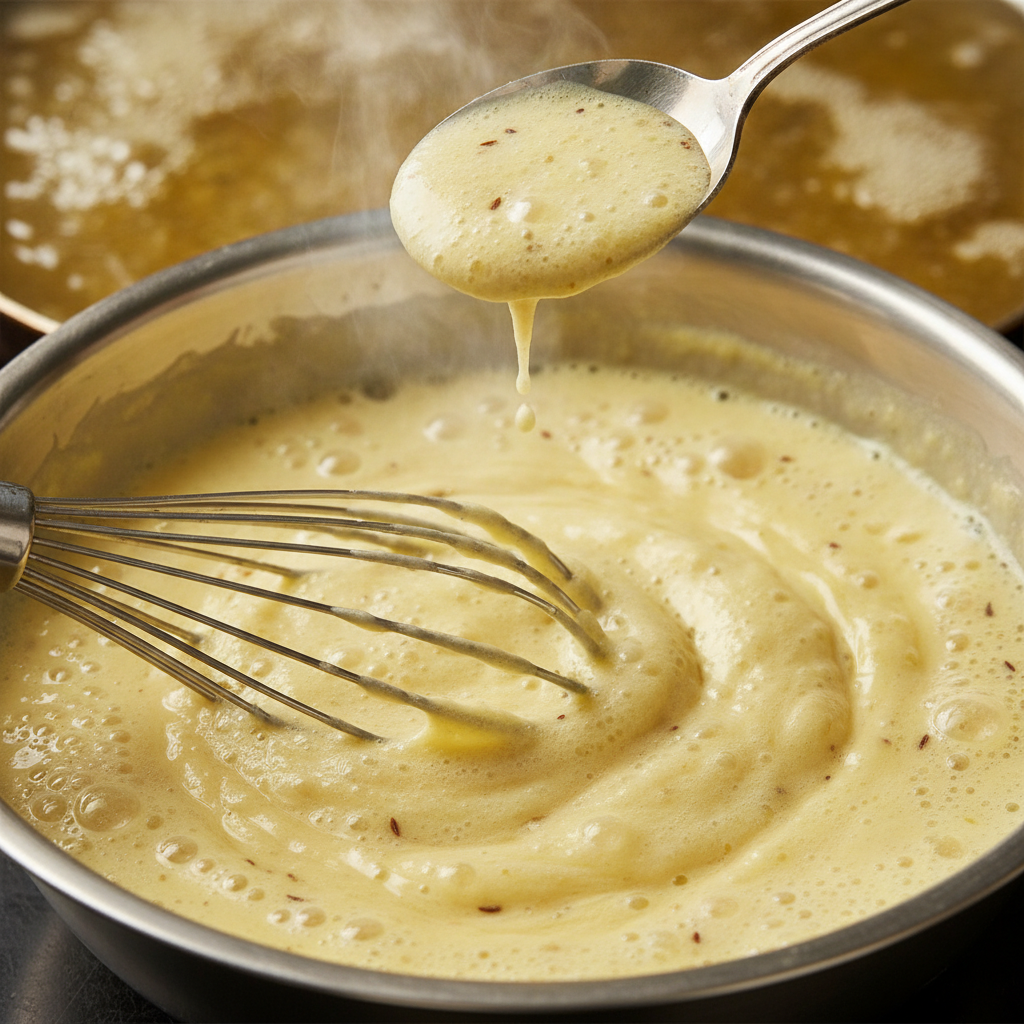
- Whip vigorously 3–5 minutes; a pea-size drop should float in water.
- Season with 1 teaspoon cumin, 1–2 minced green chilies, salt to taste; a pinch of asafoetida is optional.
- Heat neutral oil to 340–350°F (use a thermometer). Fry 8–10 small scoops per batch for 3–4 minutes until deep golden.
- Drain on a rack 60–90 seconds, then top with grated radish, green chutney, tamarind chutney, chaat masala, and lemon.
If fritters split, the paste is likely too wet or the oil is under 330°F. If they’re dense, add 30–60 seconds of whipping and reduce any extra water by 1–2 teaspoons. For color control, raise heat by 5–10°F between batches as the oil cools with use.
Deep-fry vs air-fry vs bake (quick comparison)
| Method | Texture | Timing | Heat | Best for |
|---|---|---|---|---|
| Deep-fry | Crisp shell, cloud-like interior | 3–4 min/batch | Oil at 340–350°F | Authentic street-style crunch |
| Air-fry | Moderately crisp, lighter feel | 10–14 min | 375°F (flip once) | Weeknight convenience |
| Bake | Cake-like, uniform crumb | 14–18 min | 400°F (oiled tray) | Batching without frying |
Types, Methods, and Variations
Classic ram ladoo use 100% split moong for the lightest texture, but cooks personalize the dal blend, spice profile, and finishing. Popular options include an 80/20 moong–chana mix, garlic-forward chutneys, extra-green heat, and kid-friendly sweet-tangy tamarind.
Dal blends that perform
- 100% moong dal: Lightest crumb and most hollow center; ideal for first-timers.
- 80/20 moong + chana: Adds nuttiness and a slightly firmer bite; great for outdoor serving.
- Moong + a touch of urad (5–10%): Boosts body; whip longer to avoid density.
Chutney profiles to try
- Herby-heat: Cilantro, mint, green chili, lemon juice, and roasted cumin.
- Sour-sweet: Tamarind, jaggery, black salt, and a hint of ginger.
- Garlic-forward: Raw garlic, cilantro, black salt, and lime for a bold kick.
Cooking methods adapted for home
- Deep-fry: 3–4 minutes per batch at 340–350°F; drains in 60–90 seconds on a rack.
- Air-fry: Brush or mist fritters with oil; cook 10–14 minutes at 375°F, flipping at halfway.
- Bake: On an oiled tray at 400°F for 14–18 minutes; expect more uniform, cake-like interiors.
Best Practices (Chef Tips)
Keep the paste thick, whip until volume increases 10–20%, and fry in small batches to hold 340–350°F. Dress fritters right before serving so the shell stays crisp. Test-fry one piece to calibrate salt, heat, and texture before committing a full batch.
- Soak smart: 3–4 hours hydrates; overnight soaks can make the paste too slack.
- Measure heat: Home cooks commonly overestimate oil temperature by 20–40°F; use a thermometer.
- Aeration test: A pea-size drop should float immediately; if it sinks, whip 30–60 seconds more.
- Season in stages: Salt lightly in the batter and finish with chaat masala on the plate.
- Grate fresh: Radish loses juice in 10–15 minutes; grate right before plating.
- Plating cadence: For 30–40 pieces, fry in three waves so each plate is served within 2–3 minutes of dressing.
Local considerations for Brampton
- Weekend gatherings peak between late afternoon and evening, so prep the batter earlier, then fry to order for maximum crunch.
- Cold months make chutneys taste sharper; balance with a touch more jaggery in tamarind and extra lemon at service.
- When planning an event menu, combine ram ladoo with hot snacks like samosas so guests enjoy temperature and texture variety.
Tools, Resources, and Storage
You’ll get repeatable results with a reliable blender, a medium kadai or Dutch oven, a clip-on thermometer, a skimmer, and a fine grater. Undressed fritters hold 4–6 hours at room temp; re-crisp at 375°F before topping with radish and chutneys.
- Thermometer: Stabilizes results across batches; aim for a 340–350°F window.
- Skimmer/spider: Pulls 6–8 fritters at a time to avoid over-browning by 30–45 seconds.
- Fine grater: Creates feathery radish strands that cool each bite without soaking the shell.
- Wire rack: 60–90 seconds of draining keeps the bottom from steaming soggy.
- Storage: Cool 15 minutes, then move to a breathable container; refrigerate after 6 hours.
- Reheat: Air fryer at 375°F for 6–8 minutes restores crispness; always add chutneys after reheating.
Planning a snack night? Our Brampton overview of staples, North Indian snacks, helps you mix hearty items with chaats so you cover spice levels and textures for 4–12 guests without overcomplicating prep.
Soft CTA: Hosting in Brampton and want a hand with the menu? Explore our culture notes and dish planning in the Indian store snacks guide to build a balanced spread around ram ladoo, then add a sweet finish from our premium mithai selection in-store.
Case Studies & Examples
In our Brampton kitchen and events, ram ladoo consistently pleases mixed-age groups. Batches scale cleanly, plate in under a minute per portion, and pair with chaats and Punjabi snacks. These scenarios show timing, quantities, and pairing strategies.
Example 1: Family snack night (4–6 people)
Soak 1 cup dal at 4 p.m., blend at 7 p.m., and start frying by 7:15. Two frying rounds (about 8–10 fritters each) finish in 8–10 minutes. Plate with grated radish (1 packed cup), 1/2 cup green chutney, and 1/2 cup tamarind. Serve immediately.
Example 2: Festival get-together (10–14 people)
Scale to 2 cups dal for roughly 40–48 fritters. Set a “chaat bar” with bowls of radish, chutneys, lemon wedges (8–10 pieces), and chaat masala. Fry in three waves so each tray is hot; pause 2 minutes between waves so oil rebounds to 345–350°F for color consistency.
Example 3: Catered mixer (live station)
At a casual corporate mixer, a live ram ladoo station offers hot fritters with custom chutney ratios. Each plate is ready in under 60 seconds after frying. For complementary texture and a heartier bite, plan a nearby bread station featuring Amritsari Kulcha with Chana.
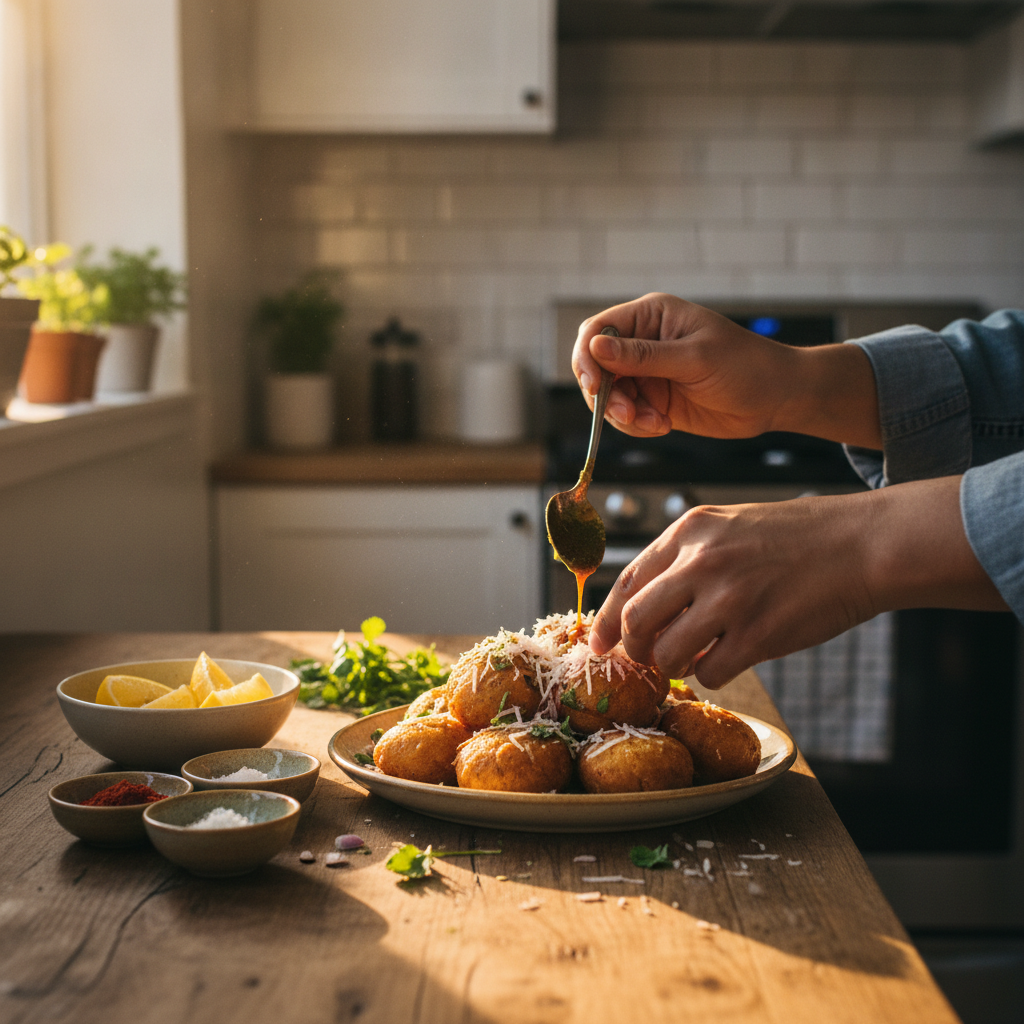
Want a full snack board? Our side-by-side on fillings and batters in the samosa and pakora guide helps you choose crisp accompaniments that hold well for 30–45 minutes on a buffet.
Frequently Asked Questions
These concise Q&As cover soaking, batter aeration, frying temperature, and toppings so you can troubleshoot quickly and serve confidently. Use them as a pre-cook checklist.
How do I make the batter airy without a stand mixer?
Grind to a thick paste with minimal water, then whisk vigorously by hand for 3–5 minutes. The paste should lighten in color and increase 10–20% in volume. A pea-size drop should float in water. If it sinks, whisk another 30–60 seconds.
What oil temperature is best for frying ram ladoo?
Aim for 340–350°F. Cooler oil leads to greasy, split fritters; hotter oil browns the outside too fast. Test-fry one piece first, then adjust heat to keep an even golden color and tiny interior air pockets.
Can I air-fry or bake ram ladoo?
Yes. Air-fry at 375°F for 10–14 minutes, flipping once and misting lightly with oil for color. Bake at 400°F on an oiled tray for 14–18 minutes. Expect a slightly more uniform, cake-like interior compared with deep-frying.
Why do my fritters taste flat even with chutneys?
Under-seasoned batter is common. Add 1 teaspoon roasted cumin and a pinch of black salt to the batter, then finish with chaat masala and fresh lemon. Grate radish right before plating—its juice helps spread spice and acidity through each bite.
What should I serve with ram ladoo for a complete spread?
Pair with samosas or pakoras for crunch, and include one hearty option like chole bhature or kulcha chana. For chaat lovers, our samosa chana chaat guide outlines a crowd-pleasing combo that complements ram ladoo’s airy texture.
Conclusion & Key Takeaways
Ram ladoo capture Delhi’s street-food magic at home: a crisp, airy fritter base cooled by juicy radish and bright chutneys. Control hydration, whip well, fry at a steady 340–350°F, and dress just before serving. Scale in waves for events and pair with classic chaats.
- Hydration + aeration produce tiny pockets for a cloud-like center.
- 340–350°F oil and small batches (8–10 pieces) keep color even.
- Grate radish to order; plate within 2–3 minutes of dressing.
- Pair with samosas, pakoras, or kulcha chana to round out texture and satiety.
For cultural comparisons and regional inspiration, you can explore an external perspective on chole-kulche traditions here: regional chole-kulche background. For broader Punjabi menu context, see this outside overview of Punjabi curries and staples. Planning community gatherings around the calendar? Review this seasonal catering example for holiday menu planning to think through crowd flow and dietary preferences.